
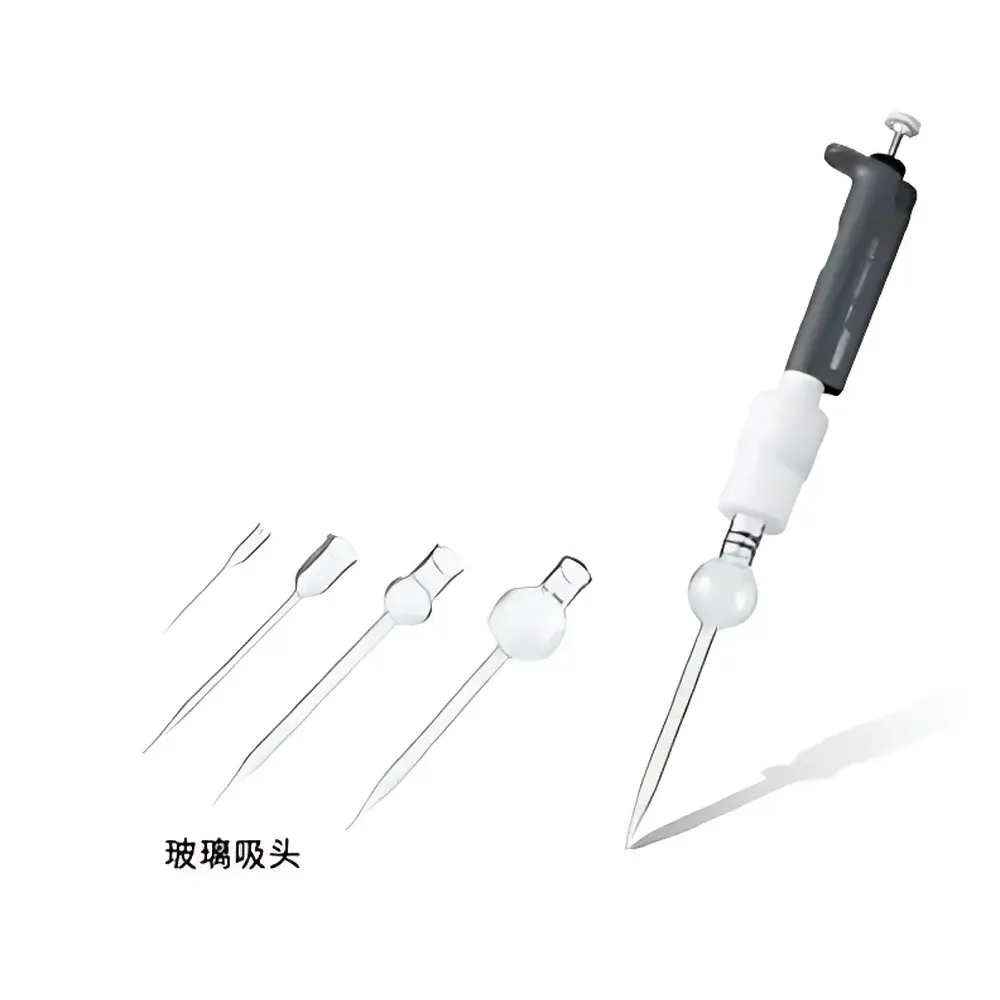
Nichiryo Nichipet ECO Digital Micropipette with Glass Tips
| Brand | Nichiryo |
|---|---|
| Origin | Japan |
| Model | Nichipet ECO |
| Pipette Type | Single-channel Manual Pipette |
| Volume Range | 20 µL – 10 mL |
| Maximum Capacity | 10 mL |
| Accuracy | ±3.0% to ±6.0% |
| Precision (CV) | ≤3.0% to ≤6.0% |
| Tip Compatibility | Nichiryo Glass Tips (S, L, X, Z series) |
| Operating Principle | Air-displacement with ceramic piston and PTFE-coated tip cone |
| Sealing | Dual O-ring tip ejection mechanism |
Overview
The Nichiryo Nichipet ECO Digital Micropipette is a precision-engineered, single-channel manual pipette designed for laboratories requiring trace-level accuracy in handling low-volatility, adsorptive, or chemically sensitive liquids—particularly in endocrine disruptor analysis, hormone quantification, and high-purity pharmaceutical assay workflows. Unlike conventional air-displacement pipettes using polypropylene tips, the Nichipet ECO integrates purpose-designed borosilicate glass tips (S/L/X/Z series) that minimize surface adsorption, reduce carryover, and eliminate plasticizer leaching—critical for GC-MS, LC-MS/MS, and radioimmunoassay applications where nanogram-level integrity is non-negotiable. Its core actuation system employs a high-stability ceramic piston sealed within a fluoropolymer (PTFE)-coated tip cone, ensuring consistent plunger resistance, long-term dimensional stability, and resistance to organic solvents and aggressive cleaning agents. The digital volume display provides real-time, parallax-free readout across its full 20 µL–10 mL range, supporting rapid recalibration and audit-ready documentation.
Key Features
- Ceramic piston assembly with PTFE-coated tip cone for chemical inertness and mechanical longevity
- Dual O-ring tip interface enabling secure attachment and smooth, tool-free glass tip ejection without seal compromise
- Four interchangeable glass tip formats (S: 20–200 µL, L: 100–1000 µL, X: 1–5 mL, Z: 1–10 mL) optimized for laminar flow and minimal dead volume
- Volume accuracy certified per ISO 8655-2: ±3.0% at mid-range (e.g., 100–1000 µL), ±6.0% at extremes (20 µL and 10 mL)
- Repeatability (coefficient of variation) ≤3.0% (mid-range) to ≤6.0% (extremes), validated per ISO 8655-6 under GLP-compliant environmental conditions (20–25°C, 40–60% RH)
- Ergonomic, low-force plunger design reducing operator fatigue during high-throughput liquid handling
Sample Compatibility & Compliance
The Nichipet ECO is specifically validated for use with aqueous buffers, ethanol/water mixtures, acetonitrile, methanol, and dilute acidic/basic solutions commonly employed in analytical toxicology and biomarker isolation. Its glass tip architecture eliminates hydrophobic binding sites associated with polymer tips—demonstrably improving recovery of polar analytes such as bisphenol A, phthalate metabolites, and steroid hormones. Device calibration and performance verification align with ISO/IEC 17025 requirements when performed using gravimetric methods traceable to NIST SRM 3150a. The pipette meets essential safety and EMC criteria per IEC 61326-1 for laboratory electrical equipment and carries CE marking for conformity with EU Directive 2014/30/EU (EMC) and 2014/35/EU (LVD).
Software & Data Management
While the Nichipet ECO operates as a standalone manual instrument, its digital display supports integration into lab-wide asset management systems via optional RS-232 or USB-to-serial adapters (sold separately). Logged volume settings and user-defined calibration timestamps can be exported for inclusion in electronic lab notebooks (ELN) compliant with FDA 21 CFR Part 11 requirements—provided the host software implements appropriate audit trail, electronic signature, and data integrity controls. Calibration records generated during routine maintenance are structured to satisfy internal QA/QC protocols and external inspection readiness for ISO 15189-accredited clinical labs and OECD GLP study sites.
Applications
- Quantitative analysis of endocrine-disrupting compounds (EDCs) in environmental water and biological matrices
- Preparation of calibration standards and QC samples for LC-MS-based clinical toxicology panels
- Low-volume spiking experiments in method validation (LOQ determination, recovery assessment)
- Handling of viscous or surface-active reagents in immunoassay development (e.g., antibody conjugation buffers)
- Trace metal analysis workflows where polymeric contaminants must be excluded from sample introduction paths
FAQ
What types of glass tips are compatible with the Nichipet ECO?
Nichiryo S-, L-, X-, and Z-series borosilicate glass tips—each optimized for specific volume ranges and certified for dimensional tolerance per ISO 8655-3.
Is the pipette suitable for use with organic solvents such as DMSO or chloroform?
Yes—the PTFE-coated tip cone and ceramic piston provide compatibility with common organic solvents; however, prolonged exposure to strong oxidizers (e.g., concentrated nitric acid) is not recommended.
How often should the Nichipet ECO be calibrated?
Per ISO 8655-5, calibration is recommended before first use, after any impact or disassembly, and at intervals defined by risk assessment—typically every 3–6 months for routine QC environments.
Can the digital display be locked to prevent accidental volume changes?
No—this model does not include a physical or software lock function; volume adjustment requires deliberate rotation of the thumbwheel, minimizing inadvertent setting shifts during operation.
Does Nichiryo provide calibration certificates traceable to national standards?
Yes—factory calibration certificates (with uncertainty budgets) are available upon request and conform to ISO/IEC 17025 when issued by Nichiryo’s accredited service centers in Japan and Germany.



