
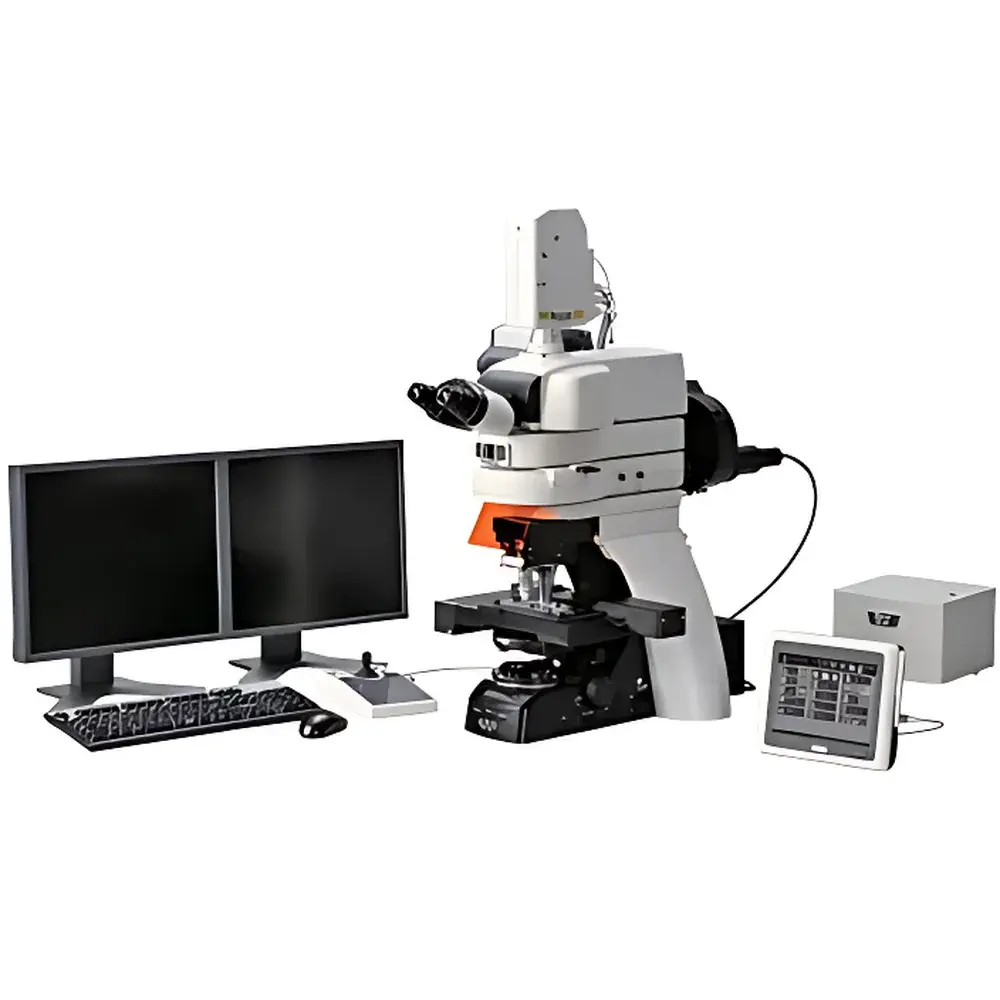
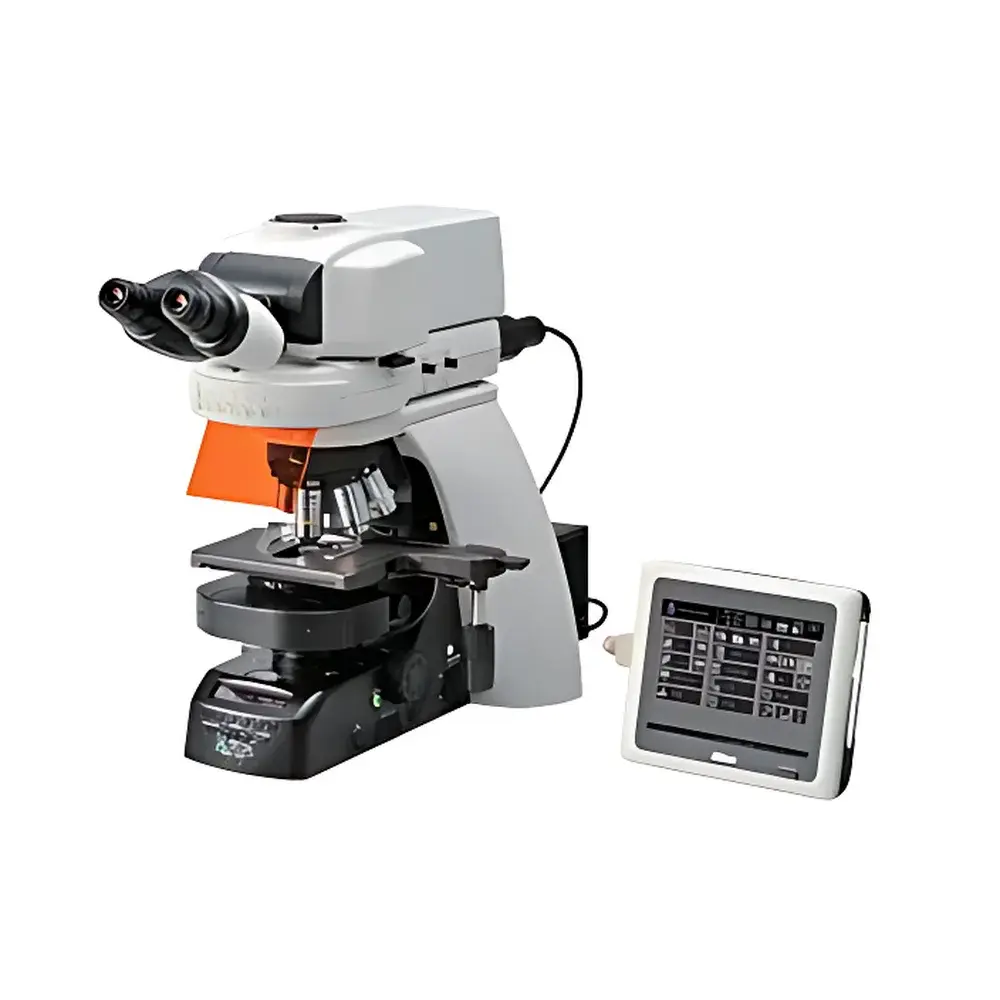
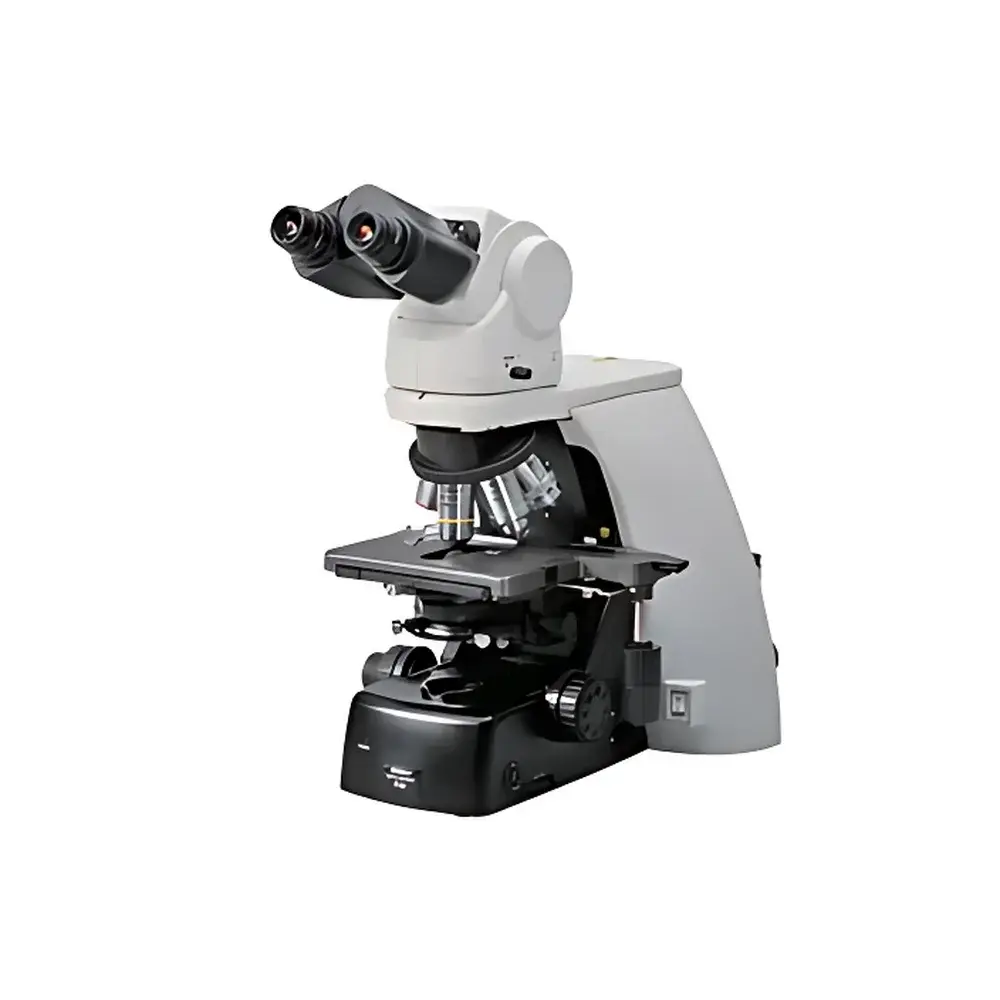
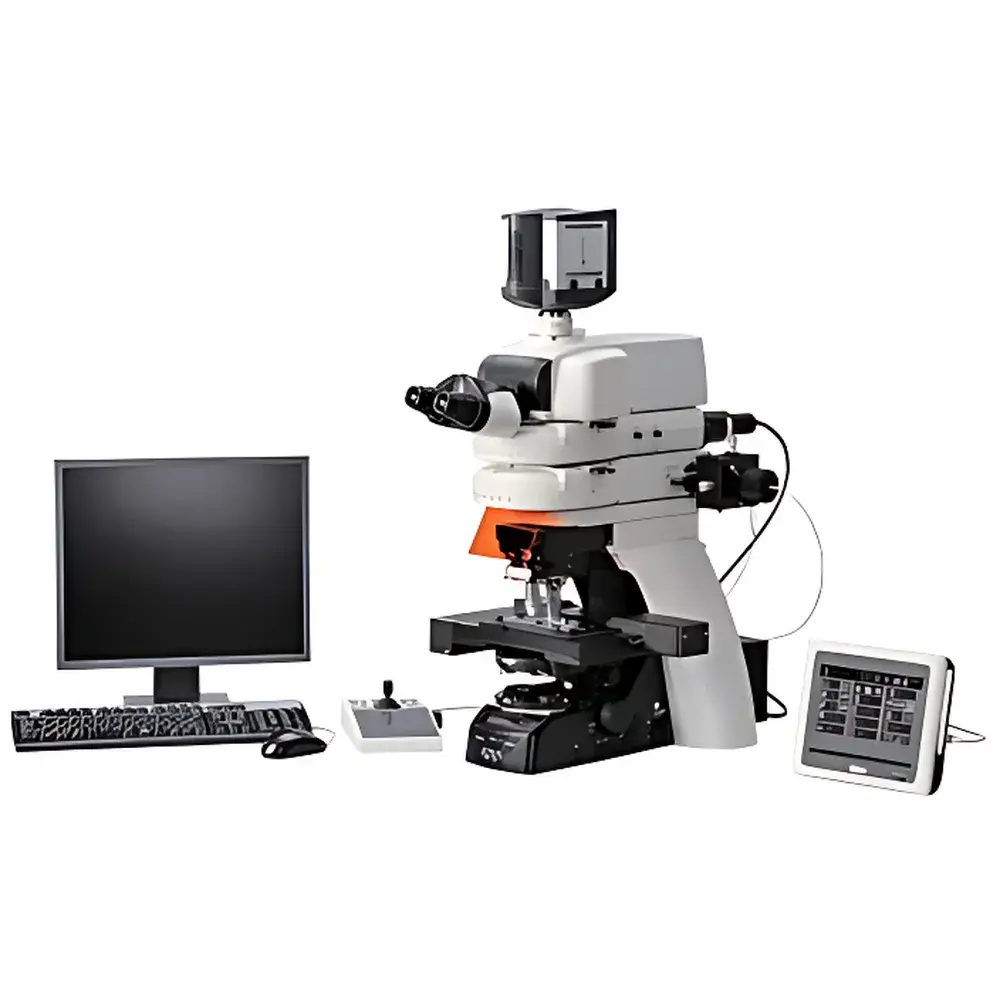
Nikon Eclipse Ni-E and Ni-U Upright Microscopes
| Brand | Nikon |
|---|---|
| Origin | Japan |
| Model | Eclipse Ni-E / Ni-U |
| Optical System | CFI60 / CFI75 Infinity-Corrected |
| Illumination | 12V 100W Halogen with Fly-Eye Lens Array |
| Objective Compatibility | CFI Plan Apochromat λ Series (350–850 nm) |
| Fluorescence Performance | Noise Terminator™ High-S/N System |
| Focus Mechanism | Motorized Coaxial Fine/Coarse (Ni-E, 0.05 µm encoder resolution) / Manual with Re-Positioning Function (Ni-U) |
| Stage | Ceramic-Coated Mechanical or Motorized XY (66 × 52 mm, 0.1 µm step) |
| Eyepiece Options | Widefield UW10× (25 mm FOV), Photomask-Compatible, Ergonomic Tilting Binoculars (10°–30°) |
| Compliance | Designed for ISO 10993-compliant sample handling workflows |
Overview
The Nikon Eclipse Ni-E and Ni-U are high-performance upright microscopes engineered for rigorous life science research, clinical histopathology, and advanced materials inspection. Built on Nikon’s proprietary CFI60 and CFI75 infinity-corrected optical platforms, these systems deliver diffraction-limited resolution across visible and near-infrared spectra (350–850 nm), enabling multimodal imaging—including brightfield, phase contrast, DIC, fluorescence, and multiphoton excitation—within a single, modular architecture. The Ni-E variant integrates full motorization for objective turret, focus, illumination intensity, and condenser alignment, supporting automated acquisition protocols required in quantitative microscopy and high-content screening. The Ni-U provides manual precision with selective motorized enhancements, preserving tactile control while ensuring repeatability through mechanical repositioning mechanisms and standardized parfocal calibration. Both models feature Nikon’s patented Nano-Crystal Coat anti-reflection technology—first deployed in microscope optics—which reduces internal scatter and increases transmission efficiency, directly improving image contrast and signal fidelity in low-light modalities.
Key Features
- CFI Plan Apochromat λ Objectives: Fully corrected for chromatic and spherical aberration across UV-vis-NIR; optimized transmission up to 850 nm for deep-tissue two-photon imaging.
- Fly-Eye Illumination Optics: Integrated lens array ensures uniform brightness across the entire field of view at all magnifications—critical for quantitative digital pathology and whole-slide scanning reproducibility.
- Noise Terminator™ Fluorescence System: Combines optimized dichroic beam paths with precision-aligned emission filters to suppress stray light, yielding high signal-to-noise ratios without compromising spectral specificity.
- Intelligent Condenser Automation: Aperture diaphragm, field diaphragm, neutral density filters (NCB11/ND8/ND32), and condenser height automatically adjust in concert with objective selection to maintain optimal Köhler illumination conditions.
- Ergonomic Human-Machine Interface: Front-panel programmable buttons enable one-touch switching between preconfigured observation modes (e.g., BF → DIC → FL); DS-L3 standalone controller allows image capture and basic annotation without PC dependency.
- Z-Axis Precision Engineering: Ni-E employs linear encoders with 0.05 µm resolution and 29 mm total travel (3 mm upward, 26 mm downward); coarse/fine dual-knob design minimizes hand fatigue during extended focusing tasks.
Sample Compatibility & Compliance
The Eclipse Ni platform accommodates standard glass slides (1 × 3 inches), petri dishes (up to 100 mm diameter), and custom specimen holders including heated/stage-top incubators and electrophysiology rigs. Its open mechanical design supports third-party accessories compliant with Nikon’s C-Mount and D-Mount standards. All optical components meet ISO 10110 surface quality specifications, and the system is compatible with laboratory environments operating under Good Laboratory Practice (GLP) and Good Manufacturing Practice (GMP) frameworks. When paired with Nikon NIS-Elements software configured for 21 CFR Part 11 compliance, the Ni-E enables electronic signatures, user-level access control, and immutable audit trails for regulated applications such as IVD assay development and biologics QC release testing.
Software & Data Management
Nikon NIS-Elements AR (Advanced Research) and BR (Basic Research) software suites provide native integration with both Ni-E and Ni-U hardware. Key capabilities include multi-channel time-lapse acquisition with hardware-synchronized shutter control, Z-stack reconstruction with deconvolution algorithms, and AI-assisted cell segmentation using trained neural networks. Raw data is saved in TIFF or proprietary ND2 format with embedded metadata (objective ID, exposure time, filter position, stage coordinates). Optional DS-L3 standalone controller offers JPEG/PNG export, histogram analysis, and measurement tools—ideal for core facilities requiring rapid image verification without workstation dependency. All software modules support DICOM export for PACS integration and comply with MIAME and MIAPE reporting guidelines for publication-ready data packaging.
Applications
- Neuroscience: High-resolution dendritic spine morphology analysis using λ-corrected objectives and multiphoton-compatible NIR transmission.
- Histopathology: Routine H&E and immunofluorescence slide evaluation with uniform illumination and automated focus mapping for digital archiving.
- Cell Biology: Live-cell DIC and phase contrast imaging with thermal-stable stage and vibration-damped base assembly.
- Materials Science: Grain boundary and defect characterization in metallurgical and semiconductor samples using polarized light and darkfield illumination.
- Quality Control: ISO/IEC 17025-accredited particle counting and dimensional metrology workflows leveraging calibrated motorized stages and traceable magnification standards.
FAQ
What is the difference between the Ni-E and Ni-U models?
The Ni-E is fully motorized with integrated controllers for focus, turret, illumination, and condenser; the Ni-U is manually operated with optional motorized add-ons (e.g., motorized turret or Z-drive) and includes mechanical repositioning functionality for repeatable stage relocation.
Are CFI75 objectives compatible with the Ni-U?
Yes—the Ni-U supports both CFI60 and CFI75 optical pathways, enabling seamless transition to higher NA, longer working distance objectives designed for thick-sample imaging.
Can the Ni-E be used for automated whole-slide scanning?
When equipped with the optional motorized XY stage (66 × 52 mm, 0.1 µm step resolution) and NIS-Elements AR software, the Ni-E supports tile-based mosaic acquisition with autofocus correction per field.
Does the Fly-Eye illumination system require recalibration when changing objectives?
No—its fixed-array geometry and automatic condenser synchronization ensure consistent illumination uniformity across all magnifications without user intervention.
Is the DS-L3 controller compatible with third-party cameras?
DS-L3 natively supports Nikon DS-Fi3 and DS-Ri2 cameras; compatibility with select USB3/UVC-compliant monochrome sensors is available via firmware update—contact Nikon Technical Support for validated device lists.





