
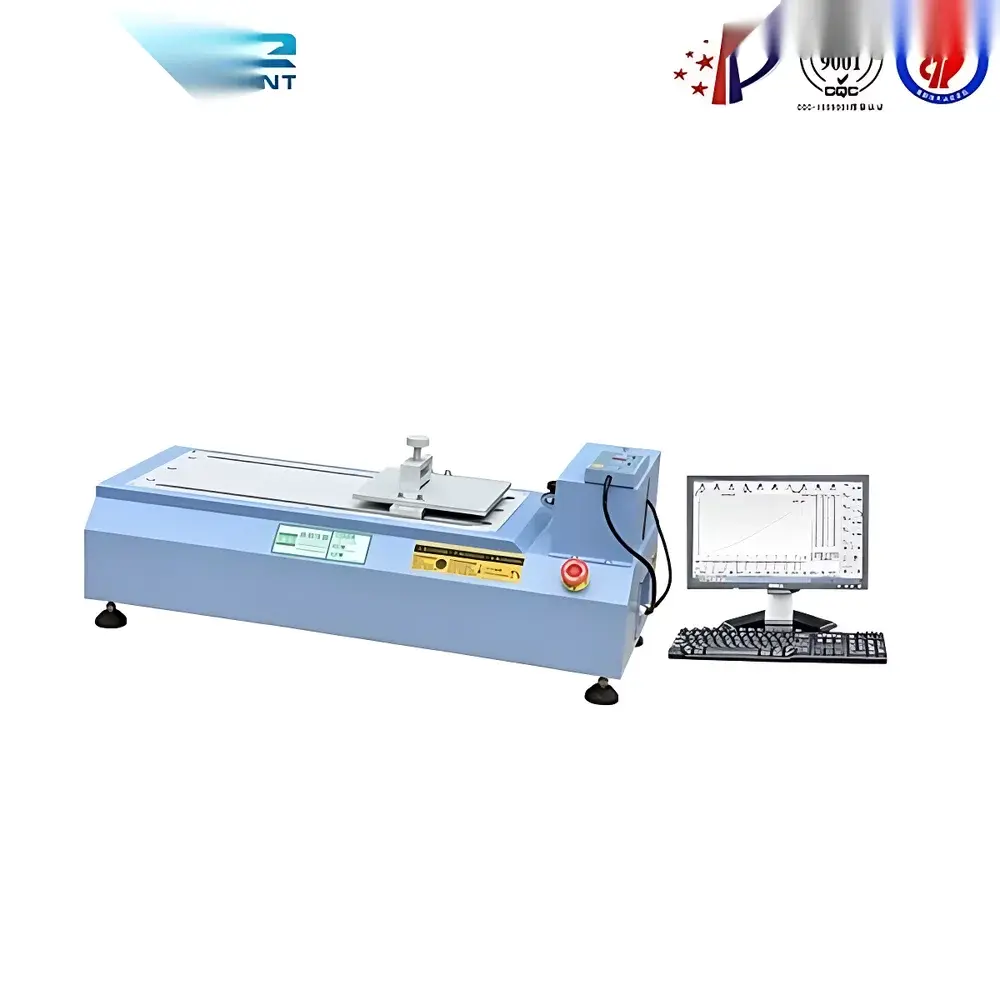
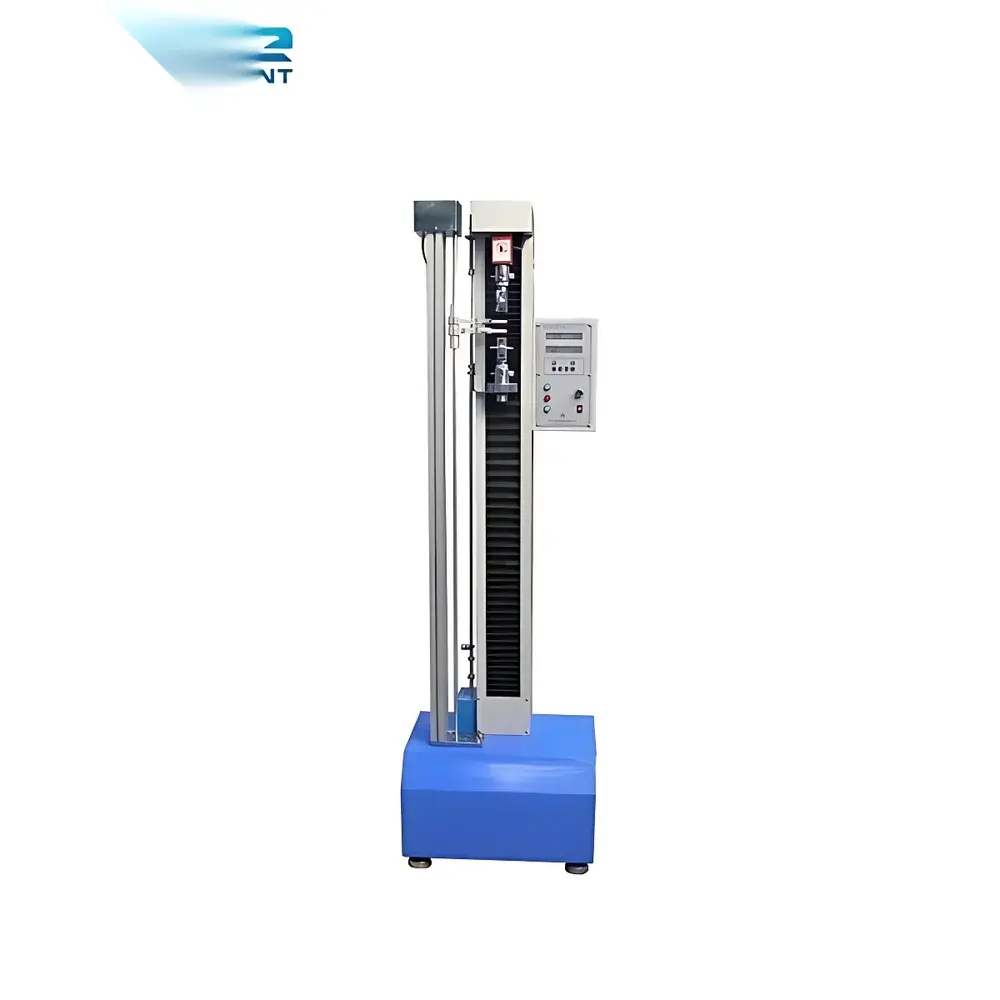
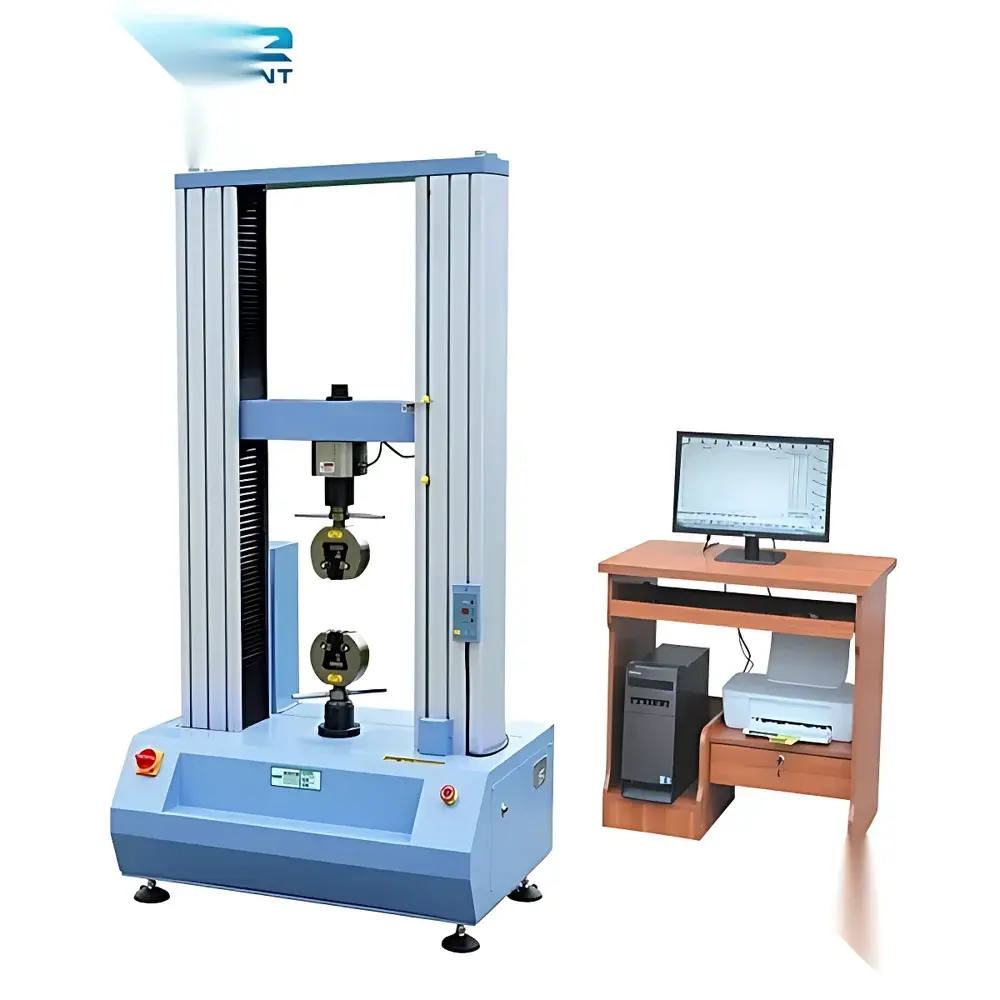
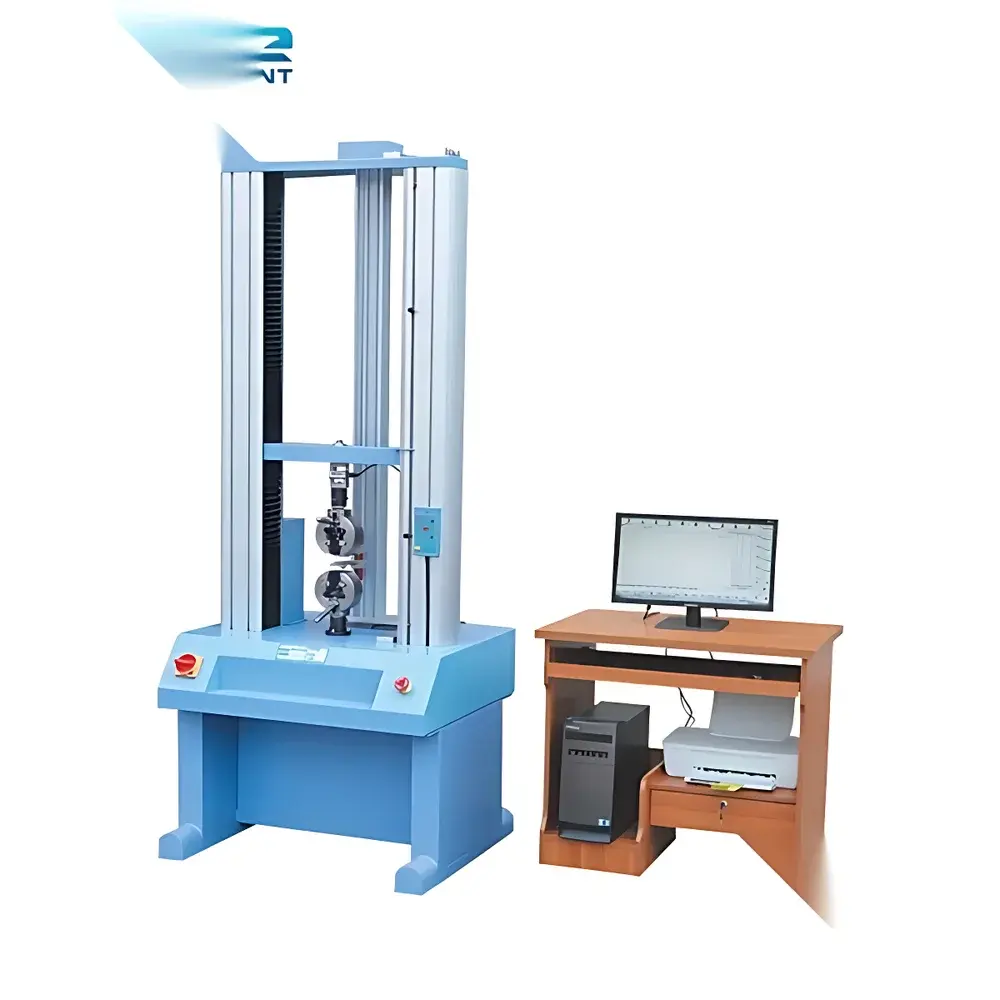
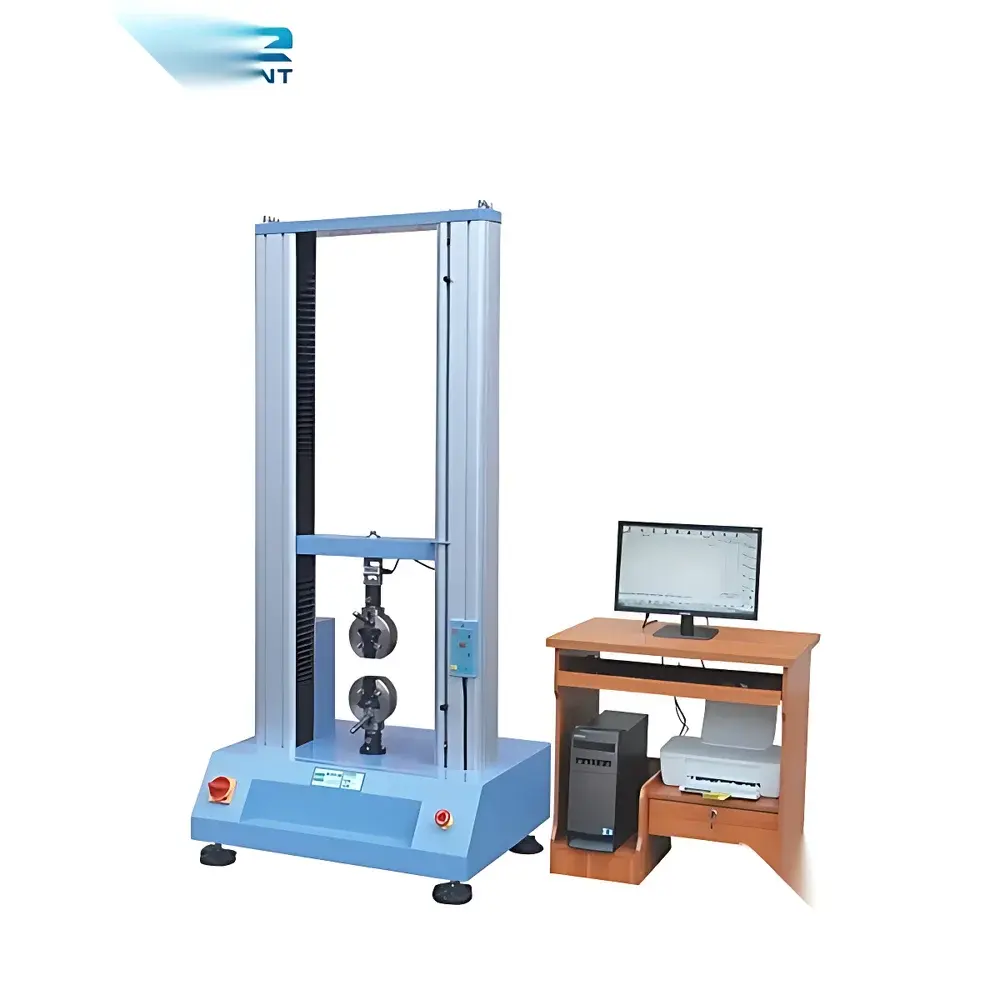
OK-NL-50 Universal Tensile Testing Machine
| Brand | OEM |
|---|---|
| Origin | Imported |
| Manufacturer Type | Authorized Distributor |
| Model | OK-NL-50 |
| Load Capacity | 50 kgf (490 N) |
| Force Resolution | 1/100,000 FS (1/250,000 FS for ≤1 kN models) |
| Force Accuracy | ≤0.5% FS (≤0.25% FS for ≤1 kN models) |
| Crosshead Travel | 1000 mm (excl. grips) |
| Test Speed Range | 5–300 mm/min (software-controlled, stepless) |
| Drive System | Panasonic AC servo motor + servo driver |
| Position Feedback | 2500-pulse/rev encoder |
| Load Cell | High-precision explosion-proof strain-gauge transducer with auto-thermal compensation, zero drift <0.03% FS, repeatability ±0.03% FS, overload capacity 150% FS |
| Transmission | Precision ground ball screw + Liming reducer + synchronous belt |
| Guideway | High-precision linear guide rails |
| Data Acquisition | PC-based real-time control & analysis software with curve plotting, peak hold, break-stop, overload protection, unit switching (g/kg/N/kN/lb), report generation & export (PDF/Excel) |
| Compliance Standards | ASTM D412, D3574, D5035, D2061, ISO 37, ISO 34-1, ISO 1798, BS EN ISO 1421, GB/T 16491, GB/T 1040, GB/T 2792, GB/T 3923.1, etc. |
| Dimensions (L×W×H) | 985 × 510 × 1600 mm |
| Power Supply | 220 V, 50/60 Hz |
Overview
The OK-NL-50 Universal Tensile Testing Machine is an electromechanical force-testing system engineered for precision mechanical property characterization of polymeric films, elastomers, textiles, adhesives, composites, and thin metallic foils in quality control and R&D laboratories. It operates on the principle of controlled uniaxial tension: a servo-driven crosshead applies calibrated tensile load to a specimen clamped between upper and lower grips, while a high-stability load cell continuously measures force response and an optical encoder tracks displacement with sub-micron positional fidelity. The system adheres to fundamental metrological requirements defined in ISO 7500-1 (Class 1) and ASTM E4 for verification of force-measuring systems, ensuring traceable, repeatable, and auditable results suitable for GLP-compliant documentation and regulatory submissions.
Key Features
- High-fidelity force measurement using a temperature-compensated, explosion-rated strain-gauge load cell with ≤0.03% FS repeatability and 150% transient overload tolerance—critical for capturing brittle fracture events without sensor saturation or damage.
- Precision motion control architecture: Panasonic AC servo motor coupled with a ground ball screw, low-backlash Liming gearbox, and synchronous belt drive delivers smooth, low-noise actuation across the full 5–300 mm/min speed range, minimizing inertial artifacts during dynamic testing.
- Real-time data acquisition at up to 10 kHz sampling rate, with 24-bit A/D resolution and 1/100,000 full-scale force resolution (upgraded to 1/250,000 for models ≤1 kN), enabling accurate detection of yield points, modulus transitions, and micro-fracture initiation.
- Integrated hardware safety interlocks: mechanical travel limit switches, software-defined overload thresholds, and automatic break-stop functionality that halts crosshead motion within 10 ms of specimen rupture—protecting both operator and instrumentation integrity.
- Full PC-based control interface supporting customizable test methods, multi-curve overlay, statistical batch reporting (mean, SD, CV%), and direct export to PDF, CSV, or Excel formats compliant with internal QA workflows and external audit requirements.
Sample Compatibility & Compliance
The OK-NL-50 accommodates specimens up to 1000 mm in gauge length and supports interchangeable grip configurations—including pneumatic, wedge, roller, and custom fixtures—for flat strips, cords, braids, and small-diameter wires. Its design conforms to mechanical testing standards widely adopted across global manufacturing sectors: ASTM D412 (rubber vulcanizates), ISO 37 (tensile properties of rubber), ISO 1798 (flexible cellular polymeric materials), GB/T 1040 (plastics tensile testing), and BS EN ISO 1421 (coated fabrics). All calibration certificates are issued with uncertainty statements traceable to NIM (China) or NIST-equivalent national standards. The system supports audit-ready operation under FDA 21 CFR Part 11 when paired with validated software versions featuring electronic signatures, audit trails, and role-based access control.
Software & Data Management
The embedded Windows-native application provides ISO/IEC 17025-aligned test method templates for tensile strength, elongation at break, Young’s modulus, yield stress, and tear resistance. Each test session automatically logs timestamped metadata—including operator ID, environmental conditions (if external sensors are connected), calibration status, and instrument firmware version—enabling full chain-of-custody reconstruction. Raw force-displacement data is stored in binary .tdms format (NI-compatible) and convertible to ASCII for third-party analysis (e.g., MATLAB, Python SciPy). Report templates comply with ISO 14727 and ASTM E1447 for technical documentation, including graphical curve annotations, statistical summaries, and pass/fail flags against user-defined specification limits.
Applications
This system is routinely deployed for routine QC verification of incoming raw materials (e.g., PET film tensile strength per ASTM D882), formulation development of pressure-sensitive adhesives (peel and shear per PSTC-1 and ASTM D3330), durability assessment of medical device tubing (burst and tensile per ISO 10993-12), and mechanical validation of packaging substrates (seal strength per ASTM F88). Its 50 kgf capacity makes it especially suited for lightweight, high-elongation materials where sensitivity to low-force deviations (<0.1 N) is essential—such as hydrogel membranes, electrospun nanofibers, and ultra-thin barrier coatings.
FAQ
What is the maximum allowable specimen thickness for standard wedge grips?
Standard pneumatic wedge grips accommodate specimens up to 10 mm thick; custom grips for thicker or irregular profiles are available upon request.
Does the system support cyclic loading or fatigue testing?
The base OK-NL-50 configuration is optimized for static and quasi-static tensile tests; optional add-ons include closed-loop strain control and waveform generation modules for controlled ramp-hold or sinusoidal cycling protocols.
Is calibration certification included with shipment?
Yes—a factory calibration certificate traceable to national standards is provided, along with a 12-month recalibration reminder service and optional ISO/IEC 17025-accredited field calibration.
Can test data be integrated into a LIMS environment?
Via OPC UA or REST API interfaces (available in v3.2+ firmware), raw and processed data can be pushed directly to laboratory information management systems meeting ASTM E1578 and ISO/IEC 17025 interoperability guidelines.
What maintenance intervals are recommended for long-term accuracy?
Ball screw lubrication and encoder alignment verification every 6 months; annual load cell linearity verification and full mechanical inspection per manufacturer’s service manual.



