
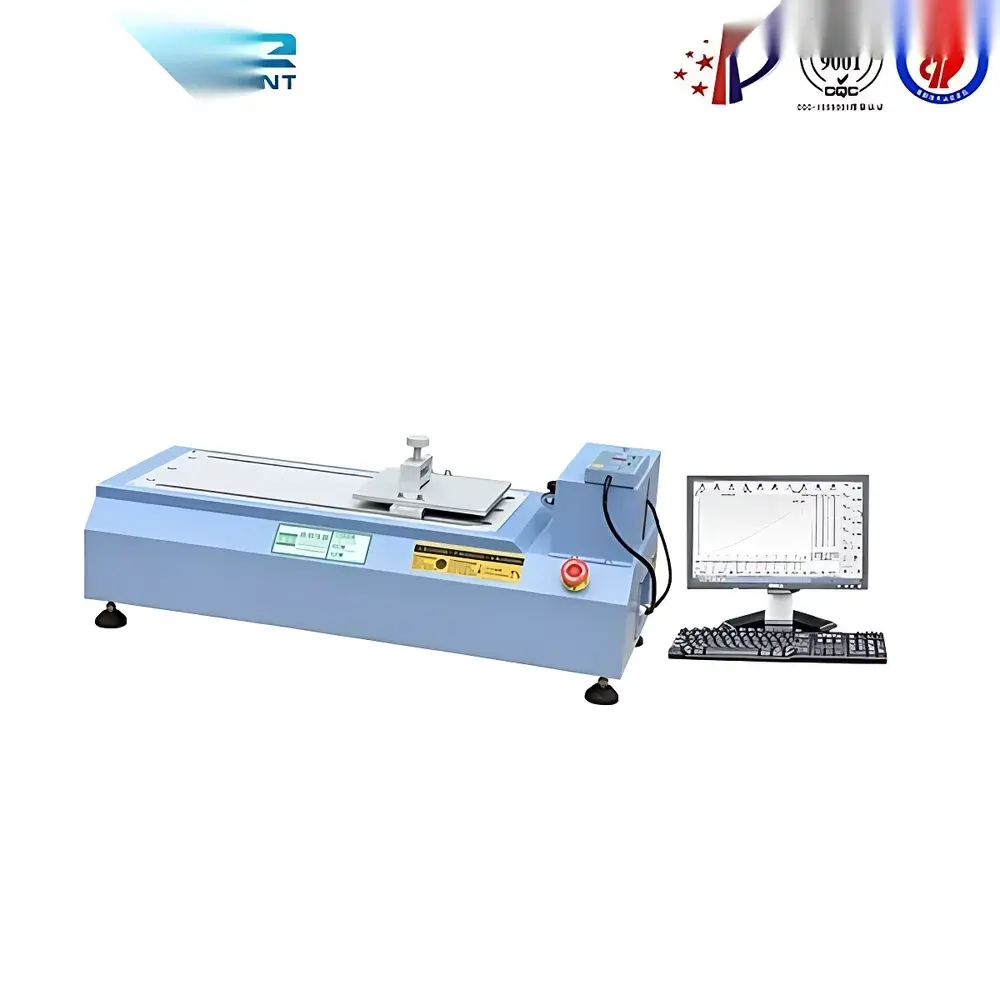
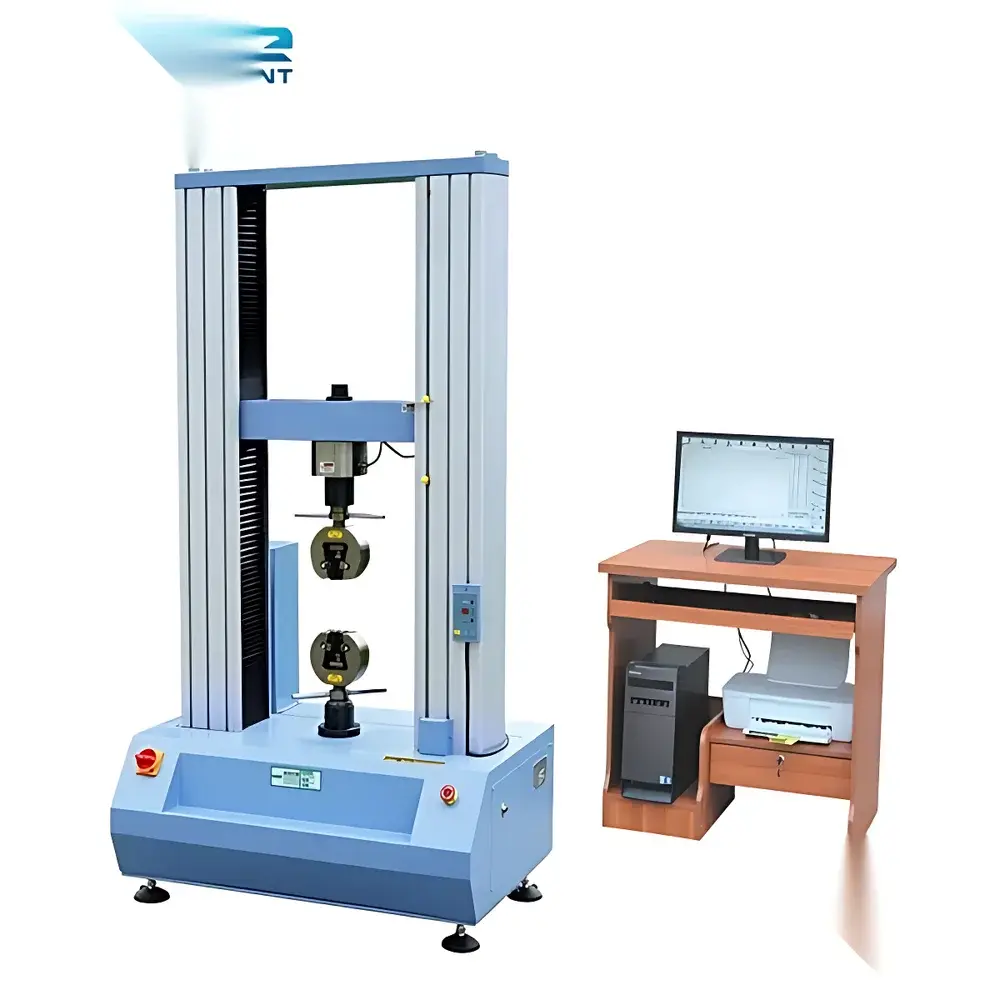
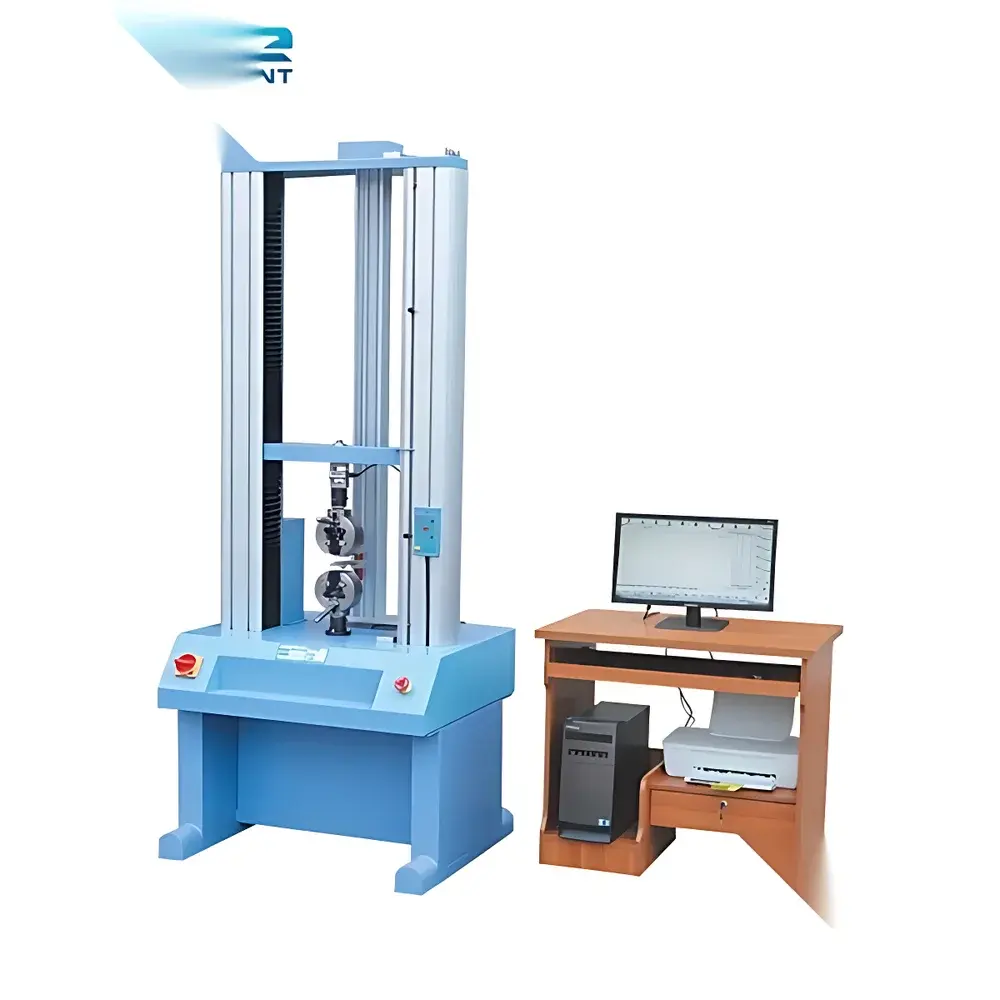
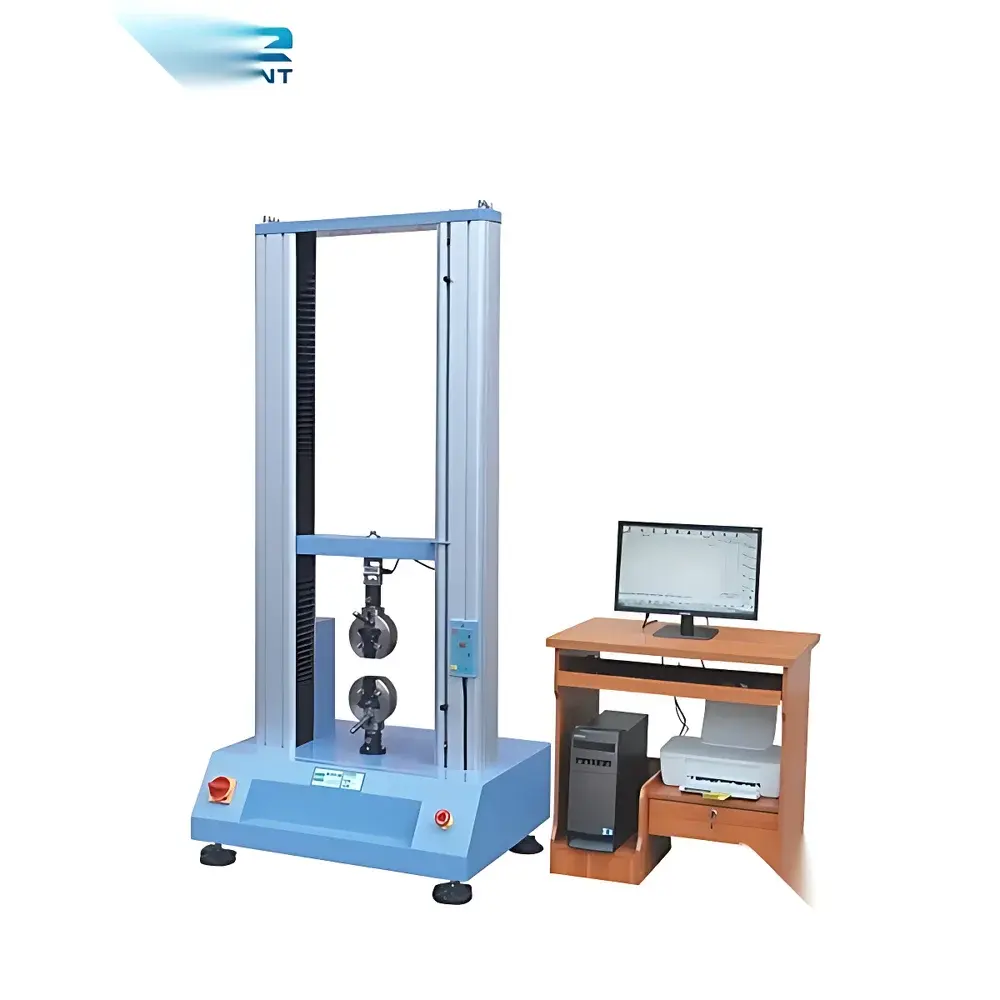
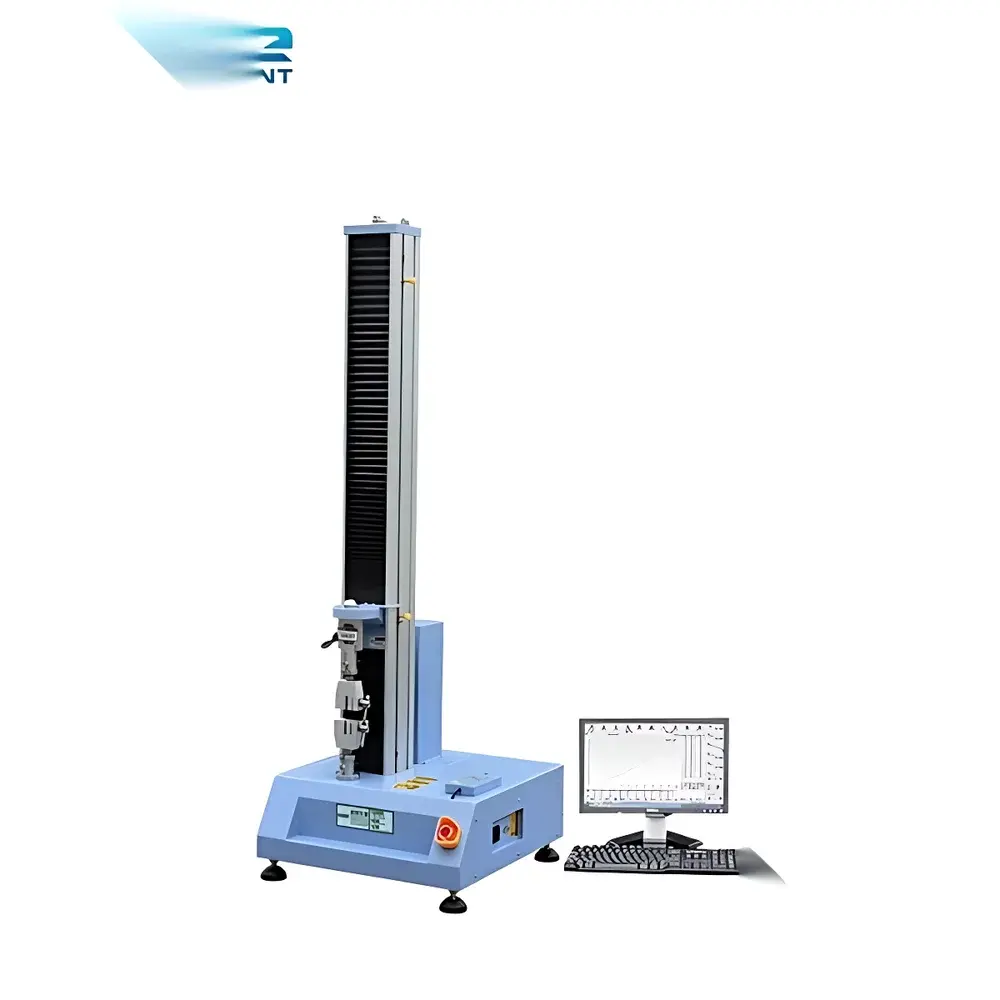
OK-NL Series Single-Column Tensile Testing Machine
| Brand | OK-NL |
|---|---|
| Capacity Options | 50 / 100 / 200 / 500 / 1000 kg |
| Load Resolution | 1/100,000 (1/250,000 for ≤1 ton) |
| Load Accuracy | ≤0.5% (≤0.25% for ≤1 ton) |
| Stroke | 1000 mm (excluding fixtures) |
| Test Speed Range | 5–300 mm/min (software-controlled) |
| Drive System | Panasonic servo motor + servo driver |
| Transmission | Precision ball screw + Liming reducer + synchronous belt |
| Dimensions (L×W×H) | 985 × 510 × 1600 mm |
| Power Supply | 220 V, 50/60 Hz |
| Unit Selection | g, kg, N, kN, lb (metric, imperial, SI selectable) |
| Display & Control | Full PC-based control with customizable reporting engine |
| Fixture Included | Standard tensile grip set |
| Compliance | GB/T 16491, GB/T 1040, ISO 37, ASTM D638, ASTM D882, ASTM D3078, EN ISO 1798, JIS K6854, BS EN 1979 |
Overview
The OK-NL Series Single-Column Tensile Testing Machine is an electromechanical universal testing system engineered for precision mechanical property evaluation of low-to-medium force-range specimens. Based on the fundamental principles of uniaxial force application and displacement measurement, it employs a high-stiffness single-column frame architecture combined with a closed-loop servo-controlled drive system to deliver repeatable, traceable, and standards-compliant mechanical testing across tensile, compression, bending, peel, shear, and elongation modes. Designed for laboratories requiring flexibility without sacrificing structural integrity, this machine supports standardized test protocols defined by ISO, ASTM, EN, JIS, GB/T, and other internationally recognized materials testing frameworks. Its modular load cell integration, programmable speed control, and real-time data acquisition enable consistent execution of method-driven workflows essential for QC/QA, R&D, and regulatory submission environments.
Key Features
- Single-column rigid frame optimized for stability during low-force (<10 kN) mechanical testing, minimizing lateral deflection and enhancing axial alignment fidelity.
- Panasonic AC servo motor coupled with a high-precision ball screw transmission system ensures smooth, noise-free motion and exceptional positional repeatability over full stroke (1000 mm).
- Load cell resolution up to 1 part in 250,000 (for models ≤1 ton capacity), enabling detection of sub-gram force increments critical for thin films, elastomers, and biomedical polymers.
- Software-defined test speed range from 5 to 300 mm/min—adjustable in 0.1 mm/min increments—supports both quasi-static and accelerated mechanical characterization per ASTM D882 or ISO 527-3.
- Multi-unit display interface (g, kg, N, kN, lb) with automatic unit conversion and SI/metric/imperial switching facilitates global collaboration and report harmonization.
- PC-based control platform with customizable report generation engine, supporting PDF, Excel, and CSV export; audit trail functionality compatible with GLP/GMP documentation requirements.
- Integrated safety interlocks, emergency stop circuitry, and overload protection conform to IEC 61000-6-2 and ISO 12100 machinery safety standards.
Sample Compatibility & Compliance
The OK-NL Series accommodates a broad spectrum of specimen geometries and material classes—including polymeric films, elastomeric strips, textile yarns, metallic foils, composite laminates, paperboard, adhesives, and biomedical hydrogels—through interchangeable fixture configurations. Standard tensile grips are supplied, while optional accessories include pneumatic clamps, peel fixtures (90°/180°), shear plates, compression platens, and custom jaw inserts. All mechanical tests comply with mandatory national and international standards including GB/T 1040 (plastics), GB/T 3923.1 (textiles), ISO 37 (vulcanized rubber), ASTM D638 (tensile properties of plastics), ASTM D882 (thin plastic sheeting), EN ISO 1798 (flexible cellular polymeric materials), and JIS K6854 (adhesive strength). The system’s calibration traceability aligns with ISO/IEC 17025-accredited reference standards, and its operational parameters satisfy FDA 21 CFR Part 11 data integrity criteria when deployed with validated software configurations.
Software & Data Management
The embedded Windows-based control software provides intuitive test method configuration, real-time curve visualization (load vs. displacement, stress vs. strain), and automated calculation of key mechanical indices: ultimate tensile strength (UTS), yield point, modulus (secant/tangent), elongation at break, and energy absorption. Raw data files are stored in binary format with embedded metadata (operator ID, timestamp, environmental conditions, calibration status). Export functions support statistical analysis-ready formats (CSV, XLSX) and regulatory-compliant PDF reports featuring digital signatures, version control, and revision history. Optional software modules extend functionality to include multi-step cyclic testing, creep/relaxation profiling, and pass/fail threshold logic for automated go/no-go decisions in production line environments.
Applications
- Quality assurance of polymer films and packaging materials per ASTM D882 and GB/T 1040.3.
- Mechanical validation of medical device components (e.g., suture tensile strength, catheter burst pressure, wound dressing adhesion).
- Characterization of fiber-reinforced composites under uniaxial loading per ISO 527-5.
- Adhesive bond strength assessment using T-peel, 90° peel, and lap shear configurations compliant with ASTM D3330 and ISO 8510-2.
- Testing of elastomeric seals, gaskets, and O-rings for elongation recovery and permanent set per ASTM D412.
- Validation of automotive interior trim materials against OEM-specific durability specifications (e.g., Ford WSS-M99P1111-A, GMW14872).
- Educational use in materials science curricula for hands-on instruction in Hooke’s law, stress-strain behavior, and failure mode analysis.
FAQ
What load capacities are available for the OK-NL Series?
The OK-NL Series offers five standard load cell options: 50 kg, 100 kg, 200 kg, 500 kg, and 1000 kg. Selection should follow the 3×–10× rule relative to expected peak load to ensure optimal signal-to-noise ratio and measurement accuracy.
Is the system compliant with FDA 21 CFR Part 11 requirements?
Yes—when configured with validated software, electronic signature capability, and audit trail logging enabled, the system meets core data integrity provisions of 21 CFR Part 11 for regulated pharmaceutical and medical device testing environments.
Can I integrate third-party extensometers or environmental chambers?
The system features analog and digital I/O ports supporting synchronization with contact/non-contact extensometers (e.g., clip-on, video-based) and chamber controllers for temperature/humidity-conditioned testing per ASTM D618.
Does the machine support automated test sequences?
Yes—the software includes scriptable test routines allowing batch execution of multiple specimen types with variable speed profiles, dwell periods, and pass/fail logic without manual intervention.
What maintenance is required to sustain metrological performance?
Annual verification against certified reference loads and periodic inspection of ball screw lubrication, belt tension, and grip jaw wear are recommended. Calibration certificates traceable to NIM or equivalent national metrology institutes are provided with each instrument shipment.



