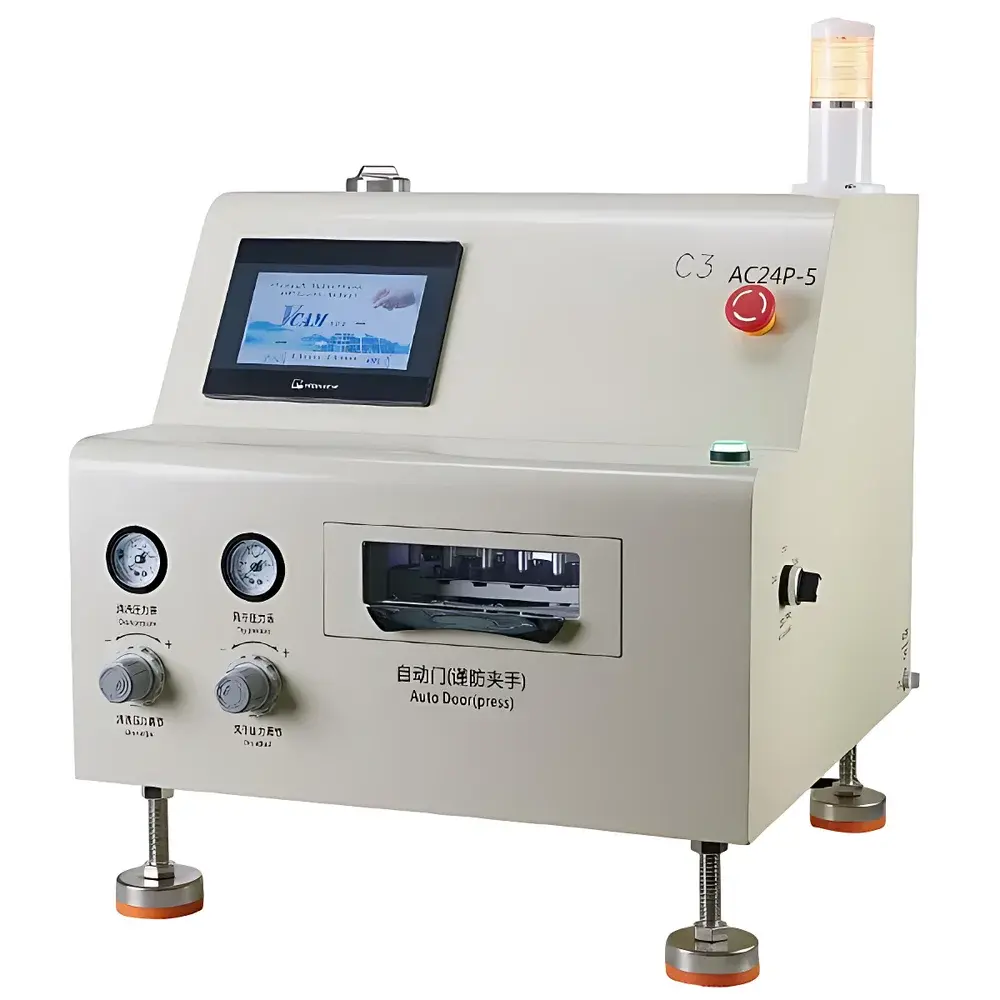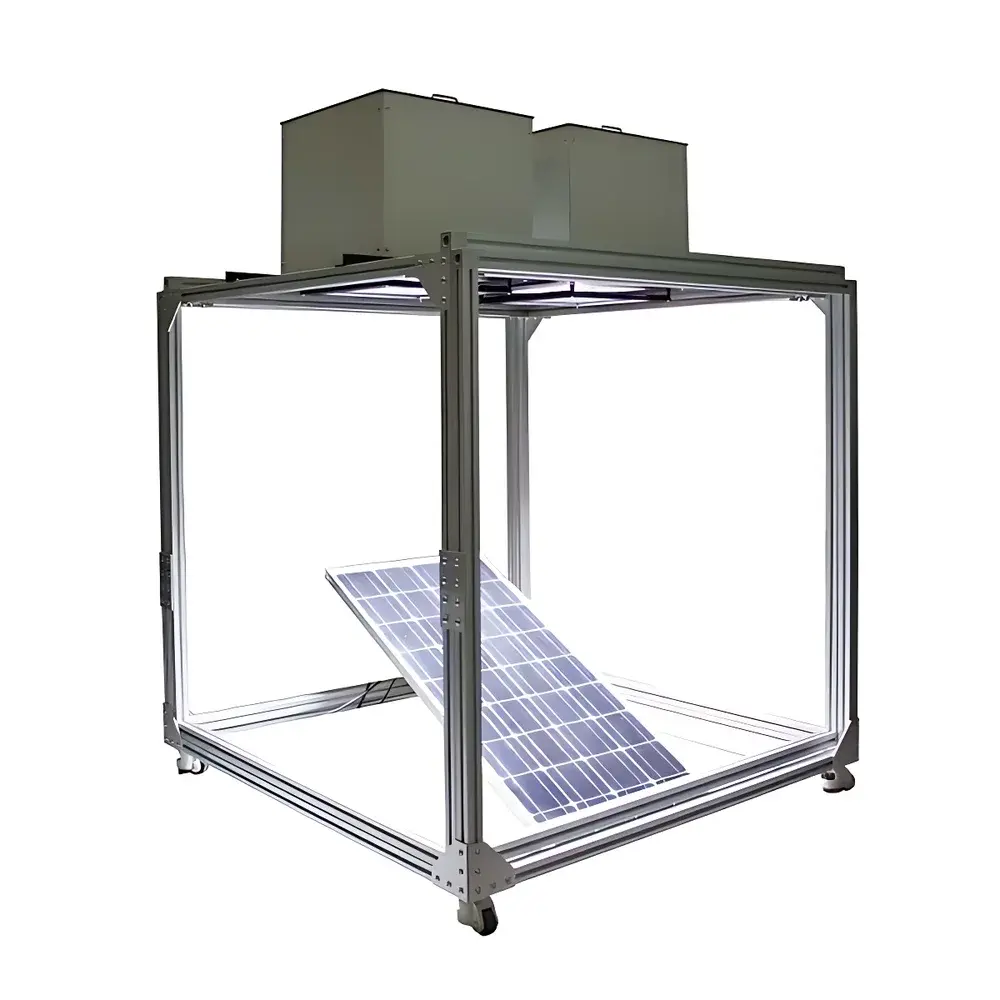
Nmerry Photovoltaic Testing Equipment Solar Simulator
| Brand | Nmerry |
|---|---|
| Origin | Beijing, China |
| Manufacturer Type | Manufacturer |
| Origin Category | Domestic |
| Model | Photovoltaic Testing Equipment |
| Price Range | USD 42,000 – 70,000 |
| Operating Mode | Steady-State |
Overview
The Nmerry Photovoltaic Testing Equipment Solar Simulator is an engineered optical system designed to replicate extraterrestrial (AM0) and terrestrial (AM1.5G) solar irradiance spectra under controlled laboratory conditions. Based on the principle of broadband spectral synthesis—typically employing xenon arc lamps coupled with precision optical filters and collimating optics—the simulator delivers spectrally matched, spatially uniform, and temporally stable illumination essential for accurate photovoltaic (PV) device characterization. Its core function is to enable standardized current–voltage (I–V) curve measurement, quantum efficiency analysis, and long-term stability assessment of solar cells and modules in compliance with international test standards including IEC 60904-9, ASTM E927-23, and JIS C 8912. With over 34 years of dedicated development in solar simulation technology, Nmerry’s systems support both ground-based PV R&D and space-grade qualification testing, providing traceable, repeatable irradiance conditions across diverse application environments.
Key Features
- Steady-state operation mode ensures continuous, non-pulsed illumination ideal for thermal equilibrium studies and real-time I–V sweep acquisition
- Configurable spectral output: standard AM1.5G (terrestrial) and AM0 (extraterrestrial) spectra achieved via calibrated air mass filters and spectral correction optics
- Optical class AAA per IEC 60904-9: spectral match ≤ ±12.5%, spatial non-uniformity ≤ ±2%, temporal instability ≤ ±0.5% over 10 minutes
- High-collimation option available with half-angle divergence ≤ 0.35°, enabling precise testing of concentrator photovoltaics (CPV) and optical concentrator components
- Vacuum-compatible mechanical design for integration into environmental chambers or space-simulation test benches
- Integrated active thermal management system supporting automatic temperature regulation and forced-air or liquid cooling interfaces
- Cleanroom-compatible housing with low-outgassing materials and ESD-safe construction for semiconductor-grade fabrication environments
Sample Compatibility & Compliance
The simulator accommodates a broad range of PV technologies, including crystalline silicon (mono- and multi-Si), thin-film devices (a-Si, CdTe, CIGS), multi-junction tandem cells, perovskite-based devices, and emerging organic photovoltaics (OPV). It supports module-level testing up to 2 m × 1.5 m active area configurations. All systems are designed and verified to meet IEC 61215, IEC 61646, and IEC 62108 requirements for PV component qualification. Spectral calibration is performed using NIST-traceable reference cells and double-monochromator spectroradiometers. For GMP/GLP-regulated environments, optional audit trails, electronic signatures, and 21 CFR Part 11–compliant software modules are available upon request.
Software & Data Management
Control and data acquisition are managed through Nmerry’s proprietary SolarSim Control Suite—a Windows-based platform supporting automated I–V sweeps, spectral irradiance logging, temperature synchronization, and real-time power point tracking (MPPT). The software exports data in IEEE 1547-compliant CSV and HDF5 formats, integrates with LabVIEW and Python APIs (via RESTful endpoints), and supports scheduled calibration reminders and instrument health monitoring. Raw spectral data files include metadata compliant with ISO/IEC 17025 documentation requirements. Optional cloud-based data archiving with role-based access control enables cross-site collaboration and regulatory submission readiness.
Applications
- Calibration and validation of reference solar cells and pyranometers
- Routine QA/QC testing of production-line PV cells and modules
- Accelerated lifetime testing under controlled irradiance and thermal cycling profiles
- Development and optimization of anti-reflective coatings and light-trapping structures
- Performance benchmarking of novel absorber materials under AM0 and AM1.5G conditions
- Thermal modeling and hot-spot analysis of CPV receivers under high-flux (>1000 suns) illumination
- Spacecraft power system qualification per ECSS-E-ST-20-07C and NASA GSFC-STD-7000A
FAQ
What spectral classes does this solar simulator meet?
It achieves Class AAA per IEC 60904-9 (2023 edition) for spectral match, spatial uniformity, and temporal stability.
Can the system be integrated into a vacuum chamber?
Yes—standard models feature flange-mounted optical ports and vacuum-rated mechanical interfaces compatible with ISO-KF and CF-150 vacuum standards.
Is AM0 spectrum generation supported without external filtering?
AM0 output is delivered natively via unfiltered xenon arc emission, with optional secondary monochromator-based spectral tailoring for specialized missions.
Does the system support automated I–V tracing with temperature control?
Yes—integrated thermocouple inputs and PID-controlled stage heaters/cooler plates synchronize irradiance delivery with sample temperature from −40 °C to +85 °C.
Are calibration certificates provided with traceability to NIST or PTB?
Each unit ships with a factory calibration report referencing NIST-traceable reference cells and spectroradiometric measurements performed in accordance with ISO/IEC 17025-accredited procedures.