
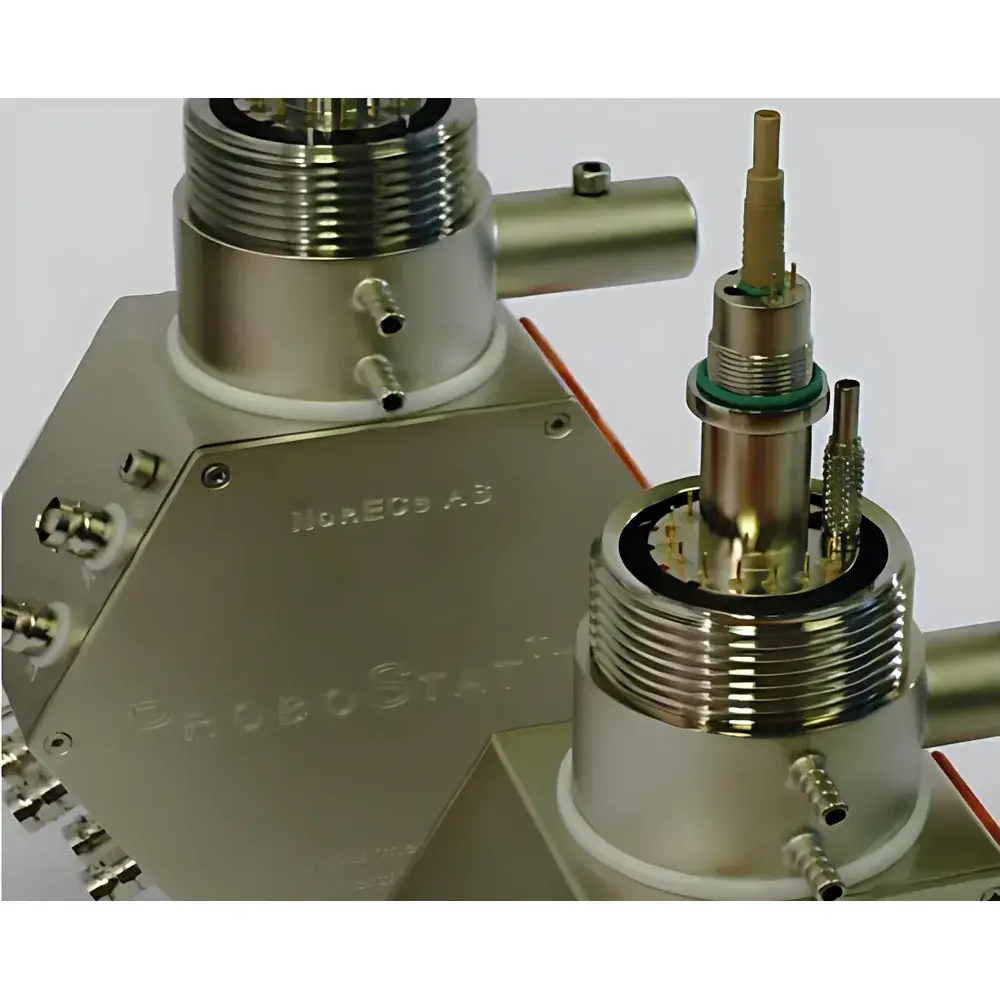
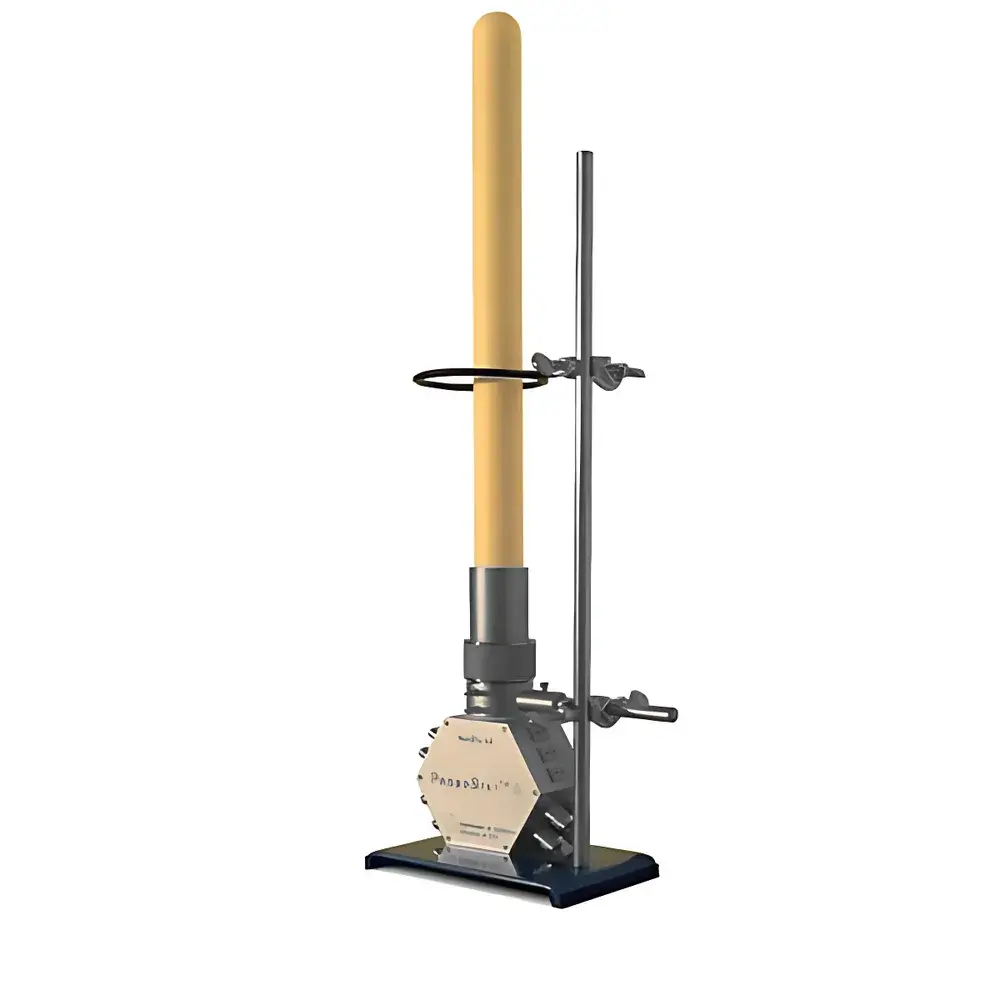
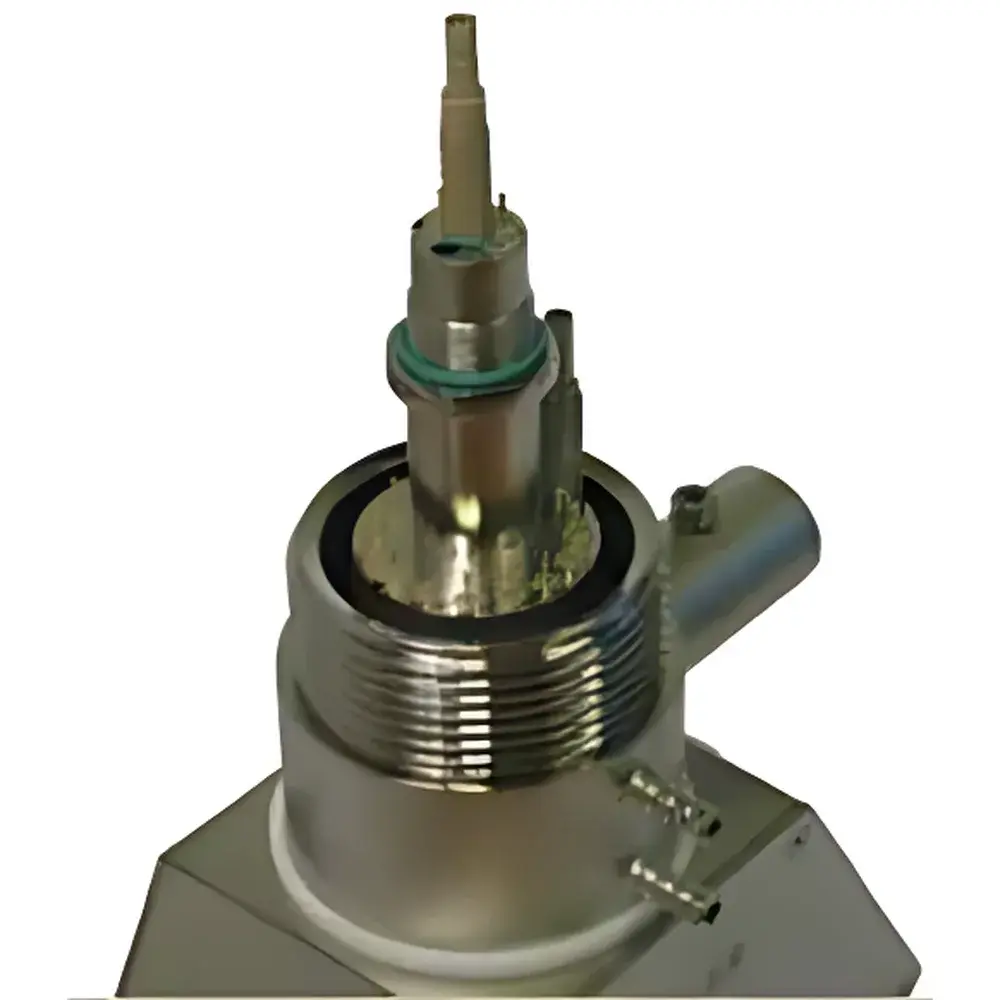
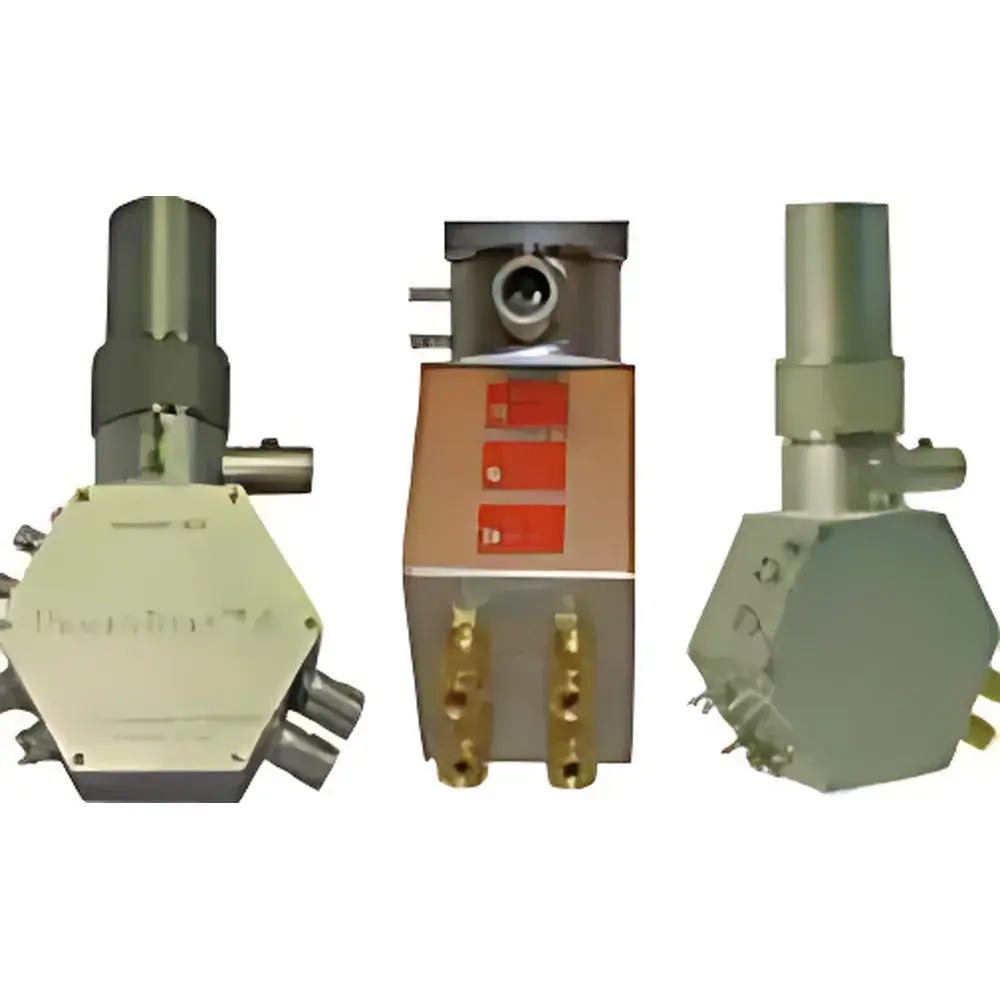
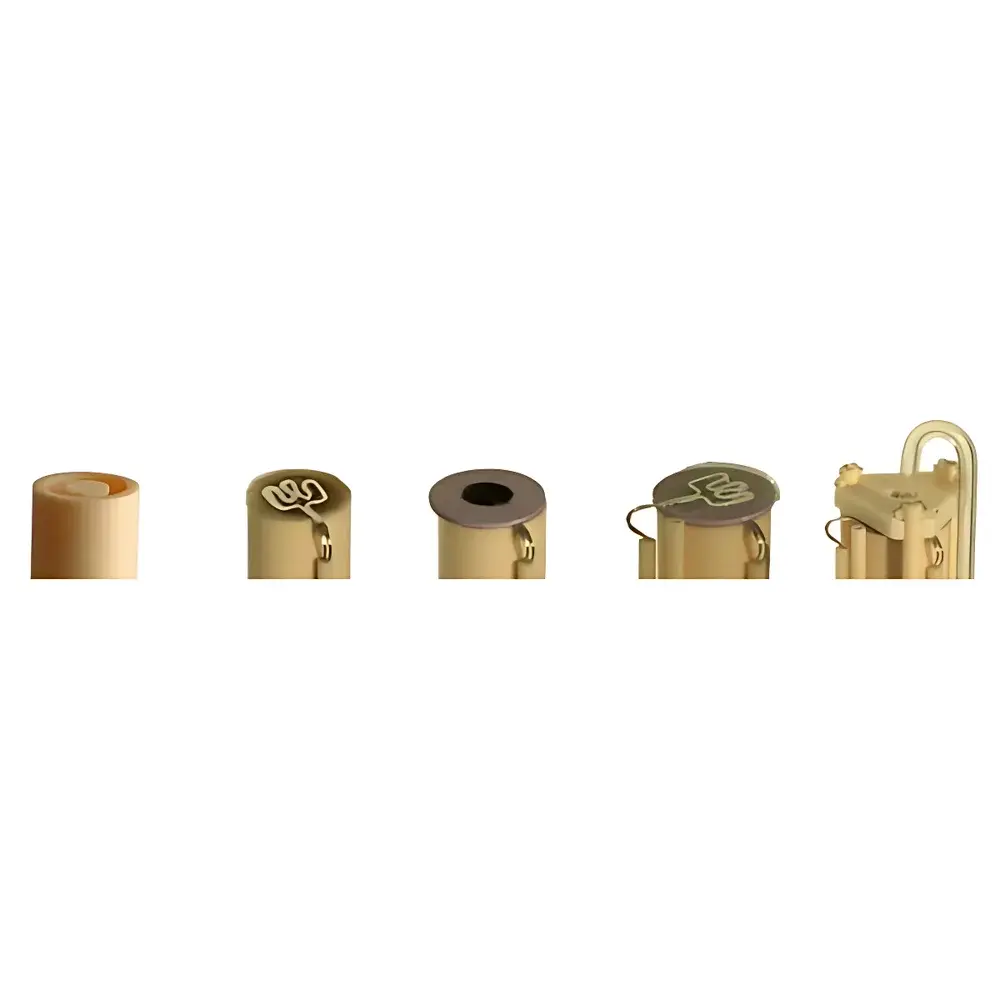
NorECs ProboStat High-Temperature Sample Holder for Controlled-Atmosphere Electrochemical Characterization
| Brand | NorECs |
|---|---|
| Origin | Norway |
| Model | ProboStat |
| Instrument Type | Electrochemical Sample Holder |
| Operating Temperature (Long-term) | Up to 1400 °C |
| Operating Temperature (Short-term) | Up to 1600 °C |
| Sample Geometry | Disc-shaped (Ø 10–24 mm, thickness 25–50 mm) or Rod-shaped (Ø up to 24 mm, length 30–1500 mm) |
| Electrode Configurations | 2-, 3-, or 4-electrode setups |
| Gas Environment | Oxidizing, inert, reducing, corrosive, humid/dry |
| pressure range | 10⁻² mbar to 1 bar (up to 25 bar in sealed steel tube) |
| Dual-chamber capability | Yes |
| Van der Pauw measurement | Supported (4-point) |
| Seebeck coefficient measurement | Supported (rod geometry) |
| Electrical measurements | DC conductivity, impedance spectroscopy, polarization, dielectric breakdown (HV version), concentration cell, transference number, permeability, fuel cell testing |
Overview
The NorECs ProboStat is a precision-engineered high-temperature sample holder designed for rigorous electrochemical and transport property characterization under precisely controlled thermal and gaseous environments. Built upon a robust ceramic–metal hybrid architecture, it enables reproducible electrical, thermoelectrical, and electrochemical measurements on solid-state materials—including oxides, ceramics, composites, and electrode assemblies—across temperatures from ambient to 1600 °C. Its core operational principle relies on thermally stable mechanical fixation, galvanically isolated electrode feedthroughs, and hermetic gas containment within a modular tubular assembly. Unlike generic furnace fixtures, the ProboStat integrates calibrated thermocouple positioning, defined current/voltage path geometry, and pressure-rated sealing—ensuring metrological traceability for measurements compliant with ASTM E1530 (thermal conductivity), ISO 13761 (electrical resistivity of ceramics), and IEC 60243 (dielectric strength testing).
Key Features
- Modular base unit system compatible with multiple configuration tiers—from Minimum (core mechanical support only) to Extensively Furnished (full 4-electrode van der Pauw, Seebeck, and dual-chamber capability)
- High-temperature stability: Alumina or mullite-based ceramic components rated for continuous operation at ≤1400 °C; short-term excursions to 1600 °C supported with appropriate sheath selection
- Gas environment flexibility: Sealed stainless-steel outer tube accommodates atmospheres ranging from high vacuum (10⁻² mbar) to 25 bar overpressure; configurable for single- or dual-gas chambers with independent inlet/outlet manifolds
- Electrode versatility: Standardized 2-, 3-, and 4-electrode configurations with gold-plated or Pt/Rh alloy contacts; HV variant supports up to 10 kV DC for dielectric polarization and breakdown studies
- Sample adaptability: Accommodates disc specimens (Ø 10–24 mm, 25–50 mm thick) and rod specimens (Ø up to 24 mm, length up to 1500 mm); custom mandrels and clamping inserts available for non-standard geometries
- Thermal metrology integration: Pre-drilled thermocouple ports aligned per ASTM E230/E230M for Type S or K thermocouples; optional embedded thin-film sensors for spatial temperature profiling
Sample Compatibility & Compliance
The ProboStat is routinely deployed in laboratories conducting GLP-compliant materials qualification for solid oxide fuel cells (SOFCs), oxygen separation membranes, battery electrode coatings, and thermoelectric generators. Its mechanical design conforms to ISO 80000-5 (quantities and units – thermodynamics) and supports measurement protocols referenced in USP <784> (electrochemical impedance spectroscopy of pharmaceutical excipients) and ASTM D257 (DC resistance of insulating materials). All metallic components are passivated stainless steel or Inconel; ceramic elements meet ISO 13384-1 for dimensional stability under thermal cycling. Gas-tight integrity is verified per ISO 15848-1 (leak testing of valve assemblies), ensuring environmental fidelity during long-duration kinetic studies.
Software & Data Management
While the ProboStat itself is a hardware platform—not an instrument with embedded firmware—it interfaces seamlessly with industry-standard potentiostats (e.g., BioLogic SP-300, Gamry Interface 5000E), impedance analyzers (Keysight E4990A), and data acquisition systems (NI PXIe-6363). Its standardized electrode pinout and gas port threading (¼″ NPT or M10×1) facilitate repeatable setup across instruments. When used in regulated environments, full audit trails—including temperature ramp logs, gas composition timestamps, and electrode connection verification—are maintained externally via LabArchives ELN or Thermo Fisher SampleManager LIMS, satisfying FDA 21 CFR Part 11 requirements for electronic records and signatures.
Applications
- High-temperature AC/DC conductivity and activation energy mapping of mixed ionic–electronic conductors (MIECs)
- Electrochemical impedance spectroscopy (EIS) of electrode/electrolyte interfaces under SOFC-relevant pO₂ gradients
- Seebeck coefficient and thermal conductivity determination for thermoelectric material screening (ASTM E1687)
- Concentration cell measurements for oxygen ion transference number evaluation (e.g., CeO₂-based electrolytes)
- Permeation studies of hydrogen or CO₂ through dense ceramic membranes using dual-chamber differential pressure control
- Dielectric aging and partial discharge analysis of high-voltage insulators (HV configuration, per IEC 60270)
- In situ redox cycling of battery cathode materials under controlled pO₂ and temperature ramps
FAQ
What temperature calibration standards are recommended for ProboStat use?
We recommend periodic verification using NIST-traceable Type S thermocouples calibrated against fixed points (e.g., Au, Ag, Cu freezing points) per ASTM E230. For critical applications, in situ calibration with reference materials (e.g., α-Al₂O₃ transition at 1050 °C) is advised.
Can the ProboStat be integrated into automated furnace systems?
Yes—its flange-mounted base unit features standardized M6 mounting holes and 30 mm center-to-center spacing, enabling direct integration with Carbolite Gero, Nabertherm, or Thermconcept vertical/horizontal tube furnaces equipped with programmable controllers.
Is vacuum compatibility validated beyond 10⁻² mbar?
The standard stainless-steel outer tube achieves ≤5×10⁻⁴ mbar with turbomolecular pumping; for ultra-high vacuum (UHV) applications (<10⁻⁶ mbar), optional all-metal (Cu–gasketed) seals and bake-out–rated ceramics are available upon request.
How is electrical isolation maintained at elevated temperatures?
All internal wiring uses mineral-insulated (MI) cable with MgO dielectric; feedthroughs employ graded ceramic–metal compression seals tested to ≥10¹² Ω insulation resistance at 1000 °C per IEC 60112.
Do you provide application-specific validation reports?
Upon request, NorECs supplies configuration-specific test reports—including thermal gradient maps, contact resistance baselines, and gas leak rate certifications—aligned with ISO/IEC 17025 accredited laboratory practices.
Related Products






