
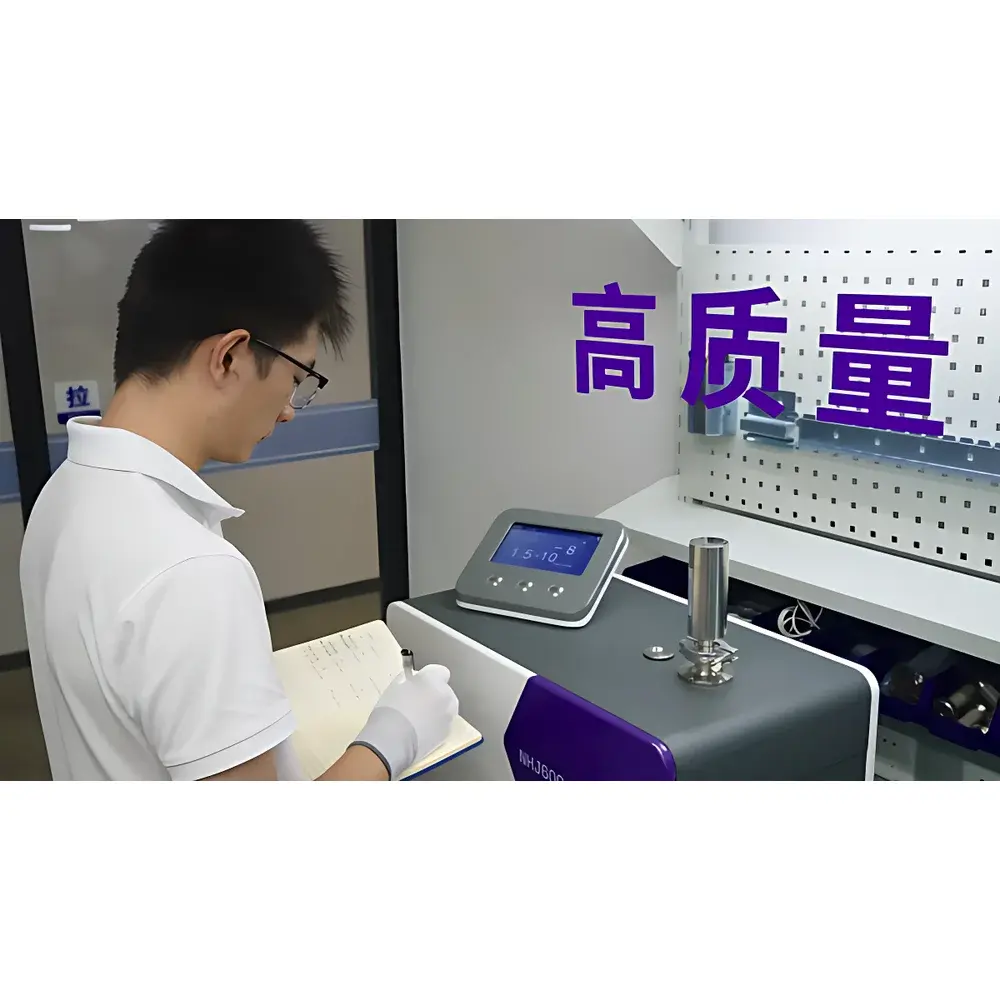
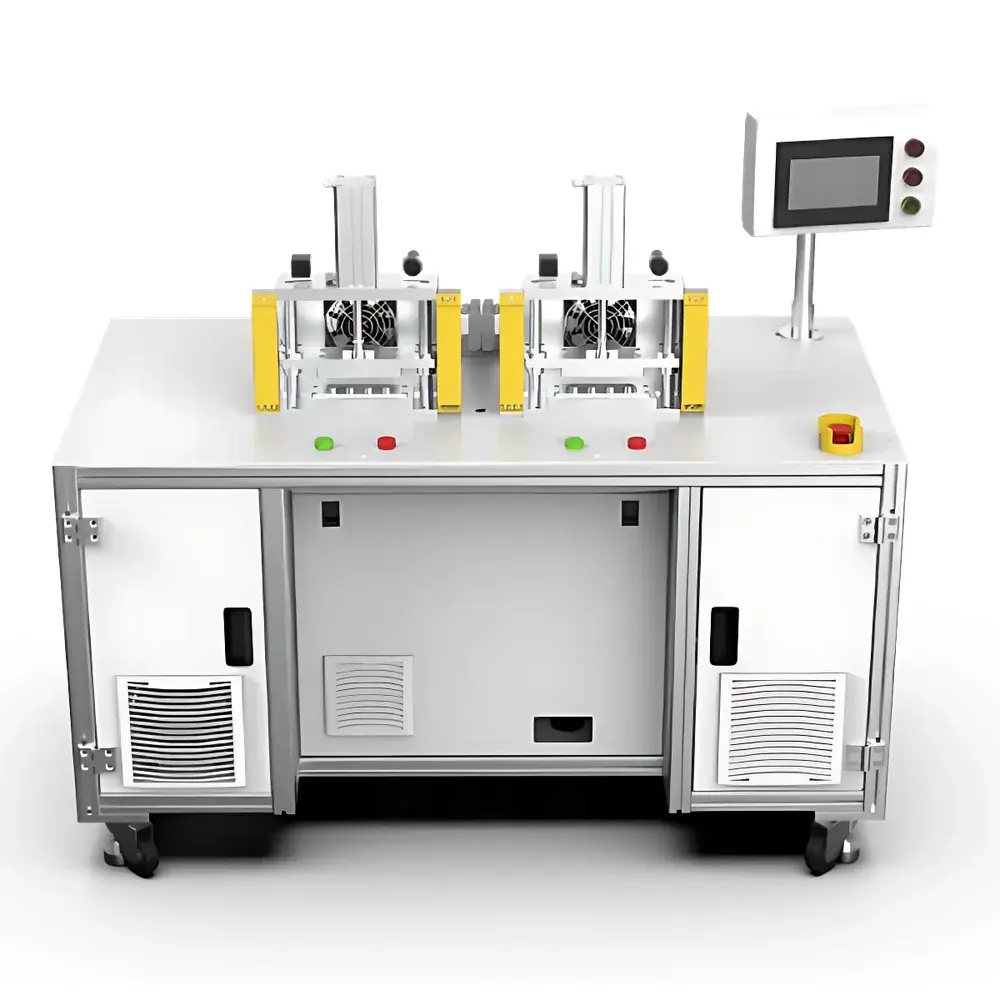
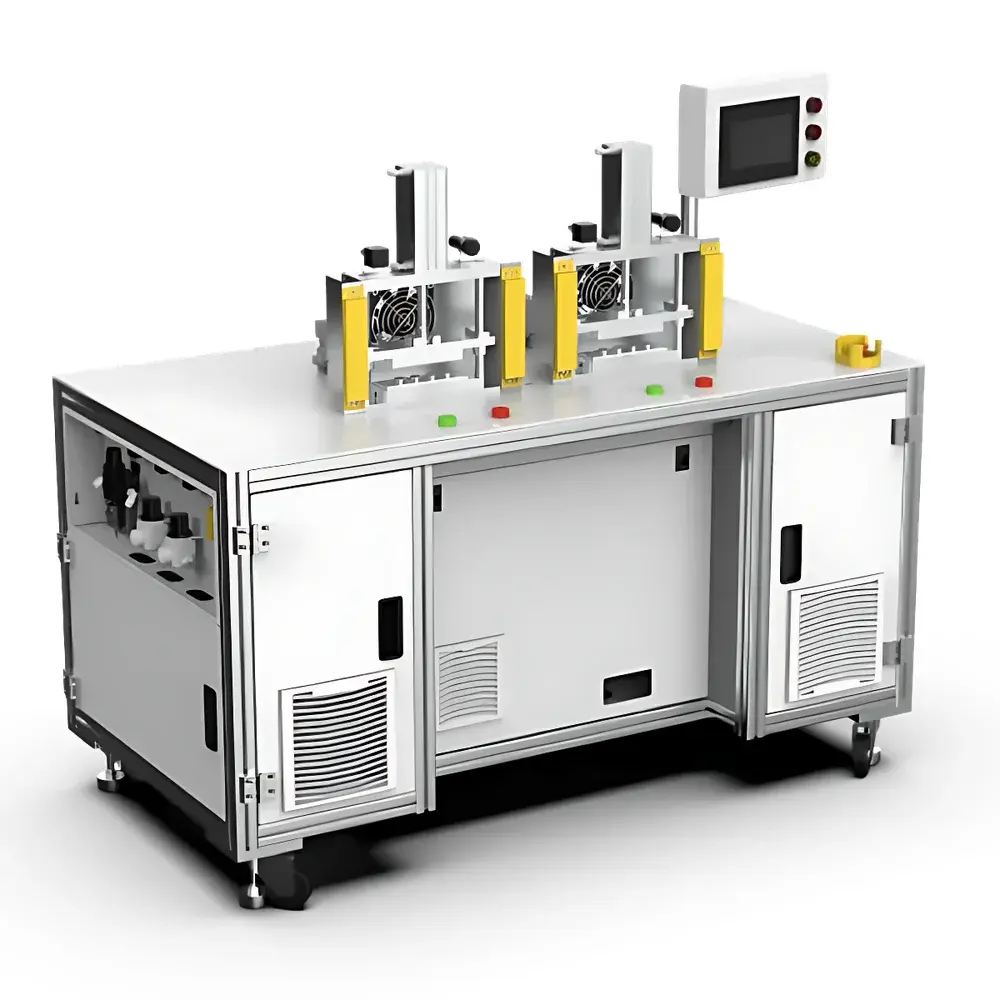
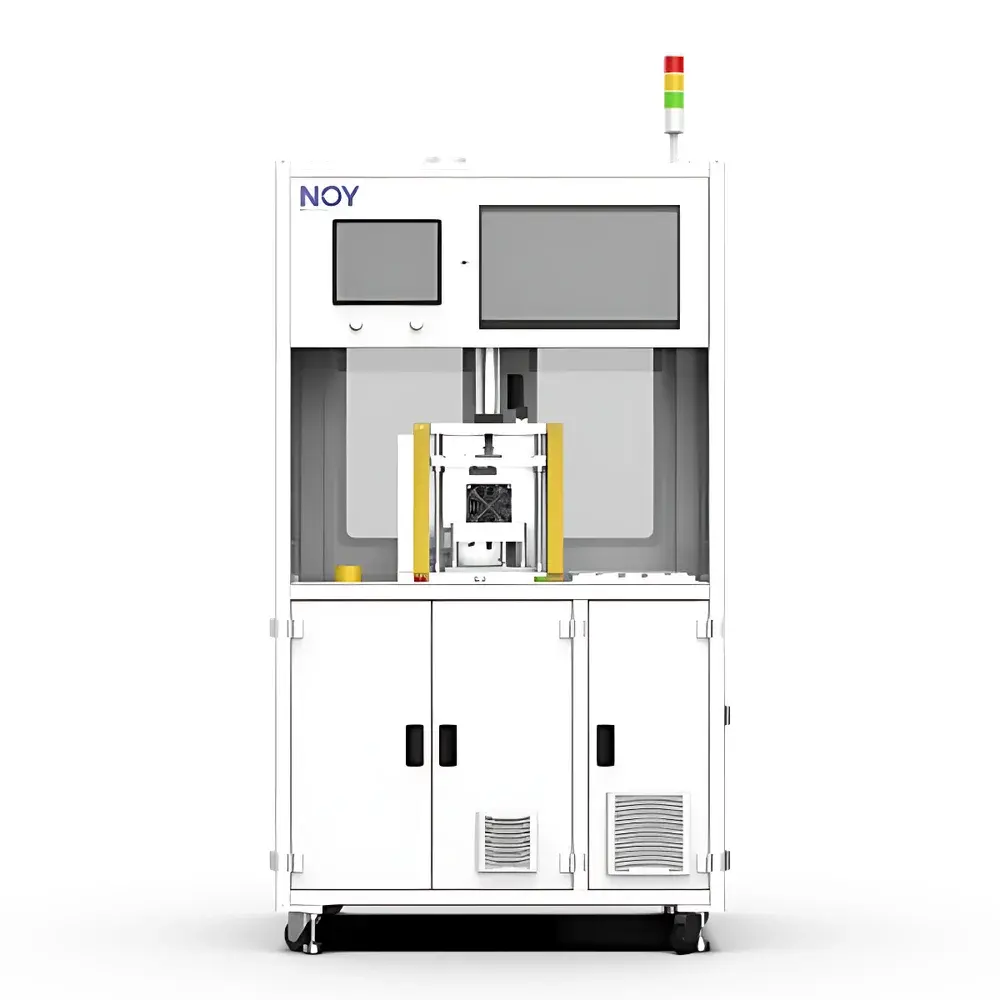
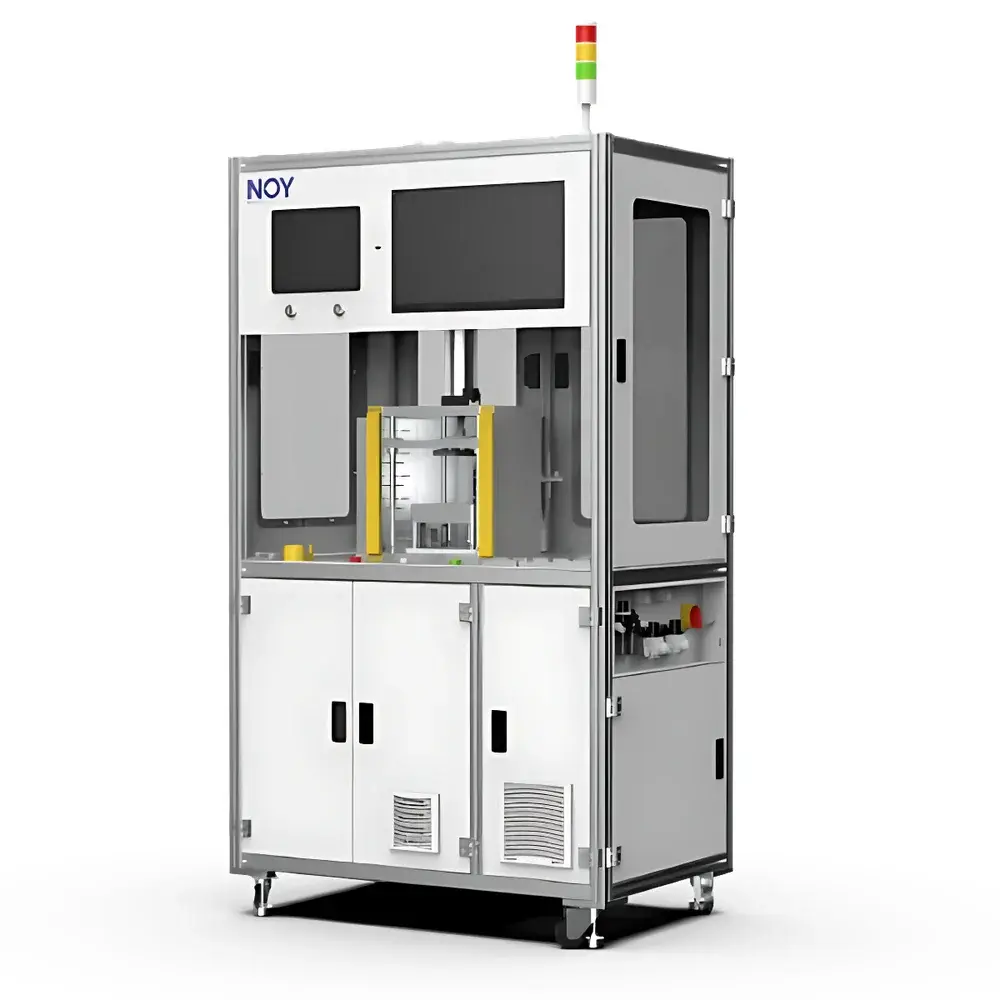
NOY NJT01 Helium Mass Spectrometer Leak Detection Workstation
| Brand | NOY |
|---|---|
| Origin | Anhui, China |
| Manufacturer Type | Direct Manufacturer |
| Instrument Type | Benchtop |
| Detection Method | Vacuum Mode |
| Minimum Detectable Leak Rate | 5×10⁻¹³ Pa·m³/s |
| Startup Time | ≤90 s |
| Response Time | ≤0.5 s |
| Maximum Pressure at Test Port | ≤2000 Pa |
| Leak Rate Display Range | 1×10⁻² to 1×10⁻⁹ Pa·m³/s |
Overview
The NOY NJT01 Helium Mass Spectrometer Leak Detection Workstation is a fully integrated, benchtop-scale vacuum-based leak detection system engineered for high-sensitivity quantitative leak assessment in industrial and R&D environments. It operates on the principle of magnetic sector helium mass spectrometry, where helium—introduced as a tracer gas—is ionized, accelerated, and separated by mass-to-charge ratio (m/z = 4) using a high-resolution mass filter. The resulting ion current is measured with a Faraday cup or secondary electron multiplier, enabling precise quantification of helium partial pressure proportional to leak rate. Designed for vacuum-mode operation (i.e., test object evacuated and externally probed with helium), the NJT01 delivers trace-level sensitivity down to 5×10⁻¹³ Pa·m³/s—meeting the stringent requirements of ultra-high vacuum (UHV) component validation, hermeticity testing of sealed devices, and qualification of critical assemblies in regulated manufacturing.
Key Features
- Benchtop architecture with compact footprint (≤0.8 m²), optimized for integration into QC laboratories, production line stations, and cleanroom-adjacent test bays.
- Automated workflow control: pre-programmed sequences support one-button initiation of evacuation, helium spray scanning, signal acquisition, and pass/fail evaluation—reducing operator dependency and inter-test variability.
- Rapid system readiness: cold-start initialization completes within ≤90 seconds; real-time response to helium ingress is ≤0.5 seconds, enabling dynamic scanning of complex geometries without signal lag.
- Robust vacuum interface: test port rated for continuous operation up to 2000 Pa, compatible with standard ISO-KF25/KF40 flanges and customizable adapters for non-standard fixtures.
- Dual-range analog/digital leak rate display (1×10⁻² to 1×10⁻⁹ Pa·m³/s), with logarithmic scaling and auto-ranging to maintain resolution across six decades of measurement.
- Internal calibration verification routine using certified reference leaks (optional NIST-traceable standards), supporting periodic performance verification per ISO 10867 and ASTM E493.
Sample Compatibility & Compliance
The NJT01 accommodates a broad spectrum of test objects—including battery enclosures, vacuum interrupters, MEMS packages, semiconductor process chambers, cryogenic valves, and medical laser housings—via modular fixturing and configurable vacuum manifolds. Its vacuum-mode configuration ensures compatibility with both rigid and semi-rigid components that tolerate internal evacuation. All electronic subsystems comply with IEC 61000-6-3 (EMI emission) and IEC 61000-6-2 (immunity) standards. The system supports audit-ready documentation generation aligned with GLP and GMP principles, including timestamped test logs, operator ID tagging, and configurable data retention policies. Optional 21 CFR Part 11-compliant software modules provide electronic signatures, audit trails, and role-based access control for regulated environments.
Software & Data Management
The embedded control software features a touchscreen HMI with multilingual UI (English, German, Japanese), intuitive workflow navigation, and real-time spectral monitoring. Raw ion current data and calculated leak rates are exported in CSV and XML formats compliant with ASTM E2655. Historical test records are stored locally with SHA-256 hashing for integrity verification. Network-enabled models support OPC UA server integration for MES/SCADA connectivity, enabling automated data routing to centralized quality databases (e.g., TrackWise, MasterControl). Firmware updates are delivered via secure HTTPS with cryptographic signature validation.
Applications
- Quality assurance of lithium-ion battery modules and pouch cells, verifying seal integrity prior to electrolyte filling and formation cycling.
- Leak validation of vacuum-insulated panels (VIPs) and refrigeration heat exchangers in HVAC and automotive thermal management systems.
- Hermeticity screening of RF/microwave packages, optical sensor housings, and inertial navigation units in aerospace and defense electronics.
- Final acceptance testing of diffusion pumps, ion gauges, and load-lock chambers used in thin-film deposition and etching tools.
- Root-cause analysis of vacuum degradation in particle accelerator beamline components and fusion research diagnostics.
FAQ
What vacuum pumping configuration is required to operate the NJT01?
A primary roughing pump (e.g., dual-stage rotary vane or dry scroll) and a high-vacuum pump (turbo-molecular or cryogenic) capable of achieving ≤1×10⁻³ Pa at the test port are mandatory. Pumping speed recommendations are provided in the technical manual based on chamber volume and desired evacuation time.
Can the NJT01 be used in sniffing (pressure-rise) mode?
No—the NJT01 is engineered exclusively for vacuum-mode detection. Sniffing-mode operation requires distinct ion source design and pressure regulation not implemented in this model.
Is helium consumption monitored or regulated during testing?
Yes—integrated mass flow control allows programmable helium pulse duration and flow rate (0.1–5 sccm), minimizing tracer gas usage while maintaining detection reliability.
How is system performance verified between calibrations?
Built-in diagnostic routines monitor filament emission stability, detector gain drift, and background helium baseline; results are logged and flagged if deviations exceed user-defined thresholds.
Does the NJT01 support external trigger inputs for synchronized testing?
Yes—TTL-compatible trigger I/O enables hardware synchronization with robotic spray nozzles, motion stages, or PLC-controlled test fixtures.





