
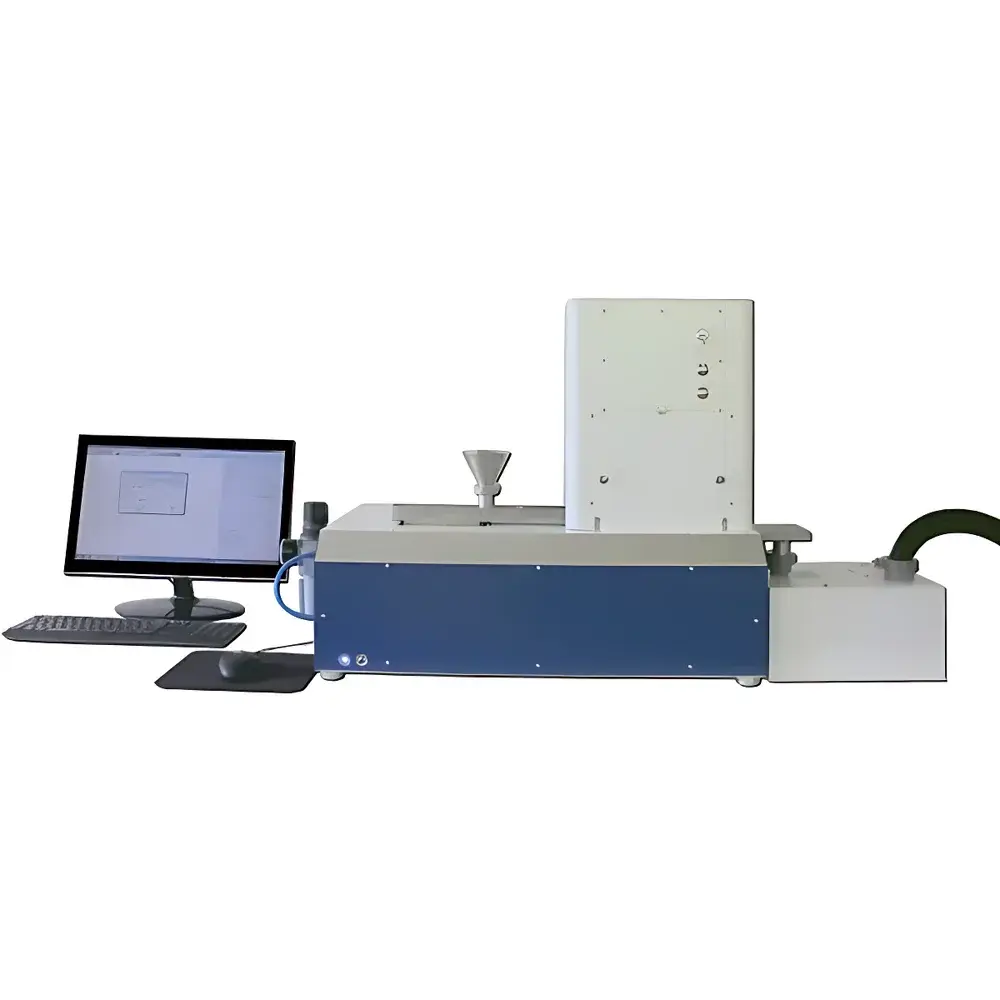
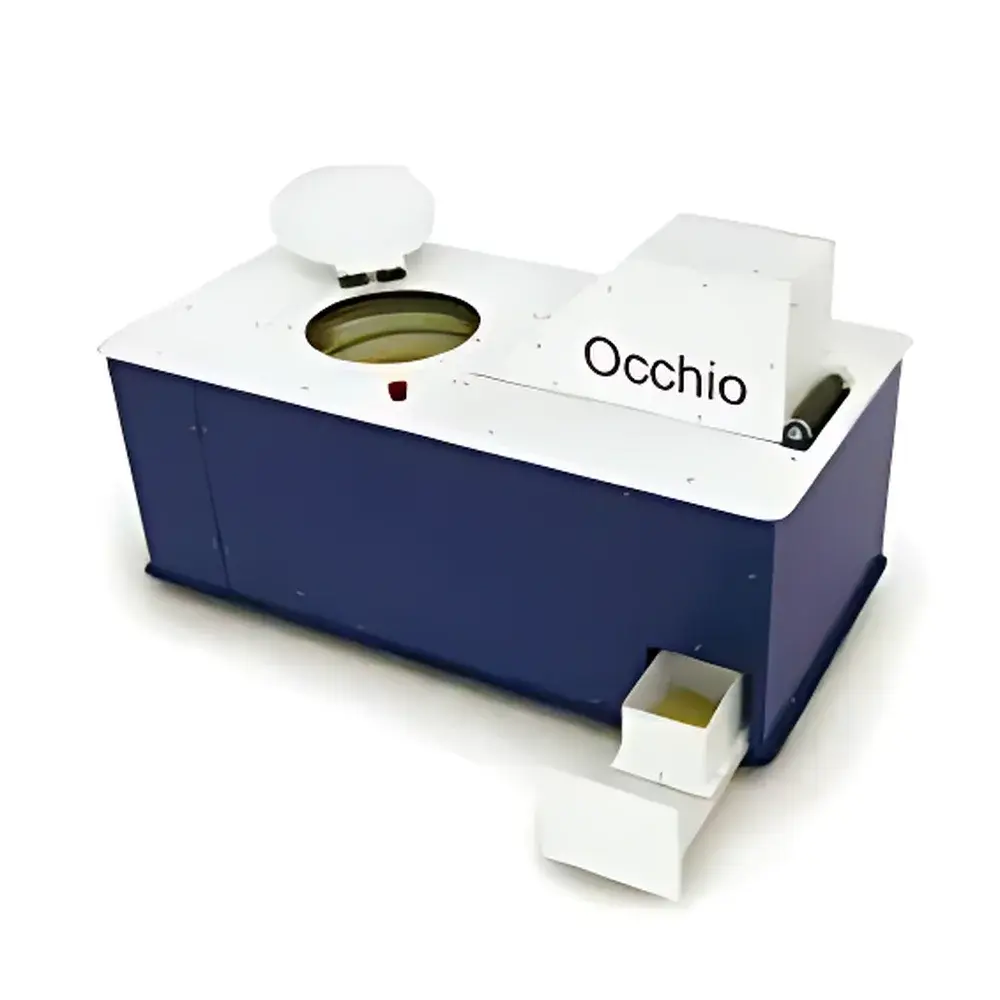
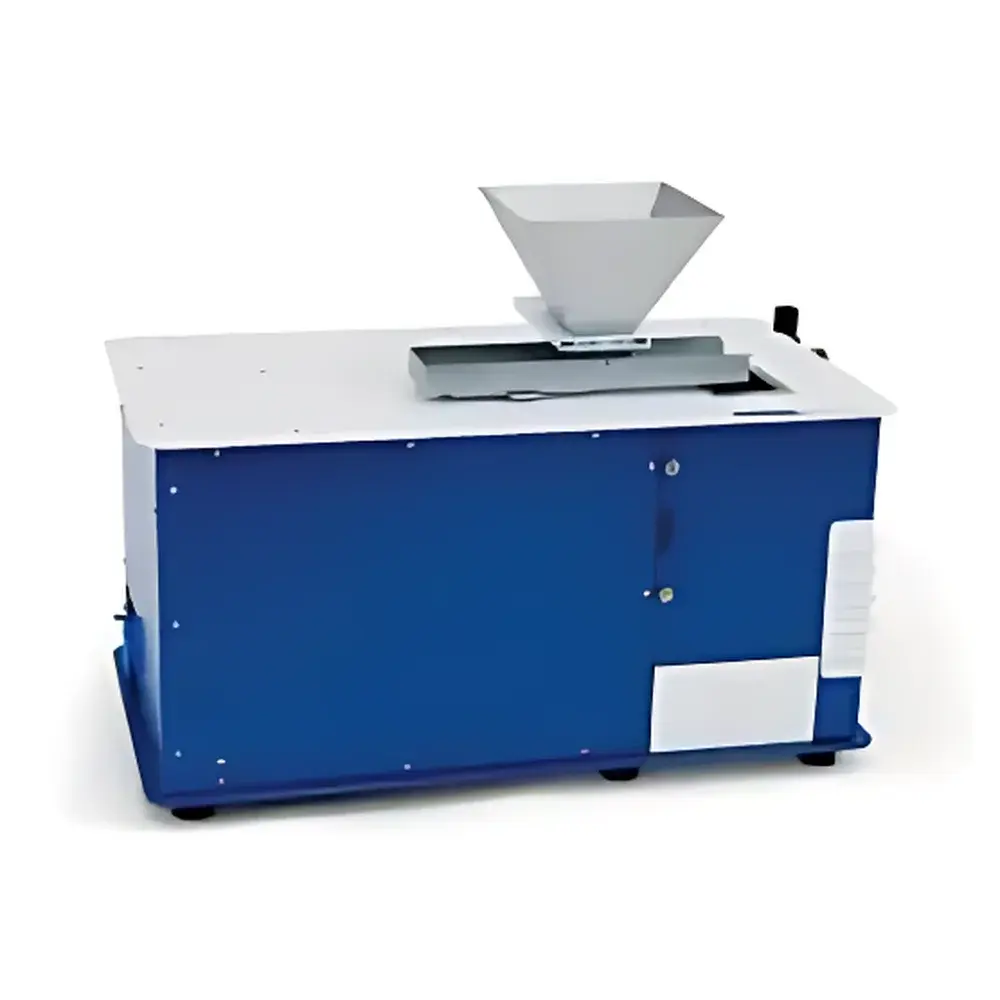
Occhio Zephyr LDA / Zephyr ESR / Morpho 3 Dynamic Particle Size and Shape Analyzer
| Brand | Occhio |
|---|---|
| Origin | Belgium |
| Model | Zephyr LDA / Zephyr ESR / Morpho 3 |
| Dry Measurement Range (Zephyr LDA) | 7 µm – 5000 µm |
| Wet Measurement Range (Zephyr LDA) | 1 µm – 3000 µm |
| Dry Measurement Range (Zephyr ESR) | 30 µm – 30 mm (extendable lower limit) |
| Dry Measurement Range (Morpho 3) | 500 µm – 10,000 µm |
| Analysis Time | 1–3 min per sample |
| Camera System | 5 MP CCD (Zephyr LDA/ESR), dual 1.3 MP (Morpho 3: 24-bit color front + 8-bit monochrome side) |
| Light Source | 440 nm blue LED (Zephyr LDA/ESR), dual diffuse white LED + monochromatic LED (Morpho 3) |
| Lens Type | Telecentric (Zephyr LDA), dual telecentric (Zephyr ESR), fixed-focus (Morpho 3) |
| Dispersion | Vibratory feed + transverse vacuum (Zephyr LDA), gravity-assisted vibration (Zephyr ESR), controlled rotary vibration + linear belt transport (Morpho 3) |
| Auto-Cleaning | Compressed air + vacuum (all models) |
| Software | Callisto 3D |
| Compliance | ISO 13322-2, ASTM E2927, FDA 21 CFR Part 11 (with optional 3Q validation: IQ/OQ/PQ) |
| Dimensions & Weight | Zephyr LDA: 85 × 47 × 64 cm, 52 kg |
| Zephyr ESR | 80 × 44 × 60 cm, 43 kg |
| Morpho 3 | 99 × 52 × 60 cm, 75 kg |
Overview
The Occhio Zephyr LDA, Zephyr ESR, and Morpho 3 are high-resolution dynamic image-based particle analyzers engineered for direct, assumption-free quantification of size, shape, color, and 3D morphology in dry and wet dispersions. Unlike laser diffraction or static imaging systems, these instruments operate on the principle of real-time dynamic imaging—capturing thousands of individual particles in motion under controlled flow conditions. Each system employs telecentric optical geometry to eliminate perspective distortion, ensuring pixel-to-micron calibration traceability and enabling direct comparability with sieve analysis, sedimentation, and laser diffraction data. The Zephyr LDA specializes in high-sensitivity dry and wet analysis down to 1 µm; the Zephyr ESR bridges the gap between traditional sieving and digital morphometry for coarse particles up to 30 mm; and the Morpho 3 delivers true volumetric reconstruction via synchronized dual-angle imaging—providing actual particle volume, thickness, and aspect ratio without geometric modeling assumptions.
Key Features
- Direct particle-by-particle measurement—no Mie theory, no refractive index input, no shape factor assumptions.
- ISO 13322-2 compliant methodology for static and dynamic image analysis, validated against ASTM E2927 for particle shape classification.
- Automated optical path cleaning: compressed air + vacuum purge eliminates window fouling—zero manual intervention between samples.
- Dynamic dispersion control: Zephyr LDA uses vibratory feed + transverse vacuum for uniform particle alignment in the focal plane; Zephyr ESR applies adaptive vibration intensity based on real-time sample mass; Morpho 3 integrates patented helical dispersion and belt-driven linear transport for robust handling of irregular, friable, or cohesive particles.
- Dual-camera 3D reconstruction (Morpho 3): simultaneous top-view color imaging and side-view monochrome profiling enable algorithmic volumetric rendering with sub-pixel edge detection.
- Comprehensive parameter set: >50 standardized descriptors including Feret diameter, circularity, convexity, aspect ratio, solidity, transparency, RGB color intensity, and volumetric sphericity—all exportable to Excel with metadata tagging.
- Advanced data filtering: 1D thresholding (e.g., exclude particles <10 µm) and 2D scatterplot gating (e.g., select only high-circularity, low-aspect-ratio particles) for targeted subpopulation analysis.
Sample Compatibility & Compliance
The Zephyr platform accommodates diverse particulate materials—including metal powders, agrochemical granules, food-grade particles (chocolate, coffee, sugar), construction aggregates (sand, cement, concrete additives), catalysts, polymers (PTFE, PVC, PE, PS), ceramics, and biological seeds—without requiring suspension media or surfactants in dry mode. Wet dispersion is available as an optional module for fragile or electrostatically charged samples, supporting particle counting and kinetic tracking of dissolution or swelling behavior. All systems support full GxP readiness: optional IQ/OQ/PQ qualification packages are provided, and Callisto 3D software is configurable to meet FDA 21 CFR Part 11 requirements—including electronic signatures, audit trails, user access controls, and immutable raw image archiving. Calibration verification is performed using NIST-traceable PSL standards and certified glass microspheres.
Software & Data Management
Callisto 3D is a modular, Windows-based application designed for laboratory-scale deployment and integration into centralized LIMS environments. It supports batch processing, SOP-driven workflows, and customizable report templates aligned with internal quality standards or regulatory submissions (e.g., USP , EP 2.9.31). Raw images are stored losslessly in TIFF format with embedded EXIF metadata (timestamp, magnification, illumination settings, dispersion parameters). Statistical outputs include cumulative distributions, population histograms, scatter matrices, and overlay-comparison plots across multiple runs or instruments. Data export options include CSV, XLSX, PDF, and XML formats—with structured fields compatible with SQL database ingestion. Version-controlled method files ensure reproducibility across operators and sites.
Applications
These analyzers serve critical QC and R&D functions across regulated and industrial sectors. In pharmaceutical manufacturing, they verify granule uniformity prior to tableting and detect fiber contamination in excipients. In metallurgy, they quantify satellite formation and surface roughness in AM powders. In agriculture, they assess fertilizer granule integrity and coating homogeneity. Food producers use them to monitor cocoa bean fragmentation, salt crystal polymorphism, and coffee grind consistency. Cement and concrete labs apply them to characterize aggregate angularity and flakiness—directly correlating with compressive strength predictions. Morpho 3’s color+3D capability enables quantitative blending analysis (e.g., pigment distribution in polymer masterbatches) and identification of oxidized or degraded particles via spectral reflectance mapping.
FAQ
What distinguishes dynamic image analysis from static image analysis?
Dynamic analysis captures particles in motion under laminar flow, eliminating operator-induced bias from manual field selection and enabling statistically robust sampling of >10,000 particles per run—whereas static methods typically analyze ≤500 particles per field of view.
Can the Zephyr systems replace sieve analysis?
Yes—the Zephyr ESR is explicitly validated against ASTM E11 and ISO 3310-1, providing digital equivalents of aperture-based fractions while adding shape and surface texture metrics unavailable to mechanical sieves.
Is wet dispersion suitable for nanoparticles?
Wet mode supports particles ≥1 µm; sub-micron analysis requires complementary techniques such as DLS or TEM—Zephyr systems do not claim nanoscale resolution below 1 µm.
How is traceability maintained across instrument platforms?
All models use identical telecentric optics, calibrated light sources, and shared Callisto 3D algorithms—enabling cross-platform data fusion and inter-laboratory comparison without normalization artifacts.
Does Morpho 3 require special sample preparation?
No—its dual-camera architecture and belt-fed dispersion accommodate bulk solids directly from standard lab containers; no pelletizing, mounting, or vacuum coating is needed.



