
OEKE Combined Temperature-Humidity-Vibration Environmental Test Chamber for Electrical and Electronic Products
| Brand | Other Brands |
|---|---|
| Origin | Imported |
| Manufacturer Type | Authorized Distributor |
| Price | USD 21,500 (FOB) |
| Temperature Range | -70°C to +180°C |
| Humidity Range | 10–98% RH |
| Vibration System | Electromagnetic Shaker with Vertical Excitation |
| Control Accuracy | ±0.1°C (Temp), ±1% RH (Humidity) |
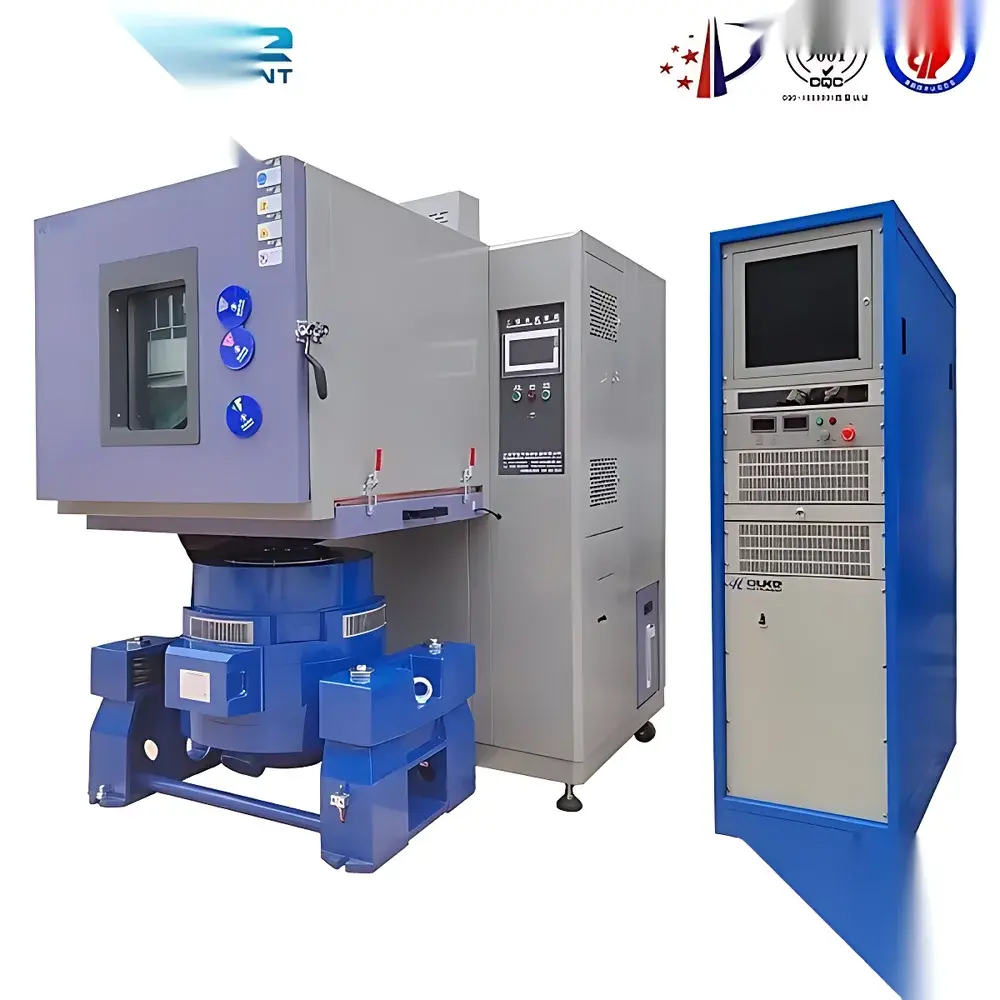
| Controller | OYO 8226 Touchscreen Programmable Controller (100 Programs × 1000 Segments × 999 Cycles) |
| Communication Interface | RS-232 / RS-485 |
| Viewing Window | Multi-layer laminated tempered glass with conductive ITO film |
| Cable Port | Ø50 mm (left-side, sealed) |
| Insulation | Polyurethane rigid foam + ultra-fine glass fiber |
| Sealing | Dual-layer high-tensile silicone rubber gasket |
| Power Supply | 3-phase 380V AC ±10%, 50/60 Hz |
Overview
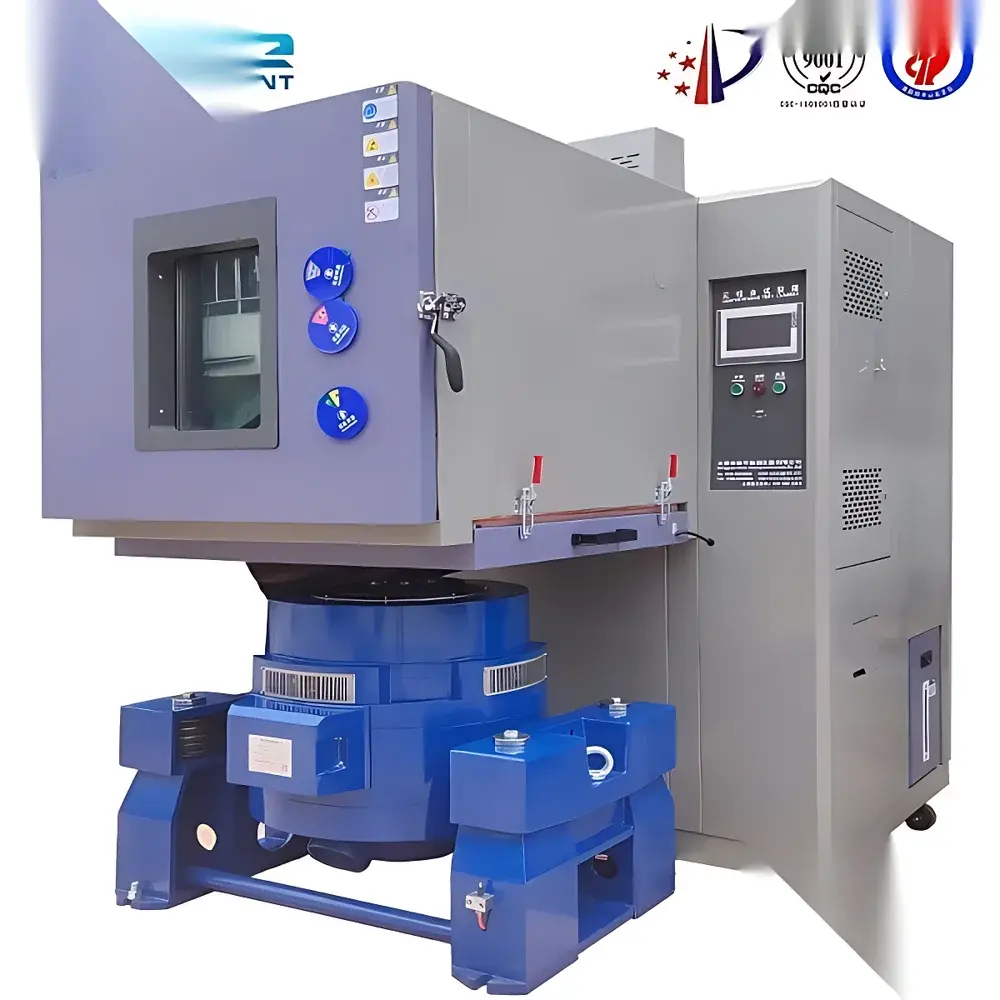
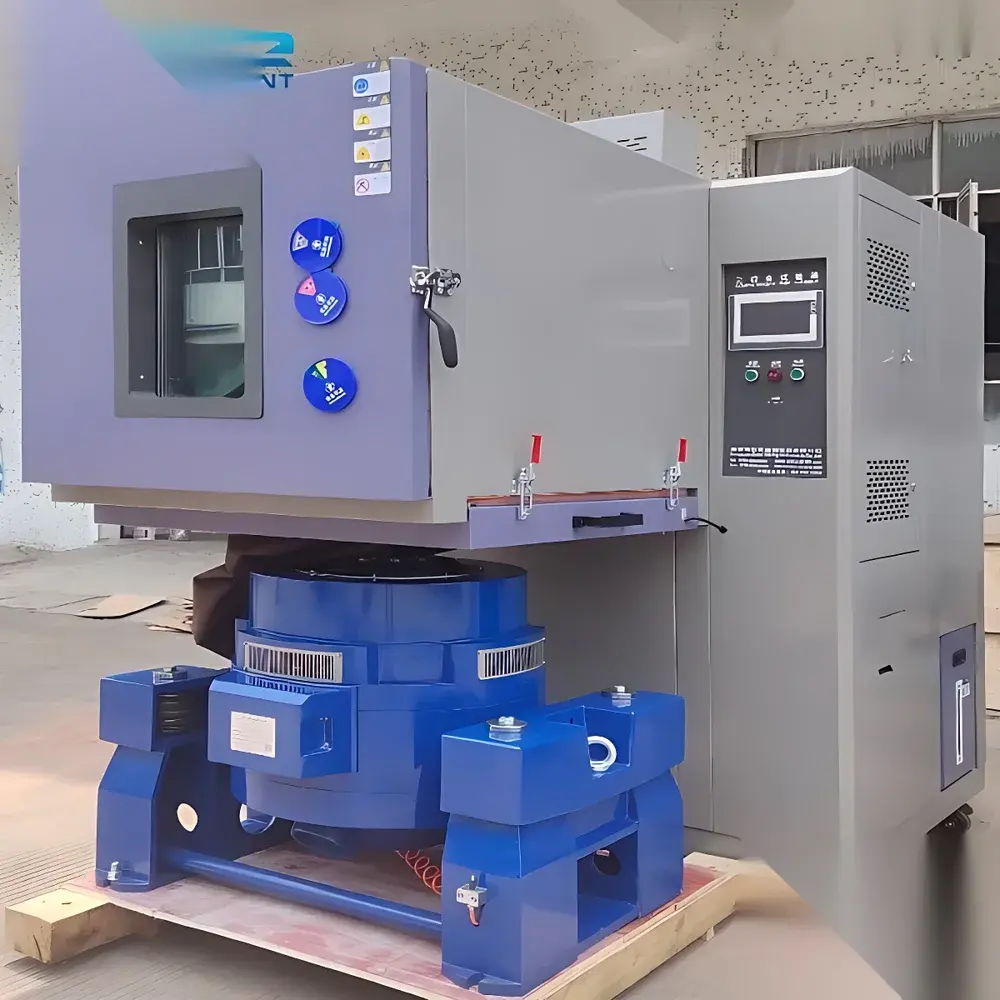
The OEKE Combined Temperature-Humidity-Vibration Environmental Test Chamber is an integrated reliability validation platform engineered for accelerated stress testing of electrical and electronic components, assemblies, and finished products under concurrent thermal, hygroscopic, and mechanical dynamic loading conditions. Designed in strict accordance with IEC 60068-2-64 (vibration), IEC 60068-2-30 (damp heat cyclic), and MIL-STD-810H Method 509.6 (combined environments), this chamber enables replication of real-world operational and storage stresses—including thermal shock during transit, condensation-induced corrosion on PCBs, and resonant fatigue in connectors or solder joints. Its modular vibration integration—featuring a motorized rail-mounted electromagnetic shaker that retracts fully from the test chamber when not in use—ensures zero cross-contamination between environmental and mechanical test phases while preserving chamber integrity and thermal/humidity uniformity per ISO 16750-4 and JEDEC JESD22-A104E requirements.
Key Features
- Modular vibration subsystem: Electromagnetic shaker mounted on precision linear rails; fully retractable to isolate vibration hardware from thermal-humidity chamber during non-vibration tests
- Hermetic sealing interface: Multi-stage interlocking connection between shaker table and chamber floor using alternating layers of high-temperature epoxy resin and silicone rubber (rated to 200°C), ensuring leak-tightness at all operational extremes
- Dual-independent control architecture: Separate PID-regulated temperature/humidity and vibration control loops prevent signal interference and enable synchronized or decoupled test profiles
- High-fidelity environmental uniformity: Top-mounted low-noise Sanyo Denki (Shimaden) centrifugal blower with multi-wing impeller; unidirectional air circulation (top-down supply, bottom return) achieving ≤±0.5°C spatial uniformity and ≤±2% RH variation across working volume
- Observation & connectivity: Triple-laminated tempered glass viewport with sputtered ITO conductive film for anti-fog clarity and EMI shielding; Ø50 mm sealed feedthrough port (left side) compatible with power, signal, and thermocouple cables
- Robust structural design: Exterior cabinet of A3 carbon steel with electrostatic powder coating; interior chamber of mirror-finish SUS304 stainless steel; insulation comprising polyurethane rigid foam (core) and ultra-fine glass fiber (peripheral barrier)
Sample Compatibility & Compliance
This chamber accommodates standard test specimens up to 600 mm × 600 mm × 600 mm (W×D×H), including printed circuit boards (PCBs), automotive ECUs, industrial power supplies, consumer electronics housings, and aerospace avionics enclosures. It supports mounting via threaded inserts, T-slots, or custom fixtures compatible with DIN 45073 and ASTM D4169 pallet configurations. All materials in direct contact with test samples—including chamber liner, gaskets, and shaker interface—comply with RoHS Directive 2011/65/EU and are halogen-free. The system meets Class II accuracy requirements per IEC 60068-3-5 (environmental testing guidance) and provides traceable calibration support for ISO/IEC 17025-accredited laboratories. Optional validation packages include IQ/OQ documentation aligned with FDA 21 CFR Part 11 data integrity principles.
Software & Data Management
The OYO 8226 programmable controller features a 7-inch resistive touchscreen with bilingual (English/Chinese) UI, real-time trend graphs for temperature, humidity, and vibration acceleration (m/s²), and password-protected screen lock to prevent unauthorized parameter modification. It stores up to 100 user-defined test programs, each supporting 1000 segments and 999 cycles—with maximum segment duration of 99 hours 59 minutes. Data logging occurs at user-selectable intervals (1–60 sec), with internal memory retaining ≥30 days of continuous operation records. RS-232/RS-485 interfaces enable remote PC-based programming via OEKE’s proprietary LabLink software (Windows 10/11 compatible), which supports automated report generation (PDF/CSV), alarm event tagging, and audit trail export compliant with GLP/GMP Annex 11 requirements.
Applications
- Qualification testing of automotive electronics per ISO 16750-4 (combined temp/humidity/vibration)
- Reliability screening of consumer electronics per JEDEC JESD22-A108G (highly accelerated life testing)
- Failure mode analysis of solder joint integrity under thermo-mechanical cycling
- Corrosion resistance evaluation of conformal-coated PCBs in damp heat + vibration
- Design verification of battery management systems (BMS) subjected to transport simulation profiles
- Pre-compliance assessment for IEC 60950-1, IEC 62368-1, and UL 62368-1 safety standards
FAQ
Can the vibration system operate simultaneously with full-range temperature and humidity conditions?
Yes—the chamber supports concurrent operation across its full specification envelope (-70°C to +180°C, 10–98% RH) while delivering vibration profiles per IEC 60068-2-64 (5–2000 Hz, 0.04–98 m/s² peak).
Is third-party calibration certification available?
Calibration certificates traceable to NIST or PTB standards are provided upon request, with optional on-site verification by ISO/IEC 17025-accredited metrology partners.
What maintenance is required for long-term stability?
Scheduled maintenance includes quarterly inspection of refrigerant charge, biannual replacement of humidifier tank seals, annual recalibration of PT100 sensors, and semi-annual lubrication of rail mechanisms per OEM service manual.
Does the system support custom test profile scripting beyond built-in standards?
Yes—LabLink software permits creation of user-defined multi-axis vibration waveforms (sine, random, shock) synchronized with non-linear temperature/humidity ramps using CSV-based script import.
How is data integrity ensured during extended unattended tests?
The controller implements automatic power-fail recovery, non-volatile memory backup, and cyclic redundancy check (CRC) on all logged datasets—ensuring continuity and immutability per 21 CFR Part 11 §11.10(d).



