OFIL Ranger UV Corona Imaging Camera
| Origin | Israel |
|---|---|
| Manufacturer Type | Authorized Distributor |
| Origin Category | Imported |
| Model | Ranger |
| Price | USD 90,000 (FOB) |
| UV Sensitivity | 3 × 10⁻¹⁸ W/cm² |
| Field of View (H×V) | 5° × 3.75° |
| Focus Range | 3 m to ∞ |
| Dual-Channel Imaging | UV + Visible Light |
| Auto-Focus | Simultaneous UV & visible channels |
| Video Output | PAL/NTSC, RS-170/CCIR |
| Zoom | 25× optical + 12× digital |
| Display | 8.4″ SVGA LCD (800 × 600), 230 cd/m² |
| Operating Temperature | −20 °C to +55 °C (CDU) |
| Power Input | 9–16 VDC or 110/220 VAC |
| Power Consumption | <15 W |
| Pan/Tilt Range | 340°/360° horizontal, −90°/+60° vertical |
| Pan/Tilt Speed | up to 30°/s (horizontal), 10°/s (vertical) |
| Connector Standard | MIL-C-26482 compliant |
Overview
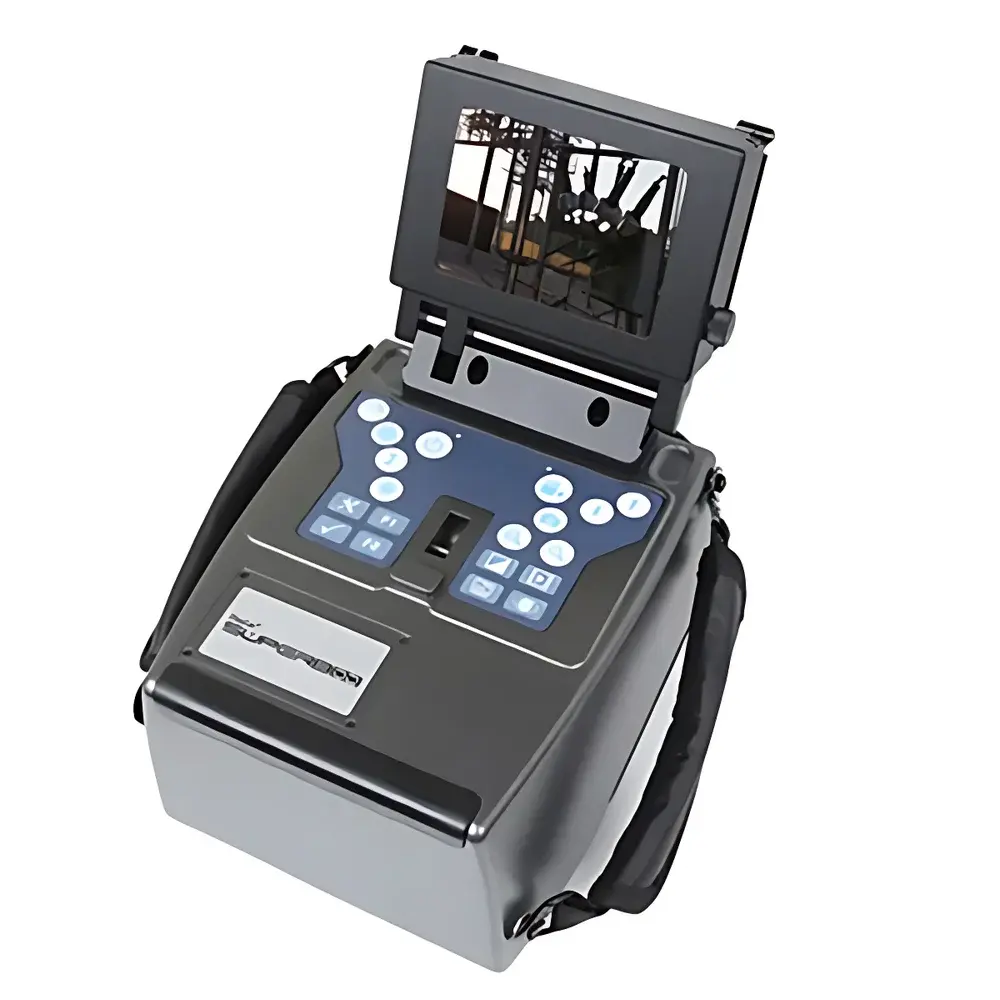
The OFIL Ranger UV Corona Imaging Camera is a high-sensitivity, dual-channel (ultraviolet + visible light) electro-optical inspection system engineered for live-line detection of partial discharge phenomena—including corona, arcing, and surface tracking—in high-voltage transmission and distribution infrastructure. Based on solar-blind UV photon counting technology operating in the 240–280 nm spectral band, the Ranger discriminates ultraviolet emissions from natural background radiation with high signal-to-noise ratio, enabling reliable detection of weak discharges at distances exceeding 100 meters—even under daylight conditions. Its core architecture integrates a back-illuminated, low-noise UV-intensified CCD detector with a stabilized pan-tilt platform and real-time image fusion algorithm, delivering synchronized spatial registration between UV and visible channels with sub-milliradian overlay accuracy. Designed explicitly for mobile utility applications, the Ranger supports in-vehicle operation via its Control and Display Unit (CDU), eliminating operator exposure while maintaining full diagnostic fidelity during dynamic inspections.
Key Features
- Ultra-low UV detection threshold of 3 × 10⁻¹⁸ W/cm²—among the highest sensitivities commercially available for field-deployable corona imagers.
- Simultaneous auto-focus across both UV and visible spectral bands, with manual override capability for fine-tuning under variable environmental conditions.
- 25× optical zoom plus 12× digital zoom, achieving full magnification within 1 second and returning to baseline focal length within the same timeframe—critical for rapid target acquisition on moving platforms.
- Ruggedized gimbal-mounted design compliant with MIL-C-26482 interface specifications; shock- and vibration-resistant construction validated for off-road vehicle deployment.
- Integrated GPS module (optional) and timestamped video output (PAL/NTSC, RS-170/CCIR) with embedded date/time stamping and customizable text overlay for traceability and audit readiness.
- Real-time UV photon counting engine with adjustable sensitivity thresholds, enabling quantitative assessment of discharge intensity relative to reference calibration sources.
Sample Compatibility & Compliance
The Ranger is optimized for non-contact inspection of energized AC and DC power assets including insulators, bushings, connectors, surge arresters, and conductor surfaces. It complies with IEC 61000-4-3 (radiated immunity), IEC 61000-4-2 (ESD immunity), and meets IP54 ingress protection rating for dust and water resistance. While not a certified measurement instrument per ISO/IEC 17025, its optical performance and repeatability support adherence to utility-specific maintenance protocols aligned with IEEE 1313.2 and CIGRÉ TB 363 guidelines for condition-based asset management. Data integrity is preserved through secure, non-volatile storage and optional 21 CFR Part 11–compliant audit trail functionality when paired with OFIL’s certified reporting software.
Software & Data Management
The included OFIL Report Generator software provides a structured database environment supporting multi-language interfaces (English, Spanish, French, Chinese, Arabic), hierarchical asset tagging, and automated report compilation per inspection route or substation. All recorded video clips retain embedded metadata—including GPS coordinates, UTC timestamp, zoom level, gain setting, and UV photon count histogram—enabling retrospective analysis and trend mapping across inspection cycles. Export formats include PDF (with embedded video thumbnails), CSV (for statistical post-processing), and native .avi files compatible with third-party forensic review tools. Software updates are delivered via encrypted firmware packages with version-controlled release notes and SHA-256 checksum validation.
Applications
- Preventive maintenance of overhead transmission lines, especially in remote or topographically challenging terrain where ground-based access is limited.
- Routine patrol of substations to identify aging insulation, contaminated porcelain, or loose hardware before failure escalates into unplanned outages.
- Post-storm damage assessment without requiring line de-energization—reducing safety risk and minimizing service interruption duration.
- Commissioning verification of new installations, including GIS terminations and composite insulators, ensuring compliance with manufacturer discharge limits.
- Integration into UAV-based inspection workflows via external mounting brackets and auxiliary power interfaces (available as OEM option).
FAQ
What spectral band does the Ranger detect in?
The Ranger operates exclusively in the solar-blind UV-C band (240–280 nm), rejecting >99.9% of ambient solar UV radiation and enabling daytime corona detection without optical filtering artifacts.
Can the Ranger be used for infrared thermography?
No—the Ranger is a dedicated UV-visible imaging system. However, it may be physically mounted alongside IR cameras on shared gimbals for multi-spectral co-registration; data fusion requires external synchronization hardware.
Is calibration required before each use?
No routine recalibration is needed. The system features factory-traceable photometric calibration with documented uncertainty (±12% at 265 nm). Annual verification against NIST-traceable UV reference sources is recommended for metrological continuity.
Does the Ranger support remote control via network protocols?
Yes—via optional Ethernet interface (IEEE 802.3), the Ranger accepts TCP/IP commands for pan/tilt positioning, zoom control, recording start/stop, and parameter adjustment using standard Modbus TCP or custom API libraries provided by OFIL.
What is the typical battery life when operating from a vehicle’s 12 VDC supply?
Under continuous operation at nominal gain and 25× zoom, average power draw remains below 14 W. When powered directly from a vehicle’s electrical system (9–16 VDC), thermal management ensures stable performance across ambient temperatures ranging from −20 °C to +55 °C.