
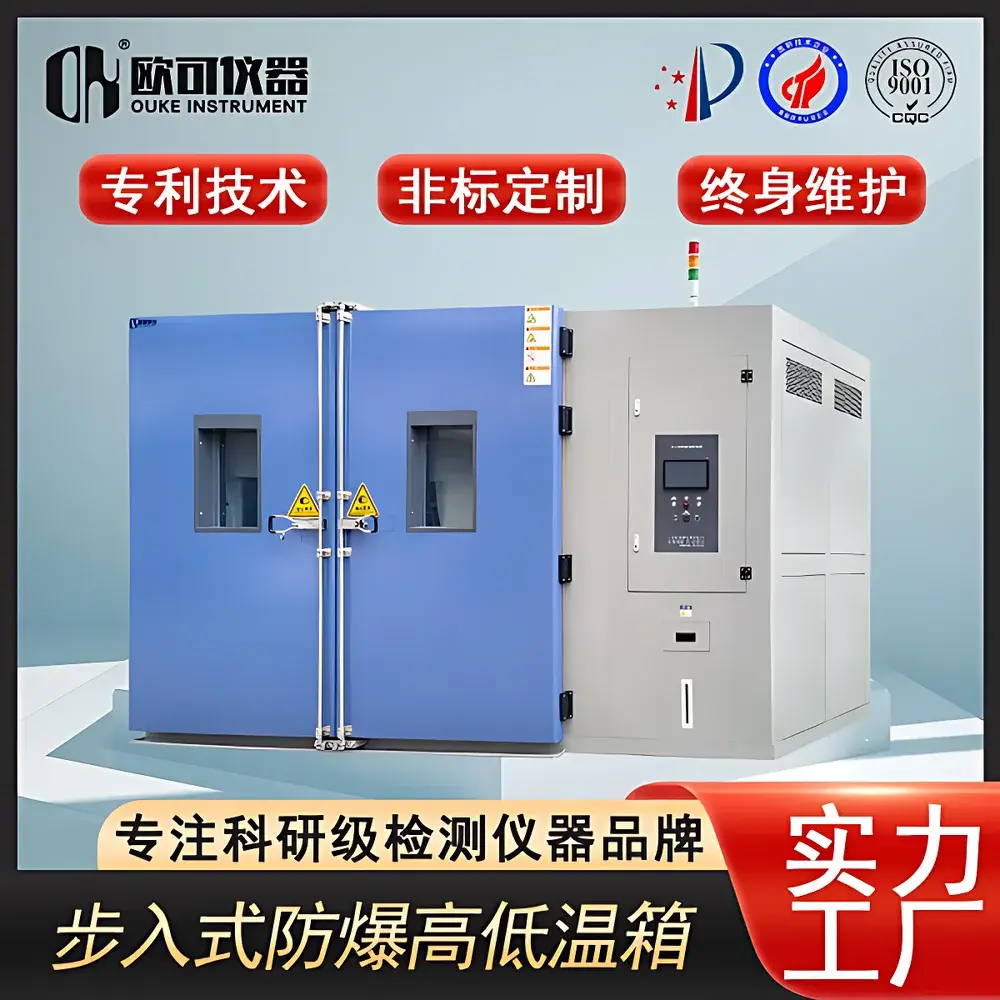
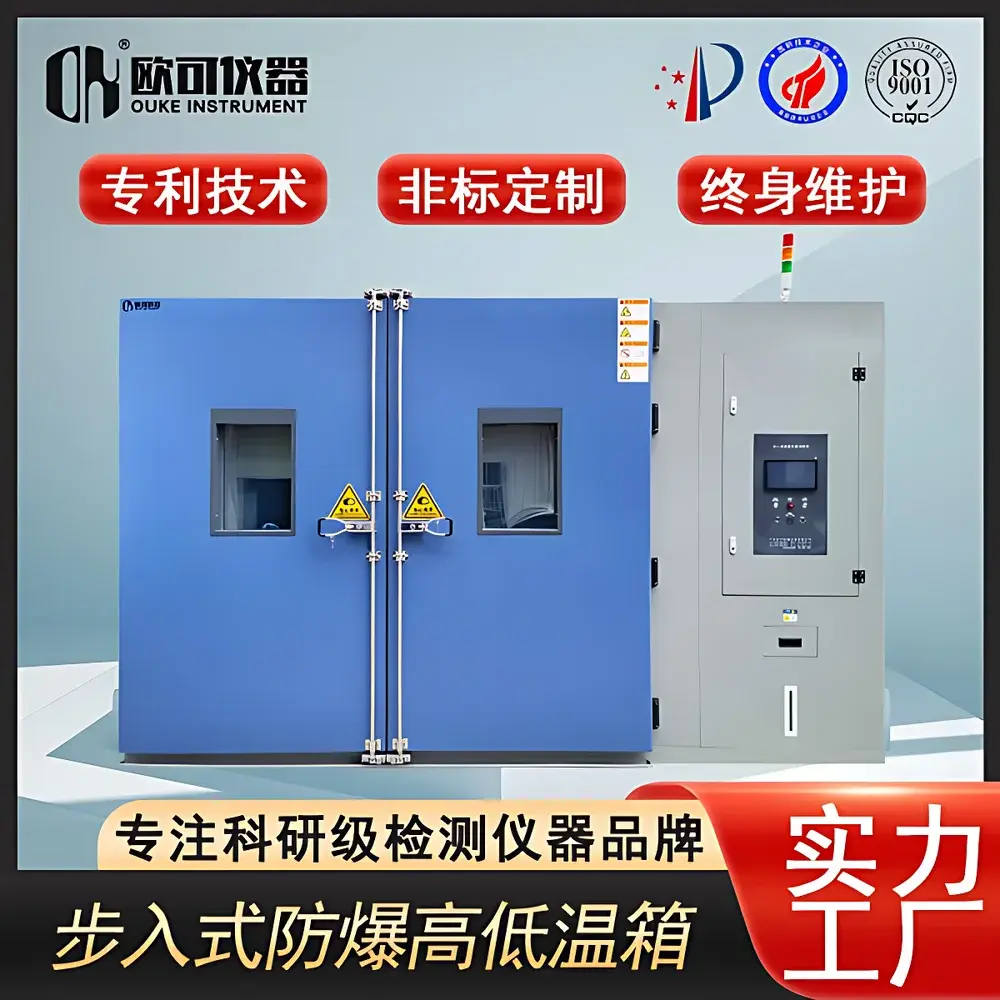
OK OK-STH-12.1688m² Walk-in Environmental Test Chamber
| Brand | OK |
|---|---|
| Origin | Guangdong, China |
| Manufacturer Type | Direct Manufacturer |
| Product Category | Domestic |
| Model | OK-STH-12.1688m² |
| Internal Dimensions (D×W×H) | 3000 × 2000 × 2000 mm |
| Temperature Range Options | A: 0°C to +85°C |
| B | −20°C to +85°C |
| C | −40°C to +85°C |
| D | −60°C to +85°C |
| E | −70°C to +85°C |
| Temperature Uniformity | ±3°C (per IEC 60068-3-5 & GB/T 2423.1/2) |
| Temperature Control Stability | ±1°C |
| Heating Rate | 1.0–4.0°C/min (dependent on setpoint and load) |
Overview
The OK ST-H Series Walk-in Environmental Test Chamber is an engineered industrial-scale thermal simulation infrastructure designed for full-size, high-mass, or high-volume test objects—ranging from electric vehicle battery packs and aerospace subsystems to power transformers and railcar components. Unlike benchtop or small-room chambers, this system operates on the principle of large-volume, forced-convection thermal conditioning with distributed multi-point air delivery, enabling precise, repeatable, and spatially uniform temperature exposure across internal volumes exceeding 12 m³ (custom configurations available up to 100+ m³). Its architecture integrates thermodynamic modeling, structural engineering, and multi-system coordination—making it a turnkey environmental testing solution rather than a conventional laboratory instrument. The chamber complies with core thermal testing standards including IEC 60068-3-5 (methods for determining temperature uniformity), ISO 16750-4 (road vehicles—environmental conditions), and MIL-STD-810G Method 502.6 (low temperature) and 501.6 (high temperature), supporting qualification and validation under GLP/GMP-aligned workflows.
Key Features
- Modular field-assembled construction using high-efficiency polyurethane insulated panels (150 mm thickness, thermal conductivity ≤0.022 W/m·K), ensuring structural integrity, vapor barrier continuity, and long-term insulation performance.
- Distributed HVAC architecture: Multi-circuit refrigeration system with parallel semi-hermetic screw compressors; water-cooled condensing units with cooling tower interface; zoned evaporator/fan modules mounted in ceiling and sidewall plenums to enable multi-directional, low-turbulence air supply.
- High-capacity forced-air circulation: Dual or quad centrifugal fans (total airflow ≥12,000 m³/h), calibrated via CFD-simulated airflow mapping to achieve ≤±3°C uniformity across all test zones—including corners, floor level, and payload shadow areas.
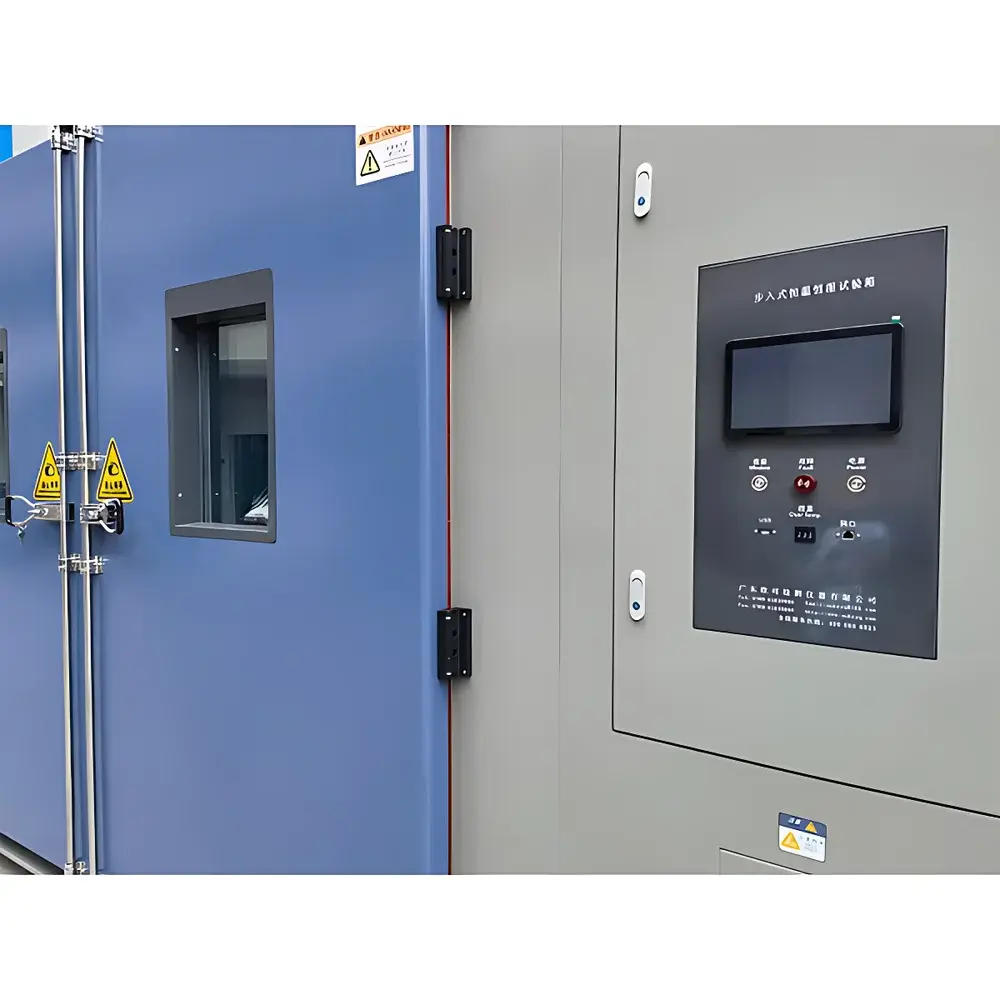
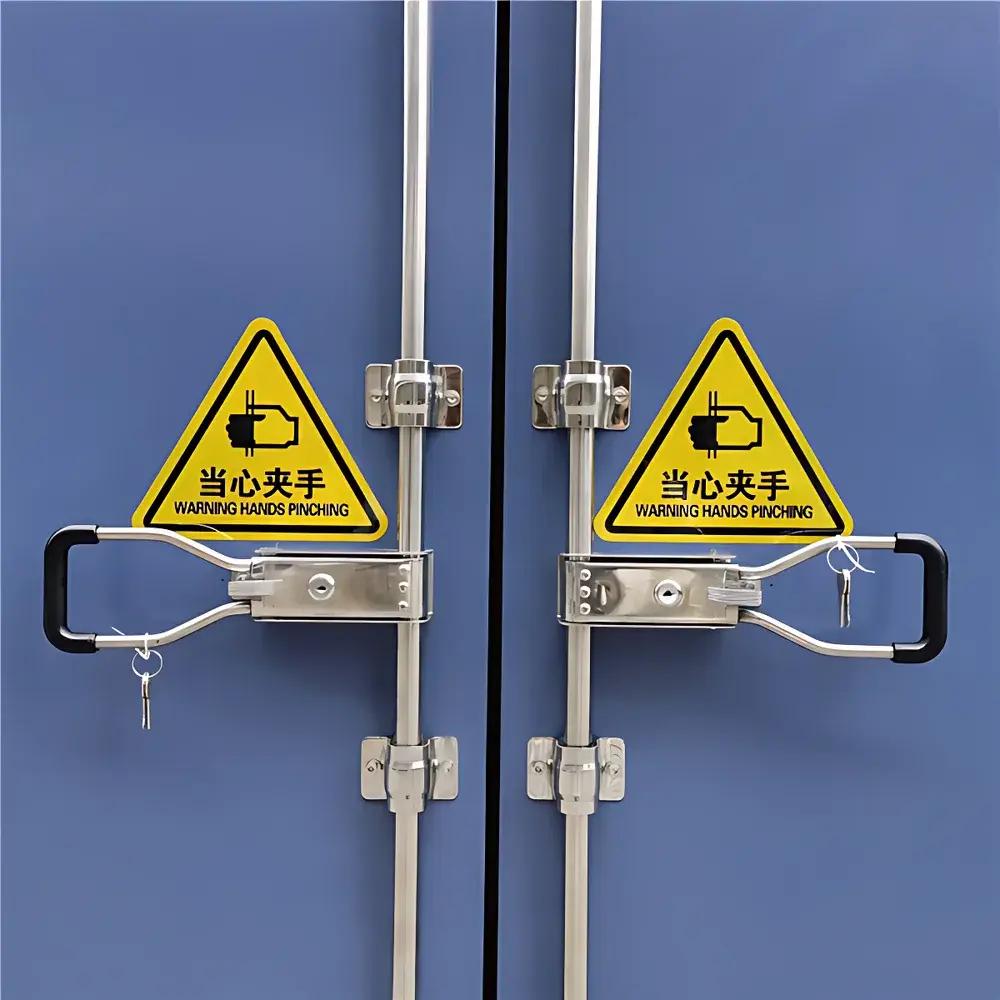
- Industrial-grade access system: Heavy-duty motorized sliding door (2400 × 2200 mm clear opening), triple-layer tempered glass observation window with anti-fog heating, integrated interior LED lighting, and safety interlocks compliant with EN 13857 (safe distances).
- Comprehensive utility integration: Pre-engineered wall penetrations for up to 48 channels—supporting 3-phase AC power (up to 400 A), analog/digital I/O, thermocouple feeds, Ethernet, compressed air, and deionized water lines—all sealed with IP65-rated feedthroughs.
- Robust safety architecture: Dual independent overtemperature protection (mechanical and electronic), emergency exhaust activation, fire suppression interface, door-open alarm, and real-time fault logging with event timestamping.
Sample Compatibility & Compliance
The OK ST-H chamber accommodates test specimens with maximum dimensions of 3000 × 2000 × 2000 mm and static loading capacity up to 5,000 kg (floor reinforcement required per site-specific structural assessment). It supports both steady-state and ramped thermal profiles per ASTM E1512 (standard practice for thermal cycling of electronic components), USP (environmental testing for pharmaceutical packaging), and GB/T 2423.1–2 (cold/dry heat testing). While humidity control is not included in the base configuration (maintaining focus on thermal fidelity and energy efficiency), optional humidification modules can be integrated for combined temperature-humidity applications. All electrical and control subsystems meet CE marking requirements (EMC Directive 2014/30/EU, Low Voltage Directive 2014/35/EU) and are designed for operation in non-hazardous industrial environments (IEC 60529 IP20 enclosure rating).
Software & Data Management
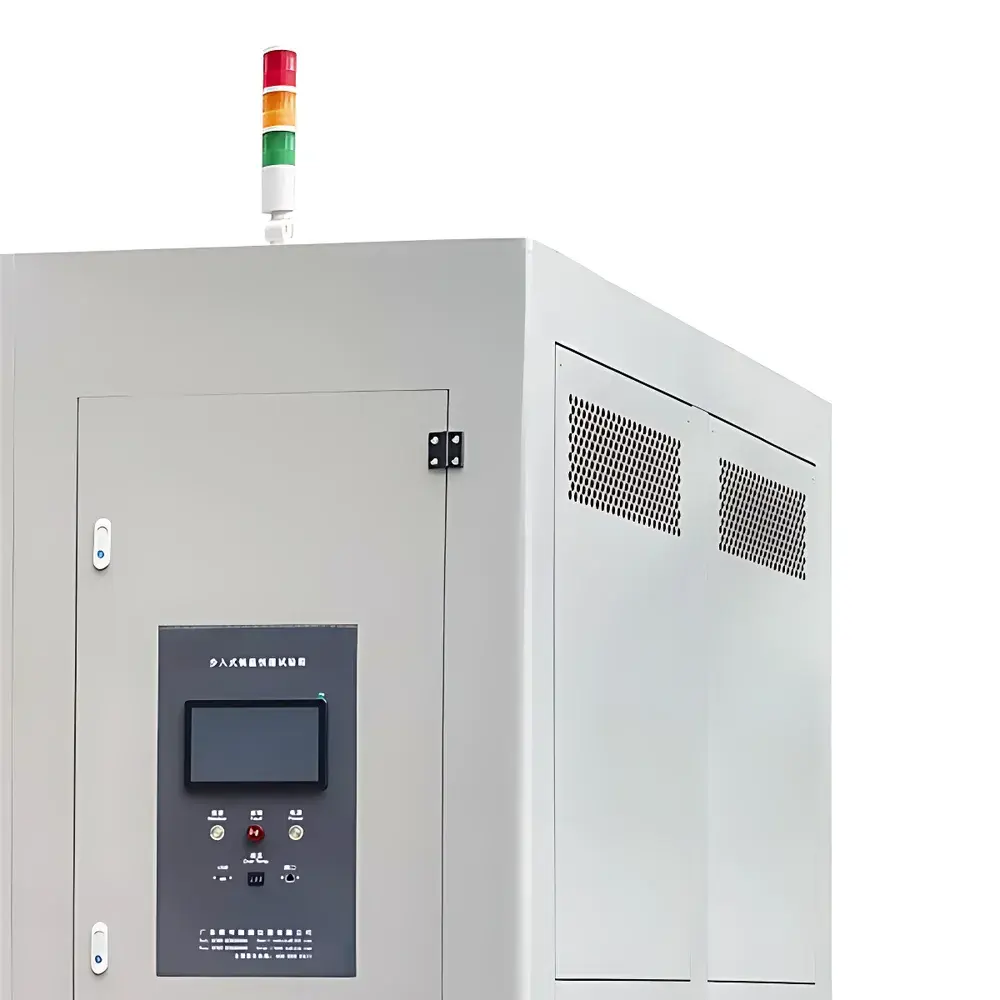
The chamber is controlled via a dedicated 10.1-inch touchscreen HMI running OK’s proprietary TEMPCONTROL v4.2 firmware—capable of executing up to 99 programmable test profiles, each with unlimited segments (ramp, soak, cycle). Real-time monitoring includes simultaneous display of up to 16 user-defined sensor inputs (including external PT100 or thermocouple probes), compressor discharge pressure, fan RPM, and power consumption. Data is logged at configurable intervals (1 s to 60 min) and exported in CSV or XML format. Optional PC-based software (OK-DataLink Pro) enables remote supervision, audit trail generation compliant with FDA 21 CFR Part 11 (electronic signatures, role-based access, immutable logs), and automated report generation aligned with ISO/IEC 17025 documentation requirements.
Applications
- Automotive: Whole-vehicle thermal soak, EV battery module thermal runaway propagation studies, ADAS sensor calibration across ambient extremes, and power electronics validation per LV-124 and GMW16270.
- Aerospace & Defense: Ground-level environmental screening of avionics bays, UAV propulsion systems, and satellite subsystems per DO-160 Section 4 and MIL-STD-810G.
- Energy Infrastructure: Thermal aging tests of grid-scale battery enclosures, transformer oil cooling behavior, and photovoltaic inverter derating analysis at −40°C to +85°C.
- Rail Transportation: HVAC system verification for metro train carriages, brake controller thermal endurance, and onboard signaling equipment qualification.
- Construction & Materials: Accelerated weathering of façade systems, concrete curing simulation, and fire-resistance material preconditioning per EN 1363-1.
FAQ
Is this chamber suitable for humidity-controlled testing?
No—the standard OK ST-H configuration is a dry thermal chamber. Humidity control requires a separate optional module (OK-HUMID-PRO), which adds steam-generation capability, condensate management, and dew-point monitoring.
What electrical infrastructure is required for installation?
A dedicated 3-phase 400 V ±10% supply (50/60 Hz) with minimum 125 A circuit breaker is required for the −40°C model; higher-low-temperature variants (−60°C/−70°C) require 250 A service and on-site transformer evaluation.
Can temperature uniformity be validated per ISO 16750-4?
Yes—OK provides a certified temperature mapping protocol (including 9-point sensor grid, 24-hour stabilization, and uncertainty budget per ISO/IEC 17025), with final uniformity report issued upon commissioning.
Does OK offer turnkey installation and commissioning?
Yes—field engineering services include foundation review, panel assembly, refrigerant charging, CFD-verified airflow balancing, full FAT/SAT documentation, operator training, and third-party calibration certificate traceable to NIM (China National Institute of Metrology).
How is thermal recovery time affected by door openings during testing?
The chamber’s rapid-response control algorithm and high-mass thermal buffer design limit recovery to ≤15 minutes after a 60-second door opening at −40°C—verified via internal thermal inertia modeling and empirical testing.



