
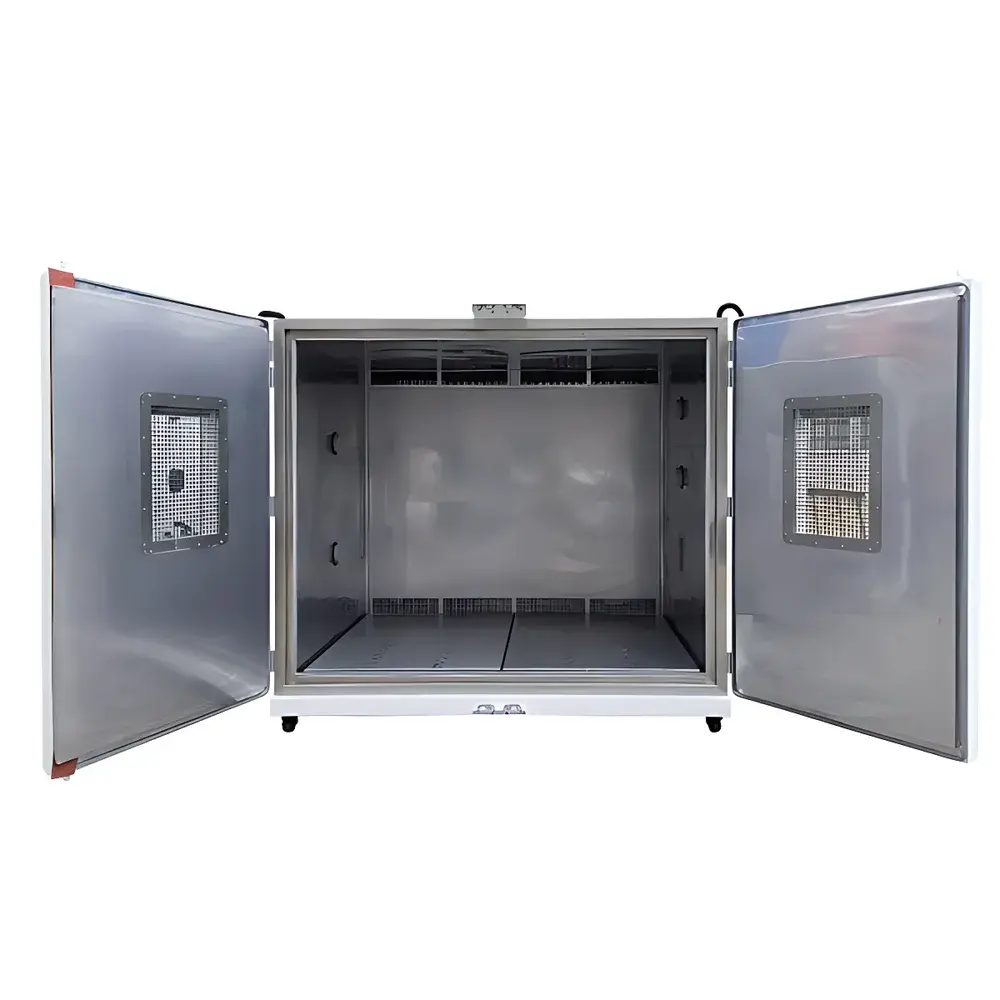
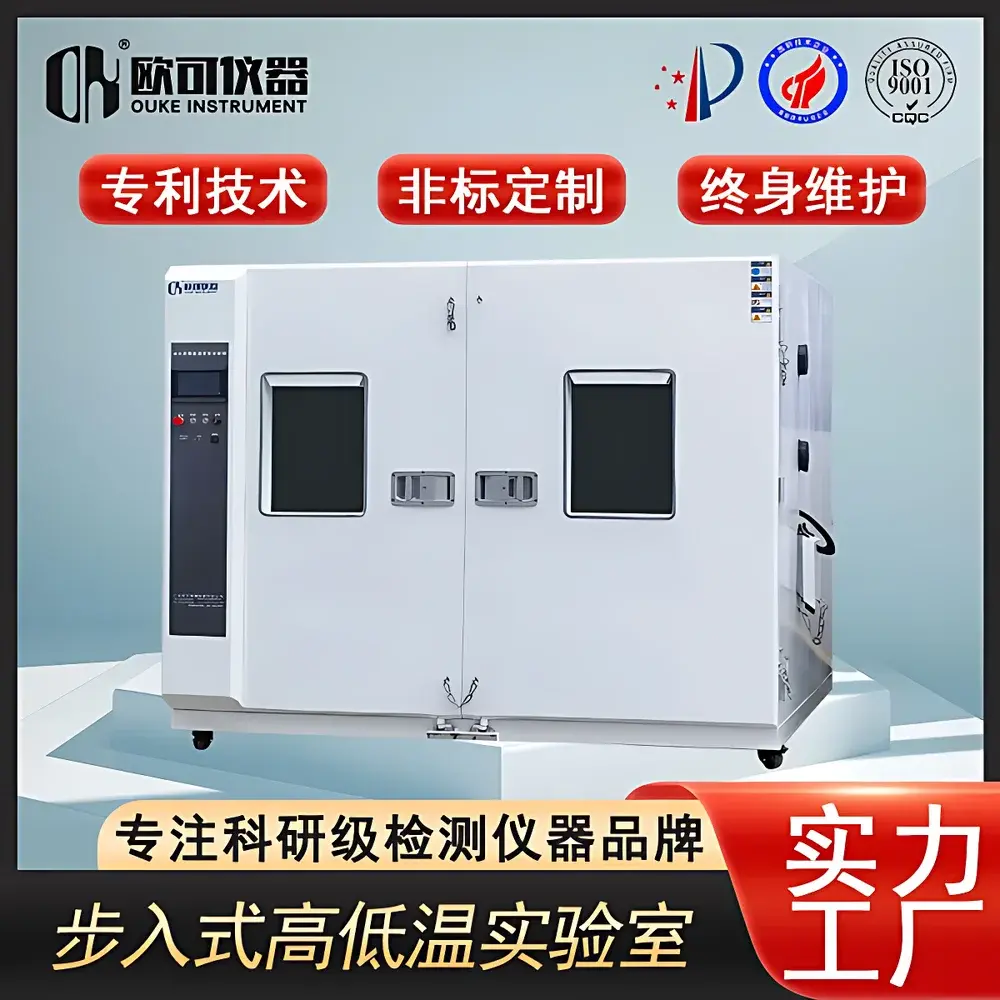
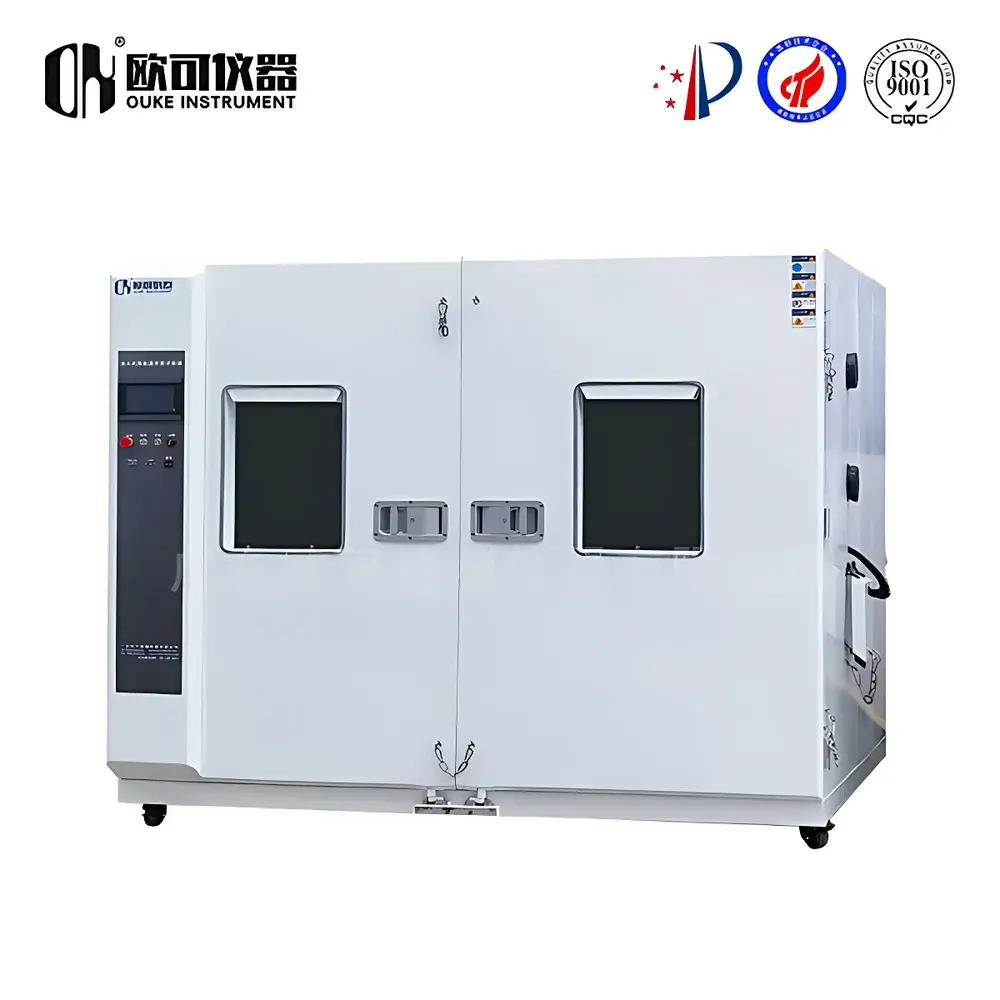
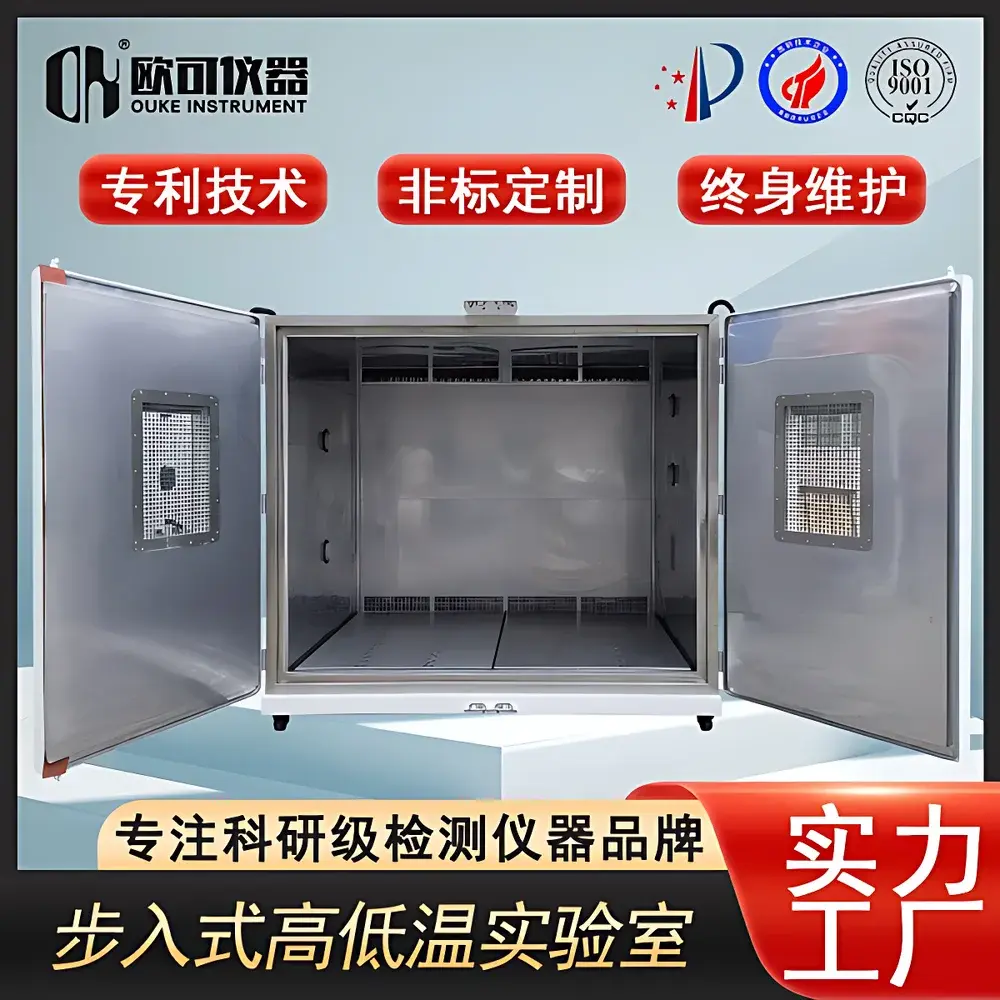
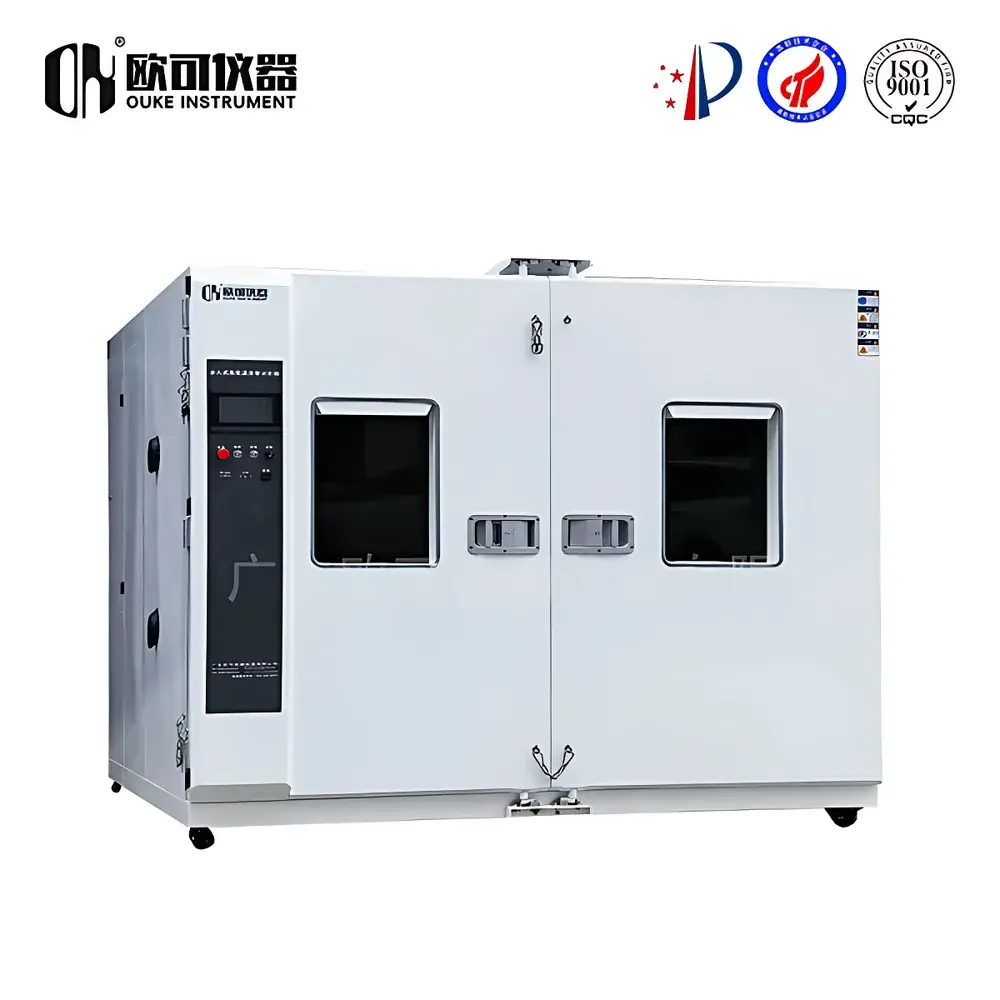
OK OK-STH-8.212m² Walk-in Environmental Stress Screening Chamber
| Brand | OK |
|---|---|
| Origin | Guangdong, China |
| Manufacturer Type | Direct Manufacturer |
| Product Origin | Domestic |
| Model | OK-STH-8.212m² |
| Internal Dimensions (D×W×H) | 2000 × 2000 × 2000 mm |
| Temperature Range Options | A: 0°C / B: −20°C / C: −40°C / D: −60°C / E: −70°C |
| Temperature Uniformity | ±3°C |
| Temperature Control Accuracy | ±1°C |
| Heating Rate | 1.0–4.0°C/min |
Overview
The OK OK-STH-8.212m² Walk-in Environmental Stress Screening Chamber is an industrial-scale, site-assembled thermal aging facility engineered for high-throughput reliability screening and burn-in testing of large-volume, high-power electronic products. Unlike benchtop or compact environmental chambers, this system functions as a controlled infrastructure—essentially a purpose-built “stress screening room”—where temperature, power delivery, airflow, and monitoring are integrated at the facility level. It operates on the principle of accelerated thermal stress exposure under powered conditions, enabling manufacturers to identify infant mortality failures, validate thermal management designs, and verify long-term operational stability prior to shipment. The chamber’s 8.212 m² floor area (2000 × 2000 × 2000 mm internal volume) supports palletized loading, forklift access, and multi-tiered racking systems—making it suitable for production-line integration in electronics, automotive, and energy sectors. Its architecture reflects engineering priorities aligned with ISO 9001 and IEC 60068-2 environmental testing standards, emphasizing structural integrity, thermal uniformity, electrical safety, and audit-ready data traceability.
Key Features
- Modular panel construction using 100–150 mm thick polyurethane-insulated steel sandwich panels, rated for continuous operation across −70°C to +85°C ambient ranges.
- Distributed HVAC system comprising multiple independently controlled air handling units (AHUs), each equipped with precision PID-controlled heating/cooling coils and variable-frequency drive (VFD) fans—optimized via CFD-simulated airflow modeling to achieve ≤±3°C uniformity throughout the entire working volume.
- Industrial-grade sliding or bi-parting door (up to 2400 mm clear opening), rated for frequent forklift traffic and sealed against thermal leakage per ASTM C1363 thermal transmittance requirements.
- Heavy-duty galvanized steel racking system with adjustable tiers, integrated cable raceways, and standardized power outlet modules (IEC 60309 or NEMA L-series configurable).
- Centralized power distribution unit (PDU) supporting up to hundreds of independently addressable AC output channels, with real-time monitoring of voltage, current, active/reactive power, power factor, and cumulative kWh per circuit.
- Comprehensive safety subsystems including Class A smoke detection, CO₂/O₂ gas sensors, emergency purge ventilation (≥6 air changes/hour), door-interlocked power cutoff, and dual-redundant overcurrent/overtemperature protection.
Sample Compatibility & Compliance
The chamber accommodates full-size consumer electronics (laptops, servers, EV onboard chargers), photovoltaic inverters, battery management systems (BMS), and telecom base station modules—regardless of form factor or thermal footprint. All structural, thermal, and electrical subsystems comply with UL 61010-1 (Safety Requirements for Electrical Equipment), EN 61000-6-4 (EMC Emission Standard), and IEC 61000-6-2 (Immunity). Optional humidity control (10–95% RH) and extended low-temperature capability (−70°C) meet MIL-STD-810H Method 502.7 and JEDEC JESD22-A108F test profiles. Full system documentation—including factory acceptance test (FAT) reports, CFD simulation outputs, single-line electrical diagrams, and calibration certificates—supports GLP/GMP validation and FDA 21 CFR Part 11-compliant electronic record retention when paired with optional audit-trail-enabled SCADA software.
Software & Data Management
The integrated control platform provides web-based HMI access via secure HTTPS/TLS 1.2 encryption. It supports programmable temperature ramp-soak cycles, multi-zone setpoint scheduling (for segmented racks), and synchronized power sequencing (delayed start, staggered load application). All sensor readings (12+ thermocouple/RTD inputs, 3-phase power metrics per PDU branch) are timestamped and stored locally on an industrial SSD with ≥1-year retention. Data export formats include CSV, PDF test reports, and OPC UA connectivity for MES/SCADA integration. Optional 21 CFR Part 11 compliance package includes role-based user authentication, electronic signatures, immutable audit logs, and automated backup to network-attached storage (NAS).
Applications
- Consumer Electronics: Pre-shipment burn-in of smartphones, tablets, and gaming consoles at scale—enabling failure mode analysis before distribution.
- Data Center Hardware: Continuous 72–168 hour powered stress testing of rack-mounted servers, switches, and AI accelerators under elevated thermal load.
- Automotive Electronics: Production-line aging of ADAS ECUs, infotainment head units, and vehicle-to-grid (V2G) communication modules per AEC-Q200 stress criteria.
- Renewable Energy Systems: Functional verification of grid-tied solar inverters, battery energy storage (BESS) PCS units, and EV charging modules under thermal cycling and sustained load.
- Power Electronics: High-current burn-in of industrial SMPS, medical-grade PSUs, and military-grade DC-DC converters with real-time efficiency and derating analysis.
FAQ
What distinguishes this walk-in chamber from standard environmental test chambers?
It is engineered as a production infrastructure—not a metrology instrument—prioritizing throughput, electrical scalability, and thermal uniformity over ultra-fine temperature resolution. Its distributed HVAC, heavy-duty power architecture, and forklift-accessible layout align with manufacturing floor requirements rather than laboratory-grade precision.
Can the chamber support both high-temperature aging and sub-zero stress testing?
Yes. Five standard temperature range configurations (0°C to −70°C) are available. Sub-zero variants incorporate cascade refrigeration, enhanced insulation, and low-temperature-compatible gaskets and sensors.
Is CFD airflow simulation included in the quotation?
Yes. Every OK-STH project delivers validated CFD reports demonstrating predicted temperature uniformity across all rack zones, including worst-case corner and bottom-tier locations—required for FAT sign-off.
How is electrical safety ensured during concurrent operation of hundreds of powered devices?
Through triple-layer protection: upstream circuit breakers with selective coordination, ground-fault interrupters per rack zone, and real-time harmonic distortion monitoring to prevent transformer saturation or neutral overload.
Does OK provide validation documentation for GMP or ISO 13485 environments?
Yes. IQ/OQ protocols, calibration traceability to NIST standards, and 21 CFR Part 11 readiness packages are available as optional deliverables—fully customizable to client quality system requirements.



