
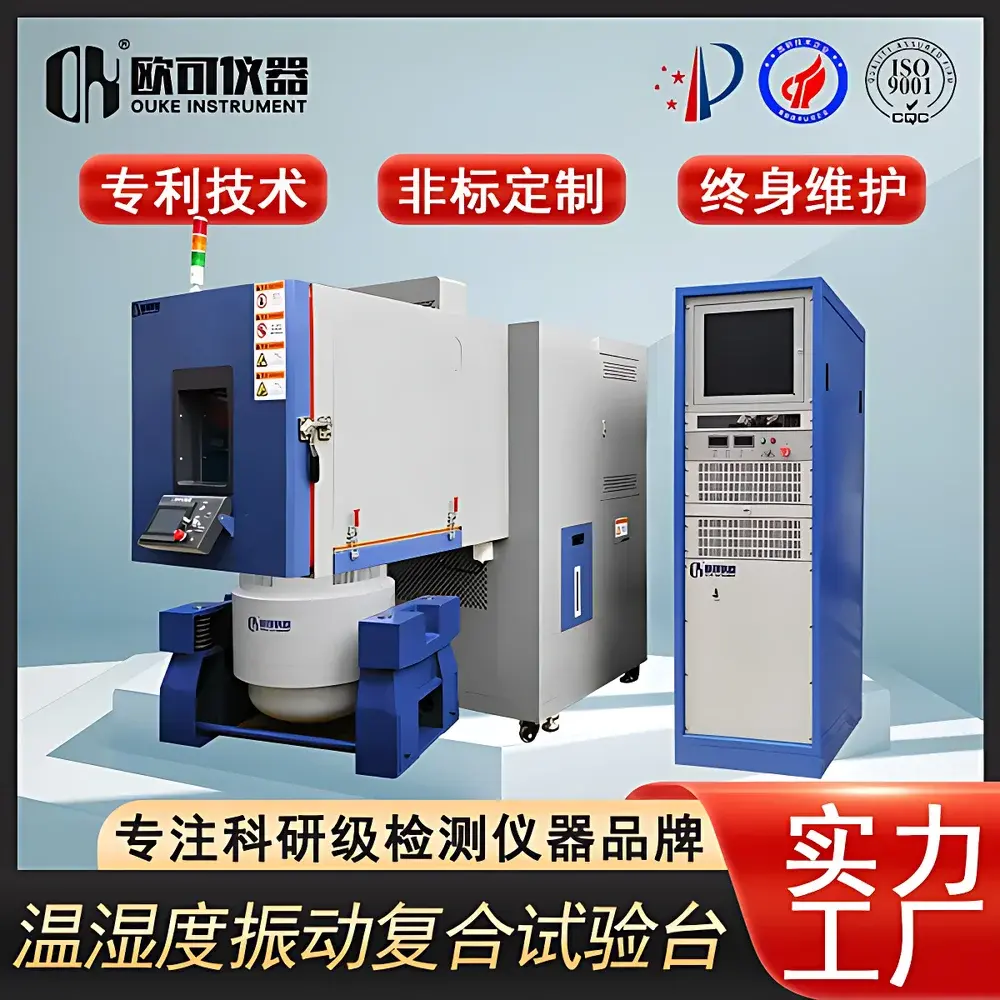
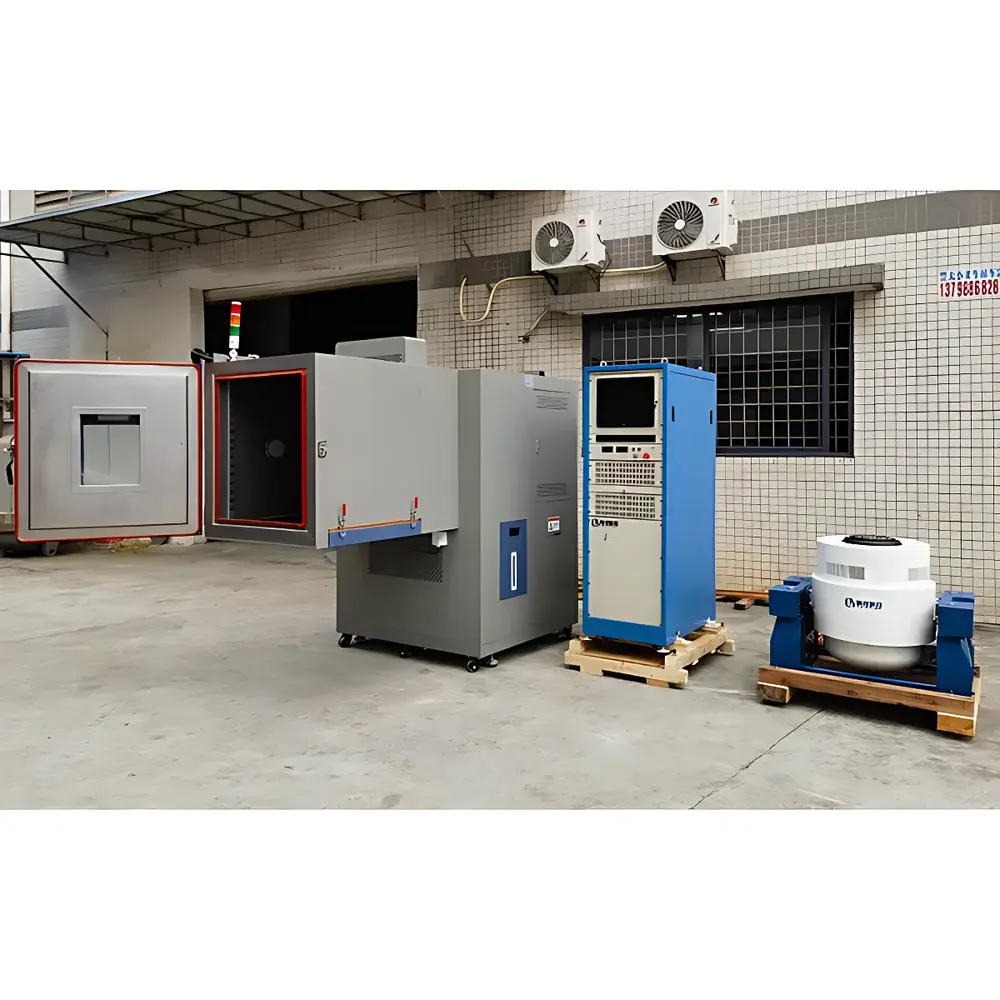
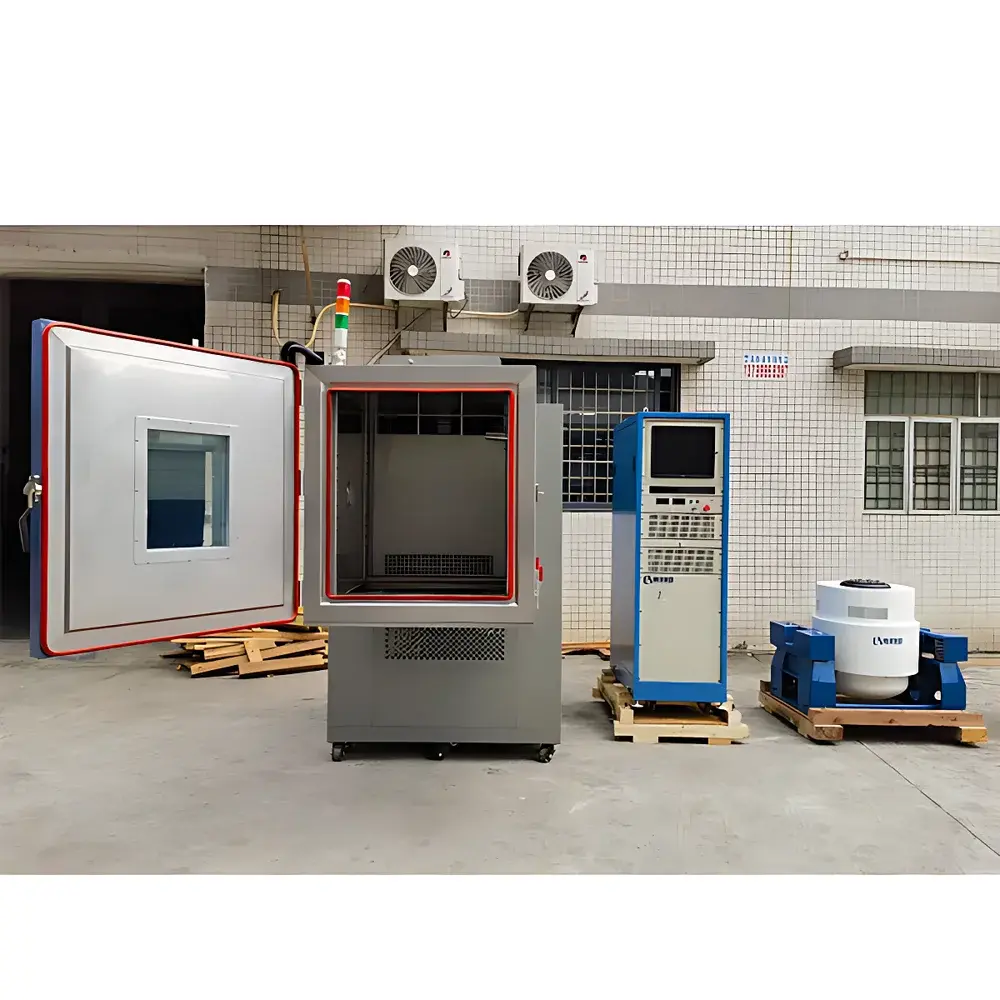
OK OK-ZTH-520 Combined Temperature-Humidity-Vibration Environmental Test System
| Brand | OK |
|---|---|
| Origin | Guangdong, China |
| Manufacturer Type | Direct Manufacturer |
| Product Origin | Domestic (China) |
| Model | OK-ZTH-520 |
| Temperature Range | −70 °C to +150 °C |
| Humidity Range | 20–98 %RH at 20–85 °C |
| Temperature Ramp Rate | 5 / 10 / 15 °C/min |
| Temperature Uniformity | ≤ ±0.5 °C |
| Standard Load Capacity | 15 kg aluminum mass block with 350 W internal heat dissipation |
Overview
The OK OK-ZTH-520 Combined Temperature-Humidity-Vibration Environmental Test System is an integrated reliability test platform engineered for simultaneous application of thermal, hygric, and mechanical (vibrational) stresses under tightly controlled laboratory conditions. It operates on the principle of multi-stress coupling—replicating real-world environmental profiles where temperature cycling, humidity exposure, and dynamic mechanical excitation co-occur. Unlike sequential single-stress testing (e.g., standalone thermal cycling or vibration endurance), this system enables true synergistic stress application: thermal expansion/contraction induces microstructural strain; moisture ingress accelerates corrosion or dielectric degradation at interfaces; and vibration amplifies crack propagation or solder joint fatigue—collectively triggering failure modes unobservable in isolated tests. Designed for compliance-driven validation workflows, the OK-ZTH-520 supports environment-dependent reliability assessment per IEC 60068-2, MIL-STD-810H, and ISO 16750-4, serving as a foundational tool for environmental engineering and product qualification across automotive, aerospace, electronics, and industrial equipment sectors.
Key Features
- Triple-stress synchronization: Independent yet coordinated control of temperature, relative humidity, and 3-axis vibration (electrodynamic shaker) within a single chamber envelope.
- Structurally reinforced test chamber: Welded stainless-steel inner chamber with high-rigidity structural frame, engineered to withstand continuous vibration without resonance-induced fatigue or seal degradation.
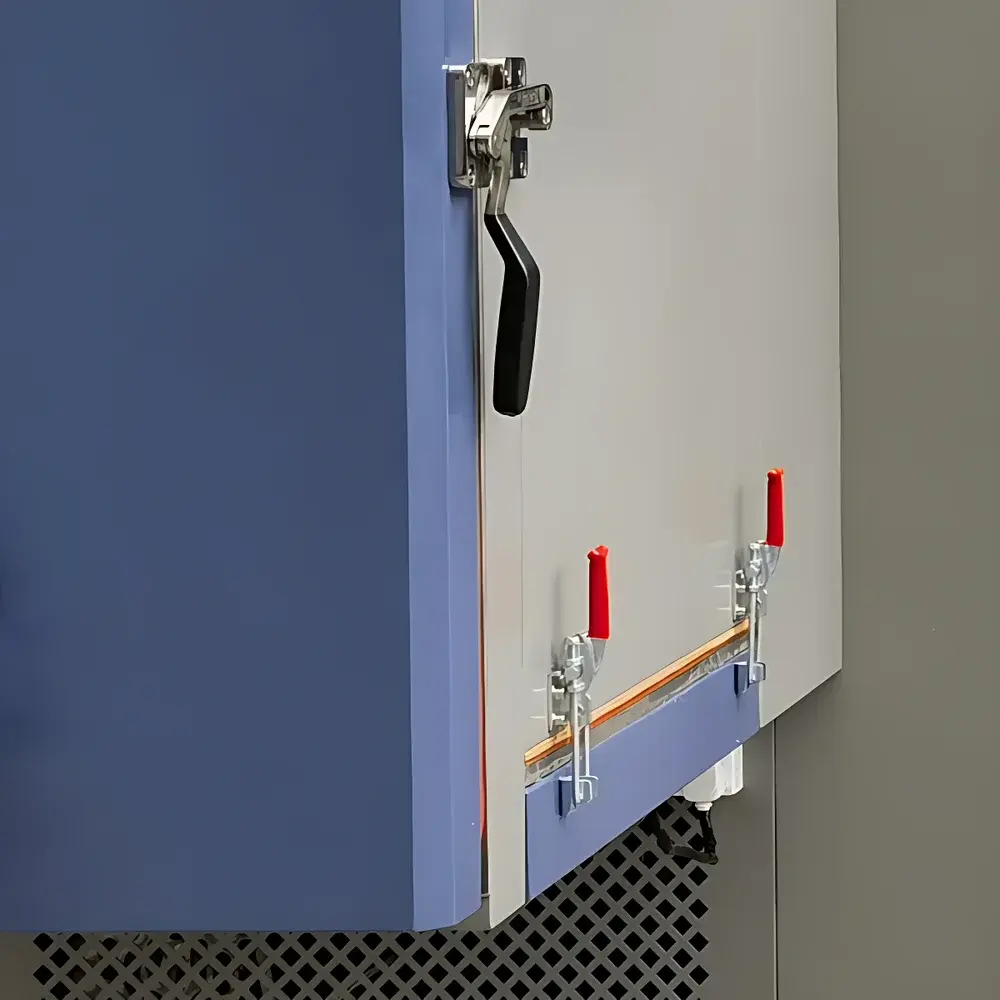
- Dynamic sealing architecture: Dual-lip door gasketing and vibration-isolated cable feedthroughs maintain environmental integrity (<±0.3 %RH drift) during active shaker operation.
- Bottom-mounted electrodynamic shaker: Integrated beneath the chamber base with thermally decoupled mounting interface and low-thermal-conductivity extension table—minimizing heat transfer from shaker coil to chamber air volume.
- Wide-range environmental capability: −70 °C to +150 °C temperature span with programmable ramp rates (5/10/15 °C/min); humidity control from 20–98 %RH across 20–85 °C operational range.
- Thermal stability assurance: Active air circulation with PID-controlled heating/cooling and redundant platinum RTD sensors ensure ≤ ±0.5 °C temperature uniformity over standard 15 kg aluminum load.
Sample Compatibility & Compliance
The OK-ZTH-520 accommodates samples up to 15 kg mounted on standardized aluminum test masses, supporting DUT power dissipation up to 350 W without compromising environmental fidelity. Chamber interior dimensions (W × D × H) are optimized for common automotive ECUs, avionics line-replaceable units (LRUs), PCB assemblies, and packaged consumer electronics. All control firmware and data logging modules comply with GLP/GMP documentation requirements—including audit-trail-enabled user access logs, electronic signature support, and timestamped parameter change history. The system meets electromagnetic compatibility (EMC) standards per EN 61326-1 and is compatible with FDA 21 CFR Part 11-compliant software extensions for regulated industries. Test profiles may be structured to satisfy specific clauses of ISO 16750-4 (road vehicles), RTCA DO-160G Section 25 (environmental conditions), and JEDEC JESD22-A108F (accelerated moisture resistance).
Software & Data Management
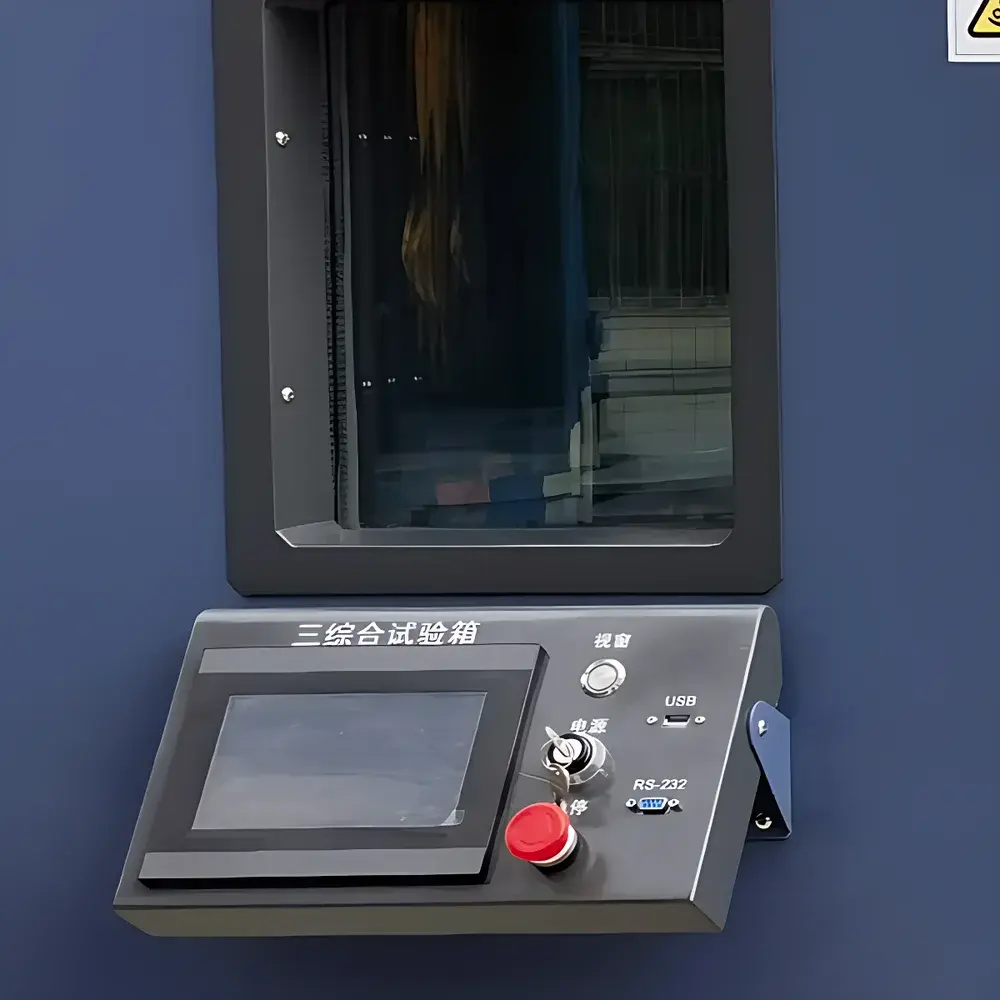
Control and monitoring are executed via OK’s proprietary TriStress™ software suite, running on embedded industrial PC hardware. The interface supports drag-and-drop test profile construction—including nested loops, conditional triggers (e.g., “initiate random vibration upon reaching 85 °C”), and real-time parameter override. Up to 16 analog/digital channels can be logged synchronously (e.g., DUT voltage, thermocouple readings, accelerometer outputs) with 100 Hz sampling resolution. All raw data is stored in vendor-neutral CSV and HDF5 formats, enabling direct import into MATLAB, Python (Pandas), or JMP for statistical life modeling (Weibull analysis, HALT-derived acceleration factors). Audit trails record operator ID, time stamps, setpoint modifications, and alarm events—fully traceable for ISO 9001 or AS9100 internal audits.
Applications
- Automotive electronics: Validation of ADAS controllers under combined desert heat (+85 °C), high humidity (85 %RH), and road-spectrum vibration (ISO 10326-1).
- Aerospace components: Simulating full mission profiles—ground hold (40 °C/60 %RH), climb (−40 °C), cruise (−55 °C/low RH), turbulence (broadband random vibration), and descent—per RTCA DO-160G.
- Medical devices: Accelerated aging of implantable electronics exposed to body-temperature humidity and physiological motion-induced micro-vibration.
- Industrial IoT sensors: Assessing long-term hermetic seal integrity under thermal-hygric cycling while subjected to machinery-induced vibration (10–2000 Hz).
- Packaging validation: Evaluating cold-chain logistics performance—refrigerated transport (2 °C/95 %RH) + highway vibration (ISO 2247 sine sweep)—for pharmaceutical or diagnostic kits.
FAQ
Can the OK-ZTH-520 perform HALT-style testing?
No—it is designed for environment-representative reliability testing, not high-acceleration stress screening. HALT requires higher temperature ramp rates (>50 °C/min), wider vibration spectra, and non-environmental stress extremes; dedicated HALT systems (e.g., Thermotron or Q-Lab HALT chambers) are recommended for that purpose.
Is low-pressure (altitude) simulation supported?
Not natively. The OK-ZTH-520 integrates only temperature, humidity, and vibration. For four-stress testing (including low pressure), OK offers the OK-ZTHP series with integrated vacuum pump and altitude simulation module.
What is the maximum sample size compatible with the standard configuration?
The chamber accommodates samples up to 500 mm (W) × 500 mm (D) × 500 mm (H) when mounted on the standard 15 kg aluminum mass plate. Custom-sized extension tables and fixture adapters are available upon request.
Does the system support third-party data acquisition integration?
Yes—via TCP/IP Ethernet and Modbus TCP protocols. Analog output signals (0–10 V or 4–20 mA) are provided for external DAQ systems, and all internal sensor values are accessible through the TriStress™ API (RESTful JSON endpoints).
How is calibration maintained across combined stress domains?
The system includes built-in NIST-traceable reference sensors for temperature (Class A Pt100) and humidity (capacitive polymer sensor, ±1.5 %RH accuracy). Annual calibration services include cross-domain verification—e.g., confirming humidity stability during active 10 g random vibration at −40 °C.
Related Products



