
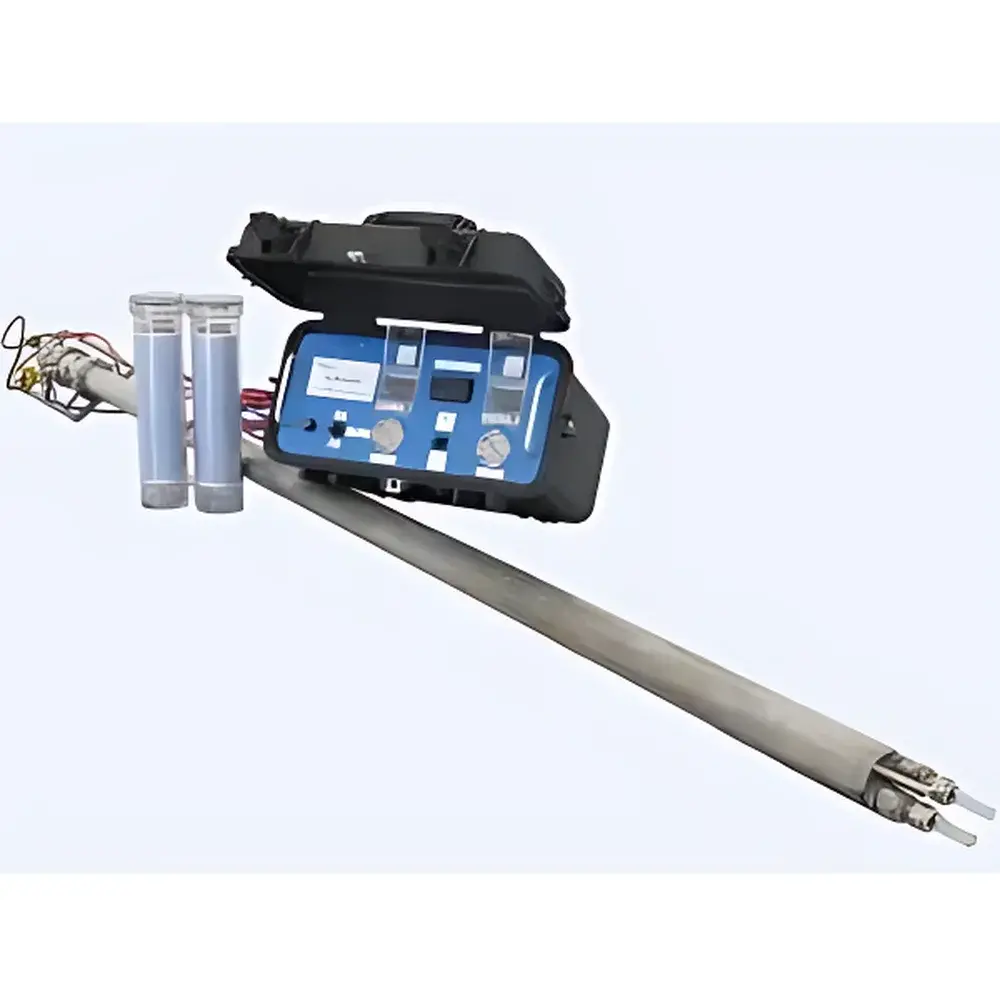
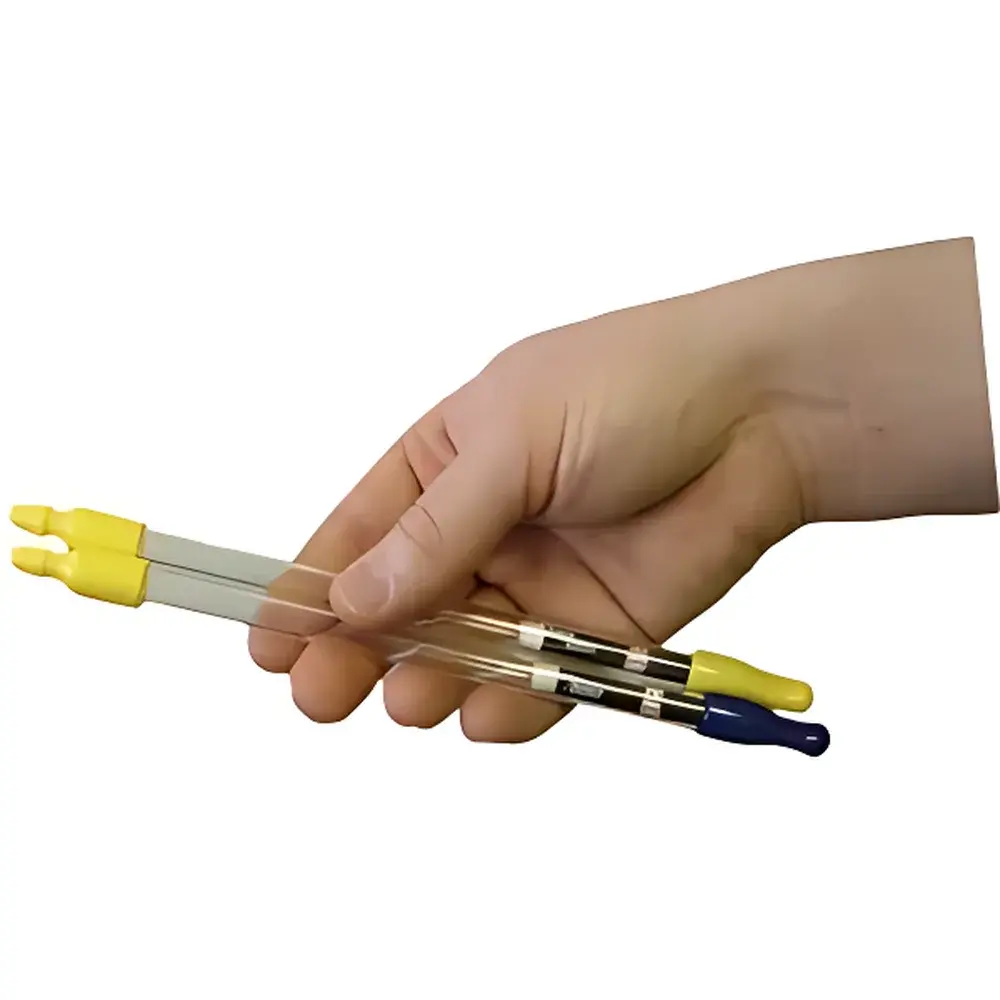
OLM30B Portable Flue Gas Mercury Sampling System
| Brand | — |
|---|---|
| Origin | Beijing, China |
| Manufacturer Type | Authorized Distributor |
| Region | Domestic (China) |
| Model | OLM30B |
| Pricing | Available Upon Request |
| Flow Resolution | 0.01 L/min |
| Repeatability | ±1% FS |
| Maximum Flow Rate | 0–2 L/min |
| Power Supply | 110/220 V AC, 50/60 Hz |
| Power Consumption | 500 W |
| Operating Temperature Range | –10 °C to +50 °C |
| Weight | Air Pump Unit — 6.8 kg |
| Compliance | EPA Method 30B |
Overview
The OLM30B Portable Flue Gas Mercury Sampling System is a field-deployable, dual-channel adsorption-based mercury sampling instrument engineered for regulatory-compliant measurement of total gaseous mercury (TGM) and speciated mercury (Hg0, Hg2+) in industrial flue gas streams. It operates on the principle of controlled isokinetic or non-isokinetic sampling via heated, temperature-stabilized probe assemblies coupled with EPA Method 30B–validated sorbent trap collection (e.g., gold-coated quartz, iodated carbon, or sulfided activated carbon). The system maintains precise flow control across variable stack conditions—regardless of ambient temperature, static pressure fluctuations, or gas composition—by integrating high-stability mass flow controllers (MFCs), a vacuum-regulated diaphragm pump, and real-time thermal monitoring via calibrated thermocouples. Its compact, integrated chassis houses all critical subsystems—including sample conditioning, moisture and acid gas removal, active heating/cooling, and data logging—enabling rapid deployment at coal-fired power plants, waste incinerators, cement kilns, and other stationary emission sources.
Key Features
- Dual independent sampling channels with synchronized flow control, enabling parallel TGM and speciated mercury capture or method validation studies.
- Heated stainless-steel probe (6 ft / 1.83 m length) with full-length thermal uniformity (±2 °C) and integrated cooling purge capability for condensate management and sorbent integrity preservation.
- Integrated wet gas and acidic gas removal: multi-stage impinger train with chilled glycol circulation and alkali scrubbing solution (e.g., NaOH or KCl) to eliminate H2O, SO2, NOx, and HCl prior to sorbent trapping.
- Modular desiccant drying column with colorimetric moisture indicator (blue-to-pink transition) for visual verification of desiccant saturation; refillable and reusable.
- High-accuracy mass flow control unit with 0.01 L/min resolution and ±1% full-scale repeatability across 0–2 L/min range, validated under both low-temperature (–10 °C) and elevated-temperature (50 °C) ambient conditions.
- Onboard programmable controller with non-volatile memory for flow setpoints, duration, and thermal profiles—eliminating manual recalibration between sequential sampling events.
- Rugged, IP54-rated transport case with shock-absorbing foam inserts, designed for repeated field use and compliant with IEC 60529 mechanical durability standards.
Sample Compatibility & Compliance
The OLM30B accommodates standard 10 mm OD quartz or stainless-steel sorbent traps per EPA Method 30B specifications, supporting both single-trap (TGM) and dual-trap (Hg0/Hg2+) configurations. All wet chemistry components are chemically resistant to concentrated acid vapors and condensates. The system meets functional equivalence requirements for ASTM D6784–22 (Standard Test Method for Elemental, Oxidized, Particle-Bound, and Total Mercury in Flue Gas) and supports GLP-aligned documentation when paired with audit-trail-enabled data loggers. While not certified as an EPA-listed CEMS, it satisfies performance criteria outlined in 40 CFR Part 60 Appendix A–8 (Method 30B) for manual reference sampling during relative accuracy testing (RAT) and quality assurance audits.
Software & Data Management
Data acquisition is handled via embedded microcontroller with RS-232/USB interface and optional Bluetooth module. Raw flow, temperature, and pressure logs are timestamped and stored internally (≥10,000 records) with CSV export capability. Optional PC software provides graphical trend analysis, automatic calculation of volumetric dry standard cubic meters (dscm), and generation of EPA-compliant reporting templates—including QA/QC flags for flow deviation (>±5%), temperature excursion (>±5 °C), and trap breakthrough indicators. Firmware supports 21 CFR Part 11–compatible user authentication, electronic signatures, and audit trail logging for regulated laboratories operating under ISO/IEC 17025 or GMP frameworks.
Applications
- Regulatory compliance monitoring for MATS (Mercury and Air Toxics Standards) and EU IED (Industrial Emissions Directive) reporting.
- Source testing and mercury speciation profiling across coal, biomass, and municipal solid waste combustion units.
- Performance evaluation of mercury control technologies (e.g., activated carbon injection, SCR catalysts, wet FGD systems).
- Field validation of continuous emission monitoring systems (CEMS) using EPA Method 30B reference protocols.
- Research-grade mercury partitioning studies under varying flue gas temperature, O2, and halogen concentration conditions.
FAQ
Does the OLM30B meet EPA Method 30B certification requirements?
Yes—the system is functionally aligned with all critical procedural and hardware specifications in EPA Method 30B, including probe heating uniformity, flow control accuracy, sorbent trap compatibility, and moisture/acid gas removal efficacy. Third-party validation reports are available upon request.
Can the system be used for both total and speciated mercury sampling?
Yes—its dual-channel architecture and independently controllable probe heating zones allow simultaneous deployment of oxidized-mercury-specific and elemental-mercury-specific sorbent traps, supporting Hg0/Hg2+ speciation per ASTM D6784 Annex A3.
What maintenance intervals are recommended for field operation?
Desiccant columns should be replaced after each 8-hour sampling shift or upon visible color change; impinger solutions require replenishment before each run; MFC calibration verification is advised every 90 days or after 200 hours of cumulative operation.
Is external power required during sampling?
Yes—the system requires continuous 110/220 V AC input. An optional 12 V DC battery pack (sold separately) supports up to 2.5 hours of uninterrupted operation in remote locations without grid access.
How is traceability ensured for calibration and field use?
Each unit ships with NIST-traceable calibration certificates for thermocouples and MFCs, along with a serialized logbook documenting factory verification tests, shipping inspection, and initial site commissioning data.
Related Products







