
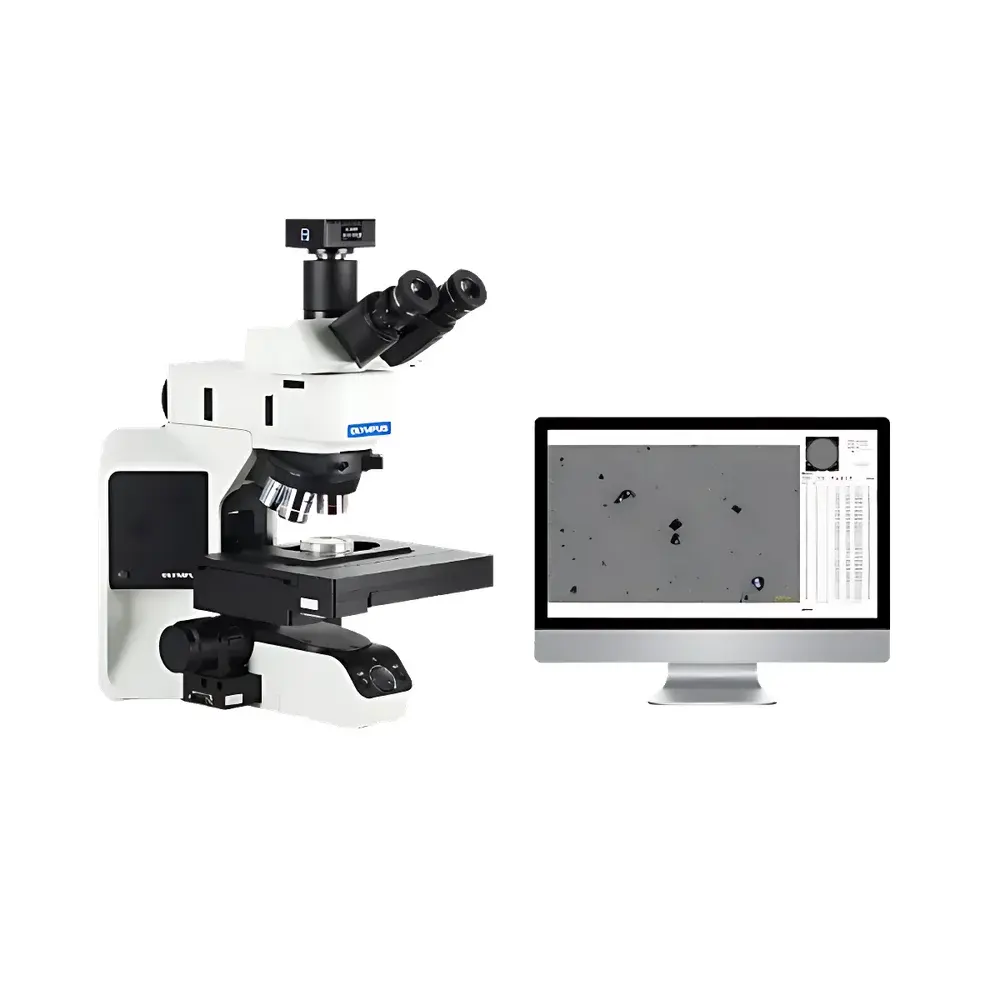
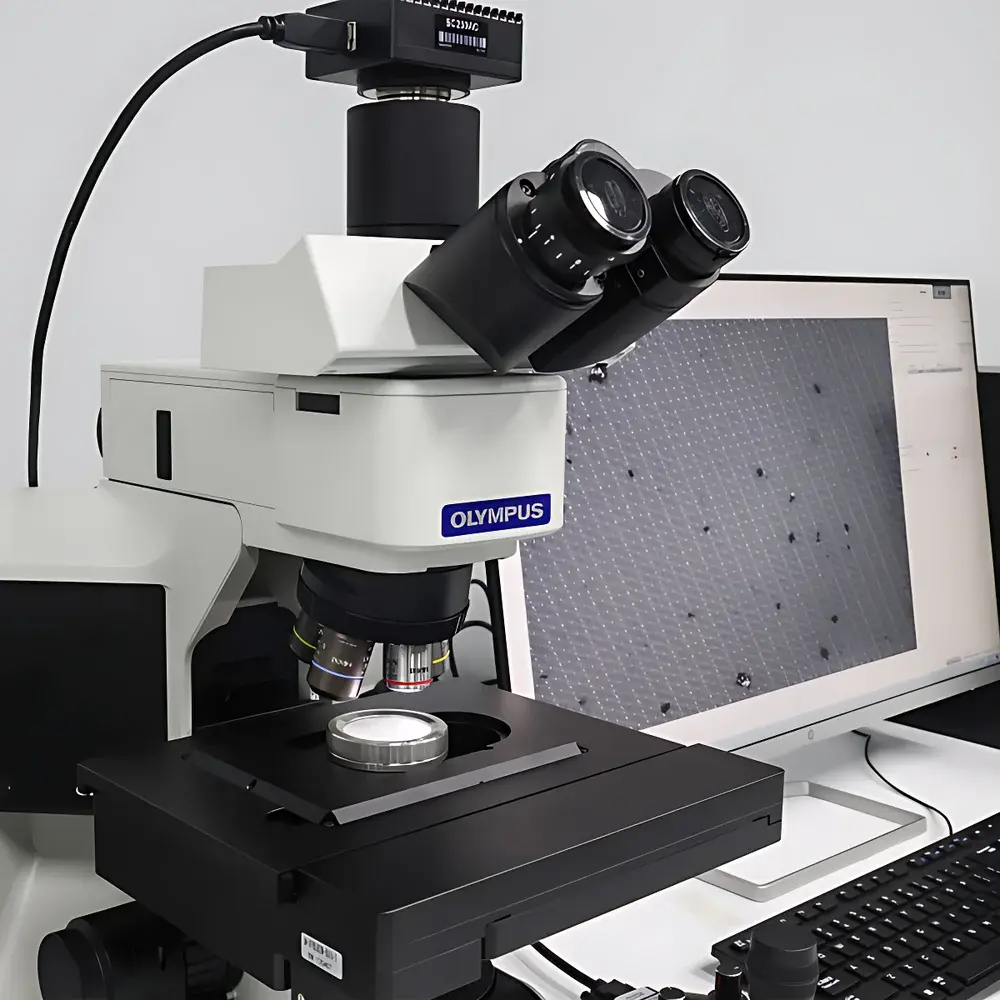
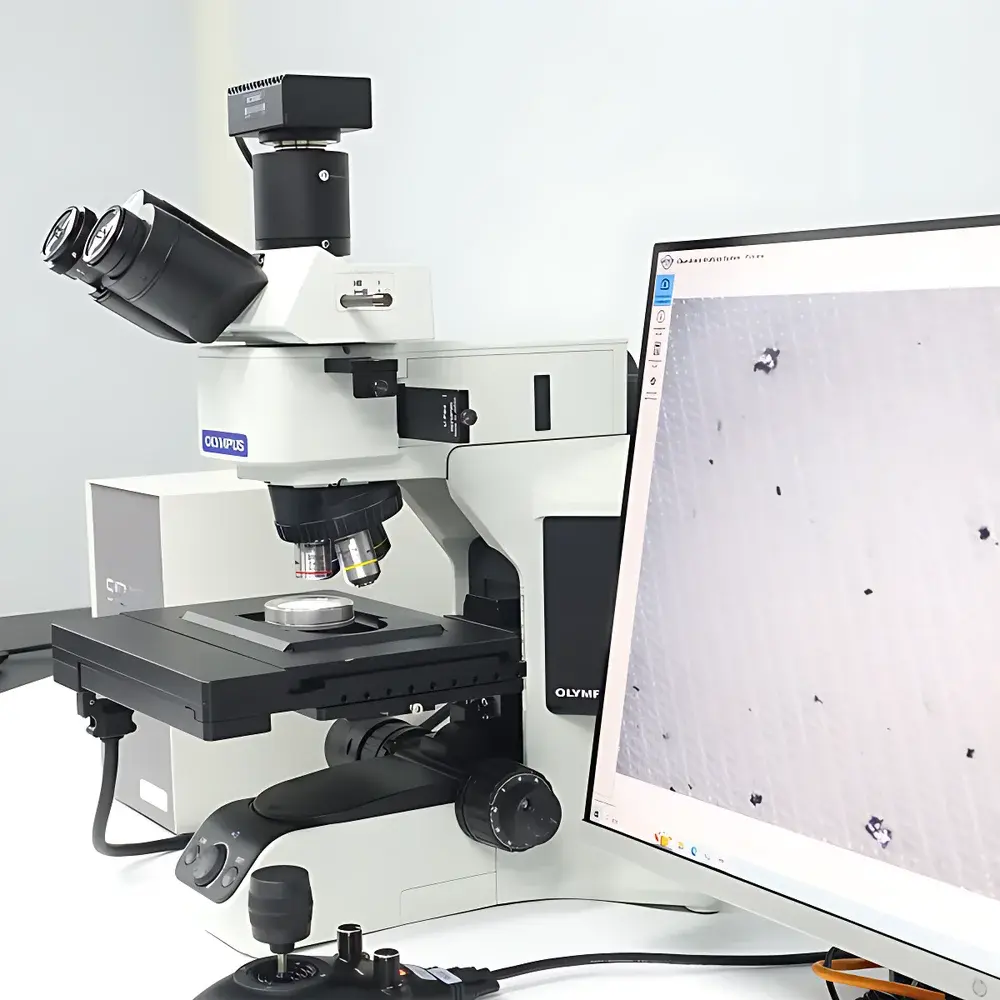
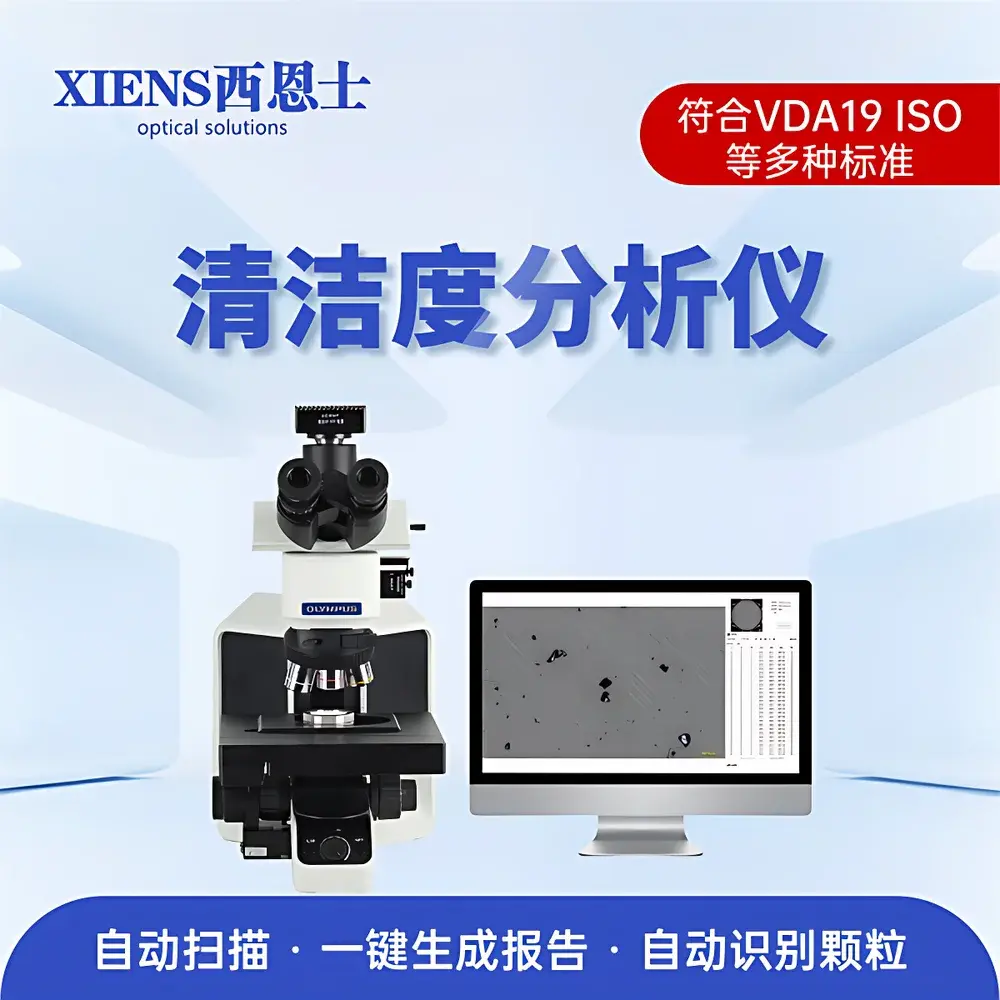
OLYMPUS SinAPC53M Automated Cleanliness Analysis System
| Brand | OLYMPUS |
|---|---|
| Origin | Jiangsu, China |
| Manufacturer Type | Authorized Distributor |
| Origin Category | Domestic |
| Model | SinAPC53M |
| Price | USD 8,200 (FOB) |
Overview
The OLYMPUS SinAPC53M Automated Cleanliness Analysis System is a dedicated optical image-based particulate contamination assessment platform engineered for precision compliance with international automotive and industrial fluid cleanliness standards. Built upon OLYMPUS research-grade upright microscopes—such as the BX53 or BX63 series—the system implements automated brightfield and darkfield imaging combined with high-resolution digital acquisition to quantify particle count, size distribution, morphology, and material classification (e.g., metallic vs. non-metallic, fibrous vs. non-fibrous) on filtration membranes or component surfaces. Its core measurement principle relies on standardized optical contrast analysis under controlled illumination, calibrated against traceable reference particles and validated per ISO/IEC 17025-aligned laboratory practices. Designed explicitly for QC/QA labs in automotive OEMs, Tier-1 suppliers, hydraulic system manufacturers, and lubricant producers, the SinAPC53M delivers repeatable, auditable results required for VDA 19.1, ISO 16232, and ISO 4406 conformance.
Key Features
- Fully automated workflow: integrated motorized XYZ stage control, auto-focus (Z-stack compensation), multi-field mosaic stitching, and sequential image acquisition across user-defined scanning areas—including irregular shapes and multi-zone filters.
- Triple-particle classification engine: simultaneous detection and categorization of reflective particles (e.g., ferrous/non-ferrous metals), non-reflective particles (e.g., rubber, plastics, oxides), and fibers—each configurable with user-defined size thresholds, aspect ratios, and intensity gradients.
- Standards-compliant analysis engine: native support for ISO 4406 (fluid code rating), ISO 4407 (particle counting by microscopy), ISO 16232 (road vehicle component cleanliness), VDA 19.1 (German automotive standard), NAS 1638, GB/T 20082, and GB/T 14039—with automatic pass/fail evaluation against selected limit tables.
- Traceable calibration framework: includes NIST-traceable particle size verification slides and stage calibration routines compliant with ISO/IEC 17025 documentation requirements.
- Robust hardware integration: compatible with OLYMPUS BX-series microscope platforms and PRIOR ProScan III or H117 high-precision motorized stages (±0.1 µm repeatability, 100 mm × 100 mm travel range).
Sample Compatibility & Compliance
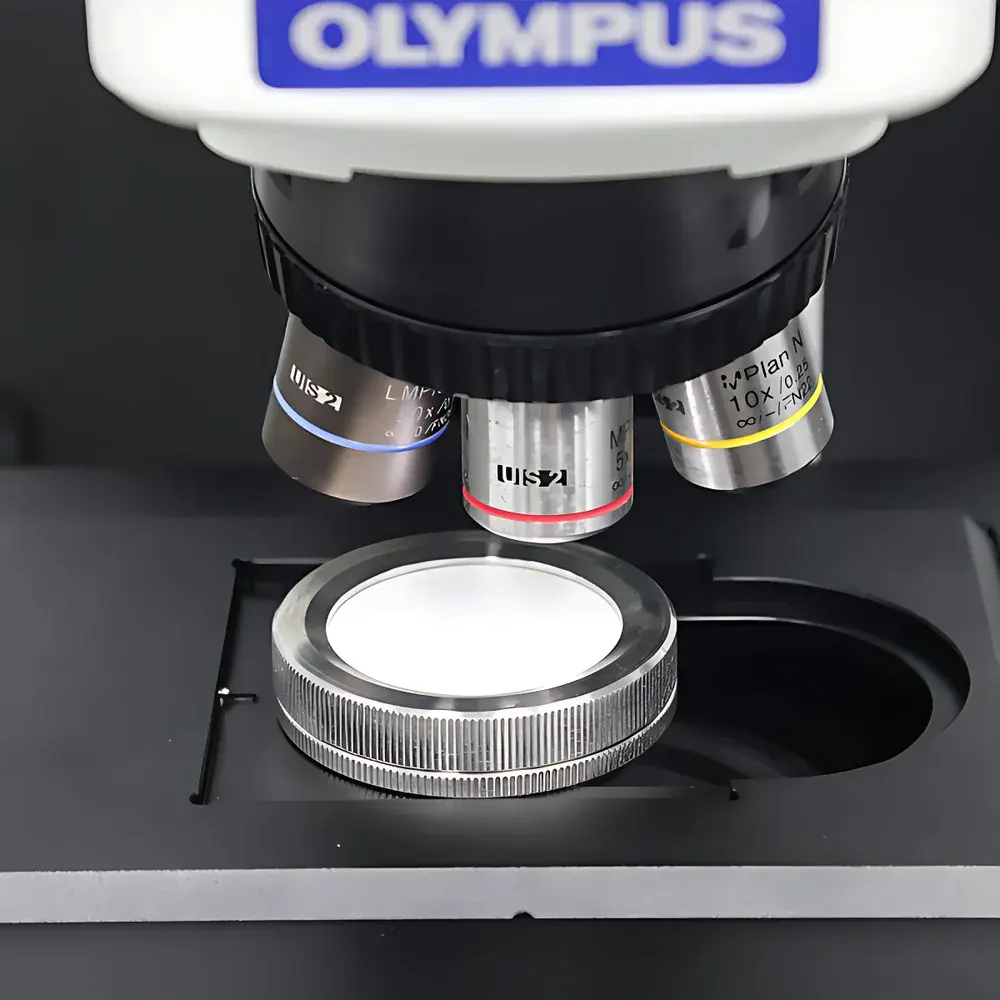
The SinAPC53M accommodates standard 47 mm and 50 mm filtration membranes (cellulose ester, polycarbonate, mixed ester), as well as flat metal or polymer components mounted on custom vacuum chucks or magnetic holders. Sample flattening fixtures minimize membrane curvature artifacts during autofocus. All analytical outputs comply with regulatory documentation requirements for GLP and GMP environments: audit trails record operator ID, timestamp, instrument configuration, software version, and raw image metadata. System validation documentation supports FDA 21 CFR Part 11 readiness when deployed with qualified IT infrastructure and electronic signature protocols.
Software & Data Management
The proprietary SinAPC software (v5.3+) provides a modular, role-based interface with configurable user permissions (administrator, analyst, reviewer). Image acquisition parameters—including exposure time, gain, white balance, and LED intensity—are stored per project and exported with DICOM-compatible metadata. Particle data is saved in SQLite format with full relational indexing; export options include CSV, PDF, XML (for LIMS integration), and structured Excel templates aligned with AIAG CQI-11 reporting conventions. Software updates are delivered via secure OLYMPUS portal with version-controlled release notes and change logs traceable to ISO 13485 design history file requirements.
Applications
- Automotive component cleanliness validation (fuel injectors, brake calipers, transmission valves, EV battery cooling channels)
- Hydraulic and lubricating oil particulate monitoring per ISO 4406 grading
- Filter media qualification and pore-size distribution analysis
- Medical device manufacturing cleanroom surface residue assessment
- Quality gate inspection for machined parts prior to assembly or coating
- Root cause analysis of wear debris in tribology studies
FAQ
Does the SinAPC53M require external calibration services?
No—built-in stage calibration and focus verification routines enable in-house daily performance checks. Annual third-party calibration is recommended for ISO/IEC 17025 accreditation.
Can the system analyze particles smaller than 5 µm?
Yes—when paired with OLYMPUS 100× oil immersion objectives and appropriate pixel binning, the system resolves particles down to 3 µm with statistical confidence at ≥95% detection efficiency per ISO 16232 Annex D.
Is fiber detection validated per ISO 16232-8?
Yes—fiber length, width, and curvature metrics are extracted using morphological skeletonization algorithms validated against ISO 16232-8 reference datasets.
How is data integrity ensured during long-duration scans?
The software implements real-time checksum validation for each acquired frame and auto-recovery checkpoints every 200 fields to prevent data loss from unexpected power interruption.
Can the system be integrated into an existing LIMS or MES?
Yes—via RESTful API and HL7-compliant data export modules, supporting bidirectional communication with LabWare LIMS, Thermo Fisher SampleManager, and Siemens Opcenter Quality.





