OMEC At-line Online Particle Size Monitoring and Control System
| Brand | OMEC |
|---|---|
| Origin | Guangdong, China |
| Manufacturer Type | Direct Manufacturer |
| Regional Category | Domestic (China) |
| Model | OMEC At-line |
| Pricing | Upon Request |
Overview
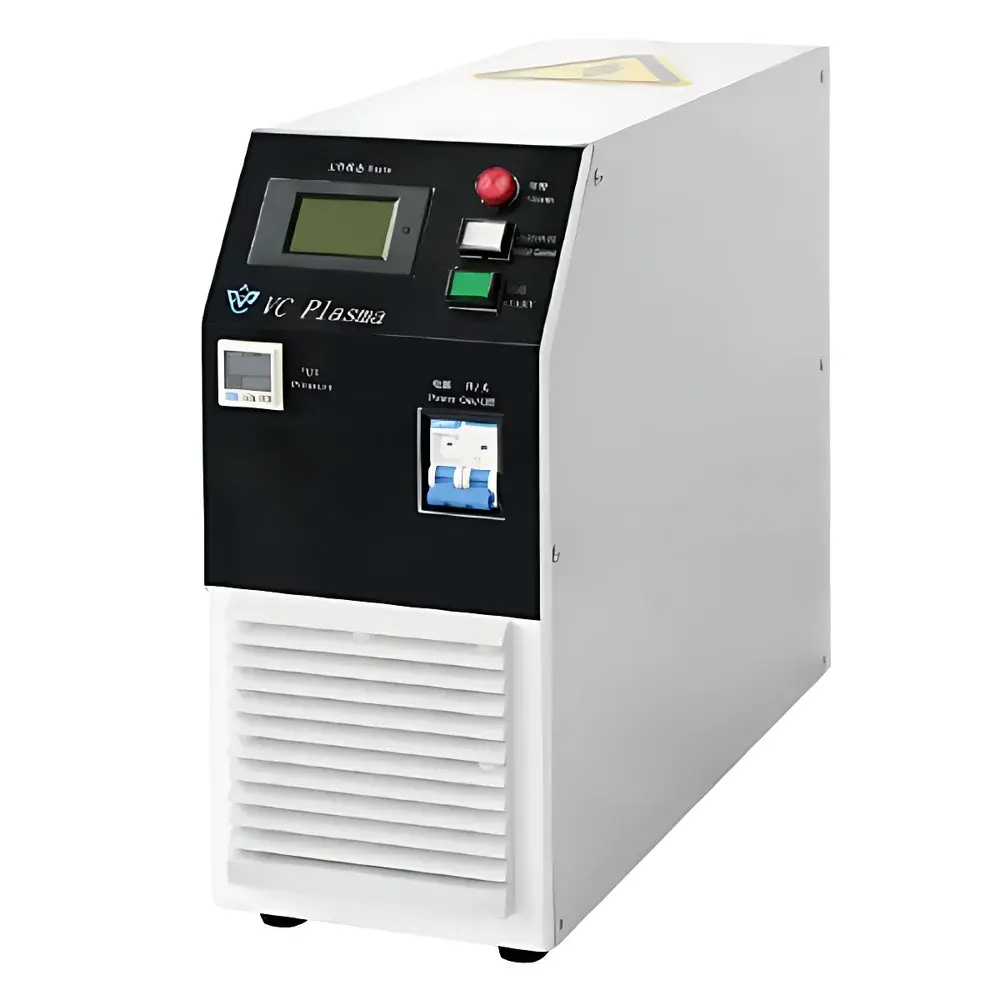
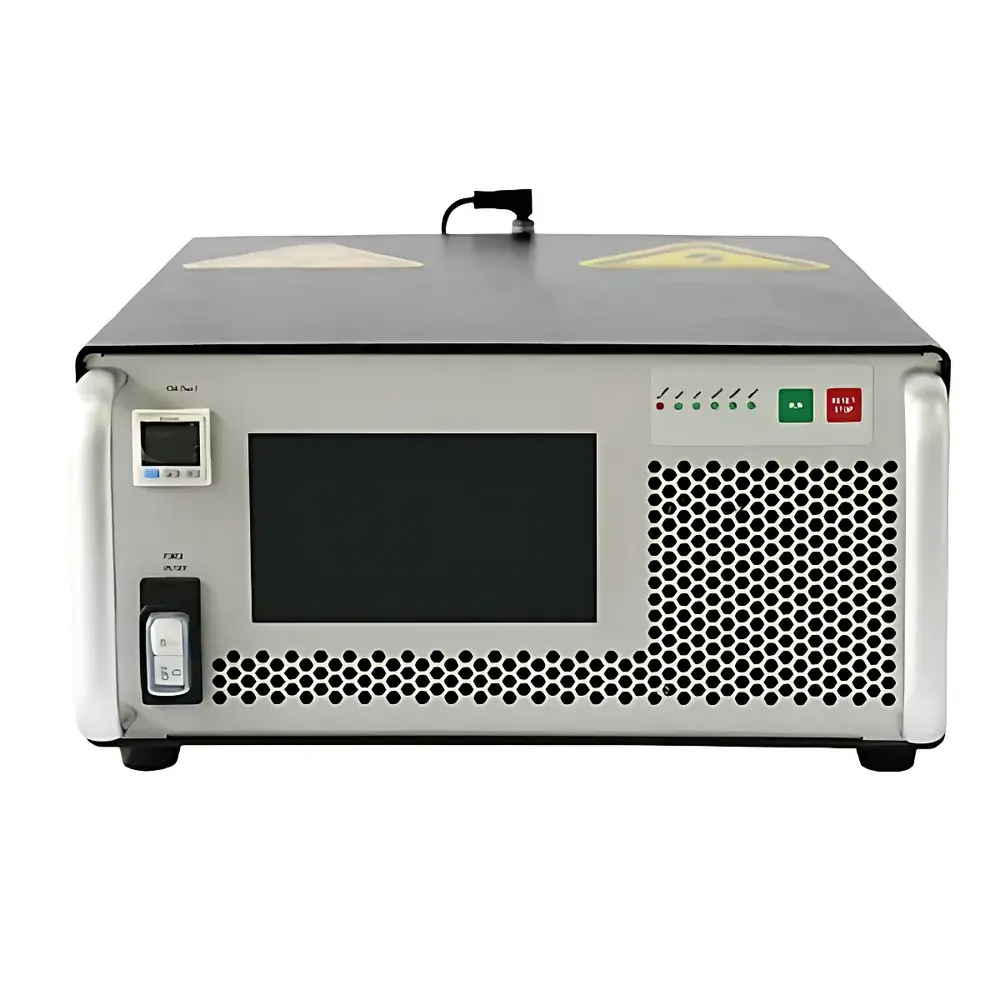
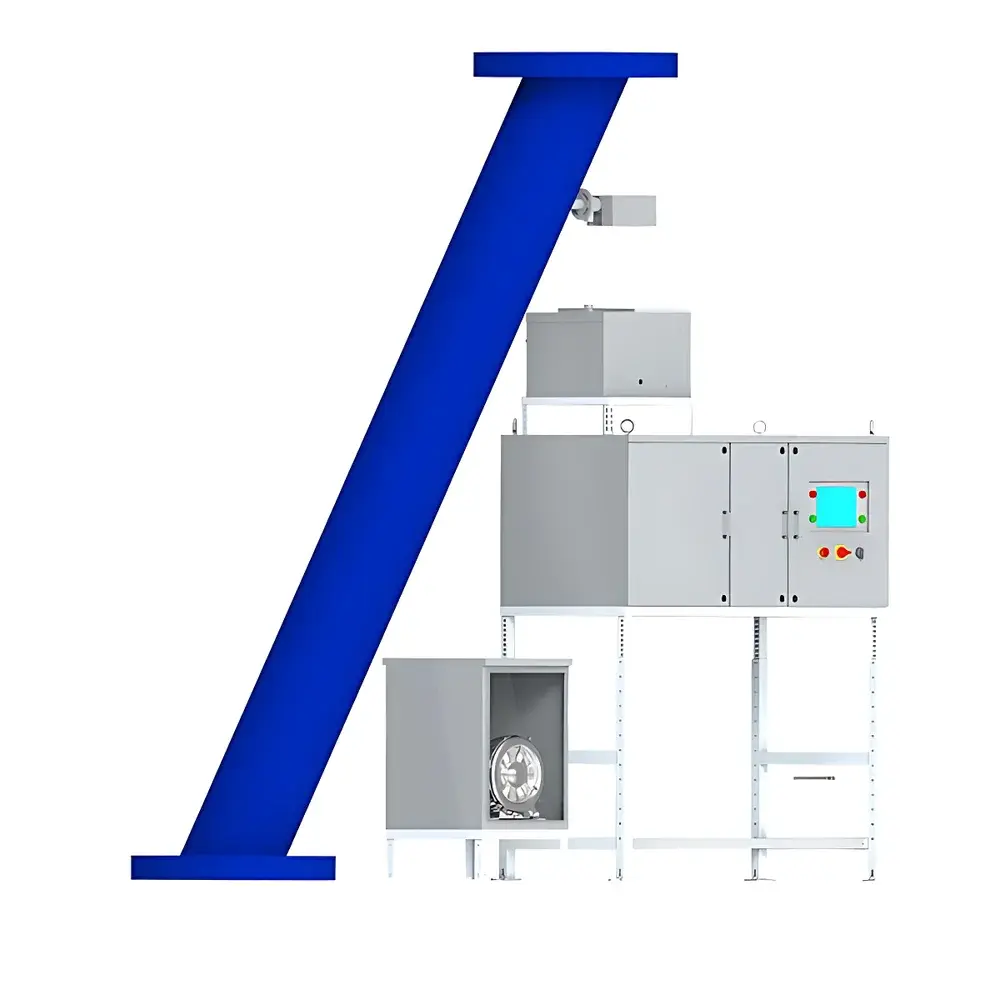
The OMEC At-line Online Particle Size Monitoring and Control System is an industrial-grade, at-line laser diffraction particle size analyzer engineered for continuous, real-time process monitoring in bulk solid manufacturing environments. It operates on the fundamental principle of Mie scattering theory: when a collimated He-Ne laser beam interacts with particles dispersed in a carrier gas stream, the angular distribution of scattered light is inversely correlated with particle diameter—larger particles scatter at smaller angles, while finer particles produce wider-angle scattering patterns. The system captures this two-dimensional intensity distribution using a high-resolution, multi-ring photodetector array and reconstructs the volumetric particle size distribution (PSD) via robust inverse algorithms validated against ISO 13320:2020. Unlike conventional offline lab analyzers, the At-line system integrates tightly into production infrastructure—sampling directly from pneumatic or mechanical conveying lines—and delivers representative, time-stamped PSD data at user-defined intervals (e.g., every 5–15 minutes), enabling closed-loop feedback control without operator intervention.
Key Features
- Multi-path, multi-inlet helical sampling probe with adaptive DC motor speed control—dynamically adjusts to pipeline pressure, mass flow rate, and material heterogeneity to ensure statistically representative sampling across wide PSD ranges (e.g., cement, slag, coal powder).
- Two-stage sample division and return architecture—prevents material accumulation, isolates test chamber from line pressure fluctuations, and maintains consistent dispersion dynamics.
- Integrated dry dispersion module with continuously adjustable air pressure (0.05–0.5 MPa), sapphire ceramic dispersion tube, precision vibration control, and dual-pressure sensing (dispersion & vacuum) for full parameter traceability.
- Optimized Fourier-transform optical design featuring a 556 mm focal length single-lens configuration—minimizes optical path reflections, reduces background noise, enhances signal-to-noise ratio, and improves resolution for both sub-3 µm fines and >65 µm coarse fractions.
- Sealed, maintenance-free He-Ne gas laser source—provides superior wavelength stability (632.8 nm), low beam divergence, and long operational lifetime (>10,000 hours), critical for unattended industrial deployment.
- Air-knife assisted turbulent-flow window cleaning—eliminates manual cleaning cycles; demonstrated >90 days of uninterrupted operation with RSD <2% for key fractions (e.g., 3–32 µm, 45 µm residue) under simulated PO42.5 cement conditions.
Sample Compatibility & Compliance
The OMEC At-line system is validated for use with free-flowing, dry particulates including Portland cement, granulated blast furnace slag, limestone filler, pulverized coal, and other mineral powders with D90 ranging from 10 µm to 120 µm. Its sampling and dispersion methodology complies with ASTM C117 and ISO 9276-2 for representative sampling of heterogeneous streams. Data integrity meets GLP/GMP-aligned requirements: all test parameters—including dispersion pressure, acquisition time, and environmental sensor readings—are timestamped, logged, and exportable in CSV/Excel format. Optional audit trail and electronic signature modules support FDA 21 CFR Part 11 compliance when integrated with validated LIMS or MES platforms.
Software & Data Management
The embedded control software provides native support for industrial communication protocols including Modbus RTU (RS-485), PROFIBUS DP, PROFINET, and OPC UA. Real-time particle size metrics—including D10, D50, D90, D97, % retained on 45 µm/80 µm sieves, weight-specific surface area, and user-defined fraction abundances (e.g., 3–32 µm, 32–65 µm)—are published via Ethernet to DCS/SCADA systems or accessible remotely through web-based dashboards and authenticated WeChat Mini Programs. Automated anomaly detection triggers configurable alarms (e.g., D50 drift >±1.5 µm over 3 consecutive cycles), initiating notifications via email or SMS. All raw scattering patterns and processed PSDs are stored locally with SHA-256 checksum validation and can be synchronized to network-attached storage for long-term trend analysis and batch traceability.
Applications
The system is deployed across cement grinding circuits, mineral powder classification loops, coal pulverizing mills, and additive manufacturing feedstock preparation lines. Typical use cases include: optimizing ball mill classifier settings based on real-time D50 feedback; reducing overgrinding energy consumption by maintaining tight 45 µm residue control; accelerating grade changeovers via rapid transient sampling during product transitions; and replacing manual lab testing to eliminate human sampling bias and turnaround delays. Field deployments demonstrate reductions in quality-related scrap rates by up to 22% and calibration drift-induced false alarms by >65% compared to legacy point-sampling + offline analysis workflows.
FAQ
What particle size range does the OMEC At-line system cover?
The system is optimized for dry powders with primary distributions spanning approximately 0.1 µm to 1000 µm, with highest accuracy and resolution in the 1–100 µm range typical of cementitious and mineral materials.
Can it replace offline laboratory laser diffraction analyzers?
Yes—system validation per ISO 13320 confirms correlation R² ≥ 0.995 with OMEC’s benchtop LS series instruments when tested on identical reference samples under matched dispersion conditions.
How is calibration maintained during continuous operation?
The system employs factory-calibrated optical alignment fixtures and stable He-Ne laser output; no routine recalibration is required. Optional NIST-traceable PSL standard verification runs can be scheduled automatically or on-demand.
Is hazardous area certification available?
ATEX Zone 22 and IECEx certification options are available upon request for installations in combustible dust environments.
What maintenance intervals are recommended?
With air-knife cleaning enabled, optical window inspection is recommended every 90 days; full preventive maintenance (filter replacement, seal check, pressure sensor verification) is scheduled annually or after 8,000 operating hours.