
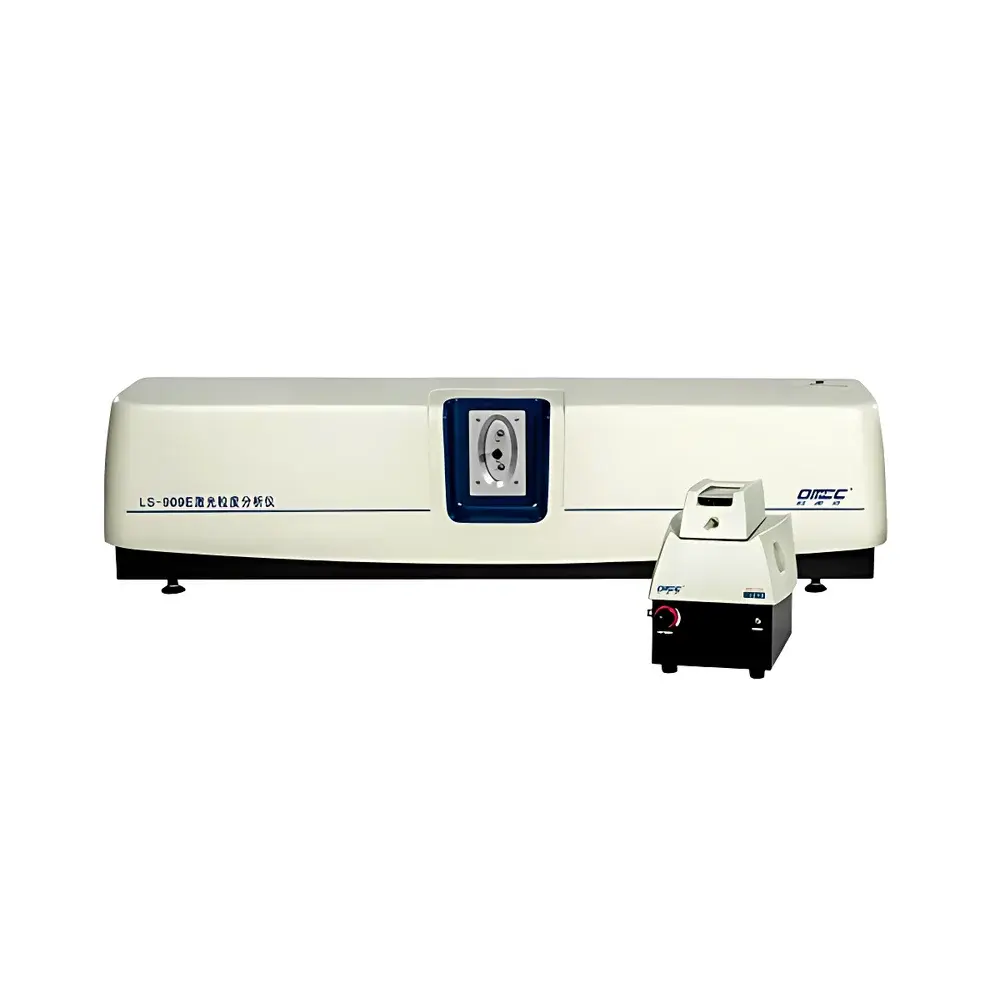
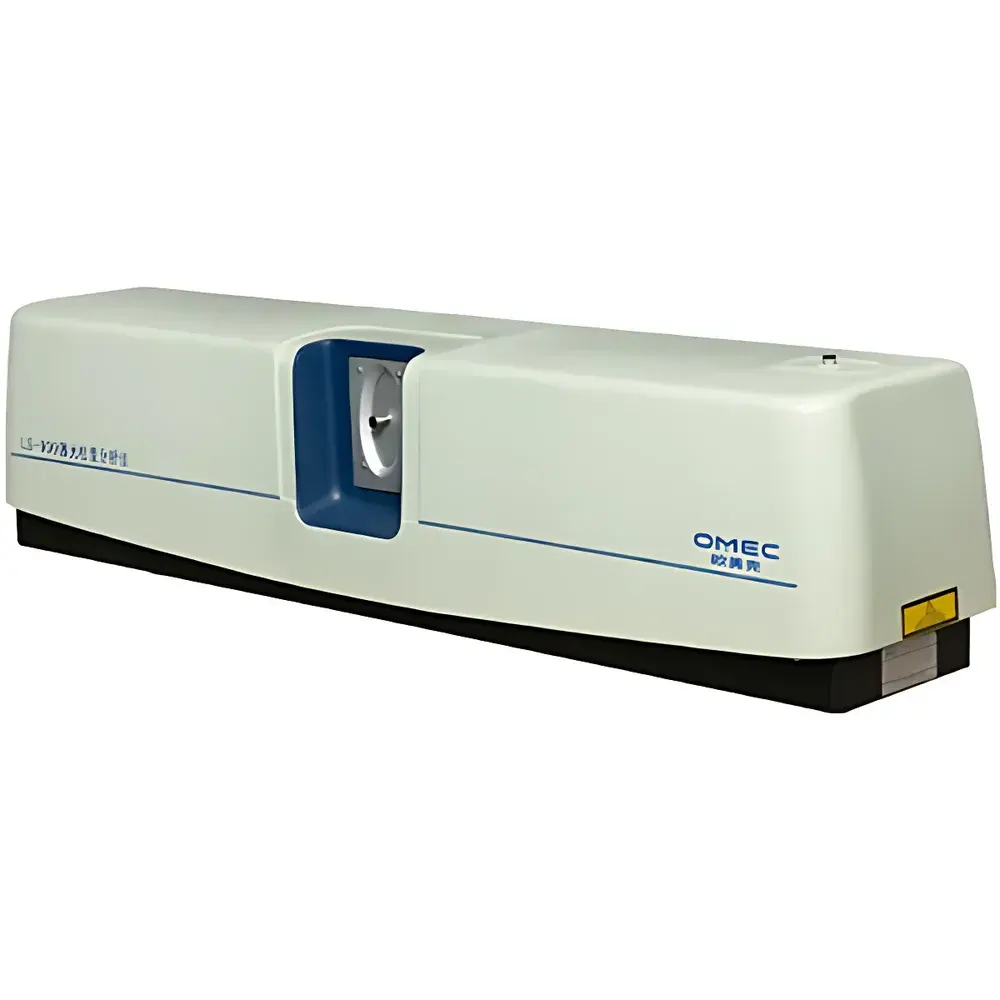
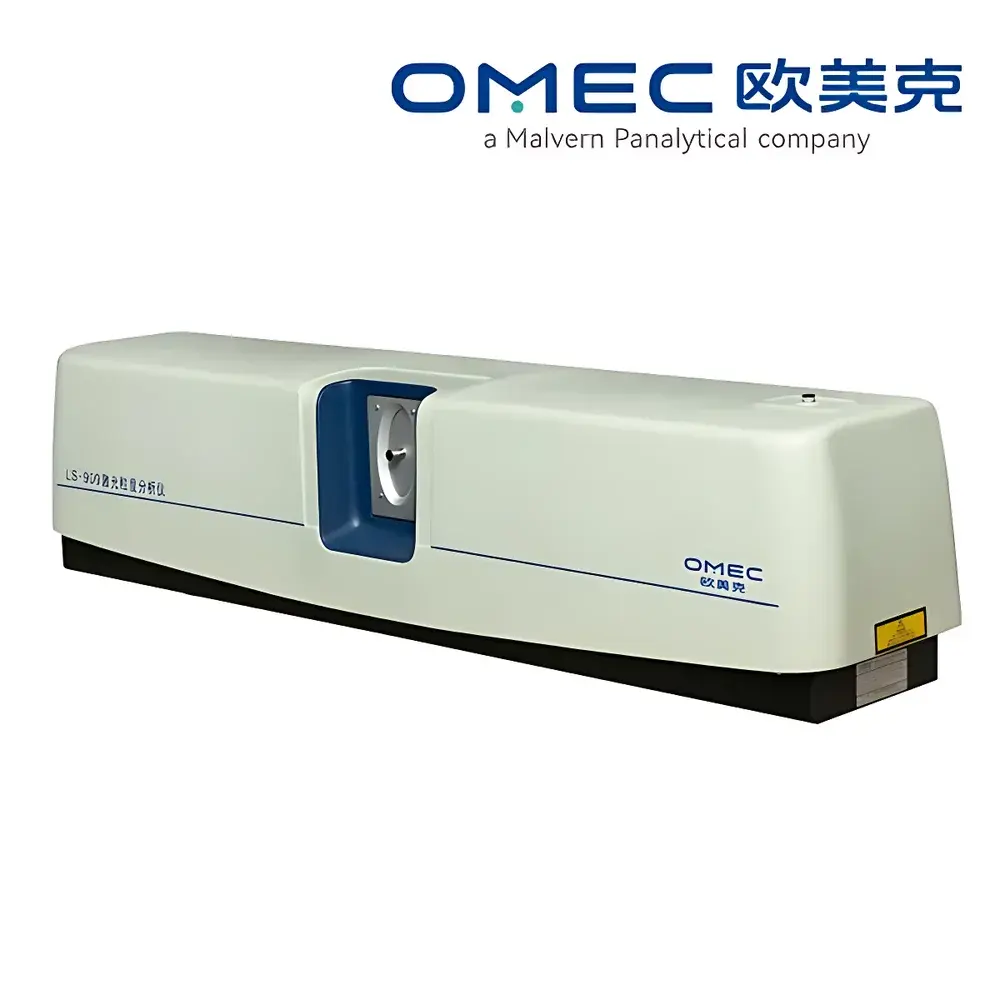
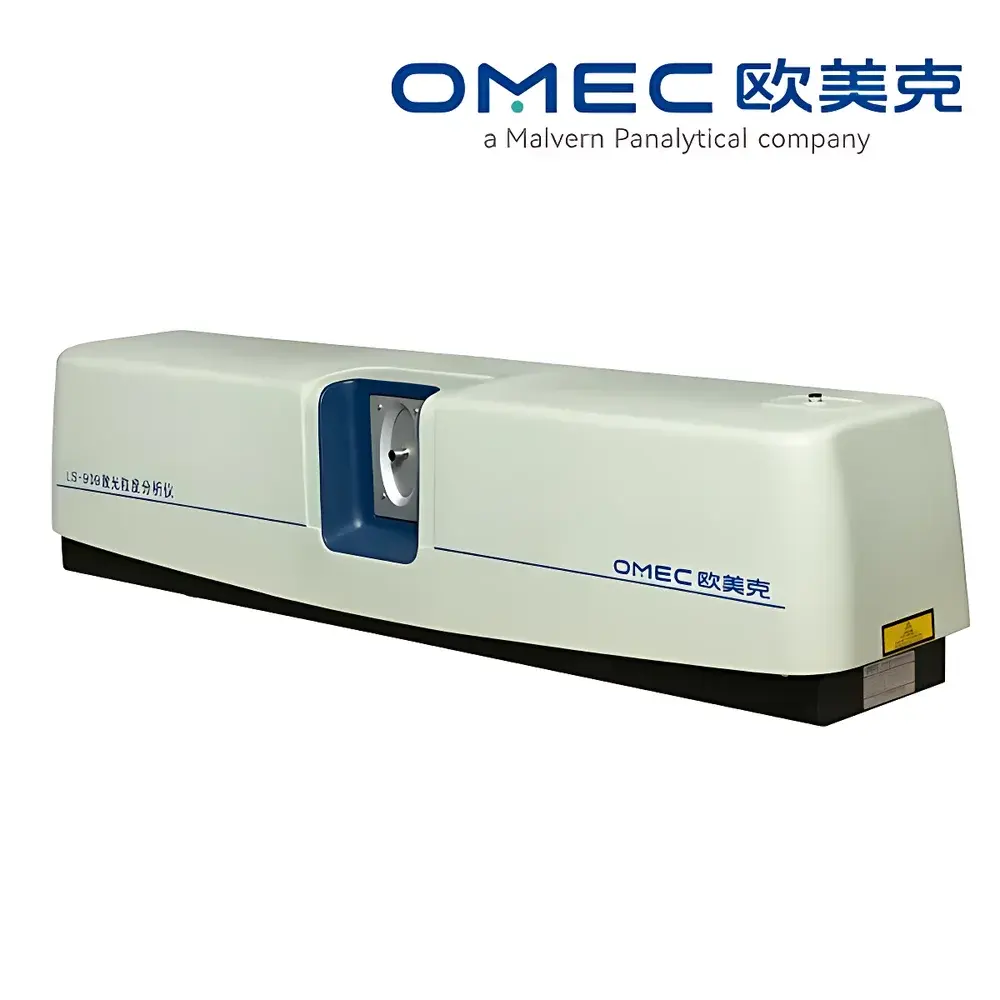
OMEC LS-909 Dry/Wet Dual-Mode Laser Particle Size Analyzer
| Brand | OMEC |
|---|---|
| Origin | Guangdong, China |
| Manufacturer Type | Direct Manufacturer |
| Region Category | Domestic (China) |
| Model | LS-909 |
| Pricing | Upon Request |
| Dispersion Method | Dry & Wet Dispersion |
| Instrument Type | Laboratory Laser Particle Size Analyzer |
| Measurement Range | 0.02–3000 µm (wet), 0.1–3000 µm (dry) |
| Repeatability | <0.5% (D50 standard deviation) |
| Measurement Time | 1–2 minutes |
Overview
The OMEC LS-909 Dry/Wet Dual-Mode Laser Particle Size Analyzer is a high-precision laboratory instrument engineered for robust, reproducible particle size distribution (PSD) analysis across an exceptionally wide dynamic range—from sub-20 nm colloidal dispersions to coarse granular materials up to 3 mm. It operates on the physical principle of laser light scattering (diffraction and Mie scattering), where a collimated He-Ne laser beam interacts with dispersed particles, generating angularly dependent scattering patterns. These patterns are captured by a multi-angle photodetector array and quantitatively interpreted using full-range Mie theory—enabling rigorous, physics-based sizing without empirical calibration. The LS-909 integrates a long-focal-length (556 mm) Fourier transform optical design, optimized dual-backscatter and reverse-scatter detection geometry, and a thermally stabilized, hard-sealed helium-neon (He-Ne) laser source (λ = 632.8 nm, ≥2.0 mW). Its modular, dust- and stray-light-resistant optical platform ensures long-term stability and minimal maintenance, while its dual-inlet architecture enables seamless, software-controlled switching between dry and wet dispersion modes—eliminating mechanical reconfiguration and reducing cross-contamination risk.
Key Features
- Full-range Mie theory-based analysis with automatic refractive index matching—supports user-defined complex optical constants (real and imaginary parts) from an embedded database of 200+ common materials.
- 91-channel photodetector array arranged in a true 3D立体 configuration: forward, side, large-angle (>160°), dual backward, and reverse-scatter sectors—all precisely positioned on the Fourier focal plane for optimal signal fidelity and dynamic range.
- High-stability He-Ne laser source with <0.1% power drift over 8 hours; no gas replenishment or tube replacement required over instrument lifetime.
- Intelligent auto-alignment system with 0.2 µm positional resolution and real-time feedback—ensures optical axis integrity before every measurement and compensates for thermal drift.
- Dual-port sample interface enabling concurrent connection of DPF-110 dry feeder and SCF-105B wet circulator; software auto-detects active inlet and configures acquisition parameters accordingly.
- Advanced signal acquisition: 18-bit, 8-channel parallel ADC with 10 kHz sampling rate and sub-0.15% full-scale background discrimination—enhancing low-signal sensitivity for nanoparticles and improving large-particle resolution.
- Integrated noise suppression algorithms—including adaptive electronic background compensation, spatial filtering, and laser power stabilization—deliver consistent signal-to-noise ratio across the entire measurement range.
Sample Compatibility & Compliance
The LS-909 accommodates diverse particulate systems: aqueous and organic suspensions (via SCF-105B/SCF-108A/SCF-126B wet dispersers), dry powders (via DPF-110 air-jet dispersion), and aerosolized solids. Its dry dispersion module employs alumina ceramic dispersion tubes, hardened optical windows with laminar airflow protection, and real-time pressure monitoring (0.05–0.5 MPa, ±0.01 MPa accuracy) with automatic under-pressure alerting. The wet system features 316L stainless-steel sample cells, 50 W adjustable ultrasonication (0–100% power, 0–300 s duration), and self-priming centrifugal pumping (0–4000 rpm, flow rate up to 2.5 L/min). All hardware and firmware comply with IEC 61000-6-3 (EMC) and IEC 60825-1 (Class 1 laser safety). Software architecture conforms to FDA 21 CFR Part 11 and EU Annex 11 requirements, supporting role-based user access control, electronic signatures, audit trails, and immutable data archiving—fully auditable for GLP, GMP, and ISO/IEC 17025 environments.
Software & Data Management
OMEC’s proprietary LS Series Analysis Software is built on a modular, object-oriented framework with real-time instrument status visualization and guided workflow navigation. It supports SOP-driven operation with programmable sequences for dispersion, sonication, measurement, and cleaning—reducing operator dependency and inter-lab variability. Data processing includes volumetric, surface-area, length, and number-based distributions with bidirectional conversion; customizable percentile reporting (D10, D50, D90, D99), specific surface area calculation, and trend analysis across batch histories. Reports are exportable to PDF, Excel, Word, and CSV formats; graphical overlays allow direct comparison of up to eight measurements. The software includes a fully extensible material property database, parametric report templating (with logo, headers, multi-column layouts), and compliance-ready features: user-level permissions, session logging, change tracking, and electronic signature validation per 21 CFR Part 11 §11.10 and §11.300.
Applications
The LS-909 serves critical quality control and R&D functions across regulated and industrial sectors. In pharmaceuticals, it verifies API crystallinity, excipient homogeneity, and inhaler aerosol performance (dry mode). In cement and mineral processing, it monitors clinker fineness, slag reactivity, and limestone grinding efficiency. Battery material labs use it to characterize cathode/anode powders (e.g., NMC, graphite) and slurry stability. Ceramics, pigments, catalysts, and food ingredient manufacturers rely on its ability to resolve multimodal distributions in polydisperse systems—such as emulsions, nanosuspensions, and agglomerated metal oxides. Its sub-100 nm capability supports nanomaterial safety assessment (ISO/TR 13014), while its 3 mm upper limit meets ASTM C136 and ISO 13320 sieve correlation requirements.
FAQ
Does the LS-909 require routine optical recalibration?
No. Its self-aligning optical train, factory-aligned detector geometry, and reference-free He-Ne laser eliminate the need for user calibration—only periodic verification with NIST-traceable standards is recommended per ISO 22412.
Can the same sample be measured sequentially in both dry and wet modes without hardware intervention?
Yes. The dual-port design and software-controlled inlet selection enable immediate mode switching—no manual disassembly, realignment, or window cleaning is required between tests.
Is the software validated for use in FDA-regulated environments?
Yes. The optional GMP-compliant software package includes 21 CFR Part 11 enforcement modules, IQ/OQ documentation templates, and a full validation support kit for installation and operational qualification.
What is the minimum detectable particle size under wet dispersion conditions?
The theoretical lower limit is 0.02 µm (20 nm), contingent upon sample refractive index contrast, dispersion stability, and signal-to-noise ratio—verified using polystyrene latex standards per ISO 13320 Annex B.
How does the LS-909 handle highly cohesive or electrostatic powders in dry mode?
The DPF-110 feeder incorporates variable-vibration feed control, angled hopper geometry, and pressure-tuned jet dispersion—allowing optimization of deagglomeration energy without mechanical shear or thermal degradation.



