
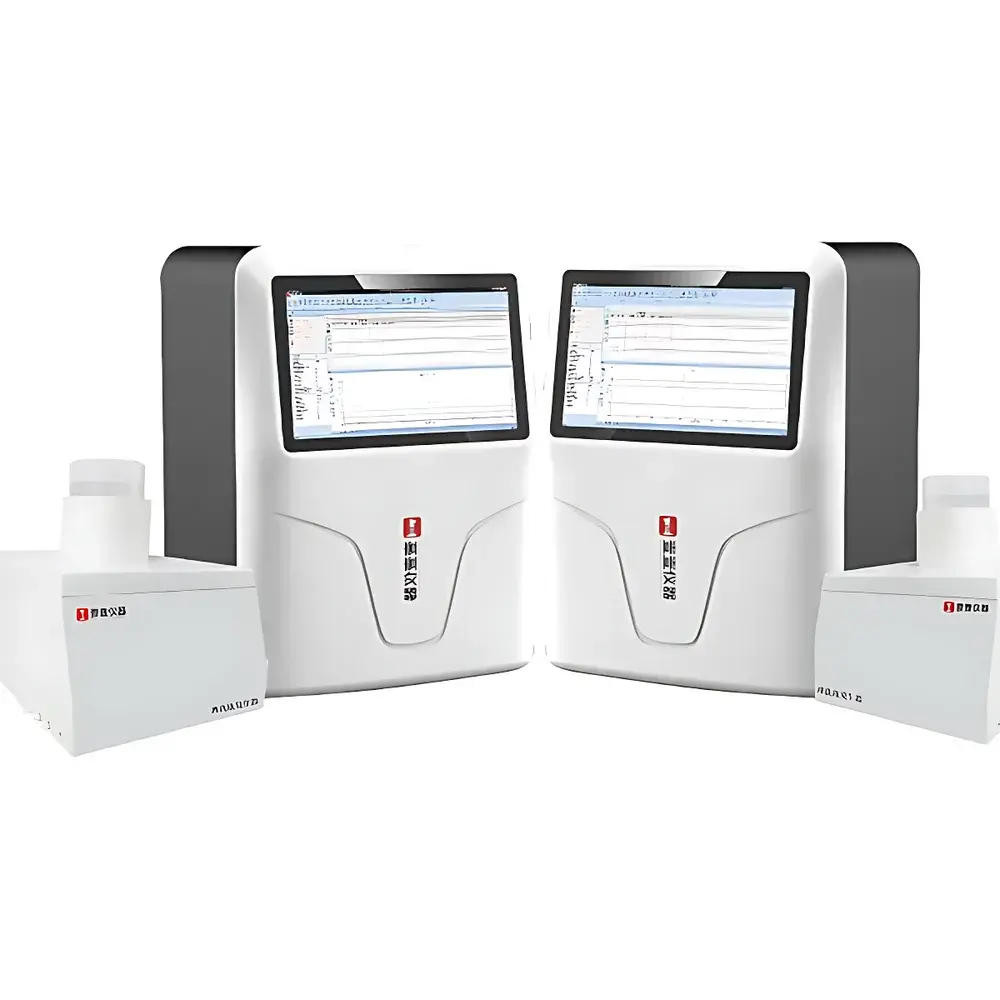
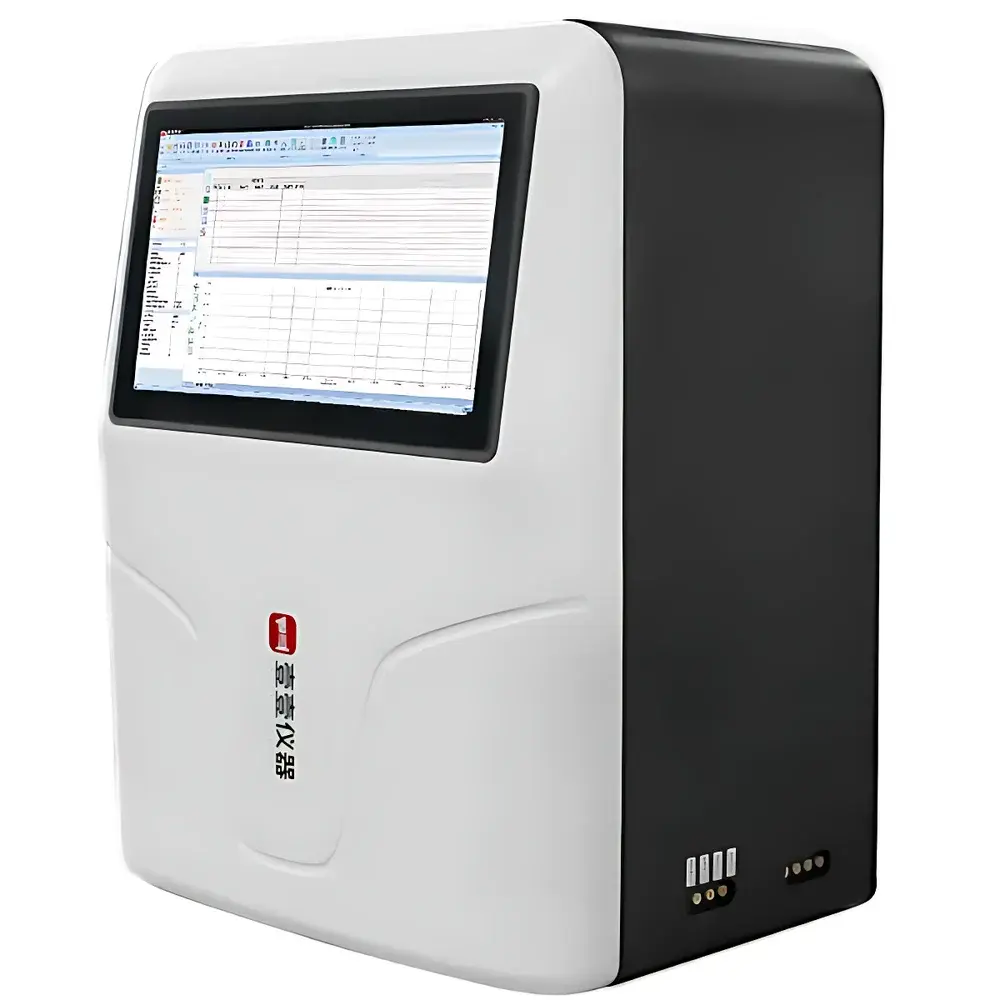
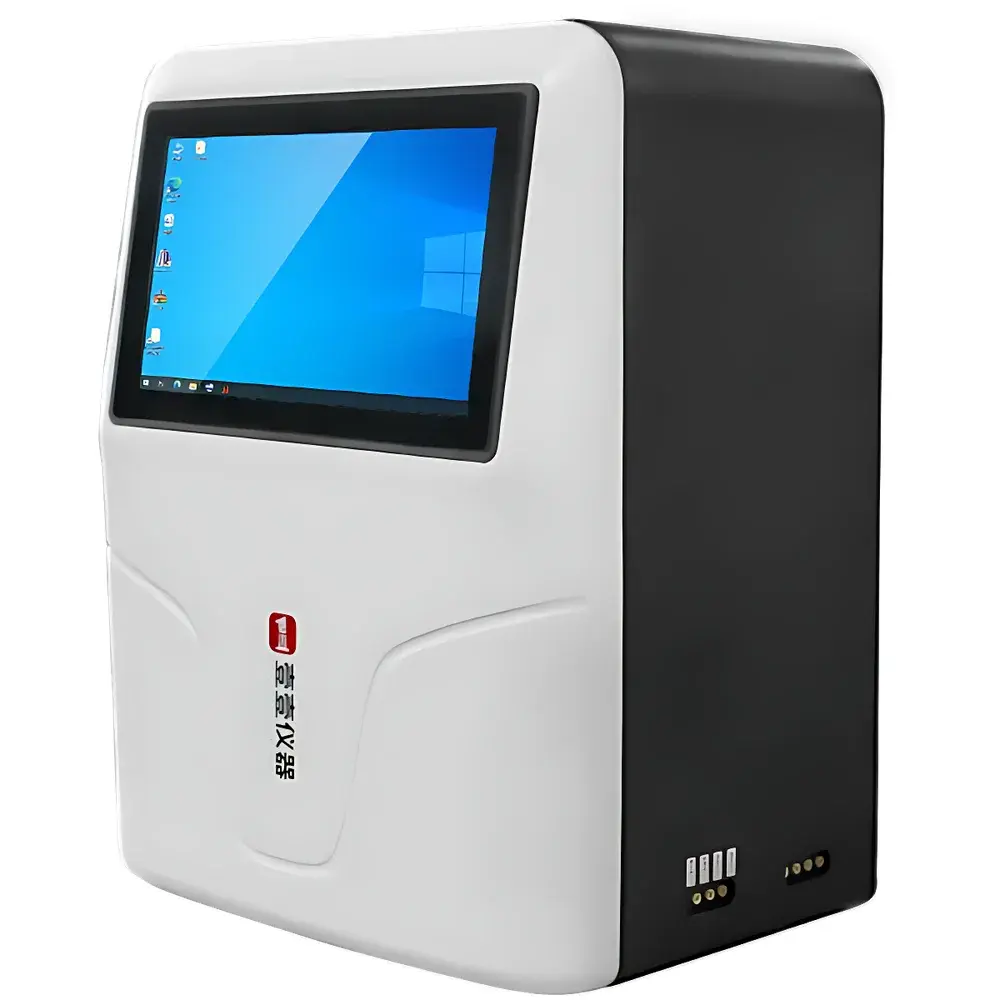
ONE ONE INSTRUMENT IC1700 Ion Chromatograph
| Brand | ONE ONE INSTRUMENT |
|---|---|
| Origin | Shandong, China |
| Manufacturer Type | Direct Manufacturer |
| Instrument Category | Domestic |
| Model | IC1700 |
| Application Scope | Laboratory-Based General-Purpose Ion Analysis |
| Maximum System Pressure | 0–36 MPa |
| Flow Rate Range | 0.00–10.00 mL/min |
| Eluent Flow Rate Range | 0.00–10.00 mL/min |
| Operating Temperature Range | +5 °C to +65 °C |
| Temperature Reproducibility | ±1 °C |
| Eluent Concentration Range | 0–100 mmol/L (KOH) |
Overview
The ONE ONE INSTRUMENT IC1700 Ion Chromatograph is a dual-channel, high-pressure laboratory ion chromatography system engineered for precise, reproducible separation and quantitative detection of inorganic and small organic ionic species in aqueous matrices. Based on suppressed conductivity detection with optional amperometric detection capability, the IC1700 employs high-efficiency anion- and cation-exchange chromatography principles—utilizing eluent generation, gradient elution, and post-column suppression—to achieve low detection limits and robust baseline stability. Designed for routine compliance testing and research-grade analysis, the system supports both isocratic and gradient elution modes, with full integration of temperature-controlled separation columns, electrochemical detection modules, and automated fluid handling components. Its architecture conforms to fundamental requirements for GLP-compliant laboratories, including traceable temperature control, pressure monitoring, and system suitability verification protocols.
Key Features
- Dual independent chromatographic channels enabling simultaneous anion and cation analysis without cross-interference or hardware reconfiguration
- High-pressure PEEK dual-piston pump capable of stable operation up to 36 MPa, delivering flow accuracy ≤±0.1% RSD across 0.00–10.00 mL/min range with chemical resistance to KOH, methanesulfonic acid, and other common eluents
- Intelligent temperature-controlled column compartment (+5 °C to +65 °C) with ±1 °C reproducibility, minimizing retention time drift and enhancing method transferability
- Modular detector support: Conductivity detector with digital signal processing and optional pulsed amperometric detection (PAD) module for carbohydrate, amino acid, and thiol analysis
- Electronically actuated six-port injection valve driven by stepper motor, ensuring repeatable injection volume (0.1–100 µL), minimal carryover (<0.01%), and long-term mechanical reliability
- Configurable autosampler options—including Cartesian 3D and polar-coordinate configurations—with programmable vial mapping, needle wash cycles, and refrigerated sample tray (4 °C–10 °C)
- Integrated eluent generator compatible with potassium hydroxide (0–100 mmol/L), enabling on-demand high-purity eluent synthesis and eliminating manual preparation variability
Sample Compatibility & Compliance
The IC1700 is validated for analysis of environmental, pharmaceutical, food, and clinical samples per widely adopted regulatory methods. It meets performance criteria specified in HJ 799–2016 (water-soluble anions in ambient particulate matter), HJ 800–2016 (cations in PM), HJ 84–2016 (inorganic anions in water), HJ 812–2016 (cations in water), and GB/T 5750.5–2006 (drinking water testing). Sample matrices include filtered drinking water, digested soil extracts, biological fluids, air filter eluates, and industrial process streams. All wetted components are constructed from PEEK, PTFE, or chemically passivated stainless steel to prevent metal leaching and ensure compatibility with alkaline and acidic eluents. The system architecture supports audit-ready data integrity practices aligned with FDA 21 CFR Part 11 requirements when paired with compliant chromatography data systems (CDS).
Software & Data Management
The IC1700 operates under a Windows-based chromatography data system supporting method development, sequence definition, real-time monitoring, peak integration, calibration curve generation (linear, quadratic, weighted), and report export in PDF, CSV, and XML formats. Software includes built-in system suitability assessment tools—retention time precision, peak area RSD, resolution between critical pairs—and automatic flagging of out-of-specification runs. Audit trail functionality records all user actions, parameter changes, and instrument events with timestamps and operator IDs. Raw data files are stored in vendor-neutral formats compatible with third-party review software and LIMS interfaces. Remote diagnostics and firmware updates are supported via secure HTTPS connection.
Applications
- Environmental monitoring: Quantification of F⁻, Cl⁻, NO₂⁻, Br⁻, NO₃⁻, SO₄²⁻, PO₄³⁻, and CrO₄²⁻ in surface water, groundwater, and precipitation per EPA Method 300.1 and ISO 10304-1
- Drinking water safety: Routine screening for bromate (BrO₃⁻), chlorite (ClO₂⁻), chlorate (ClO₃⁻), and perchlorate (ClO₄⁻) at sub-µg/L levels
- Pharmaceutical quality control: Testing for residual counterions (Na⁺, K⁺, NH₄⁺) in APIs and excipients; assay of organic acids (citrate, succinate, lactate) in formulations
- Food and beverage analysis: Determination of preservatives (benzoate, sorbate), acidity regulators (phosphate, citrate), and biogenic amines (choline, betaine, methylamines)
- Electrolyte and battery material characterization: Measurement of Li⁺, Na⁺, PF₆⁻, and TFSI⁻ in lithium-ion electrolyte solutions
- Biological research: Separation and quantification of neurotransmitters, amino acids, and organic metabolites using suppressed conductivity or PAD detection
FAQ
Does the IC1700 support gradient elution for complex sample matrices?
Yes—the system integrates a dual-gradient pump configuration enabling linear, step, or multi-step gradients using two independently controlled eluents, optimized for resolving co-eluting anions such as sulfite and sulfate or organic acid mixtures.
Can the instrument be configured for both conductivity and amperometric detection in a single run?
No—detection mode selection is hardware-defined per channel; however, the dual-channel design allows one channel to operate with conductivity detection while the other uses amperometry, enabling parallel method execution.
Is the eluent generator compatible with carbonate/bicarbonate eluents?
The standard KOH eluent generator is not designed for carbonate-based systems; alternative configurations with external eluent delivery and suppressor-compatible carbonate buffers may be implemented upon request.
What level of data security and electronic signature compliance does the software provide?
When deployed with validated CDS version 3.2 or higher, the system supports role-based access control, electronic signatures, and full 21 CFR Part 11 audit trails—including immutable event logs and user-authenticated method locking.
How is column temperature uniformity verified during qualification?
Temperature uniformity is assessed using calibrated PT100 probes placed at multiple axial and radial positions within the column oven; acceptance criterion is ≤±0.5 °C deviation across the active zone at setpoints from 25 °C to 50 °C.







