
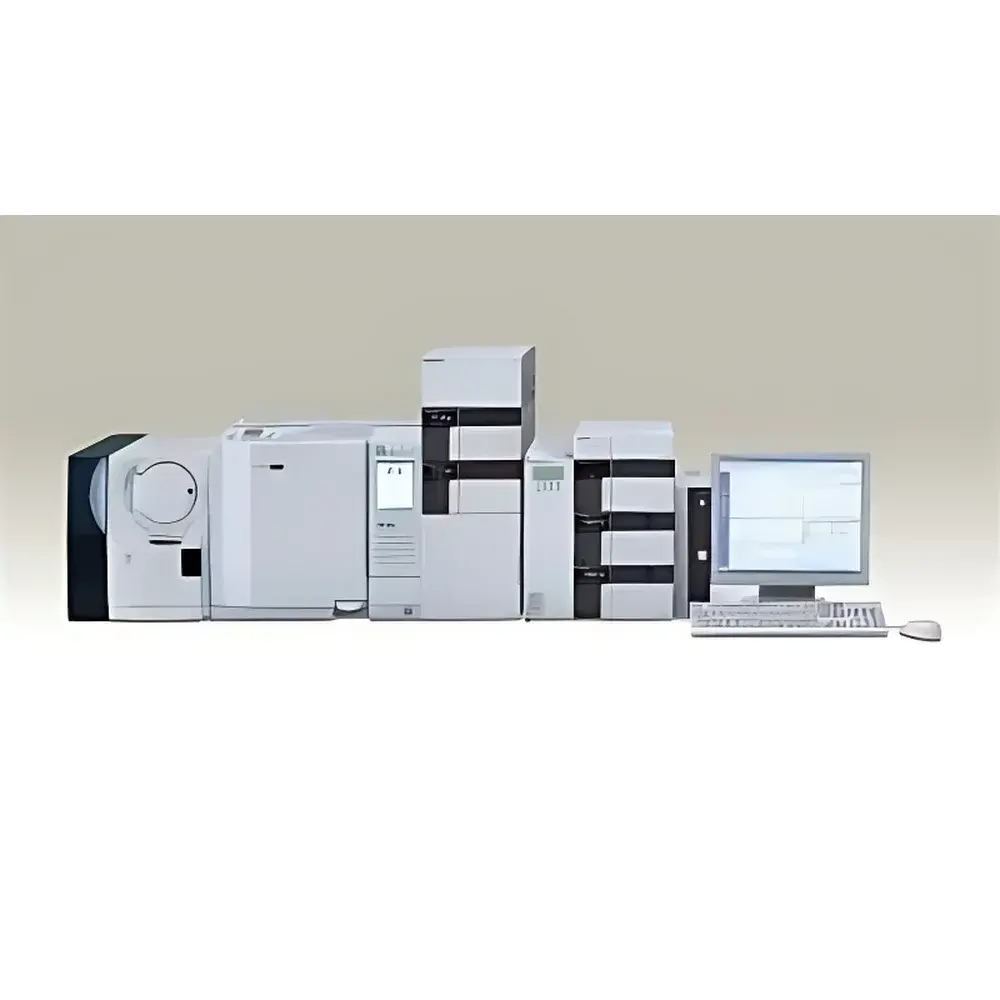
Online Pre-Processing GC-MS Coupling System
| Origin | Japan |
|---|---|
| Manufacturer Type | Authorized Distributor |
| Origin Category | Imported |
| Model | GPC-GCMS |
| Pricing | Upon Request |
| Mass Analyzer Type | Single Quadrupole |
Overview
The Online Pre-Processing GC-MS Coupling System (Model GPC-GCMS) is an integrated analytical platform engineered to automate sample preparation and seamless transfer into a gas chromatography–mass spectrometry (GC-MS) workflow. Designed for high-throughput laboratories in environmental monitoring, food safety testing, pharmaceutical quality control, and forensic toxicology, this system eliminates manual derivatization, solvent exchange, or offline concentration steps—reducing contamination risk, improving reproducibility, and minimizing analyst intervention. The architecture couples solid-phase extraction (SPE), thermal desorption, or liquid–liquid extraction modules directly with the GC inlet via programmable valve switching and heated transfer lines, ensuring quantitative analyte delivery and retention of volatile and thermally labile compounds. It interfaces natively with Shimadzu’s GCMS-QP2010Plus single quadrupole mass spectrometer, leveraging its 1.5–1090 u mass range, AART (Automatic Adjustment of Retention Time) algorithm, and COAST (Creation of Analyte Specific Tables) functionality to enable robust, method-driven SIM/Scan co-acquisition.
Key Features
- Real-time, unattended online sample cleanup and pre-concentration prior to GC injection—compatible with EPA Method 8270D, ISO 17993, and ASTM D7622 workflows
- Programmable multi-step protocols: conditioning, loading, washing, elution, and focusing—configurable per matrix type (water, soil extract, biological fluid)
- Heated transfer line (up to 350 °C) and cryo-focusing trap to preserve integrity of semi-volatiles (e.g., PAHs, PCBs, phthalates) and prevent band broadening
- Integrated leak detection and pressure monitoring across all fluidic paths—ensuring method compliance and audit readiness
- Modular design supports optional add-ons: large-volume injection (LVI), purge-and-trap (P&T), and automated derivatization reactors for carbamates or organophosphates
- Fully synchronized timing control between pre-processing module and GC-MS acquisition—enabling precise trigger-based data collection aligned with elution windows
Sample Compatibility & Compliance
The GPC-GCMS accommodates aqueous samples (1–100 mL), organic extracts (hexane, acetone, ethyl acetate), and homogenized solid matrices (soil, tissue, feed) following standard QuEChERS or ASE pretreatment. It meets regulatory requirements for GLP-compliant laboratories under OECD 150 and US EPA SW-846 guidelines. Data integrity is maintained through 21 CFR Part 11–compliant electronic signatures, full audit trail logging (including method parameters, valve actuation timestamps, and temperature profiles), and secure user-role management. All hardware components comply with IEC 61000-4 electromagnetic compatibility standards and UL/CSA safety certification for laboratory use.
Software & Data Management
Control and method development are executed via GCMSsolution v4.50 or later—a validated platform supporting dual acquisition modes (full-scan + targeted SIM) within a single run. The software integrates AART for automatic retention time alignment across batches and COAST for intelligent, peak-intensity-driven SIM table generation from preliminary scan data. Quantitative reports include internal standard normalization, matrix-matched calibration curves, and uncertainty estimation per EURACHEM/CITAC guidelines. Raw data (.qgd files) and processed results are exportable in .csv, .pdf, and .xml formats compatible with LIMS systems (e.g., LabWare, Thermo Fisher SampleManager). Audit logs record every parameter change, user login/logout, and instrument state transition—fully traceable for FDA or EMA inspection.
Applications
- Environmental: Detection of ng/L-level pesticides in drinking water per EU Directive 98/83/EC; analysis of dioxins/furans in sediment using HRGC-HRMS confirmation pathways
- Food Safety: Multi-residue screening of >300 pesticides in fruits and vegetables per SANTE/11813/2021; mycotoxin quantification (aflatoxins, ochratoxin A) in cereals
- Pharmaceutical: Residual solvent profiling in APIs per ICH Q3C(R8); genotoxic impurity verification (e.g., alkyl halides, hydrazines) at sub-ppb levels
- Clinical & Forensic: High-sensitivity quantification of benzodiazepines and synthetic cannabinoids in urine using deuterated IS and isotopic dilution
FAQ
Is the GPC-GCMS compatible with GC-MS systems other than Shimadzu GCMS-QP2010Plus?
Yes—via analog/digital I/O triggering and customizable GC inlet interface kits; however, full AART/COAST integration and method synchronization require GCMSsolution software and Shimadzu hardware firmware.
What validation documentation is provided with the system?
Includes Factory Acceptance Test (FAT) report, Installation Qualification (IQ), Operational Qualification (OQ) templates aligned with ASTM E2500, and Performance Qualification (PQ) support packages for regulated labs.
Can the pre-processing module be operated independently of the GC-MS?
Yes—the module features standalone controller firmware and HMI interface, enabling method optimization, maintenance routines, and offline calibration without interrupting GC-MS operations.
Does the system support unattended overnight analysis?
Fully supported: up to 120 sample positions with barcode tracking, auto-reinjection logic for failed runs, and email/SNMP alerts for completion or error conditions.
How is carryover mitigated during high-concentration sample analysis?
Through sequential solvent rinses (up to 3 solvents), bake-out cycles (250–300 °C), and real-time blank monitoring with threshold-based flagging in GCMSsolution.
Related Products






