
OptiSense Industrial Coating Thickness Gauge
| Brand | OptiSense |
|---|---|
| Origin | Germany |
| Manufacturer Type | Authorized Distributor |
| Origin Category | Imported |
| Model | Industrial |
| Pricing | Upon Request |
Overview
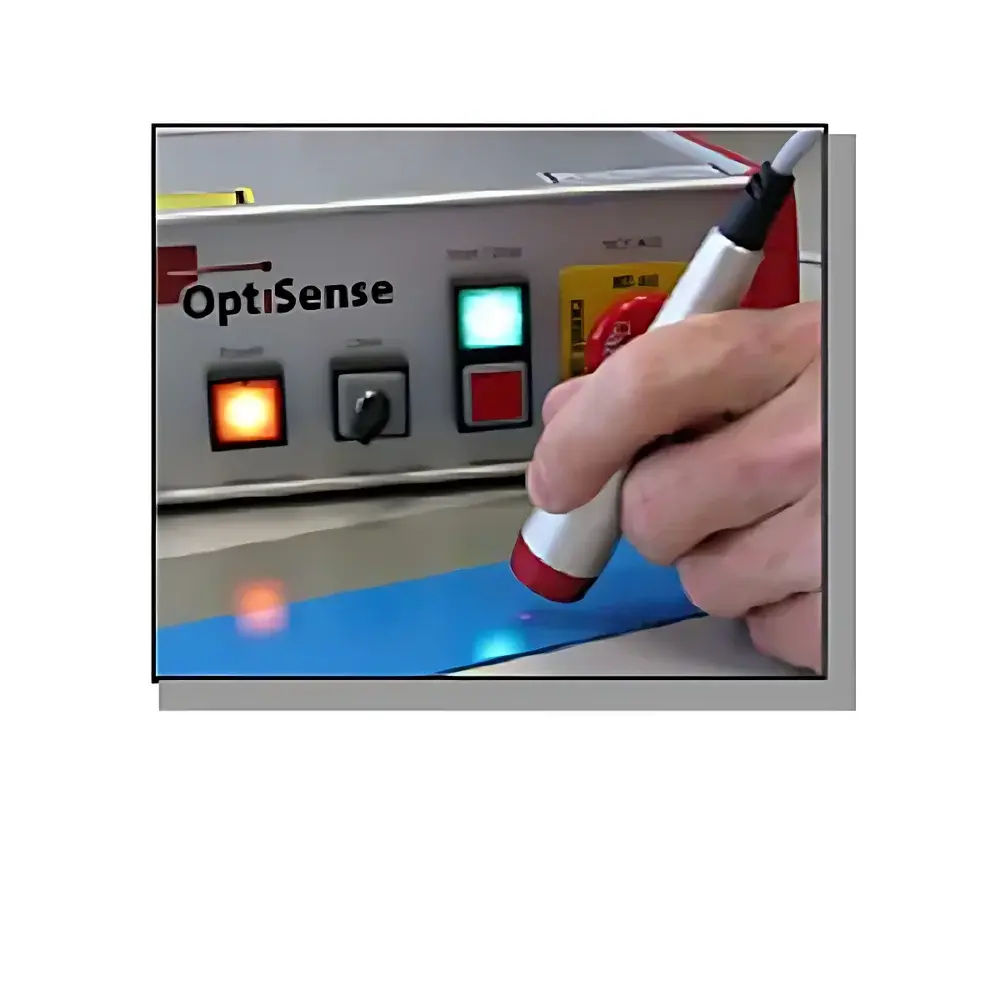
The OptiSense Industrial Coating Thickness Gauge is a non-destructive, non-contact optical measurement system engineered for real-time, in-line thickness monitoring of liquid, paste, powder, and cured coatings during industrial manufacturing processes. It operates on the principle of laser-induced photothermal reflectance (LARES® technology), a proprietary optical method developed by OptiSense that exploits transient thermal expansion and surface reflectance modulation following pulsed laser excitation. Unlike conventional eddy-current or magnetic induction gauges—limited to conductive or ferromagnetic substrates—the LARES® method enables universal applicability across diverse substrate classes including metals, ceramics, elastomers, and composites. The system complies fully with DIN EN 15042-2, the European standard governing optical measurement of dry film, wet film, and powder coating thickness. Its core design objective is early-process metrology: deployment immediately post-application (e.g., after spray, roll-coat, or dip-coating) to detect deviations in film build before curing, thereby minimizing scrap, rework, and material rejection.
Key Features
- Non-contact, non-destructive measurement with no physical interaction required—eliminates risk of surface damage or contamination.
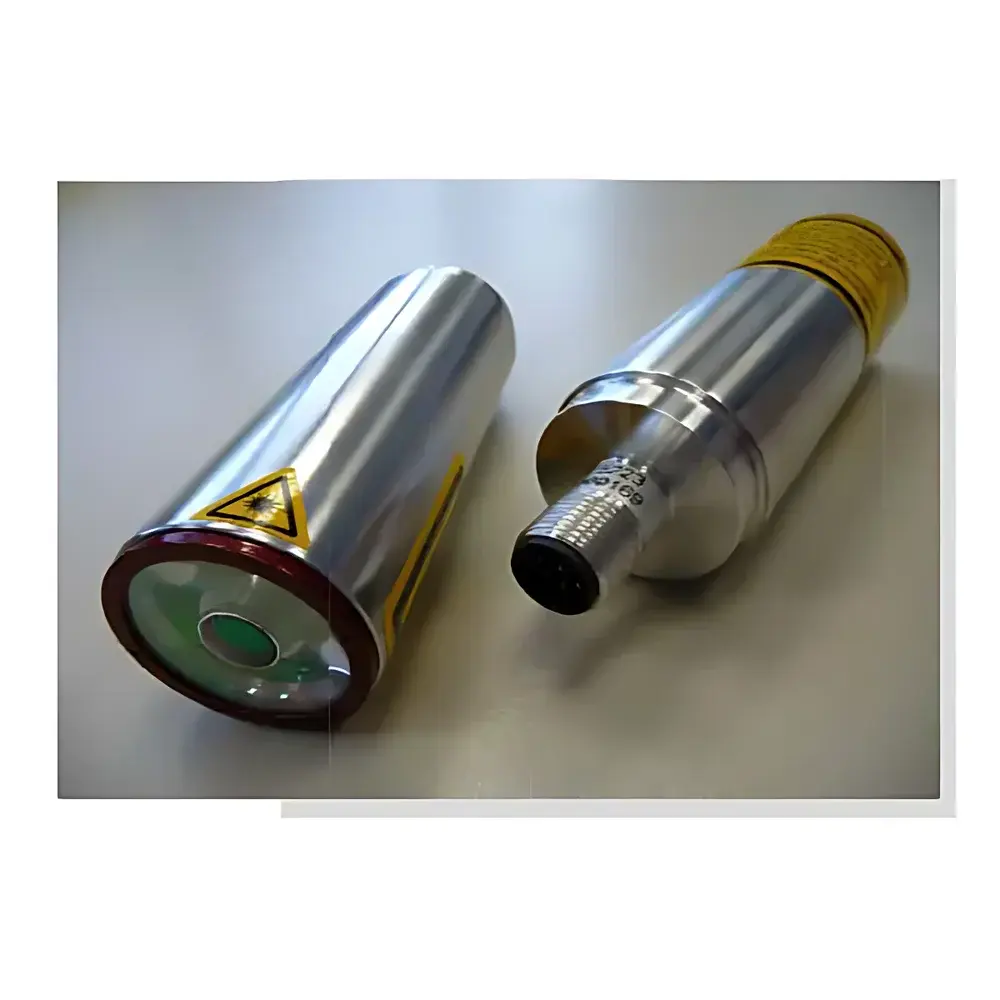
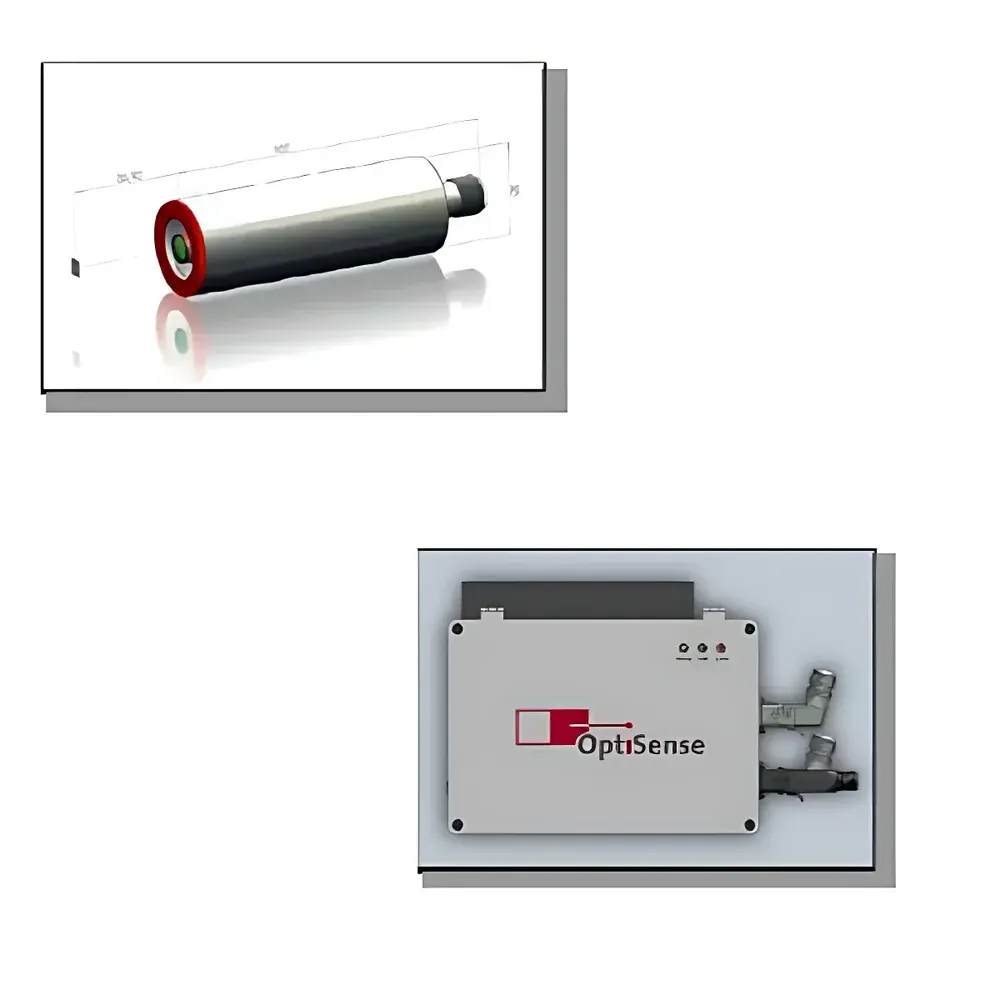
- Ultra-lightweight aluminum sensor probe (≈100 g) with compact cylindrical form factor (Ø30 mm × L102 mm), optimized for robotic integration, fixture mounting, or conveyor-side installation.
- LARES® laser technology (Class 1M, pulse mode, max. 0.5 W peak power) ensures intrinsic eye safety—no interlocks, enclosures, or operator training certifications required per IEC 60825-1.
- Configurable optical head options: selectable measurement spot sizes (0.25×0.25 mm² to 2×2 mm²) and working distances (16 mm or 35 mm), enabling optimization for surface roughness, feature size, and standoff constraints.
- Real-time measurement capability at up to 1 Hz repetition rate, with adjustable acquisition time (8–512 ms) to balance signal-to-noise ratio and process speed requirements.
- Robust IP65-rated data processing terminal (30 × 272 × 110 mm³, ≈5 kg) housing embedded control firmware, analog/digital signal conditioning, and local data buffering.
Sample Compatibility & Compliance
The gauge supports quantitative thickness assessment across organic solvent-based paints, waterborne coatings, thermosetting powder coatings, glazes, and UV-curable resins applied to metallic (steel, aluminum, stainless), non-metallic (ceramic tiles, rubber compounds, polymer laminates), and composite substrates. Thickness range: 0–300 µm on conductive/metallic substrates; 0–60 µm on non-conductive/non-metallic substrates—dependent on optical absorption coefficient, thermal diffusivity, and surface emissivity of the specific coating–substrate pair. Measurement accuracy is ±5% of actual value; resolution ≈3% of reading. Tolerance to probe positioning is ±1 mm axial distance deviation and ±15° angular misalignment—enabling stable operation in dynamic production environments with minor mechanical drift. Full compliance with DIN EN 15042-2 ensures traceable, auditable results suitable for ISO 9001, IATF 16949, and aerospace AS9100 quality management systems.
Software & Data Management
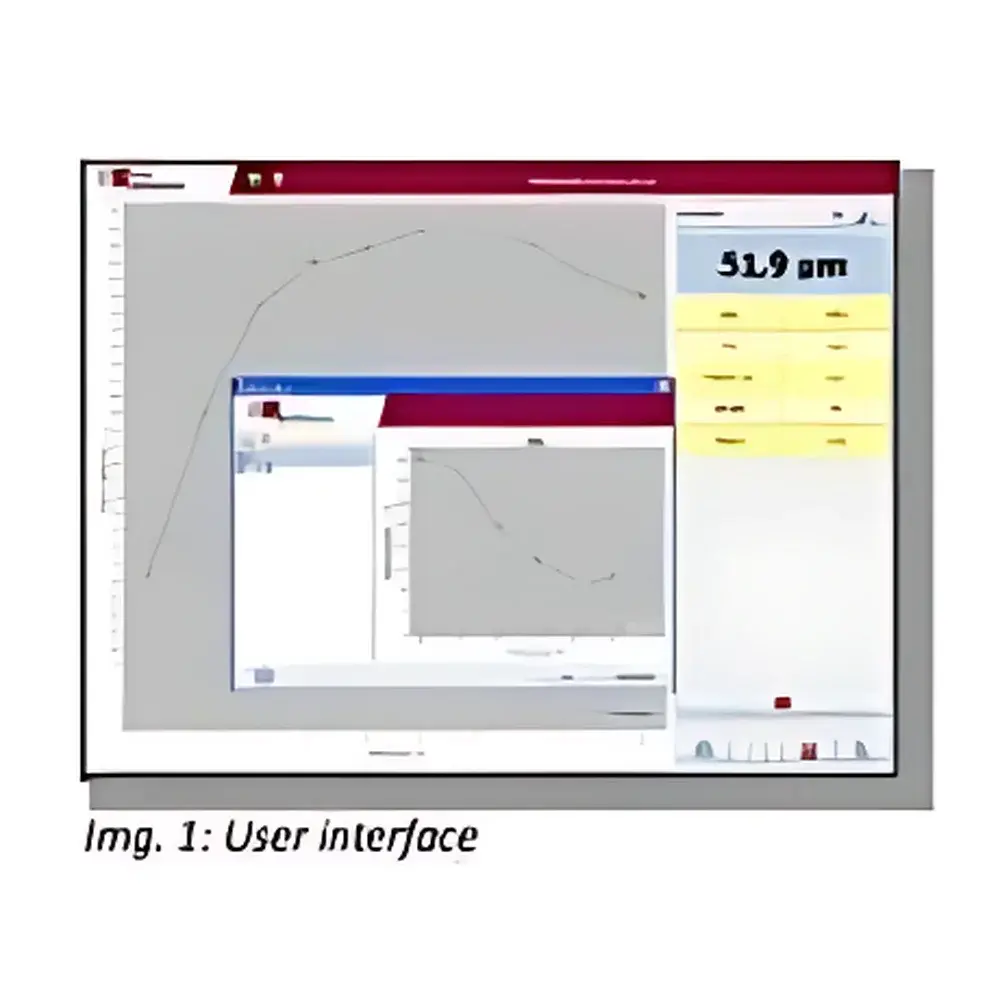
The OpTiSense User Software provides dual-mode operation: manual benchtop inspection (e.g., R&D sample validation, incoming material verification) and automated line-integrated control. Real-time thickness profiles are visualized via intuitive GUI with configurable thresholds, pass/fail indicators, and statistical process control (SPC) overlays (X̄/R charts, Cp/Cpk calculation). All measurements are timestamped and geotagged with probe ID and configuration metadata. Data export supports CSV, XML, and OPC UA protocols. Optional QDAS® Control Port integration enables full database-driven measurement sequencing, feature-based data logging (e.g., “Zone A – Top Surface – Pre-Cure”), and 21 CFR Part 11-compliant audit trails—including electronic signatures, change history, and user-access-level permissions—for pharmaceutical, medical device, or regulated automotive applications. Communication interfaces include Ethernet (10 Mbit/s, RJ45), CAN bus (24 V), and isolated digital I/O (TTL/24 V) for PLC synchronization and alarm triggering.
Applications
- In-line monitoring of coil coating lines for steel/aluminum strip—detecting streaks, thin spots, or over-application prior to curing.
- Automotive OEM paint shops: real-time verification of e-coat, primer, basecoat, and clearcoat layer builds on car bodies and subassemblies.
- Powder coating of architectural aluminum extrusions—ensuring uniform film thickness across complex cross-sections without contact-induced distortion.
- Quality assurance of ceramic glaze thickness on sanitaryware and tile production lines—critical for firing consistency and aesthetic performance.
- R&D labs evaluating novel waterborne or bio-based coatings on elastomeric substrates, where traditional magnetic/eddy-current methods fail.
FAQ
What substrate materials are compatible with the Industrial Coating Thickness Gauge?
Metals (ferrous and non-ferrous), ceramics, glass, rubber, thermoplastics, thermosets, and fiber-reinforced composites—provided the coating exhibits sufficient optical absorption in the near-infrared spectrum.
Can the system measure wet films in real time during application?
Yes—DIN EN 15042-2 explicitly validates its use for wet film thickness (WFT) measurement, leveraging the high sensitivity of LARES® to refractive index gradients and surface topography changes during solvent evaporation.
Is calibration required for each new coating–substrate combination?
A baseline calibration curve is recommended per unique material system; however, the system supports user-defined custom calibration curves stored in flash memory, eliminating recurring recalibration for repeat production runs.
How is measurement repeatability ensured under factory vibration or thermal drift?
The probe incorporates passive thermal stabilization and internal reference compensation; combined with short-pulse laser excitation and lock-in detection, it maintains ≤1% relative standard deviation over 8-hour continuous operation at ambient temperatures from 15–40°C.
Does the system support integration into Siemens S7 or Rockwell ControlLogix PLC environments?
Yes—via native CANopen protocol or Ethernet/IP gateway modules; digital I/O signals (OK/NG, Start/Stop, Error) are configurable to match standard machine-control logic sequences.



