
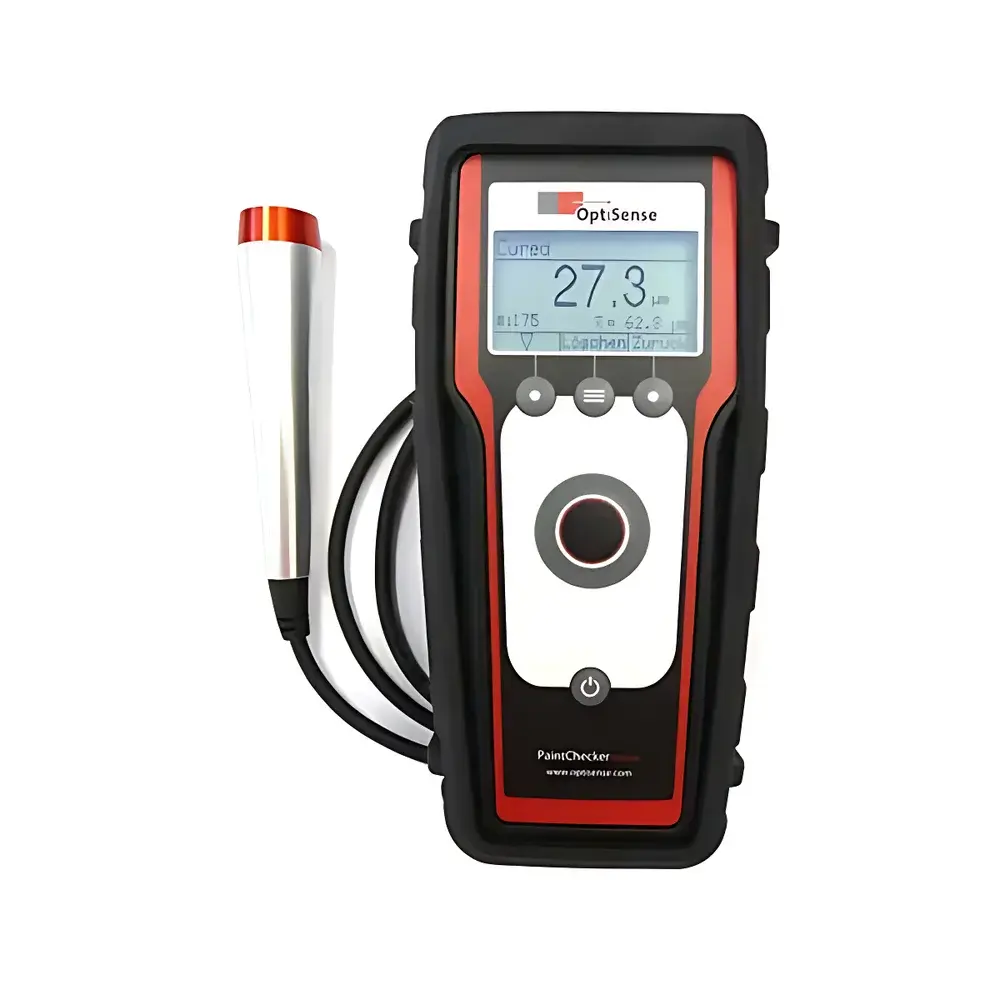
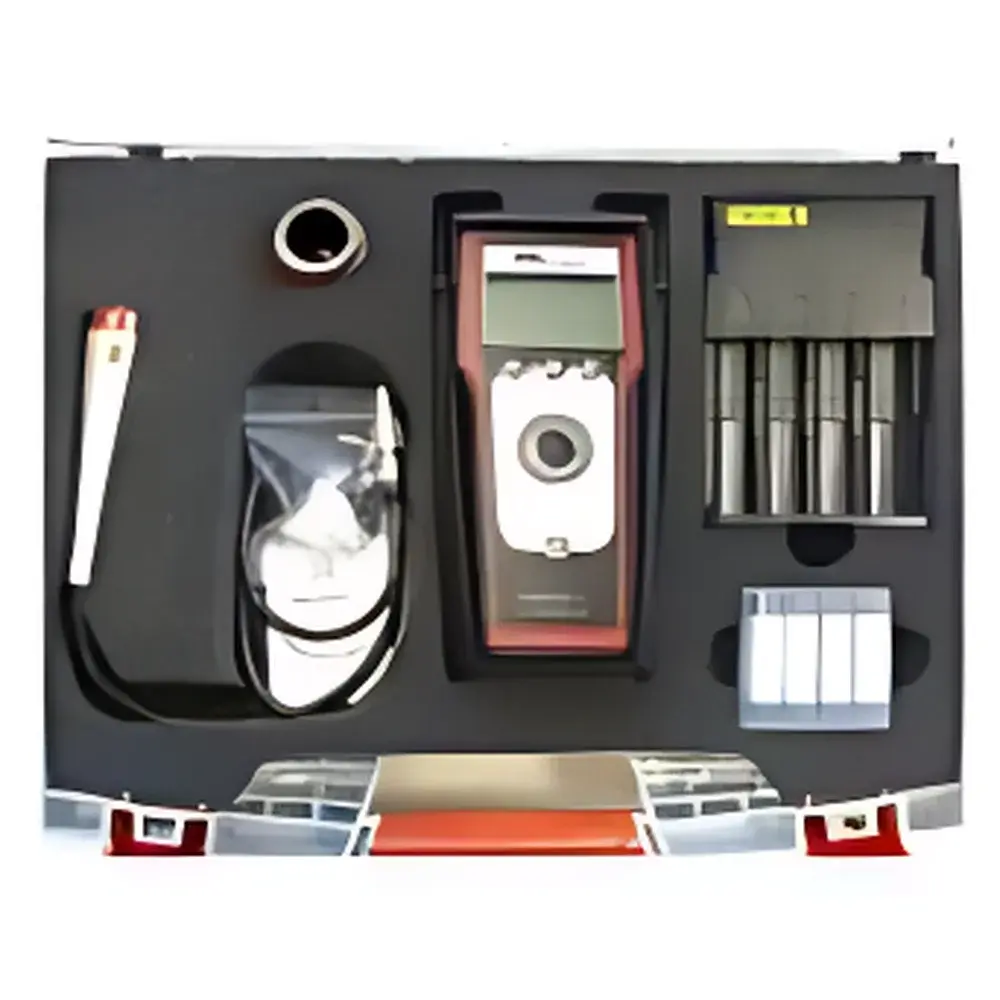
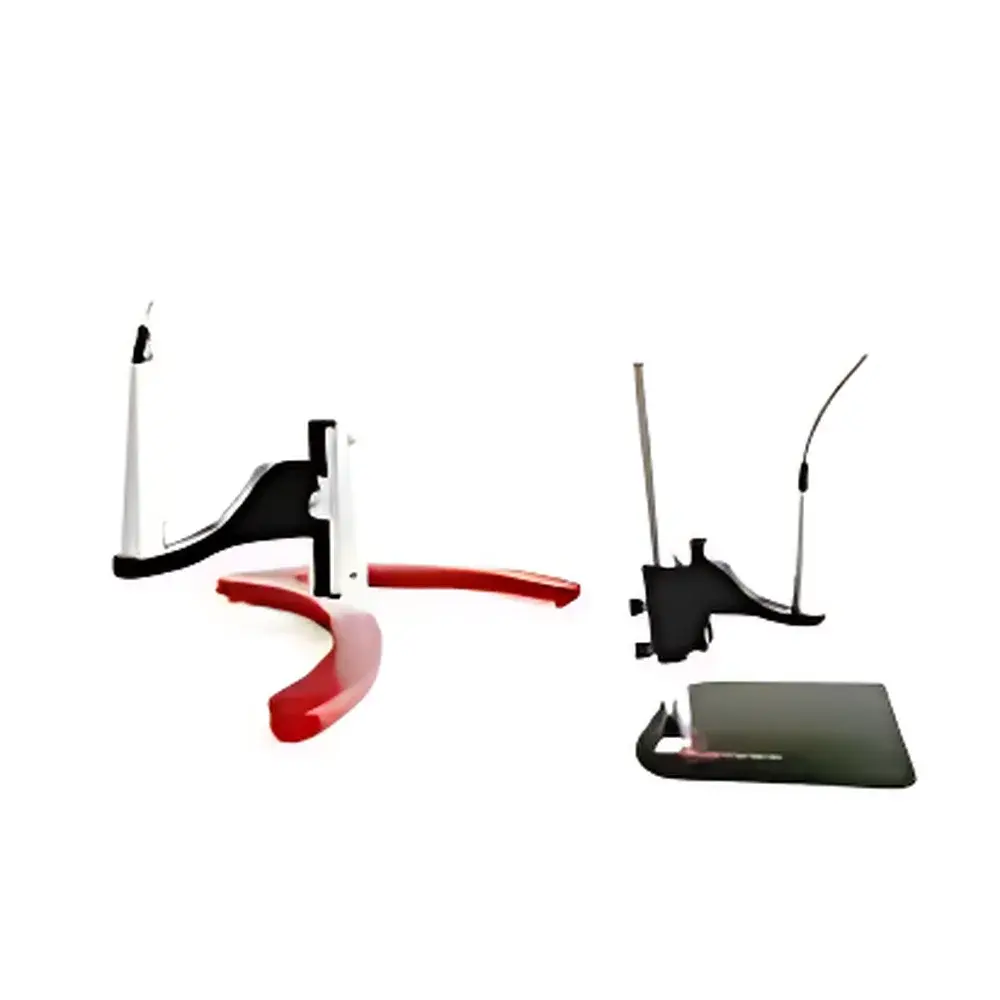
OptiSense SpecEL Handheld Laser Coating Thickness Gauge
| Brand | OptiSense |
|---|---|
| Origin | Germany |
| Manufacturer Type | Authorized Distributor |
| Origin Category | Imported |
| Model | SpecEL |
| Pricing | Upon Request |
Overview
The OptiSense SpecEL Handheld Laser Coating Thickness Gauge is an industrial-grade, non-contact, non-destructive measurement system engineered for real-time thickness assessment of uncured and cured coatings across diverse substrates. It operates on the principle of photothermal deflection spectroscopy (PTDS), where a modulated laser pulse induces localized thermal expansion in the coating layer, and a secondary probe beam detects the resulting surface displacement via interferometric deflection analysis. This physics-based method enables quantitative thickness determination without physical contact—critical for monitoring wet films during spray application, powder deposition, or pre-cure inspection in automotive OEM, coil coating, and architectural finishing lines. Unlike conventional eddy current or magnetic induction gauges, the SpecEL is insensitive to substrate conductivity or permeability, allowing seamless operation on metallic (steel, aluminum), non-metallic (ceramic, rubber, composites), and multi-layered substrates. Compliant with DIN EN 15042-2 for optical coating metrology, it supports process validation under ISO 9001 and IATF 16949 quality management frameworks.
Key Features
- True non-contact operation: No mechanical pressure, zero risk of surface marring or film disturbance—even on soft, tacky, or thermally sensitive coatings.
- Ergonomic handheld probe (L = 110 mm, W = 25 mm, weight = 100 g) with integrated alignment optics and fixed 16 mm working distance—optimized for one-handed use in confined or overhead positions.
- High-speed single-point acquisition: Measurement cycle time configurable between 32 ms and 1024 ms; maximum repetition rate of 1 Hz for statistical sampling at a given location.
- Wide dynamic range: Supports thickness measurements from 1 µm to 300 µm, with resolution ≈1% of reading and accuracy ≈±3% of measured value—subject to calibration against certified reference standards per ASTM D7091 Annex A2.
- Laser safety compliance: Class 1M laser source (IEC 60825-1:2014); eye-safe under normal operating conditions without auxiliary optics.
- Field-deployable power architecture: Rechargeable lithium-ion battery pack (4 cells) enables ≥10 hours of continuous operation; external smart charger included.
- Robust portable terminal: IP54-rated housing (80 × 180 × 42.5 mm, total system weight 750 g), resistive touchscreen interface, and intuitive icon-driven menu navigation compliant with MIL-STD-1472G human factors guidelines.
Sample Compatibility & Compliance
The SpecEL accommodates organic solvent-based paints, waterborne coatings, thermosetting powder coatings, ceramic glazes, and thin-film polymer laminates applied to ferrous/non-ferrous metals, elastomers, technical ceramics, and fiber-reinforced composites. Its photothermal methodology eliminates substrate-dependent signal drift—no separate calibration required for steel vs. aluminum vs. rubber, provided baseline curves are established per material-coating combination. All factory-supplied calibration curves adhere to traceable NIST-traceable reference standards (e.g., NIST SRM 2134, ISO 2808 Annex B). The instrument meets electromagnetic compatibility requirements per EN 61326-1:2013 and is CE-marked for use within the European Economic Area. Documentation packages include full Declaration of Conformity, calibration certificate, and raw data export logs for GLP/GMP audit readiness.
Software & Data Management
Embedded firmware supports USB 2.0 data transfer to Windows-based PCs for post-processing in the optional SpecEL DataSuite software. This validated application provides statistical process control (SPC) charting (X̄/R, Cpk), batch reporting aligned with ISO/IEC 17025 clause 7.8.2, and audit trail functionality compliant with FDA 21 CFR Part 11 (electronic signatures, user access levels, immutable event logs). Raw measurement files (.csv and proprietary .specel binary format) retain timestamp, GPS coordinates (if enabled), operator ID, probe orientation metadata, and full spectral response traces—enabling root-cause analysis of thickness variability. Custom curve development and multi-parameter regression modeling (e.g., correlating thickness with cure degree via FTIR cross-validation) are supported through the Advanced Calibration Module.
Applications
- Pre-cure wet-film verification in automotive body shop painting lines—reducing rework by detecting thickness deviations before baking.
- In-line QC for coil coating mills measuring zinc-phosphate primers and PVDF topcoats on stainless steel strips.
- R&D labs evaluating film build uniformity of UV-curable acrylics on flexible PET substrates.
- Maintenance teams assessing protective epoxy linings inside chemical storage tanks without surface preparation.
- Third-party certification bodies performing on-site audits per ISO 12944-5 for corrosion protection systems.
FAQ
Does the SpecEL require substrate-specific calibration?
Yes—while the photothermal principle eliminates electromagnetic interference, calibration curves must be generated for each unique coating-substrate pair using certified reference standards to account for optical absorption and thermal diffusivity differences.
Can it measure on curved or textured surfaces?
Yes—the 0.5 mm diameter measurement spot and ±15° angular tolerance allow reliable readings on radiused edges (R ≥ 5 mm) and moderately rough surfaces (Ra ≤ 3.2 µm), provided the local curvature remains within probe standoff limits.
Is real-time data streaming supported?
No—measurements are stored locally on the terminal and exported via USB; however, the optional DataSuite SDK enables integration with SCADA or MES platforms via TCP/IP socket protocol.
What maintenance is required?
Annual verification against traceable standards is recommended; optical windows should be cleaned with lens-grade tissue and isopropyl alcohol every 200 hours of field use.
Can it distinguish between multiple layers?
No—the SpecEL reports total optical path thickness of the topmost continuous layer; multilayer resolution requires complementary techniques such as ellipsometry or cross-sectional SEM.



