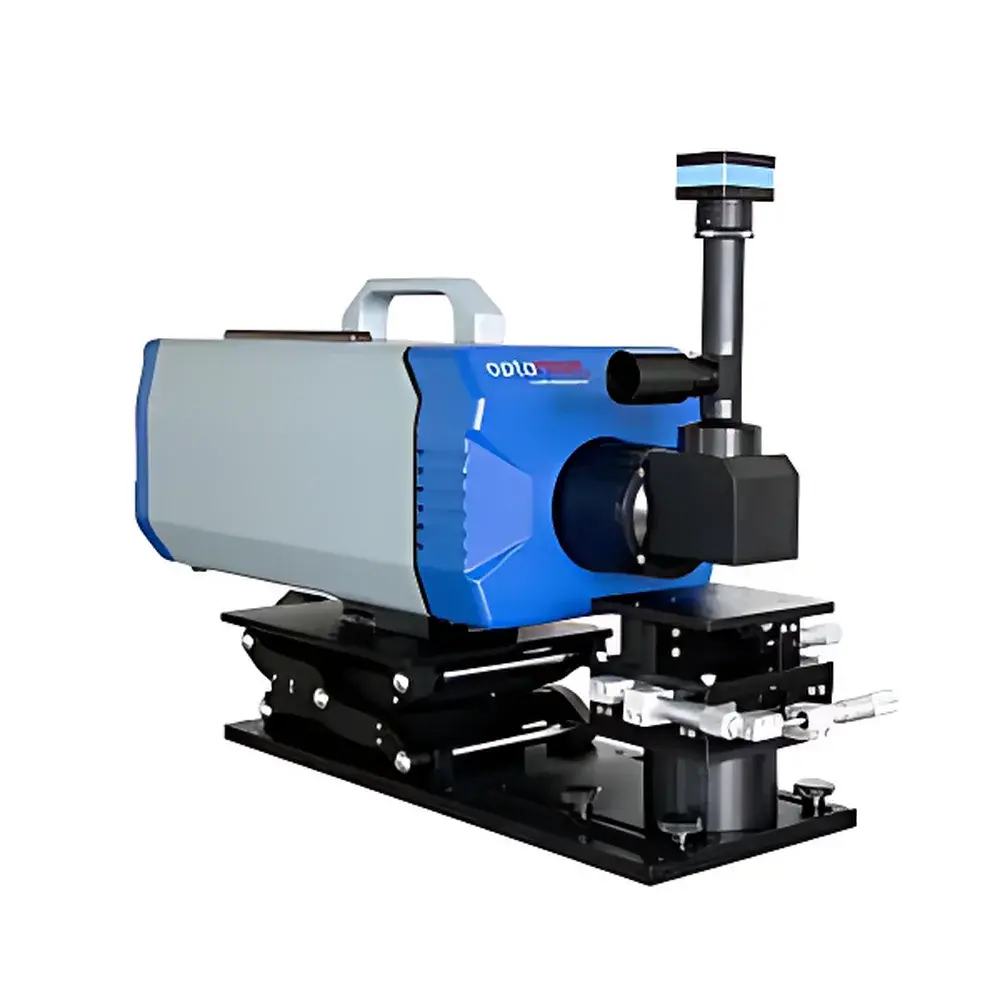
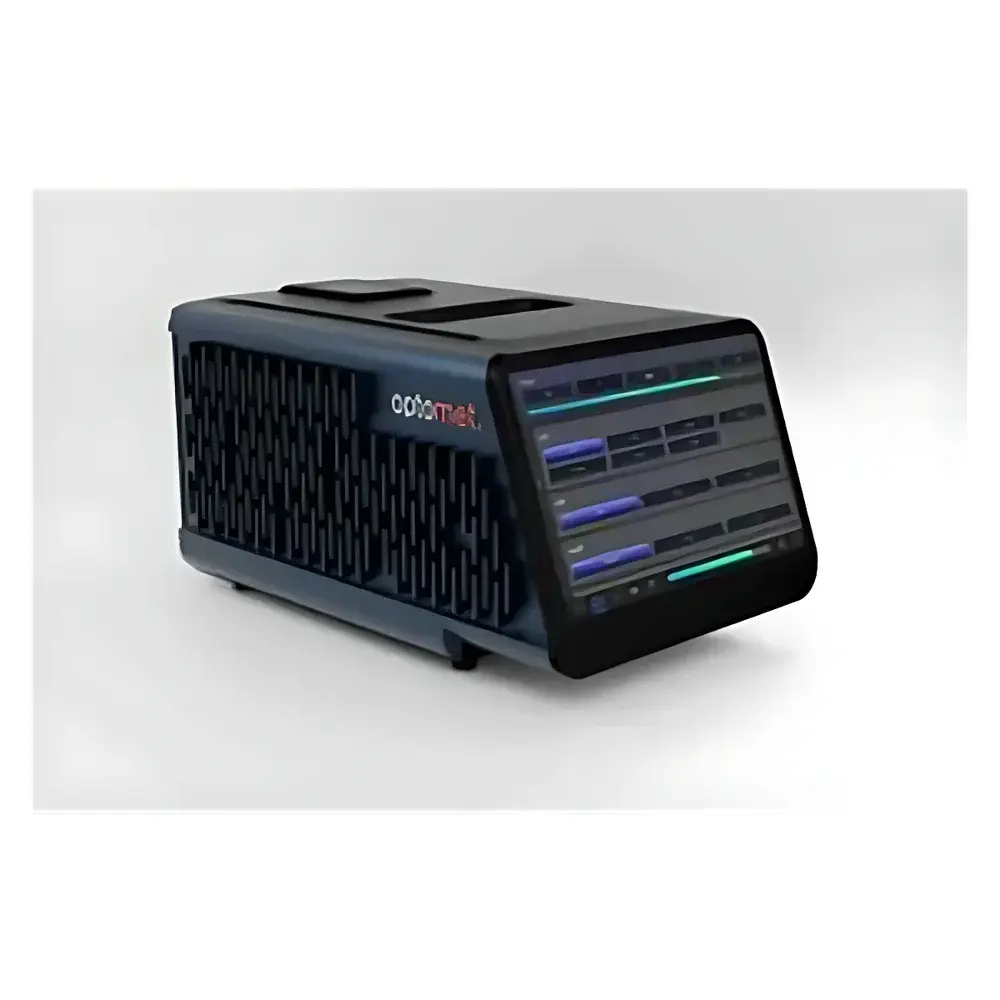
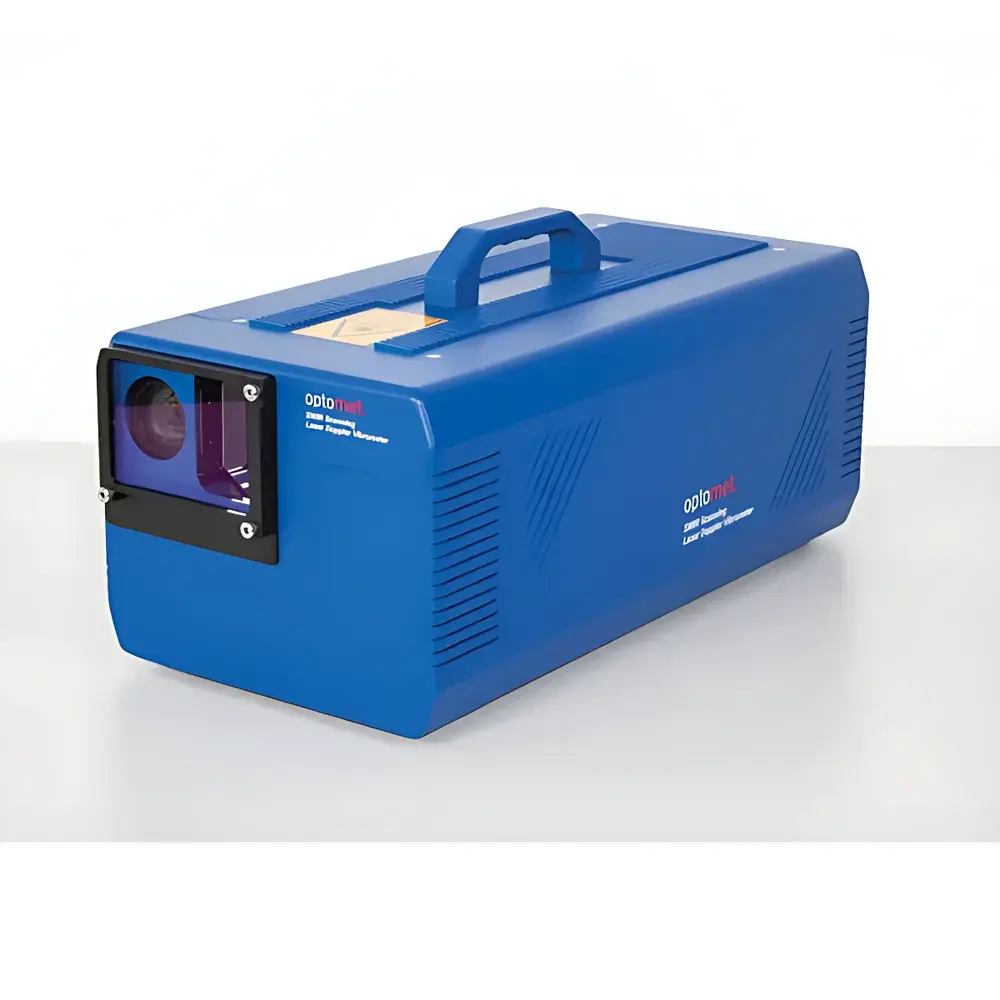
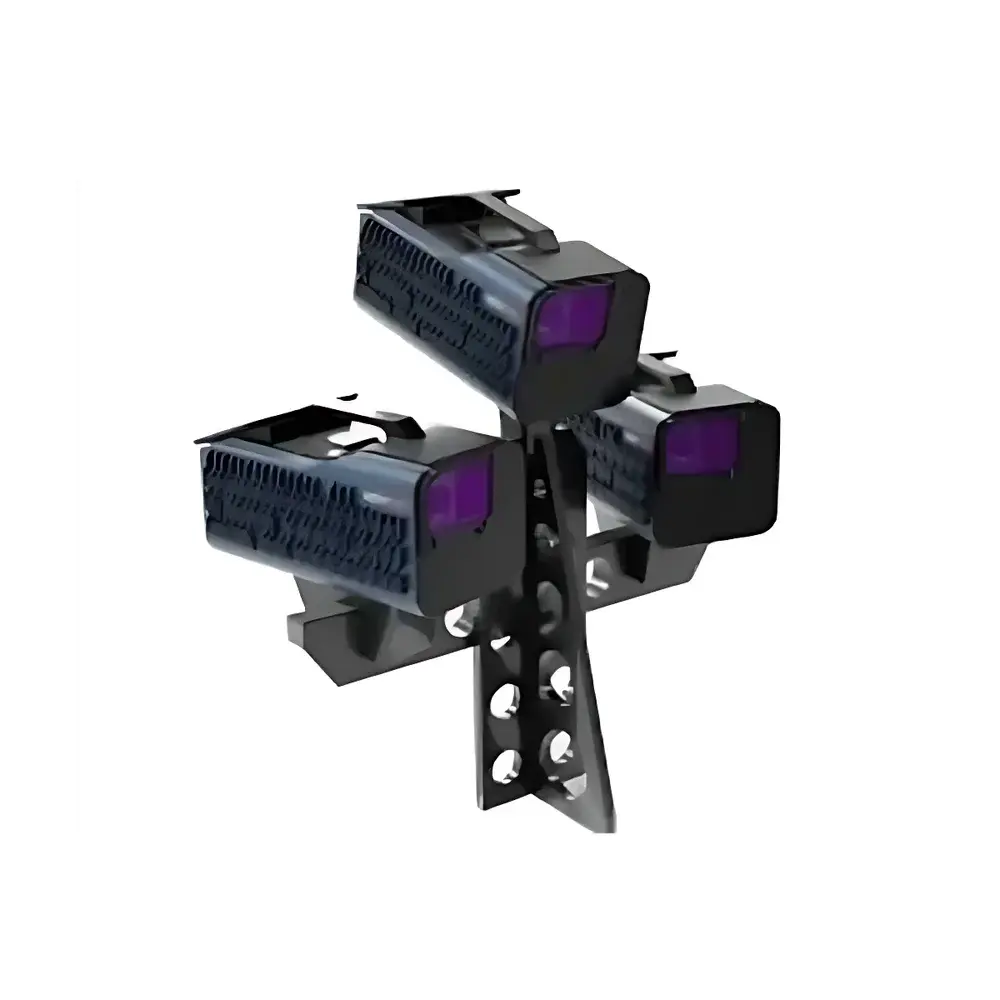
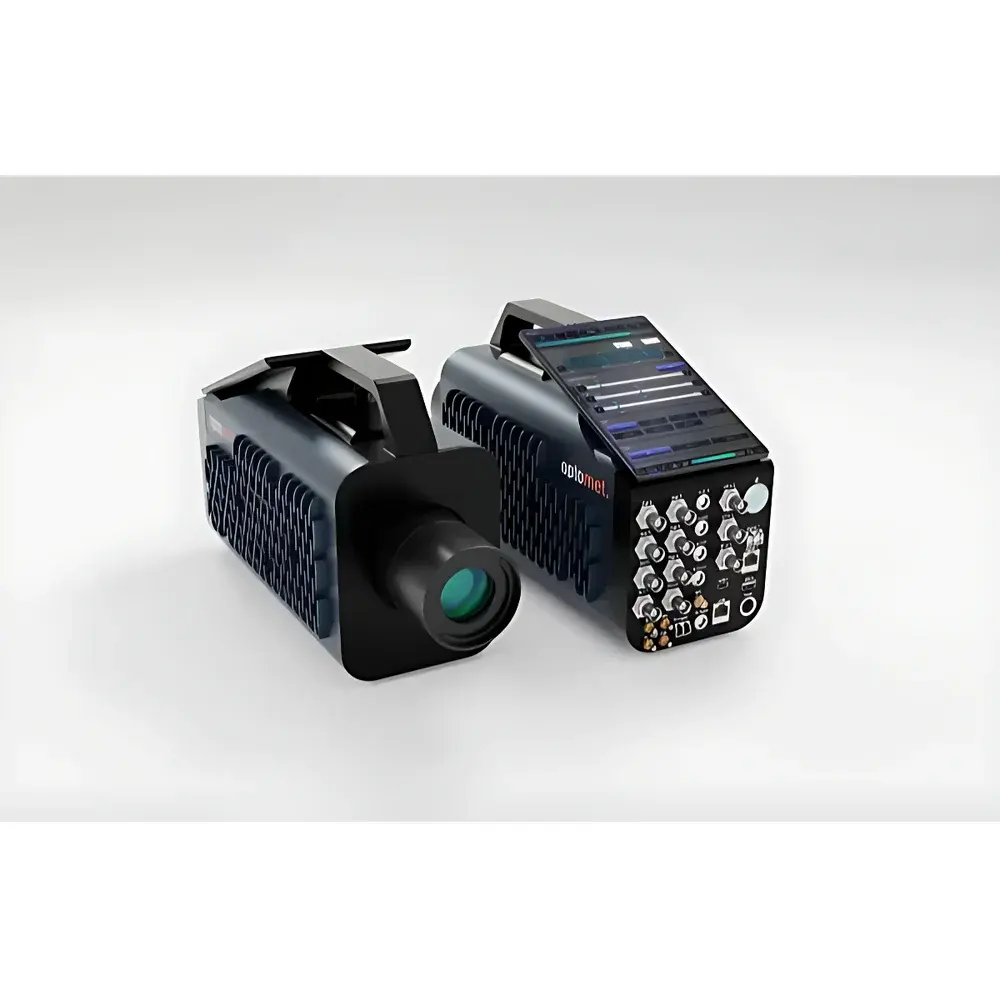
Optomet Vector-Micro Microscopic Laser Doppler Vibrometer
| Brand | Optomet |
|---|---|
| Origin | Germany |
| Model | Vector-Micro |
| Laser Wavelength | 632 nm |
| Spot Diameter | ~3 µm |
| Frequency Range | 0–25 MHz |
| Integrated Camera | 12 MP (4K resolution) |
| Application Domain | MEMS, microelectronics, precision microstructure vibration analysis |
| Compliance | Designed for ISO 18431-1, ISO 2041, and ASTM E1876-compliant modal testing workflows |
| Software Architecture | Native support for GLP/GMP audit trails, FDA 21 CFR Part 11–compliant data handling |
Overview
The Optomet Vector-Micro Microscopic Laser Doppler Vibrometer is a high-precision, non-contact optical measurement system engineered for quantitative vibration analysis of microscale structures. Based on the principle of heterodyne laser Doppler interferometry, it detects minute surface velocity fluctuations by analyzing the frequency shift (Doppler shift) of coherent light reflected from a vibrating target. Unlike conventional accelerometers or piezoelectric sensors, the Vector-Micro eliminates mass-loading effects and mechanical coupling constraints—critical when characterizing delicate MEMS devices, micro-electromechanical resonators, thin-film actuators, or semiconductor packaging substrates. Its integrated 632 nm HeNe laser source delivers stable coherence length and low noise, enabling sub-nanometer displacement resolution across its full 0–25 MHz bandwidth. The system is purpose-built for laboratory-based R&D, failure analysis, and quality assurance in microelectronics, photonics, and advanced materials development.
Key Features
- Micro-spot optical probing: <3 µm laser spot diameter enables spatially resolved vibration mapping on features smaller than 10 µm—ideal for cantilevers, comb drives, and RF-MEMS switches.
- Co-registered 4K imaging: 12-megapixel high-resolution microscope camera provides real-time visual feedback and pixel-accurate laser positioning without manual alignment drift.
- Full-field velocity output: Delivers time-domain velocity waveforms with >100 dB dynamic range and phase stability <0.1° over 1-hour continuous operation.
- Modular optical head design: Compatible with inverted and upright microscope configurations; supports optional NIR extension modules (e.g., 780 nm) for silicon-transmissive measurements.
- Ruggedized optomechanical architecture: Thermally stabilized interferometer baseplate, kinematic mounting interfaces, and vibration-isolated breadboard integration capability.
Sample Compatibility & Compliance
The Vector-Micro accommodates reflective, semi-transparent, and diffusely scattering surfaces—including gold-coated MEMS mirrors, silicon nitride membranes, solder bumps, and polymer-based flexible electronics. Surface roughness down to Ra < 20 nm remains fully measurable without signal degradation. All hardware and firmware comply with CE marking requirements under Directive 2014/30/EU (EMC) and 2014/35/EU (LVD). Data acquisition protocols adhere to ISO/IEC 17025 traceability frameworks; raw velocity time histories are timestamped, checksum-verified, and exportable in HDF5 and UFF58 formats for third-party modal analysis (e.g., LMS Test.Lab, Siemens Simcenter, or MATLAB-based FDD/EIGENSOLVER workflows). System validation reports include NIST-traceable calibration certificates for velocity sensitivity (V/(m/s)) and frequency response flatness (±0.15 dB up to 10 MHz).
Software & Data Management
The proprietary VibSoft™ control suite runs natively on Windows 10/11 x64 platforms and supports deterministic real-time acquisition at up to 100 MS/s per channel. It implements role-based user access control, electronic signatures, and immutable audit logs meeting FDA 21 CFR Part 11 requirements for regulated environments. Measurement sequences can be scripted via Python API (vibsoft-py), enabling automated parametric sweeps, thermal-vibration correlation studies, or closed-loop feedback with external temperature chambers or bias sources. Raw datasets retain full metadata: laser power, focus distance, objective magnification, environmental temperature/humidity (via optional sensor input), and operator ID. Export options include CSV (for spreadsheet post-processing), MATLAB .mat, and ASAM MDF4 for integration into automotive or aerospace test data management systems.
Applications
- MEMS device characterization: Resonant frequency, Q-factor, mode shape identification, and nonlinear stiffness extraction of gyroscopes, accelerometers, and micro-mirrors.
- Fundamental materials research: Damping mechanisms in nanolaminates, interfacial adhesion assessment in wafer-bonded stacks, and viscoelastic loss factor quantification in polymer composites.
- Failure root-cause analysis: Localized delamination detection in flip-chip interconnects, solder joint fatigue precursor identification, and thermo-mechanical warpage tracking during reflow simulation.
- Acoustic transducer development: Diaphragm vibration uniformity mapping, standing-wave node/antinode localization, and harmonic distortion profiling under broadband excitation.
- Micro-opto-electro-mechanical systems (MOEMS): Dynamic alignment stability verification of tunable VCSELs, grating couplers, and photonic crystal cavities.
FAQ
What is the minimum measurable vibration amplitude with the Vector-Micro?
The system achieves a velocity noise floor of ≤10 nm/s/√Hz at 1 kHz, translating to sub-picometer displacement resolution for periodic signals within its bandwidth.
Can the Vector-Micro measure through transparent substrates such as glass or silicon?
Yes—when configured with appropriate objective lenses and optional NIR wavelength modules, it supports backside probing of devices mounted on transparent carriers or encapsulated in hermetic packages.
Is remote operation supported for integration into automated test benches?
Fully supported via TCP/IP Ethernet interface and SCPI-compatible command set; LabVIEW, Python, and MATLAB drivers are provided with every system shipment.
How is laser safety managed during routine operation?
The Vector-Micro complies with IEC 60825-1:2014 Class 2M laser safety classification; integrated interlock circuits disable lasing upon enclosure opening, and all optical paths are fully enclosed during scanning operations.
Does the system require periodic recalibration?
Annual factory recalibration is recommended; however, built-in reference interferometer diagnostics allow daily self-validation of velocity scaling accuracy and linearity per ISO 16063-41 guidelines.