
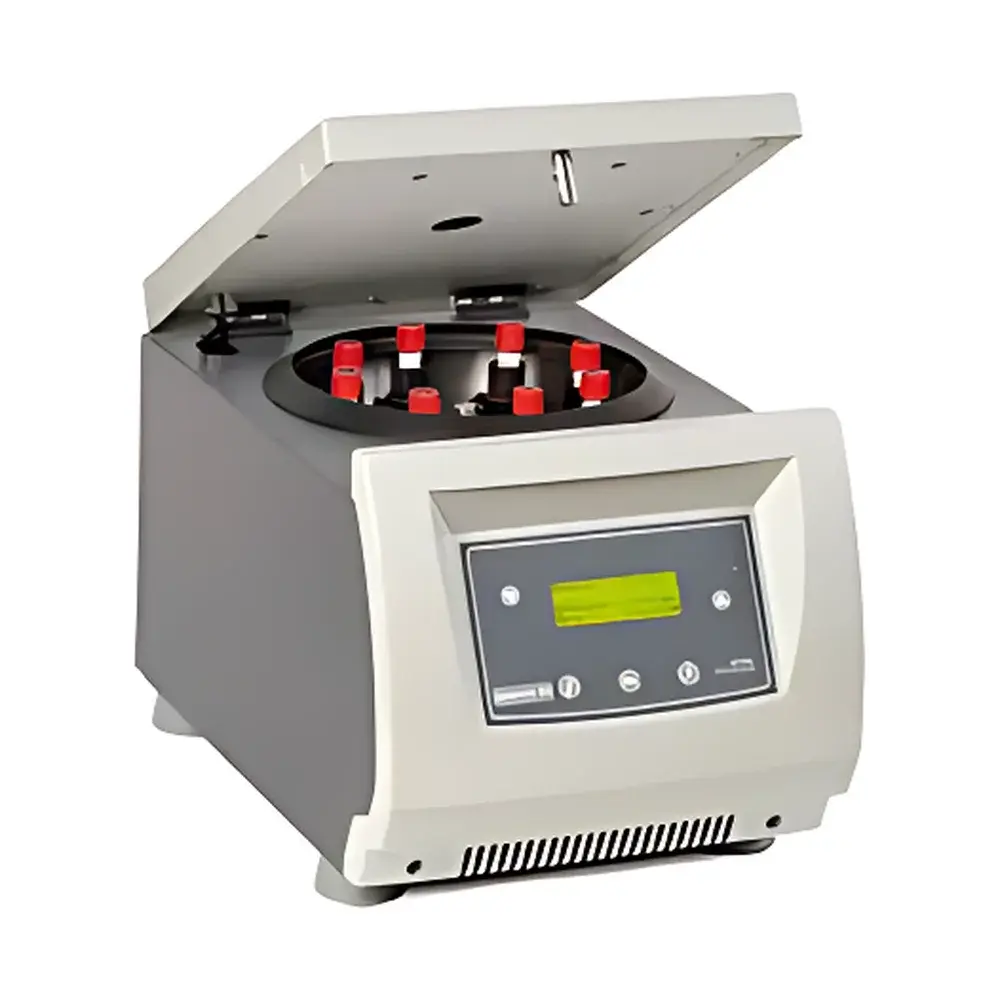
Ortoalresa Plasma 22 Benchtop Platelet Separation Centrifuge
| Brand | Ortoalresa |
|---|---|
| Origin | Spain |
| Model | Plasma 22 |
| Type | Benchtop Centrifuge |
| Max Speed | 3000 rpm |
| Max RCF | 1288 × g |
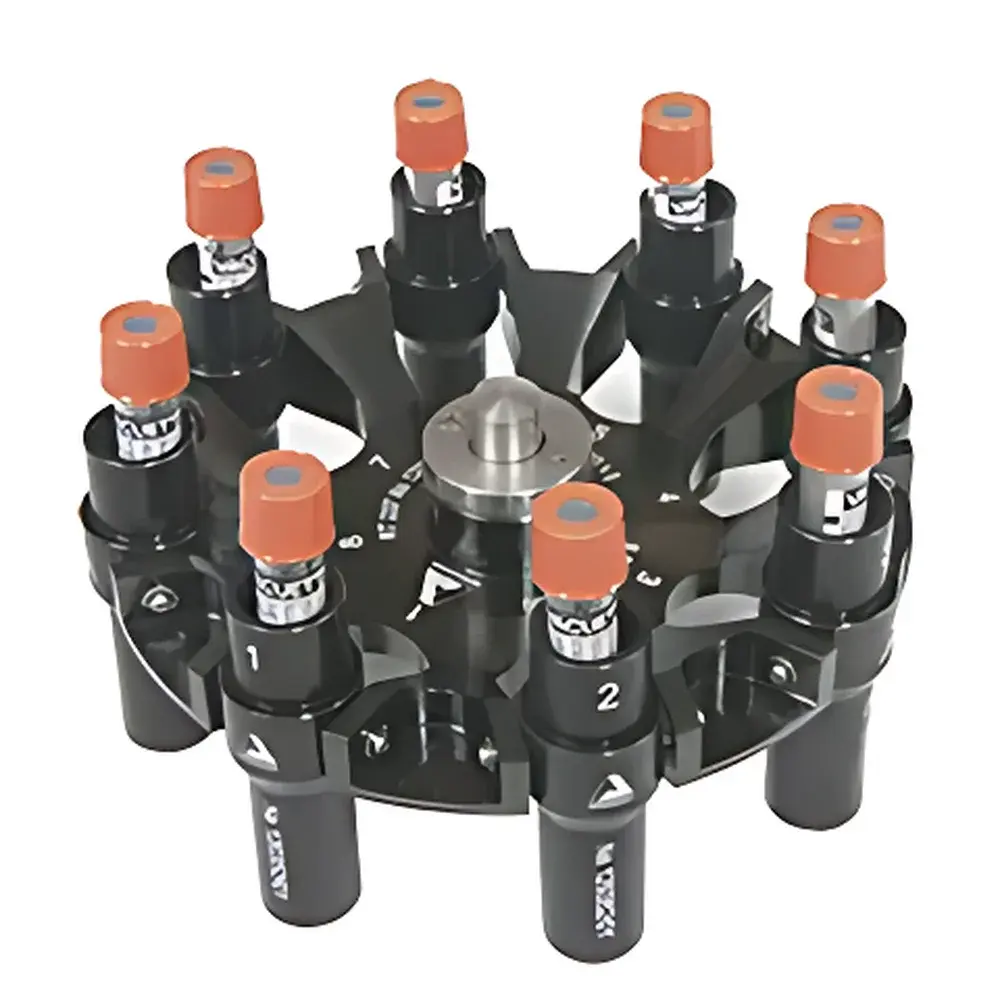
| Capacity | 8 × 9/15 mL |
| Dimensions (W×D×H) | 270 × 400 × 270 mm |
| Net Weight | 19 kg |
| Power Supply | 220–230 V / 50–60 Hz (CE156) or 110–120 V / 50–60 Hz (CE165) |
| Power Consumption | 120 W |
| Noise Level | <60 dB(A) |
| Acceleration/Deceleration Ramps | 175 programmable profiles |
| Timer Range | 1–99 min ±5 s |
| Display | LCD showing rpm, rcf, time, acceleration/deceleration status |
| Safety Compliance | EN 61010-1, EN 61010-2-020, EN 61326-1, EN 61326-2-6 |
| Regulatory Directives | 2011/65/EU (RoHS), 2012/19/EU (WEEE), 2014/30/EU (EMC), 2014/35/EU (LVD), 98/79/EC (IVDR) |
Overview
The Ortoalresa Plasma 22 is a CE-certified, benchtop centrifuge specifically engineered for reproducible, low-speed separation of platelet-rich plasma (PRP), platelet-rich fibrin (PRF), and related autologous biologics in clinical and translational research laboratories. Unlike general-purpose centrifuges, the Plasma 22 implements a rigorously validated rotational protocol—optimized for the delicate balance between fibrin network integrity and platelet activation kinetics—based on decades of empirical validation in regenerative medicine workflows. Its operational envelope (3000 rpm, 1288 × g) falls within the narrow window required to sediment red blood cells while preserving platelet viability and minimizing leukocyte contamination, aligning with ISO 22870:2016 (point-of-care testing) and CLSI H26-A3 guidelines for PRP preparation. The instrument employs a brushless DC motor with microprocessor-controlled torque regulation to ensure stable angular velocity across variable load conditions, eliminating speed drift during deceleration—a critical factor in preventing post-centrifugation resuspension of platelet aggregates.
Key Features
- Programmable acceleration and deceleration ramps (175 selectable profiles) to prevent shear-induced platelet degranulation and maintain fibrin architecture integrity
- 16-user memory slots for storing validated PRP/PRF protocols—including rpm, rcf, time, and ramp parameters—with automatic recall on startup
- LCD interface displaying real-time rpm, rcf, elapsed/remaining time, and ramp status; adjustable in 50 rpm / 50 × g increments
- Progressive braking control system (PCBS) with position-hold function to preserve pellet morphology after rotor stop
- Automatic rotor recognition and lid interlock mechanism compliant with EN 61010-2-020 safety requirements for centrifugal equipment
- Stainless-steel centrifuge chamber and autoclavable aluminum rotors (134 °C, 2 bar, 15 min) supporting GLP-compliant cleaning validation
- Acoustic and visual alarm system for imbalance detection, lid-open interruption, overspeed, and thermal overload
- Energy-saving auto-shutdown after 8 hours of inactivity (configurable disable option)
Sample Compatibility & Compliance
The Plasma 22 accommodates standard conical tubes (9 mL and 15 mL) using its fixed-angle rotor configuration (8-place, 30° angle), enabling consistent sedimentation geometry essential for reproducible PRP layering. All rotor adapters are designed to minimize tube tilt deviation (<0.5°), ensuring uniform radial force distribution per ASTM F2691-21 (standard practice for centrifuge performance verification). The device meets EU IVDR 98/79/EC requirements for in vitro diagnostic ancillary equipment used in autologous biological processing. Its electromagnetic compatibility (EN 61326-1/-2-6) and electrical safety (EN 61010-1/-2-020) certifications support deployment in ISO 15189-accredited medical laboratories and FDA-regulated GCP/GMP environments where audit trails and operational consistency are mandatory.
Software & Data Management
While the Plasma 22 operates as a standalone instrument without proprietary software, it supports full traceability through hardware-level parameter logging. All user-modified settings—including rpm, rcf, duration, ramp profile ID, and start/stop timestamps—are retained in non-volatile memory and accessible via service mode diagnostics. This enables manual documentation for 21 CFR Part 11-aligned SOPs when paired with laboratory information management systems (LIMS). Optional external USB data loggers (not included) may capture real-time rpm and temperature (if equipped with optional sensor kit) for long-term trend analysis and preventive maintenance scheduling.
Applications
- Preparation of clinical-grade PRP for orthopedic, dermatological, and dental regenerative procedures
- Isolation of leukocyte-poor PRF membranes for guided tissue regeneration (GTR) and socket preservation
- Standardized plasma fractionation in academic studies investigating platelet-derived growth factor (PDGF) and transforming growth factor-beta (TGF-β) release kinetics
- Processing of whole blood samples in point-of-care settings under ISO 22870-defined quality assurance frameworks
- Cellular component separation in veterinary regenerative medicine protocols requiring CE-marked instrumentation
FAQ
Is the Plasma 22 validated for specific PRP preparation kits?
The Plasma 22 does not validate third-party kits; however, its pre-programmed parameters align with published protocols for commercial PRP systems (e.g., RegenLab, Harvest SmartPReP2) and peer-reviewed methods (e.g., Dohan Ehrenfest et al., Curr Pharm Biotechnol 2012).
Can the rotor be sterilized in an autoclave?
Yes—both the aluminum rotor and all polypropylene adapters are rated for steam sterilization at 134 °C, 2 bar, for 15 minutes, complying with EN 285:2015 for sterilizer validation.
Does the device support remote monitoring or network connectivity?
No native Ethernet or Wi-Fi interface is provided; operation remains local and hardware-locked to ensure deterministic timing control and regulatory compliance in clinical settings.
What safety certifications apply to the Plasma 22?
It carries full CE marking under Directive 2014/35/EU (LVD), 2014/30/EU (EMC), and 98/79/EC (IVDR), with conformity demonstrated against EN 61010-1 and EN 61010-2-020 for laboratory equipment.



