
OSEN-JQG-03 AI-Powered Quadruped Inspection Robot for Chemical Plant Leak Detection and Emergency Response
| Brand | OSEN |
|---|---|
| Origin | Guangdong, China |
| Manufacturer Type | Authorized Distributor |
| Country of Origin | China |
| Model | OSEN-JQG-03 |
| Price | USD 8,400 (Reference FOB Guangdong |
Overview
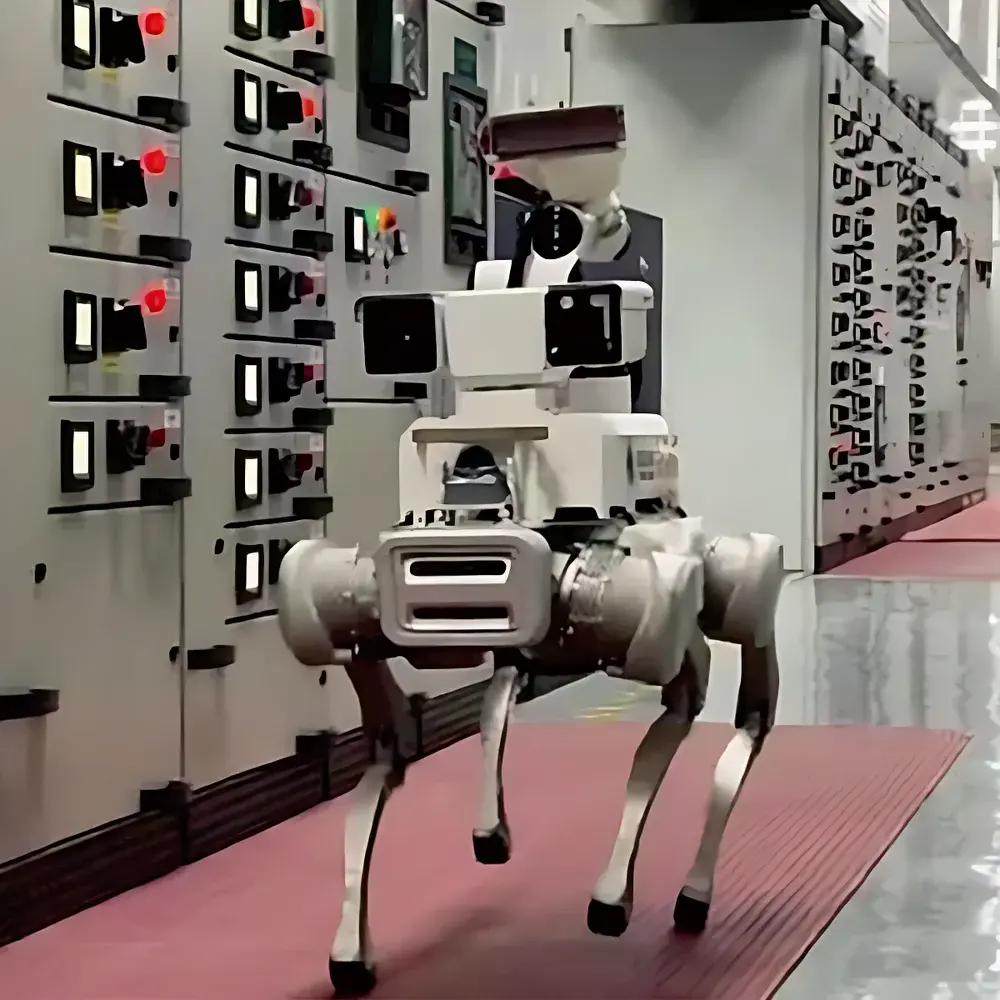
The OSEN-JQG-03 is a purpose-built quadruped robotic platform engineered for autonomous visual inspection and hazardous event reconnaissance in industrial chemical facilities. Unlike wheeled or tracked mobile sensors, this robot leverages biomimetic legged locomotion to navigate uneven terrain, staircases, narrow corridors, confined entryways, and debris-strewn zones—environments where traditional ground robots fail. It integrates synchronized multimodal sensing—including high-resolution RGB imaging, thermal infrared (uncooled microbolometer), gas concentration mapping via onboard electrochemical and PID sensors (configurable for Cl₂, NH₃, H₂S, VOCs, CH₄), and real-time AI-driven anomaly detection—to identify fluid leaks, vapor plumes, abnormal surface temperatures, and structural deviations. Its operational principle combines edge-based computer vision (YOLOv5s-tiny inference engine) with SLAM-enabled navigation (Lidar + IMU fusion) and ROS 2 Humble middleware, enabling persistent, map-aware patrols without continuous remote teleoperation.
Key Features
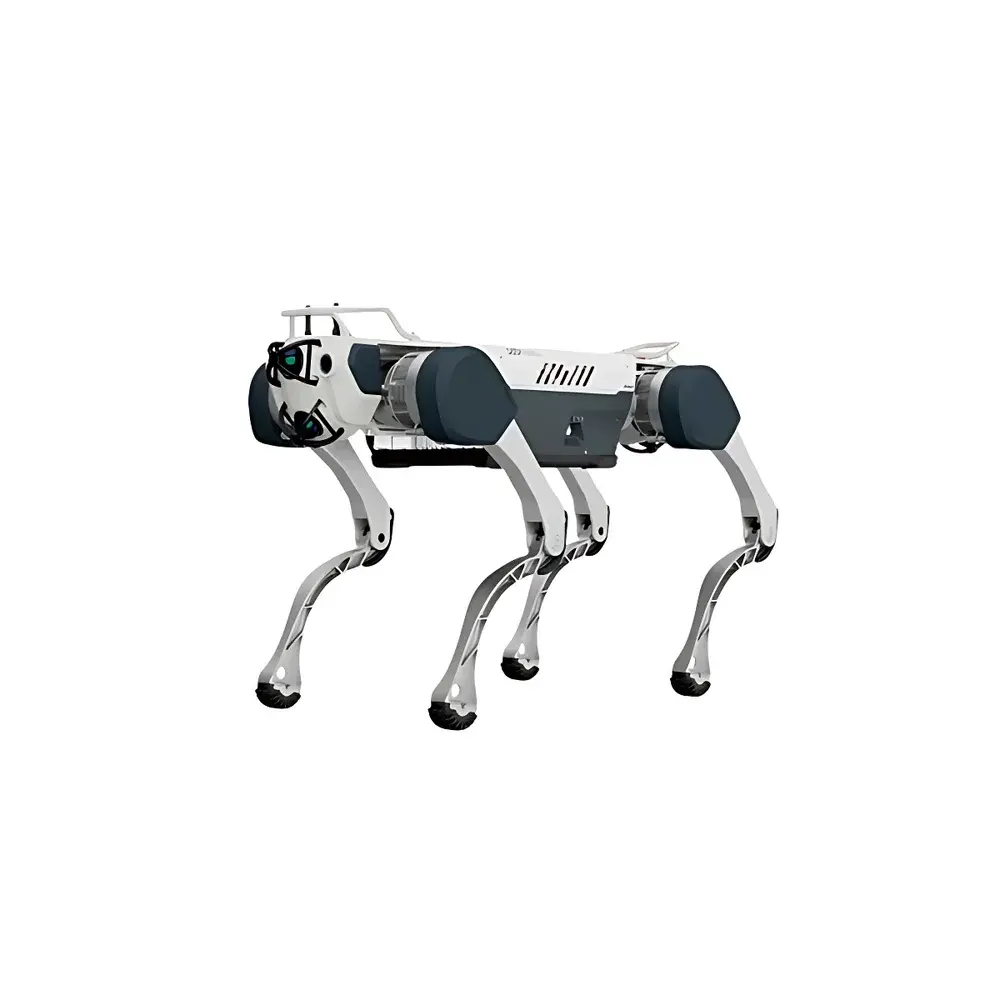
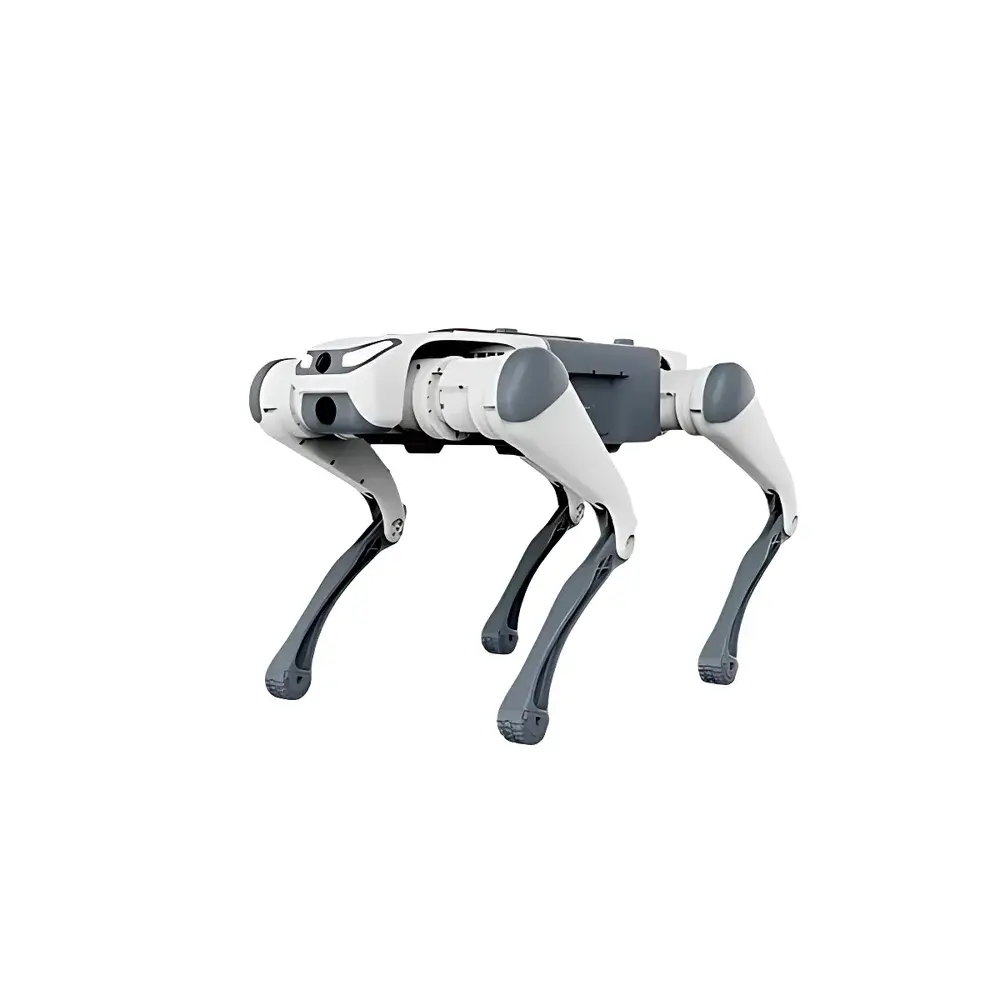
- Adaptive Legged Mobility: 12-DOF torque-controlled actuation system with dynamic gait planning (trot, crawl, step-over) supporting 25° incline traversal and 20 cm vertical step clearance.
- Hazard-Resistant Enclosure: IP67-rated chassis with ATEX/IECEx Zone 2 certification for operation in potentially explosive atmospheres (Class I, Division 2 / Group IIA–IIIB).
- Multi-Sensor Payload Integration: Standard payload bay accommodates interchangeable modules—thermal camera (640×512 @ 50 Hz), wide-angle RGB (4K@30fps), UV flame detector, and 4-channel gas sensor array with ppm-level resolution.
- Onboard Edge Intelligence: NVIDIA Jetson Orin NX (16 GB RAM) running pre-trained CNN models for real-time leak classification (liquid pooling, dripping, vapor dispersion) and false-positive suppression using spatiotemporal context.
- Secure Remote Operation: TLS 1.3 encrypted telemetry, dual-band Wi-Fi 6 (802.11ax) and optional 4G/LTE fallback, with configurable latency thresholds (<300 ms end-to-end video delay under nominal RF conditions).
- Regulatory-Ready Data Logging: Timestamped sensor fusion logs stored locally on encrypted eMMC (64 GB) and synchronized to on-premise NAS or cloud vaults with SHA-256 integrity verification and audit trail per ISO/IEC 17025 Clause 7.9.
Sample Compatibility & Compliance
The OSEN-JQG-03 is designed for non-contact, standoff inspection of process piping, flange joints, storage tanks, vent stacks, and loading/unloading bays within petrochemical, chlorine, ammonia, and organic synthesis facilities. It does not require physical sampling or direct chemical interaction. Its compliance framework includes adherence to GB/T 38659-2020 (Chinese standard for intelligent inspection robots), IEC 61508 SIL2 functional safety requirements for autonomous mobile systems, and electromagnetic compatibility per EN 61000-6-2/-4. Optional configurations support FDA 21 CFR Part 11-compliant electronic signatures and audit trails when integrated with validated enterprise EHS platforms.
Software & Data Management
The robot operates under OSEN InsightOS—a Linux-based firmware stack with modular ROS 2 packages for perception, navigation, and mission orchestration. The companion web application (OSEN FleetView v3.2) provides centralized fleet monitoring, georeferenced heatmaps of detected anomalies, automated report generation (PDF/CSV), and integration hooks for Siemens Desigo CC, Honeywell Experion PKS, and Schneider EcoStruxure Asset Advisor via RESTful APIs and OPC UA PubSub. All raw video, thermal, and gas time-series data are archived with immutable metadata (GPS, IMU pose, ambient T/RH, battery SOC), enabling retrospective root-cause analysis aligned with ISO 45001 incident investigation protocols.
Applications
- Preventive Maintenance Patrols: Scheduled autonomous rounds verifying valve positions, insulation integrity, and drip pan dryness across Class I Div 1 zones.
- Post-Incident Reconnaissance: Rapid deployment following alarm events to assess leak magnitude, directionality, and thermal signature evolution without exposing personnel.
- Confined Space Entry Support: Pre-entry verification of O₂, LEL, H₂S, and CO levels in reactors, scrubbers, or sumps prior to human entry—meeting OSHA 1910.146 requirements.
- Regulatory Audit Readiness: Automated documentation of inspection frequency, coverage completeness, and anomaly response timelines for EPA Risk Management Program (RMP) submissions.
- Training & Simulation: Digital twin export capability (ROS bag + URDF) supports operator training in virtual replicas of plant layouts using NVIDIA Omniverse.
FAQ
Does the OSEN-JQG-03 require external positioning infrastructure (e.g., UWB beacons or magnetic tape)?
No. It relies exclusively on lidar-inertial SLAM for localization and mapping, eliminating dependency on facility-installed infrastructure.
Can it operate in total darkness or dense smoke?
Yes. Its thermal imaging subsystem and IR-assisted navigation enable full functionality in zero-visibility conditions typical during fire or vapor cloud incidents.
Is firmware update capability available over-the-air (OTA)?
Yes. Secure OTA updates are supported via signed package delivery through the FleetView portal, with rollback protection and integrity validation.
What is the typical battery endurance under continuous patrol mode?
Up to 2.5 hours at 0.3 m/s average speed with all sensors active; hot-swappable battery design enables <90-second module replacement.
How is cybersecurity assured against unauthorized access or command injection?
Hardware-enforced secure boot, TPM 2.0 attestation, role-based access control (RBAC), and mandatory certificate-based mutual TLS authentication for all remote interfaces.
Related Products







