
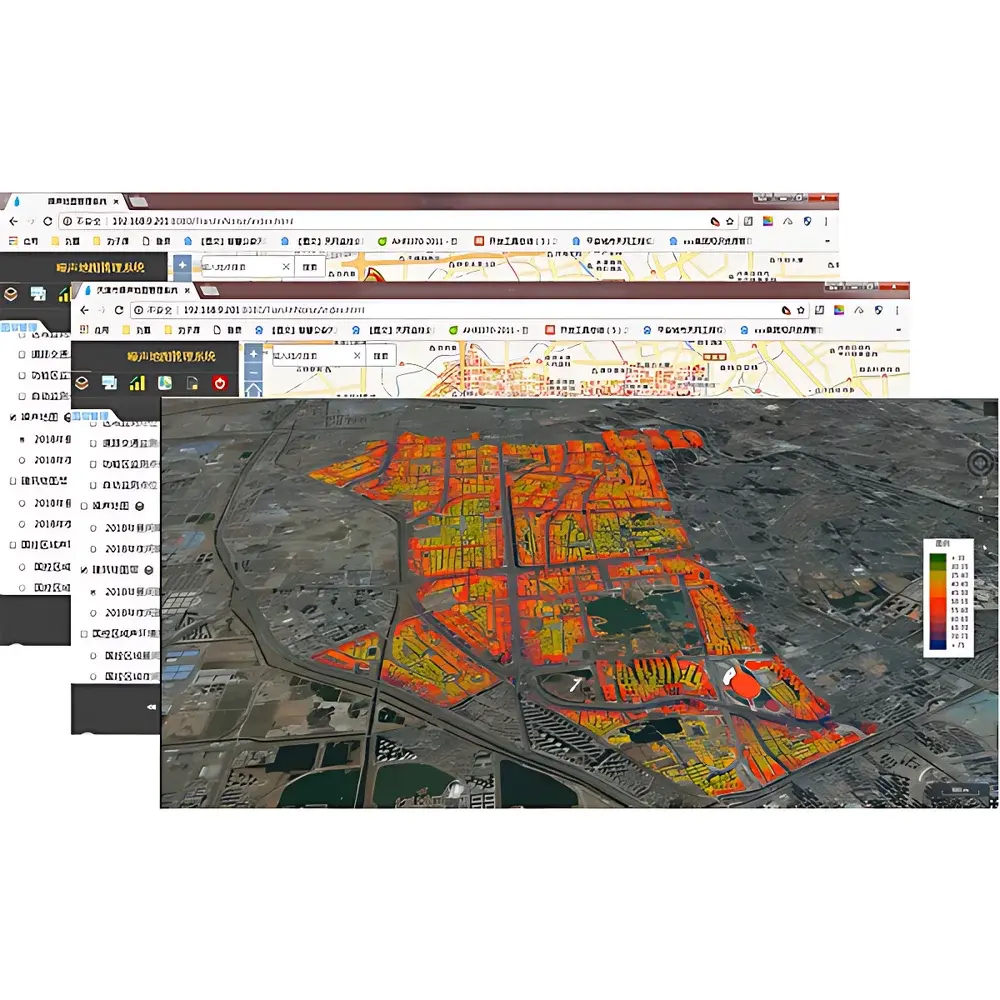
OSEN OSEN-PT-01 Urban-Scale Dynamic Noise Mapping Platform
| Brand | OSEN |
|---|---|
| Origin | Guangdong, China |
| Manufacturer Type | Authorized Distributor |
| Country of Origin | China |
| Model | OSEN-PT-01 |
| Instrument Type | Online Noise Monitoring System |
| Pricing | Custom Quotation Required (Non-Standard Configuration) |
Overview
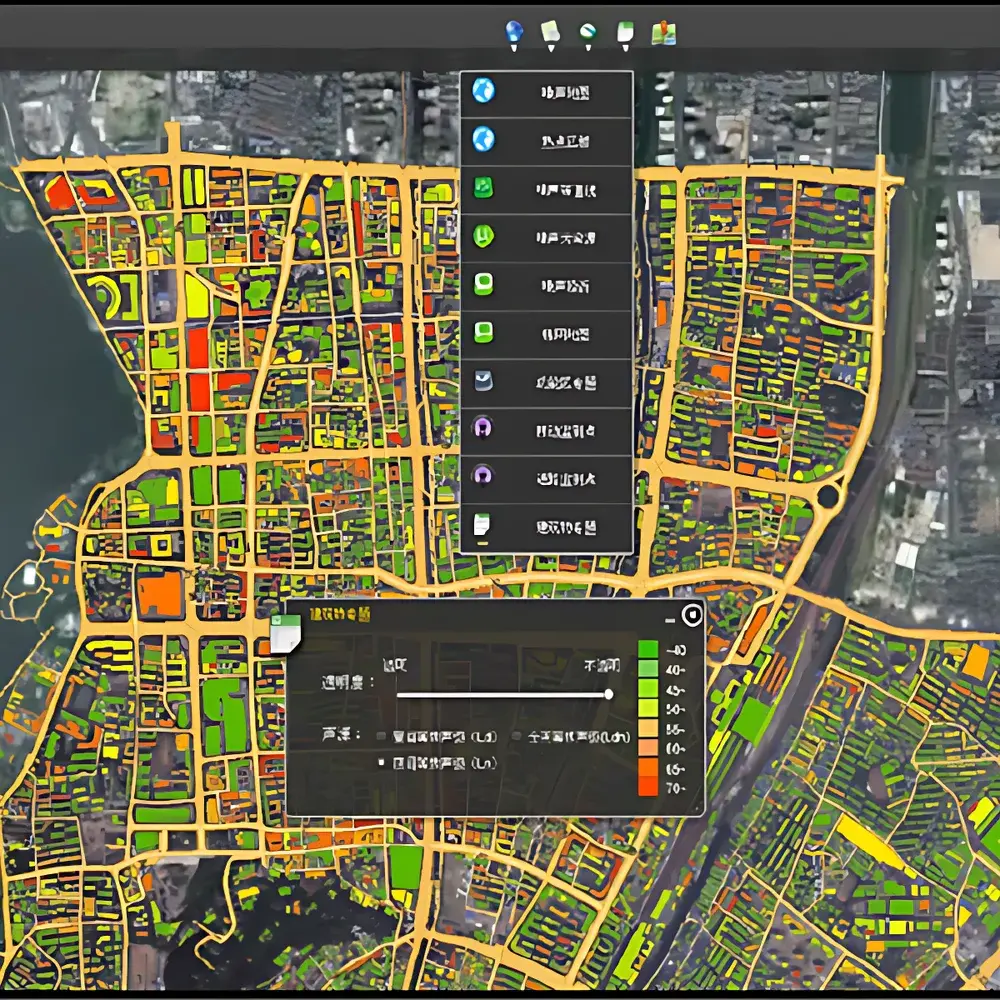
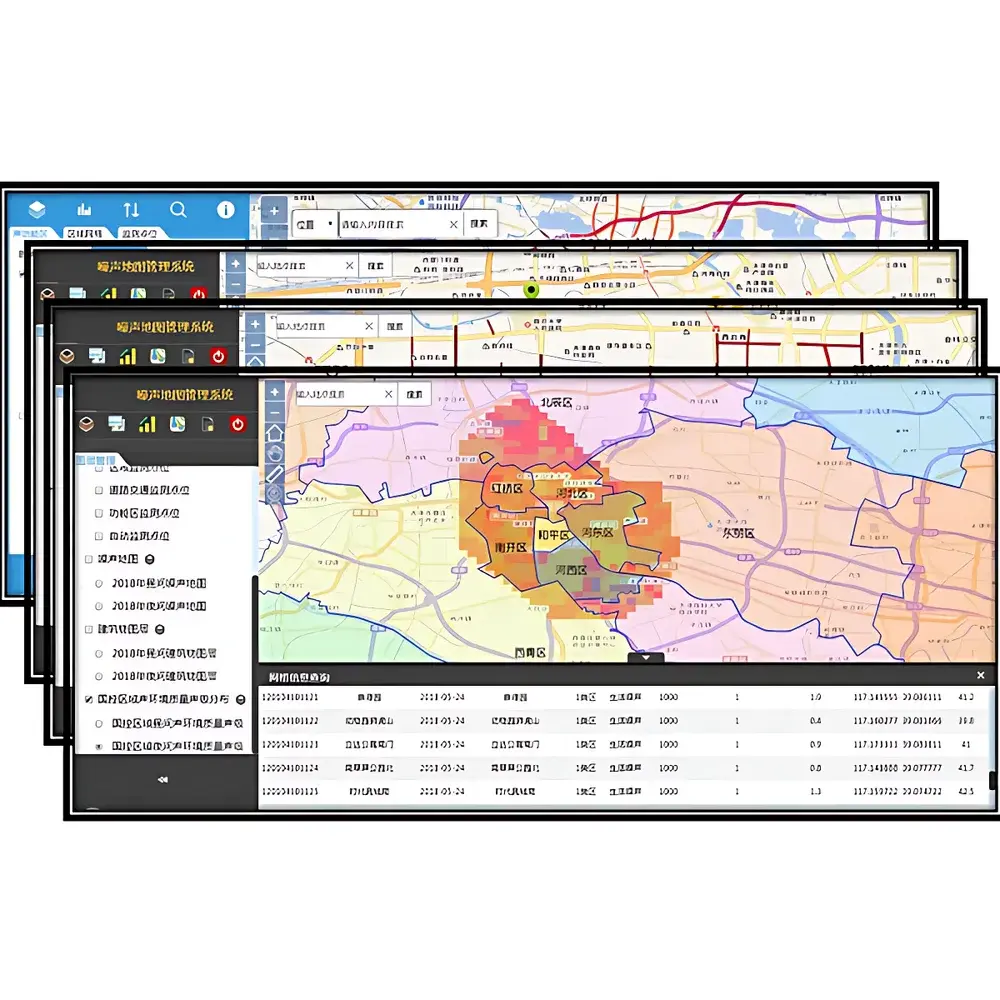
The OSEN OSEN-PT-01 Urban-Scale Dynamic Noise Mapping Platform is a geospatially enabled environmental monitoring solution engineered for continuous, high-resolution acoustic assessment across metropolitan areas. Unlike conventional point-based sound level meters or static noise mapping tools, this platform integrates real-time noise sensor networks, GIS-based spatial interpolation algorithms (e.g., ISO 1996-2:2017 compliant propagation modeling), and time-series analytics to generate dynamic 3D noise maps. It operates on the principle of distributed acoustic sensing—leveraging calibrated Class 1 IEC 61672-1 compliant sensors deployed across strategic urban nodes (e.g., traffic corridors, residential perimeters, industrial boundaries) to capture spatiotemporal noise variations at sub-hourly resolution. The system supports long-term trend analysis, event-triggered anomaly detection (e.g., construction bursts, night-time violations), and regulatory compliance reporting aligned with national ambient noise standards (e.g., GB 3096–2008) and EU Directive 2002/49/EC requirements.
Key Features
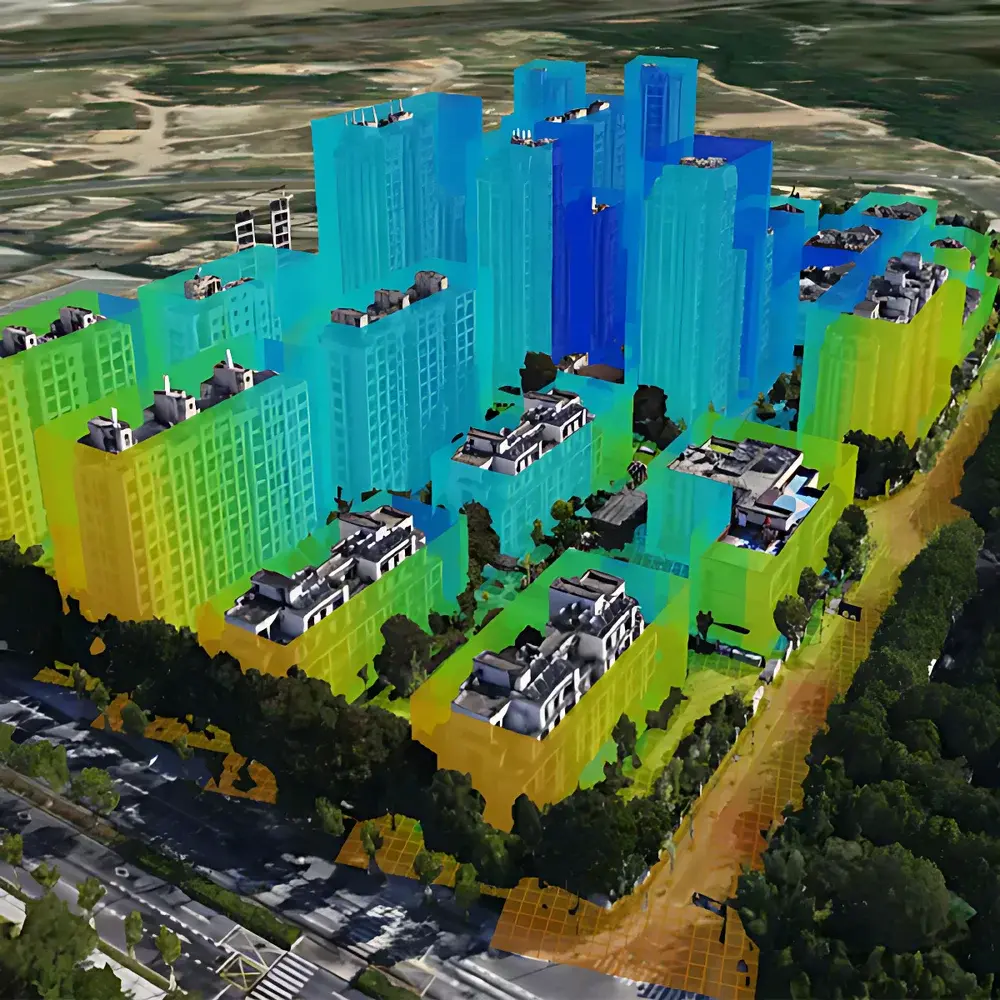
- Real-time 3D noise visualization: Layered rendering of LAeq, Lden, and Lnight metrics over digital elevation models (DEMs) and building footprints, enabling vertical stratification of noise exposure (e.g., ground floor vs. 5th-floor dwellings).
- Dynamic temporal modeling: Hourly, daily, and seasonal noise pattern simulation using adaptive kriging and ray-tracing propagation models validated against field measurements.
- Scalable sensor integration: Supports heterogeneous input from OSEN’s certified online noise monitors (OSEN-NS series), third-party IEC 61672-1 Class 1 devices, and legacy SCADA systems via Modbus TCP and MQTT protocols.
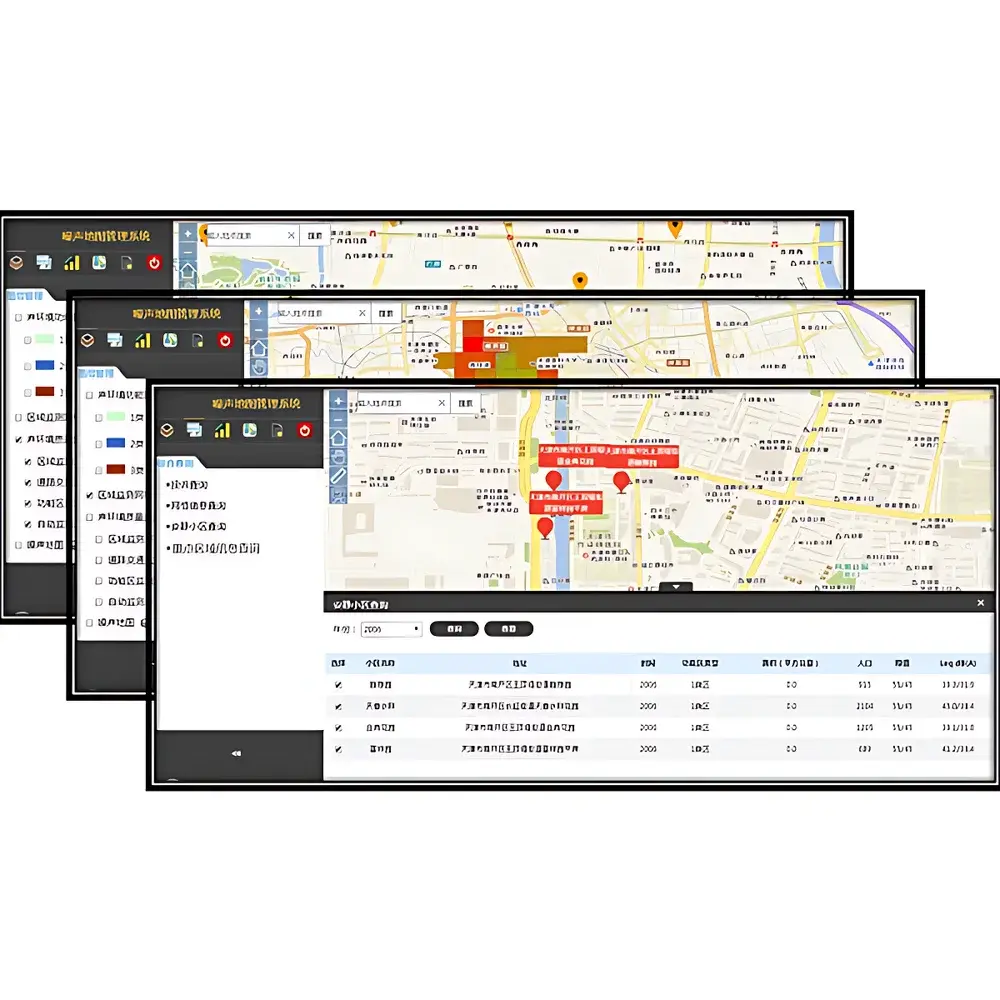
- Regulatory dashboarding: Preconfigured report templates compliant with Chinese Ministry of Ecology and Environment (MEE) reporting formats, including annual noise pollution status summaries and hotspot identification matrices.
- API-first architecture: RESTful interfaces for integration with municipal smart city platforms (e.g., urban operation centers), environmental data lakes, and GIS enterprise systems (ArcGIS Enterprise, QGIS Server).
- Robust data governance: Role-based access control (RBAC), audit logs for map generation events, and metadata tagging per ISO 19115–1:2014 standards.
Sample Compatibility & Compliance
The platform accepts structured acoustic data streams from fixed-location, permanently powered noise monitoring terminals meeting IEC 61672-1:2013 Class 1 accuracy specifications. It is compatible with common urban infrastructure deployments—including pole-mounted enclosures, building façade integrations, and roadside cabinets—provided environmental operating conditions fall within −20 °C to +50 °C and relative humidity ≤90% non-condensing. All noise metric calculations adhere to ISO 1996-1:2016 (basic quantities and assessment procedures) and ISO 1996-2:2017 (methods for determining sound pressure levels). For regulatory submissions in China, outputs satisfy MEE Technical Guidelines for Environmental Noise Monitoring (HJ 640–2012) and GB/T 3222–2022 (acoustics—field measurement of environmental noise). The system architecture supports GLP-aligned data integrity practices, including timestamp traceability, sensor calibration history linkage, and immutable raw data storage.
Software & Data Management
The OSEN-PT-01 platform runs on a containerized microservices stack (Docker/Kubernetes) hosted on-premises or in private cloud environments. Its core software suite includes a web-based GIS mapping interface (built on OpenLayers v7.x), a time-series database (InfluxDB optimized for acoustic metadata), and a noise modeling engine implementing ISO/TR 20916:2017 recommended practices for uncertainty quantification in noise mapping. Data ingestion pipelines enforce strict validation rules: automatic rejection of out-of-range LAeq values (>140 dB), gap-filling via spatial-temporal interpolation with user-adjustable confidence thresholds, and drift compensation using reference microphone cross-calibration routines. Audit trails comply with ISO/IEC 17025:2017 clause 7.5.2 for record retention, and export modules generate PDF/GeoJSON/CSV deliverables suitable for regulatory review. Optional FDA 21 CFR Part 11–compliant electronic signature and audit trail extensions are available for clients operating under pharmaceutical or medical device manufacturing site noise control programs.
Applications
- Municipal environmental protection bureaus conducting statutory noise zoning and land-use planning assessments.
- Transportation authorities evaluating noise impact of new metro lines, highway expansions, or airport runway operations.
- Urban planners integrating noise exposure metrics into health impact assessments (HIAs) and WHO-recommended noise burden indices.
- Industrial park operators fulfilling environmental compliance obligations under China’s Pollutant Discharge Permit System.
- Academic research groups studying anthropogenic noise propagation in complex urban canyons using high-resolution spatiotemporal datasets.
- Real estate developers performing pre-construction noise baseline studies and post-completion verification reporting.
FAQ
Is the OSEN-PT-01 platform supplied as off-the-shelf software or fully customized?
The OSEN-PT-01 is delivered as a configurable platform—not a fixed-license product. Deployment scope, sensor network topology, modeling assumptions (e.g., barrier insertion loss coefficients), and reporting templates are defined during a joint scoping workshop with OSEN’s application engineers.
Does the system support integration with existing municipal IoT infrastructure?
Yes. Standardized northbound interfaces include HTTP REST APIs, MQTT brokers with TLS 1.2 encryption, and OPC UA adapters for interoperability with legacy SCADA and smart city middleware.
What level of technical support and calibration traceability is provided?
OSEN provides annual remote health checks, on-site sensor recalibration services traceable to NIM (National Institute of Metrology, China), and documentation packages compliant with ISO/IEC 17025 requirements for accredited laboratories.
Can historical noise data from manual surveys be imported into the platform?
Yes. The platform accepts CSV-formatted datasets containing coordinates, timestamps, and LAeq/Lmax values, automatically georeferencing them and incorporating them into baseline statistical models.
Is cloud hosting available outside mainland China?
Deployment is restricted to sovereign infrastructure per Chinese cybersecurity regulations (CSL Article 37); international clients must utilize local data centers or hybrid architectures with edge preprocessing and anonymized metadata forwarding.







