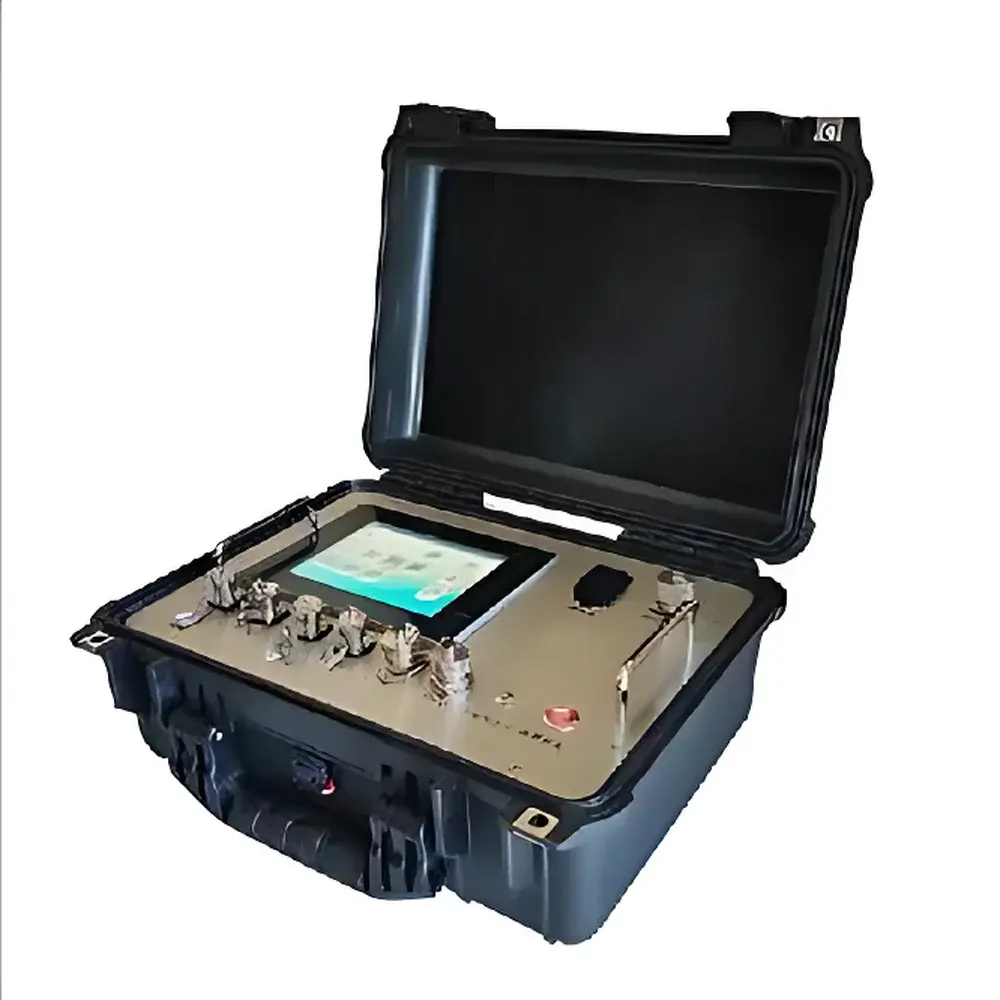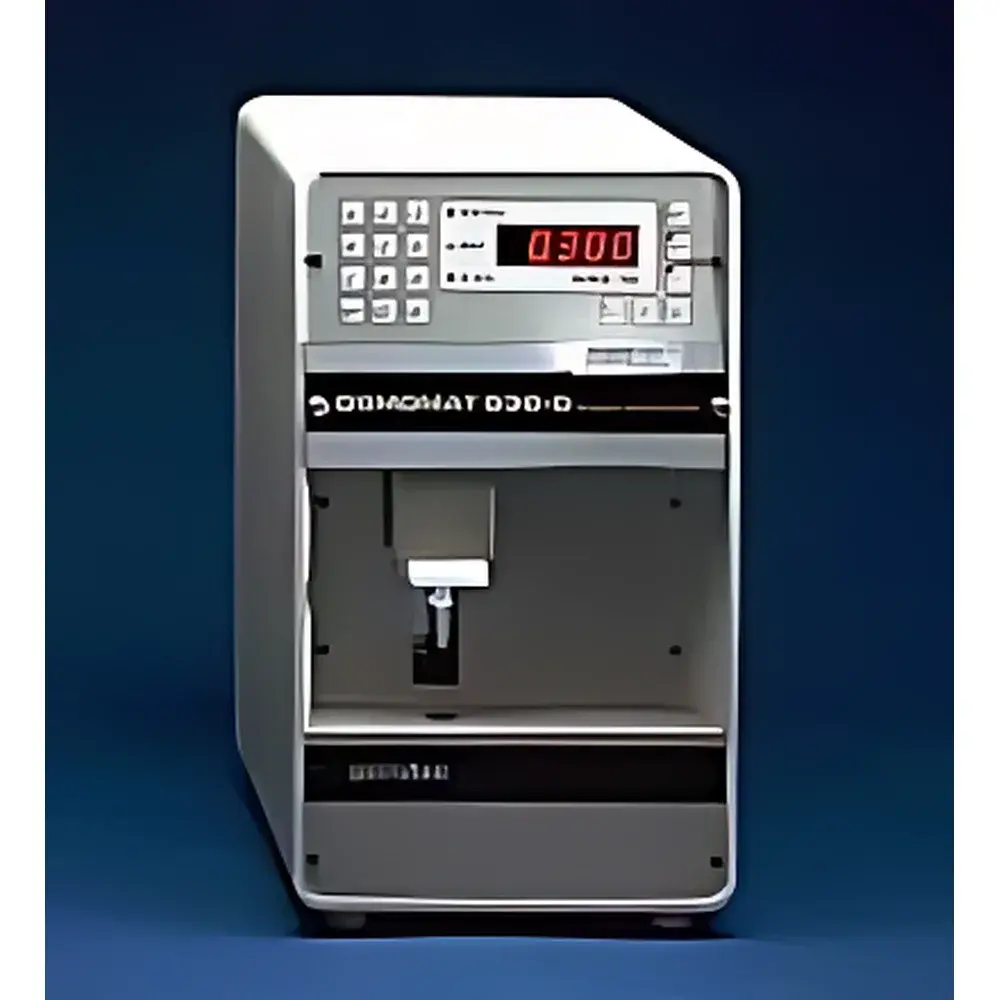
OSMOMAT 030 Cryoscopic Osmometer (German-Made, Pharmaceutical-Grade)
| Key Features | Microprocessor-controlled cryoscopic measurement |
|---|---|
| Sample volume | 30–50 µL (optional 15 µL configuration) |
| Measurement time | <60 s per sample |
| Accuracy | ±0.5% or ±2 digits (at 50 µL), ±1% or ±4 digits (at 30 µL) |
| Resolution | 1 mOsmol/kg |
| Measuring range | up to 3000 mOsmol/kg |
| Cooling system | Dual independent Peltier elements with electronic temperature regulation (±0.1 °C stability) |
| Display | 4½-digit LED |
| Dimensions | 220 W × 205 H × 360 D mm |
| Weight | 7 kg |
| Power supply | 110/230 V, 50/60 Hz |
| Compliance | Designed for GLP/GMP-aligned pharmaceutical QC environments |
Overview
The OSMOMAT 030 is a high-precision cryoscopic osmometer engineered for regulatory-compliant osmolality determination in pharmaceutical, clinical, and biomedical laboratories. It operates on the fundamental colligative principle that the freezing point depression of an aqueous solution is directly proportional to its total solute concentration — specifically, a 1 Osmol/kg solution depresses the ice point of pure water by −1.858 °C. By precisely measuring the temperature difference between the sample’s freezing point and that of ultrapure water reference, the instrument calculates osmolality in milliosmoles per kilogram (mOsmol/kg) using calibrated thermodynamic algorithms. This cryoscopic method is recognized in pharmacopoeial standards including USP , EP 2.2.35, and JP 6.07, and is widely accepted for quality control of parenteral solutions, dialysis fluids, contrast media, ophthalmic preparations, and cell culture media.
Key Features
- Fully automated cryoscopic measurement cycle: dual-stage Peltier cooling initiates controlled supercooling, followed by precise micro-crystallization via stainless-steel needle induction — eliminating operator-dependent nucleation variability.
- Ultra-low sample requirement: standard operation at 30–50 µL; optional low-volume module supports 15 µL analysis — critical for precious biological samples such as cerebrospinal fluid, neonatal serum, or limited-volume biologics batches.
- High reproducibility: ≤ ±0.5% RSD (at 50 µL) and ≤ ±1% RSD (at 30 µL), validated against NIST-traceable osmotic reference standards.
- Robust thermal architecture: two independent Peltier modules enable rapid thermal equilibration and stable sub-zero temperature control (±0.1 °C), preventing frost accumulation and ensuring uninterrupted multi-sample runs.
- Intuitive top-mounted interface: tactile membrane keys and high-contrast 4½-digit LED display facilitate glove-compatible operation in cleanroom or clinical settings.
- Self-diagnostic firmware: real-time monitoring of cooling performance, crystallization kinetics, and sensor integrity — alerts users to deviations before data acquisition begins.
Sample Compatibility & Compliance
The OSMOMAT 030 accommodates a broad spectrum of aqueous-based formulations without chemical modification or dilution, including isotonic saline, dextrose solutions, monoclonal antibody formulations, heparinized plasma, urine, dialysate concentrates, and plant tissue extracts. Its non-destructive, solvent-free measurement principle avoids interference from volatile organics, proteins, or polymers that may compromise vapor pressure or membrane-based methods. The system supports audit-ready workflows under FDA 21 CFR Part 11 requirements when paired with optional RS-232C interface and compliant LIMS integration. Routine calibration verification follows ISO/IEC 17025 traceability protocols, and documentation packages meet ICH Q5C stability testing guidelines for biopharmaceuticals.
Software & Data Management
While the base unit operates as a standalone instrument with local storage of up to 100 measurement records, optional digital interfaces extend its functionality: RS-232C enables bidirectional communication with laboratory information systems (LIS) or electronic lab notebooks (ELN); analog output (0–10 V or 4–20 mA) supports continuous process monitoring in manufacturing suites; and integrated thermal printer provides immediate hard-copy reports with timestamp, operator ID, and calibration status. All data exports include metadata required for GLP audits — including ambient temperature, sample ID, measurement duration, and system self-test logs.
Applications
- Pharmaceutical QC: Release testing of injectables, lyophilized products, and excipient solutions per USP monographs.
- Clinical diagnostics: Rapid assessment of serum, urine, and CSF osmolality in nephrology, neonatology, and critical care units.
- Hemodialysis & apheresis: Verification of dialysate and replacement fluid osmolality prior to patient administration.
- Cell therapy & regenerative medicine: Monitoring osmotic balance in cryopreservation media and wash buffers.
- Veterinary & agricultural research: Evaluation of semen extender formulations and plant sap osmolality under drought stress studies.
FAQ
What regulatory standards does the OSMOMAT 030 comply with?
It aligns with USP , European Pharmacopoeia 2.2.35, Japanese Pharmacopoeia 6.07, and ISO 11348-3 for cryoscopic osmometry — supporting validation under GMP Annex 15 and ICH Q2(R2).
Can the instrument be qualified for use in a regulated QC environment?
Yes — IQ/OQ/PQ protocols are available, and the system supports electronic signatures, audit trails, and calibration lockout features when configured with compliant software infrastructure.
Is maintenance required between samples?
No cleaning or rinsing is needed; the stainless-steel crystallization probe is inert and self-drying, enabling back-to-back analysis with no carryover risk.
How is calibration verified?
Automated zero-point verification using ultrapure water and two-point calibration with certified reference standards (e.g., 200 and 1000 mOsmol/kg) — all logged with full traceability.
Does it support unattended batch processing?
While fully automatic per-sample, continuous unattended operation requires external autosampler integration — available through third-party OEM partnerships.