
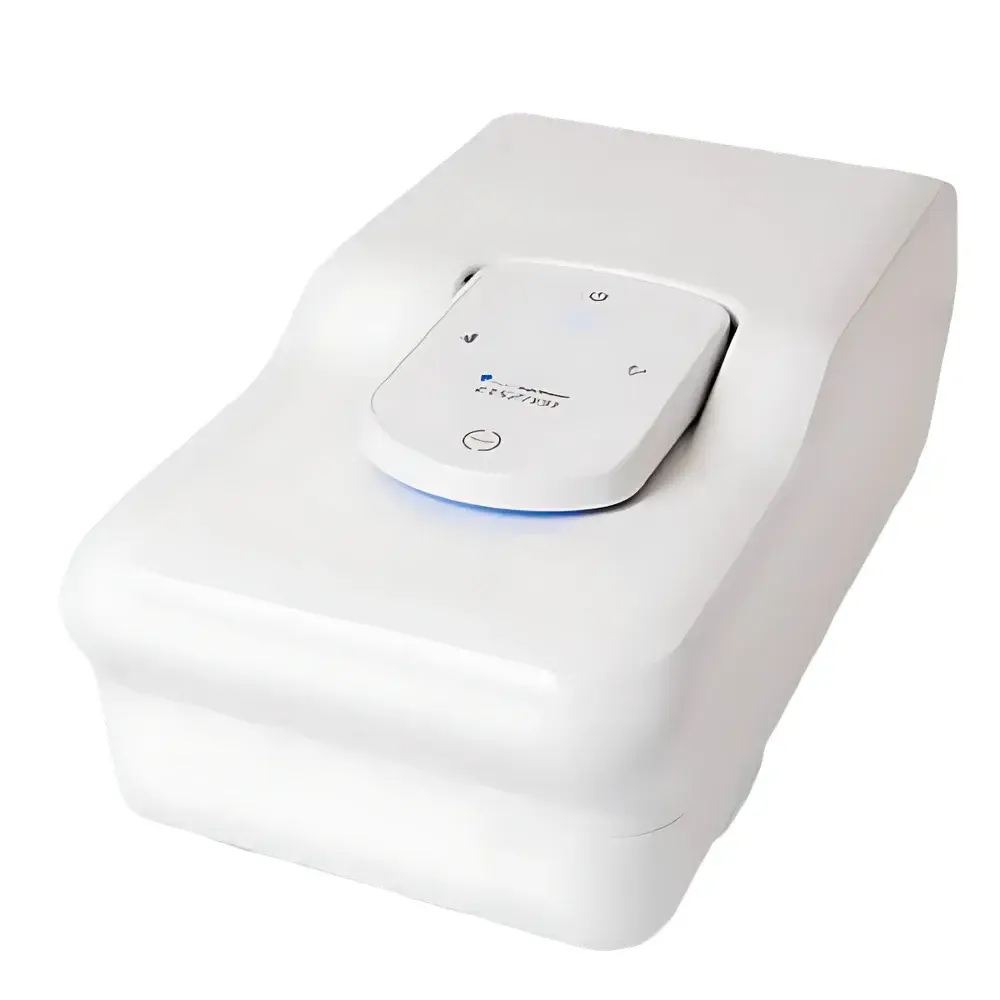
Otsuka ELSZ-neo SE Zeta Potential and Nanoparticle Size Analyzer
| Brand | Otsuka Electronics |
|---|---|
| Origin | Japan |
| Manufacturer Type | Authorized Distributor |
| Product Category | Imported Instrument |
| Model | ELSZ-neo SE |
| Price | Upon Request |
| Particle Size Range | 0.6 nm – 10 µm |
| Temperature Control Range | 0–90 °C |
| Particle Sizing Method | Dynamic Light Scattering (Photon Correlation Spectroscopy) |
| Sample Concentration Range | Zeta Potential: 0.001–40% w/v |
| Particle Size | 0.00001% (0.1 ppm) – 40% w/v*¹ |
| Zeta Potential Measurement Range | No practical upper limit |
| Zeta Potential Principle | Electrophoretic Light Scattering (Laser Doppler Velocimetry) |
| Particle Size Principle | Dynamic Light Scattering (DLS) |
| Optical Configuration | Heterodyne for Zeta Potential |
| Light Source | Narrow-band Diode Laser |
| Detector | High-Sensitivity APD |
| Standard Cell | Flow-through Cell for Simultaneous Zeta & Size |
| Optional Accessories | Fluorescence Cut-off Filter, Flat-sample Electrode Cell for High-Salt Surface Zeta, Temperature Gradient Module |
| Power Supply | 100 V ±10%, 250 VA |
| Dimensions (W×D×H) | 330 × 565 × 245 mm |
| Weight | 22 kg |
Overview
The Otsuka ELSZ-neo SE Zeta Potential and Nanoparticle Size Analyzer is a dual-function, high-precision electrophoretic and dynamic light scattering instrument engineered for rigorous surface and colloidal characterization in research and quality control laboratories. It operates on two complementary physical principles: electrophoretic light scattering (ELS) for zeta potential determination via laser Doppler velocimetry, and dynamic light scattering (DLS) — also known as photon correlation spectroscopy (PCS) — for hydrodynamic size distribution analysis of nanoparticles and macromolecules. Designed for reproducible measurements across extreme sample conditions — from ultra-dilute biological macromolecules (0.1 ppm) to highly concentrated industrial slurries (up to 40% w/v) — the system integrates temperature-controlled fluidics, adaptive optical detection, and robust signal processing architecture. Its operational range spans 0.6 nm to 10 µm in particle size and supports zeta potential quantification without theoretical upper limit, enabled by high-resolution heterodyne optics and low-noise avalanche photodiode (APD) detection. The platform is calibrated per ISO 22412 (DLS) and ISO 13099-2 (ELS), supporting traceable, GLP-compliant reporting.
Key Features
- Simultaneous dual-parameter acquisition: Real-time, co-located measurement of zeta potential and hydrodynamic diameter using a single flow-through cell — eliminating sample re-alignment and inter-run variability.
- Extended concentration tolerance: Validated performance from 0.00001% (0.1 ppm) for protein solutions to 40% w/v for ceramic slurries and polymer dispersions, with no dilution required for routine QC.
- Full thermal programmability: Precise Peltier-based temperature control from 0 °C to 90 °C, including linear gradient capability (e.g., 0.1–1.0 °C/min) for thermal denaturation profiling of proteins, phase transition analysis of thermosensitive polymers, and stability assessment under accelerated aging protocols.
- Surface zeta capability: Optional flat-sample electrode cell enables direct zeta potential measurement on planar substrates (e.g., silicon wafers, functional membranes, thin-film electrodes) even at high ionic strength (>1 M NaCl), critical for semiconductor CMP slurry development and adsorption mechanism studies.
- Modular expansion architecture: Field-upgradable modules include molecular weight estimation (via Debye plot integration), particle number concentration calculation (using absolute intensity calibration), micro-rheology (via intermediate scattering function analysis), gel network structure quantification (q-dependence of diffusion coefficient), and multi-angle DLS for anisotropic particle validation.
- Optical integrity assurance: Integrated fluorescence cut-off filter (optional) suppresses background emission from labeled biomolecules or fluorescent dyes, preserving signal-to-noise ratio in complex bio-nanomedicine formulations.
Sample Compatibility & Compliance
The ELSZ-neo SE accommodates aqueous and organic dispersions, surfactant micelles, liposomes, exosomes, polymeric nanoparticles, metal oxides (TiO₂, Al₂O₃, SiO₂), carbon nanotubes, cellulose nanofibrils, catalysts, pigments (carbon black, organic dyes), and pharmaceutical emulsions. It meets essential regulatory design criteria for analytical instrumentation used in GMP environments: full audit trail logging (user ID, timestamp, parameter set, raw correlation data), electronic signature support aligned with FDA 21 CFR Part 11 requirements, and configurable report templates compliant with ISO/IEC 17025 documentation standards. All calibration procedures reference NIST-traceable polystyrene and silica nanoparticle standards (e.g., NIST SRM 1963, 8012). Surface charge measurements on flat samples conform to ASTM D7825 for zeta potential of solid surfaces.
Software & Data Management
Otsuka’s proprietary ELSZ-Control Suite v4.x provides intuitive workflow-driven operation, real-time correlation curve visualization, and automated quality flagging (e.g., dust contamination, multiple scattering, poor signal-to-noise). Raw autocorrelation functions (ACF) and electrophoretic mobility spectra are stored in HDF5 format with embedded metadata (temperature, viscosity, refractive index, laser power). Batch processing supports ISO 13321-compliant cumulant and CONTIN analysis for polydisperse systems. Export options include CSV, PDF, and XML for LIMS integration. Software validation packages (IQ/OQ documentation, test scripts, and protocol templates) are available for regulated industries. Data encryption at rest and role-based access control ensure alignment with GDPR and HIPAA-aligned data governance policies.
Applications
- Colloidal stability optimization in battery electrode slurries, CMP formulations, and pigment dispersions.
- Surface modification efficacy verification for functionalized nanomaterials (e.g., PEGylation, silanization, polymer grafting).
- Protein aggregation onset detection via zeta potential shift and hydrodynamic radius growth during thermal ramps.
- Drug delivery system characterization: liposome/DNA complexation efficiency, dendrimer charge reversal, nanoemulsion droplet stability under gastric pH shifts.
- Adsorption kinetics modeling at solid–liquid interfaces (e.g., contaminant binding on mineral surfaces, antifouling coating performance).
- Regulatory submission support: Particle size distribution and surface charge data generated per ICH Q5A(R2), USP <729>, and Ph. Eur. 2.9.31.
FAQ
Can the ELSZ-neo SE measure zeta potential of non-spherical particles such as nanotubes or nanowires?
Yes — while zeta potential reflects surface charge rather than shape, the instrument reports electrophoretic mobility directly; interpretation for anisotropic particles requires caution and should be supported by complementary TEM or AFM morphology data.
Is it possible to validate measurement repeatability across laboratories?
Absolutely — the system supports inter-laboratory comparison via standardized SOPs, NIST-traceable reference materials, and export of raw ACF files for third-party reanalysis using open-source tools (e.g., DDSCAT, CONTIN implementations).
Does the flow-through cell require cleaning between samples?
The quartz capillary cell is chemically inert and compatible with common solvents (water, ethanol, acetone, chloroform); automated rinse cycles (programmable volume and dwell time) minimize carryover; typical protocol includes 3× 500 µL solvent flush followed by air purge.
How does the instrument handle high-salt samples commonly used in biological buffers?
The optional flat-sample electrode cell bypasses bulk conductivity limitations, enabling reliable surface zeta measurements in buffers up to 1 M NaCl; for conventional cuvette-based DLS/ELS, salt-induced scattering noise is mitigated via optimized heterodyne detection and adjustable laser power modulation.
Can the software generate reports compliant with FDA eCTD requirements?
Yes — report templates include mandatory fields per ICH M4, automatic inclusion of audit trail excerpts, digital signatures, and metadata export in XML format suitable for eCTD module 5.3.2 submissions.



