Oxford Instruments ALD OpAL Atomic Layer Deposition System
| Brand | Oxford Instruments |
|---|---|
| Origin | United Kingdom |
| Model | ALD OpAL |
| Substrate Size | Up to 200 mm |
| Process Temperature | Up to 200 °C |
| Precursor Sources | Up to 4 (liquid or solid) |
| Plasma-Enhanced ALD Capability | Optional, field-upgradable |
| Chamber Design | Direct-load, open-frame thermal ALD platform |
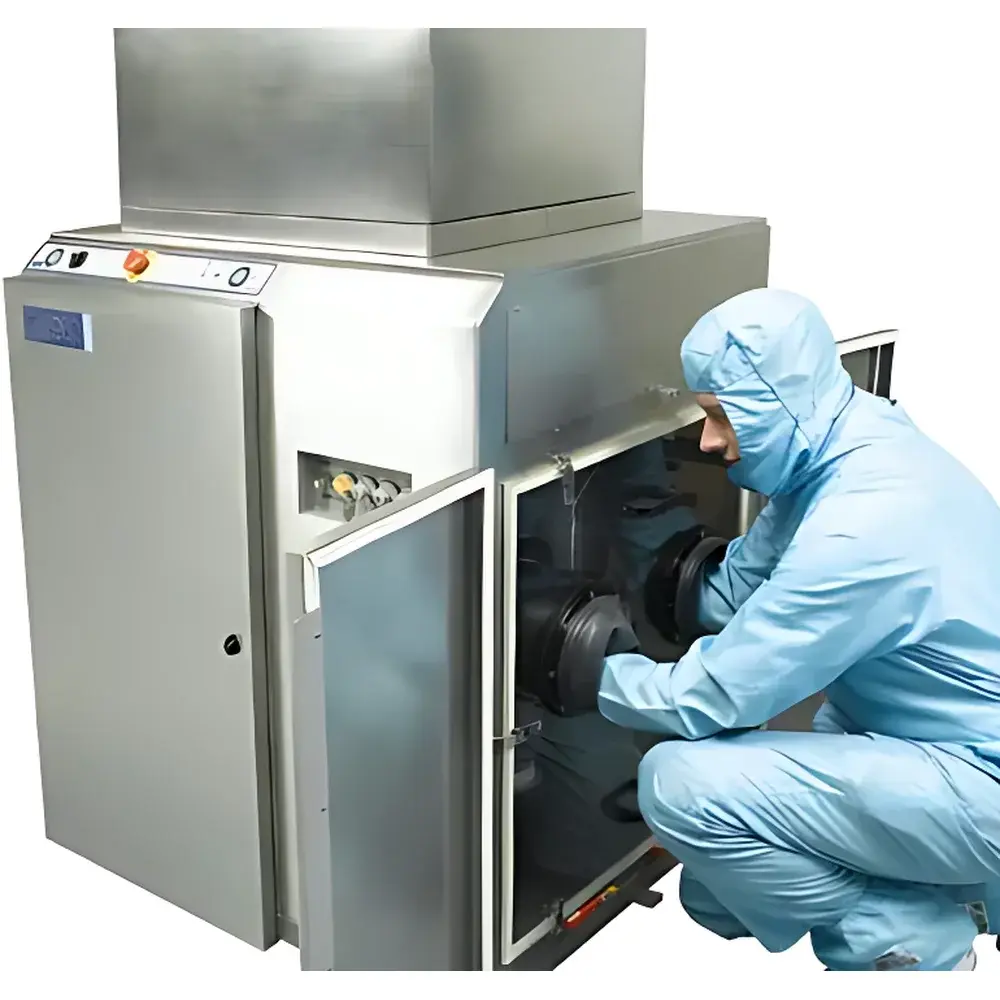
| Safety Integration | Compatible with N₂-purged gloveboxes and exhaust hoods |
| Service Support | Lifetime process support, including new recipe development and material-specific optimization guidance |
Overview
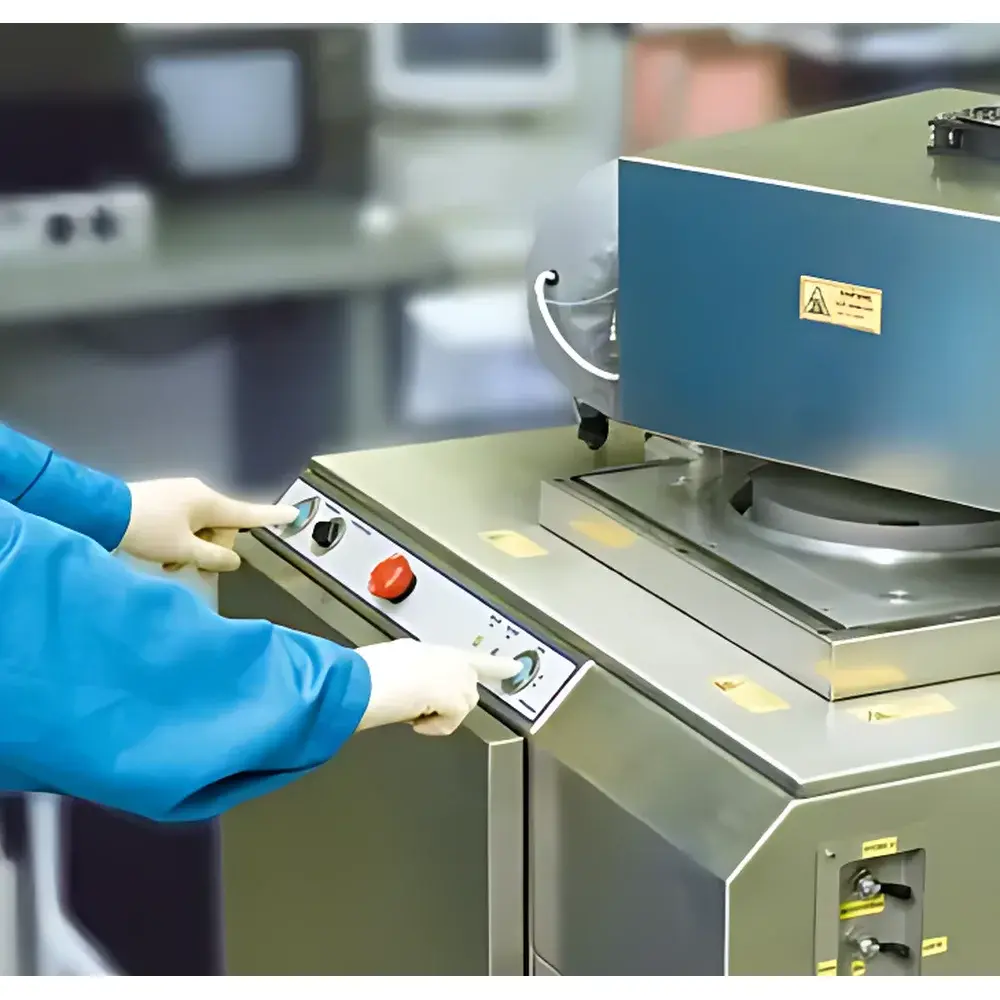
The Oxford Instruments ALD OpAL is a modular, direct-load thermal atomic layer deposition system engineered for precision thin-film synthesis in academic research, R&D laboratories, and low-volume pilot production environments. It operates on the fundamental principle of self-limiting surface reactions—sequential, saturative exposures of gaseous precursors separated by inert purge steps—to achieve sub-nanometer thickness control, exceptional conformality (>95% step coverage on high-aspect-ratio features), and atomic-scale uniformity across 200 mm substrates. The system’s architecture supports both conventional thermal ALD and, via a straightforward hardware and software upgrade path, plasma-enhanced ALD (PE-ALD), enabling access to lower-temperature processing windows and expanded precursor reactivity without compromising chamber footprint or operational continuity. Its open-frame design facilitates rapid maintenance, visual process monitoring, and seamless integration with in situ characterization tools.
Key Features
- Modular thermal ALD platform with factory-ready PE-ALD upgrade option—no chamber replacement required
- Direct-load configuration with front-access door and pneumatic lift mechanism for safe, ergonomic chamber opening
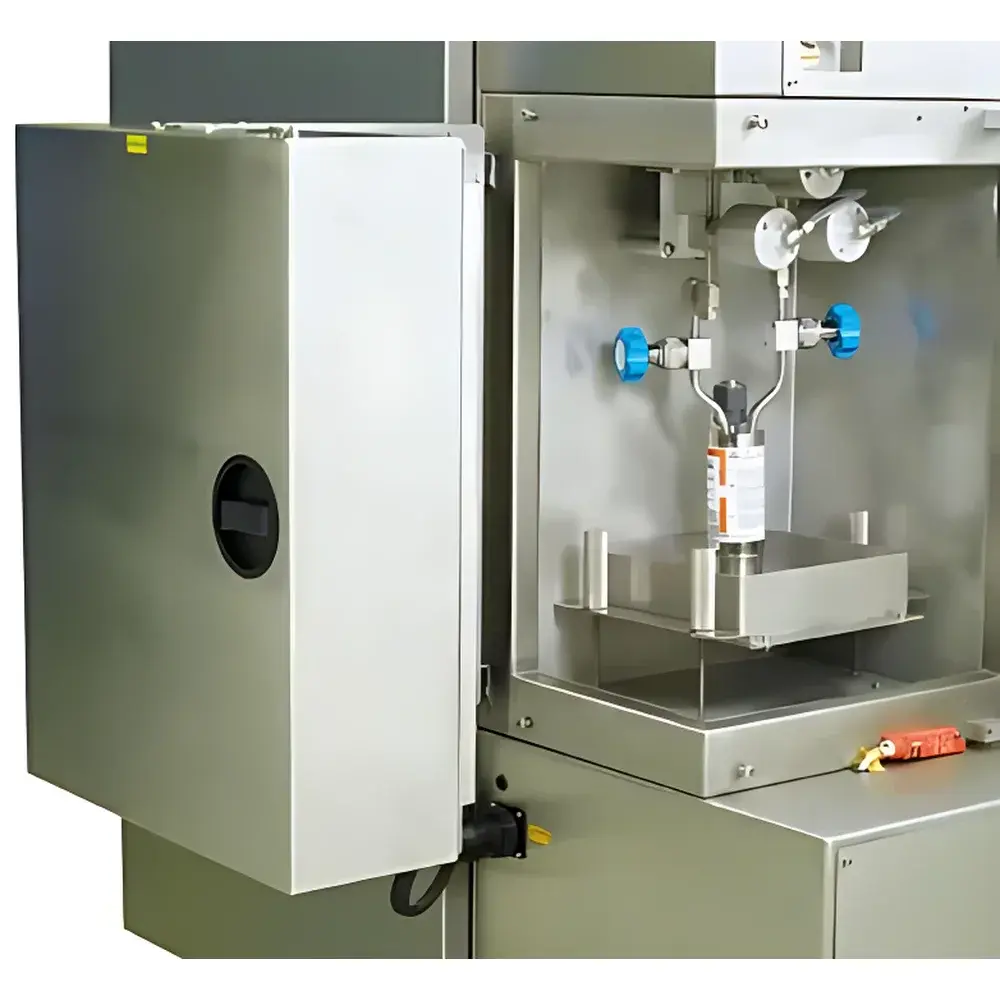
- Four independently controlled precursor delivery lines accommodating liquid, solid, or volatile precursors via bubblers or sublimation sources
- Integrated temperature control from ambient to 200 °C with ±1 °C stability over full substrate area
- Removable, low-mass aluminum chamber liner for rapid cleaning and minimal cross-contamination risk
- Compatibility with N₂-purged gloveboxes (optional integrated transfer port) and fume extraction systems to meet ISO 14644 cleanroom and OSHA-compliant lab safety standards
- Standard vacuum architecture with turbomolecular pumping and pressure regulation down to 10⁻⁶ mbar base pressure
Sample Compatibility & Compliance
The ALD OpAL accommodates substrates up to 200 mm in diameter—including silicon wafers, glass slides, flexible polymers, and MEMS devices—with full edge exclusion control and chuck-based thermal management. It complies with CE marking requirements for electromagnetic compatibility (EMC Directive 2014/30/EU) and low-voltage safety (LVD Directive 2014/35/EU). Process repeatability adheres to ISO 13849-1 for functional safety of control systems, and all software logging meets audit-trail requirements for GLP and early-stage GMP-aligned workflows. While not certified for full FDA 21 CFR Part 11 compliance out-of-the-box, the system’s data acquisition framework supports time-stamped, user-authenticated event logs compatible with validation protocols used in semiconductor materials qualification.
Software & Data Management
The ALD OpAL is operated via Oxford Instruments’ proprietary ALD Control Suite—a Windows-based application providing real-time parameter monitoring, script-driven recipe execution, and synchronized data capture from optional in situ diagnostics (e.g., spectroscopic ellipsometry, residual gas analysis). All process logs are stored in structured SQLite databases with export capability to CSV and HDF5 formats. Version-controlled recipe libraries allow traceable iteration across development cycles, and remote desktop access (via IT-approved secure channels) enables off-site troubleshooting and collaborative process tuning. Firmware updates and calibration routines are delivered through Oxford Instruments’ secure customer portal, ensuring continuous alignment with evolving metrology best practices.
Applications
- Nanoelectronics: High-κ gate oxides (e.g., Al₂O₃, HfO₂), metal gates (TiN, TaN), and diffusion barriers for Cu interconnects
- Energy devices: Surface passivation layers for crystalline Si photovoltaics (Al₂O₃, SiO₂), catalyst-support coatings in PEM fuel cells
- Optoelectronics: Pinhole-free encapsulation for OLEDs and perovskite LEDs; transparent conductive oxide (TCO) seed layers
- MEMS & microfluidics: Conformal dielectric liners for high-aspect-ratio trenches and nanochannels; biocompatible surface functionalization (e.g., TiO₂, ZnO)
- Advanced packaging: Low-k dielectric fill for 2.5D/3D integration; atomic-scale corrosion inhibition on sensor surfaces
- Nanoporous materials: Controlled pore-walling deposition for MOF stabilization and selective membrane functionalization
FAQ
Can the ALD OpAL deposit films on non-planar or 3D substrates?
Yes—the system’s highly conformal ALD chemistry and laminar precursor flow design enable uniform coating on complex topographies, including micro-patterned wafers, fiber arrays, and porous scaffolds, provided they fit within the chamber’s dimensional envelope.
Is remote service and process support available internationally?
Oxford Instruments provides global technical support via secure remote connection, video-assisted diagnostics, and quarterly virtual process review sessions—all included under the lifetime process support agreement.
Does the system support custom precursor delivery configurations?
Yes—customers may specify alternative bubblers, cold traps, or sublimation ovens during order placement; retrofit kits for additional precursor lines are available post-installation.
What level of training is provided upon installation?
A five-day on-site commissioning and operator training program is standard, covering safety protocols, routine maintenance, recipe development, and basic troubleshooting—delivered by certified Oxford Instruments Field Applications Engineers.
How is film thickness calibrated and verified?
Thickness calibration is performed using reference samples measured by cross-sectional TEM or XRR; the ALD Control Suite includes built-in growth-per-cycle (GPC) calculators and supports integration with third-party metrology tools via API.