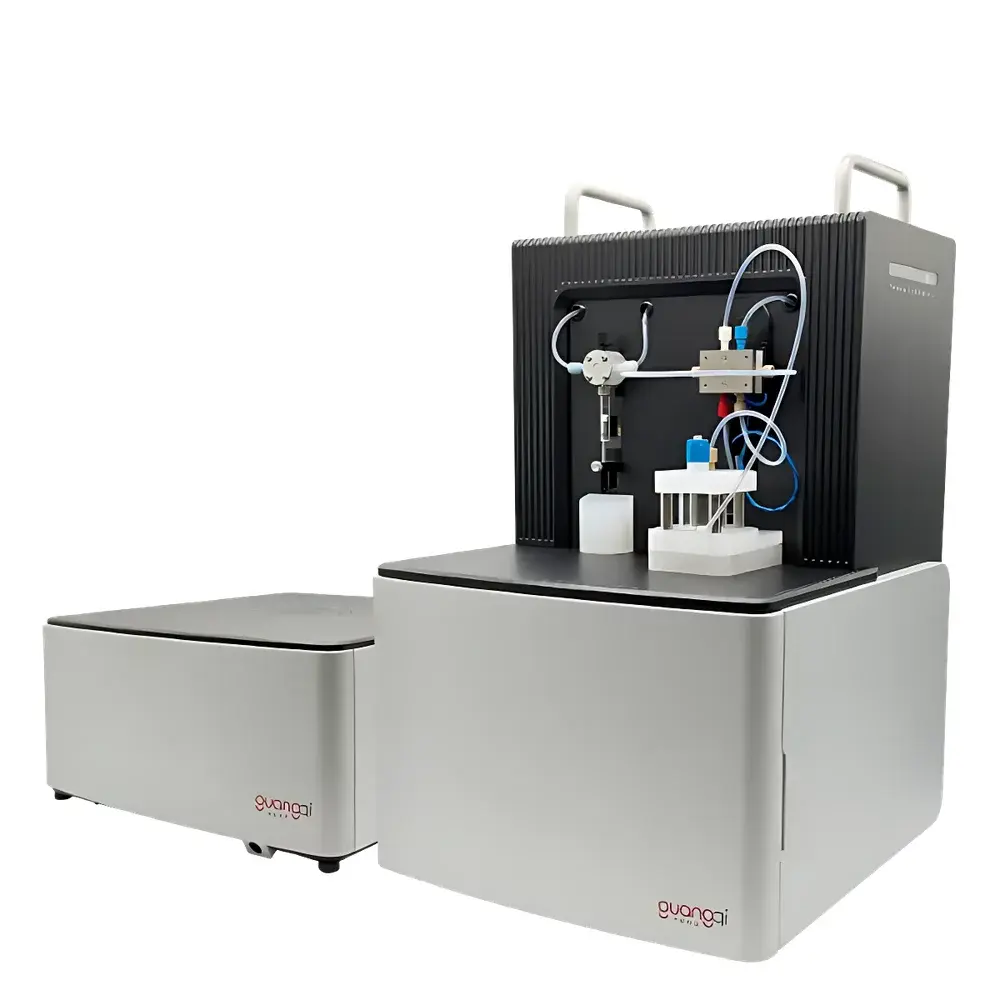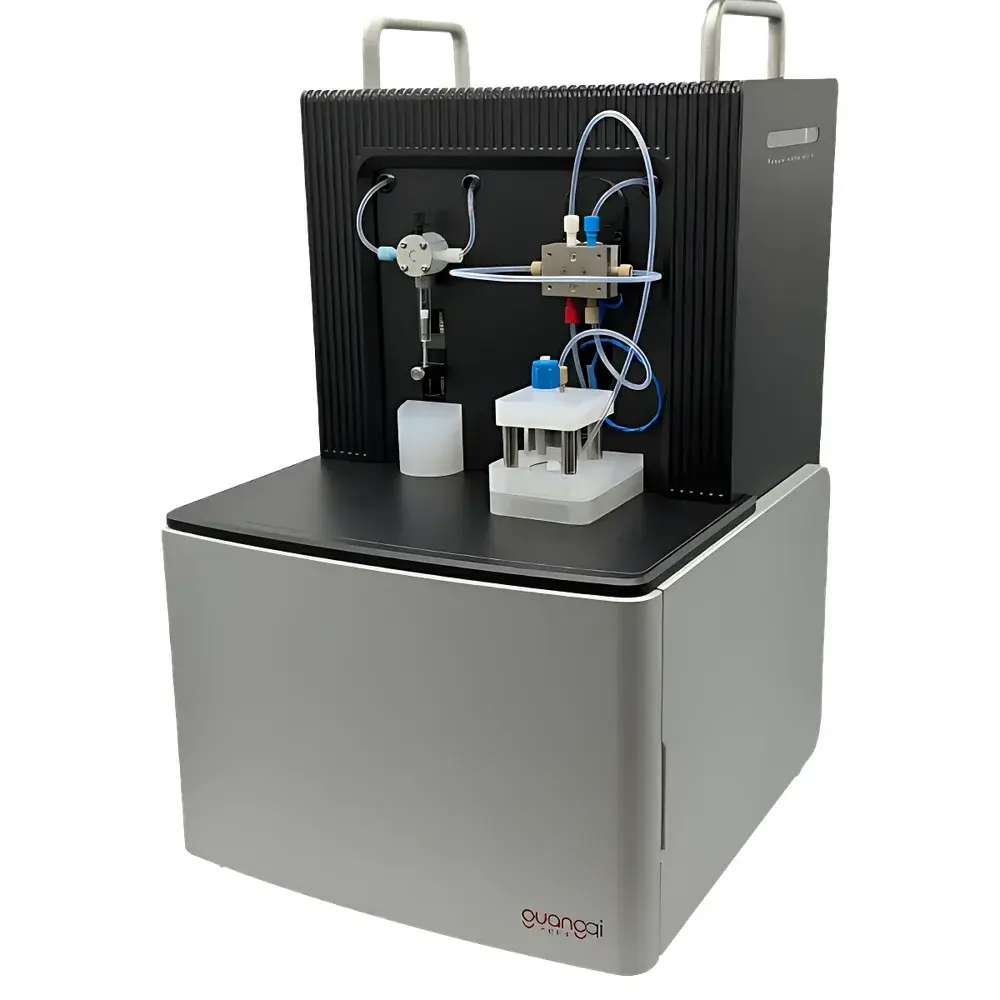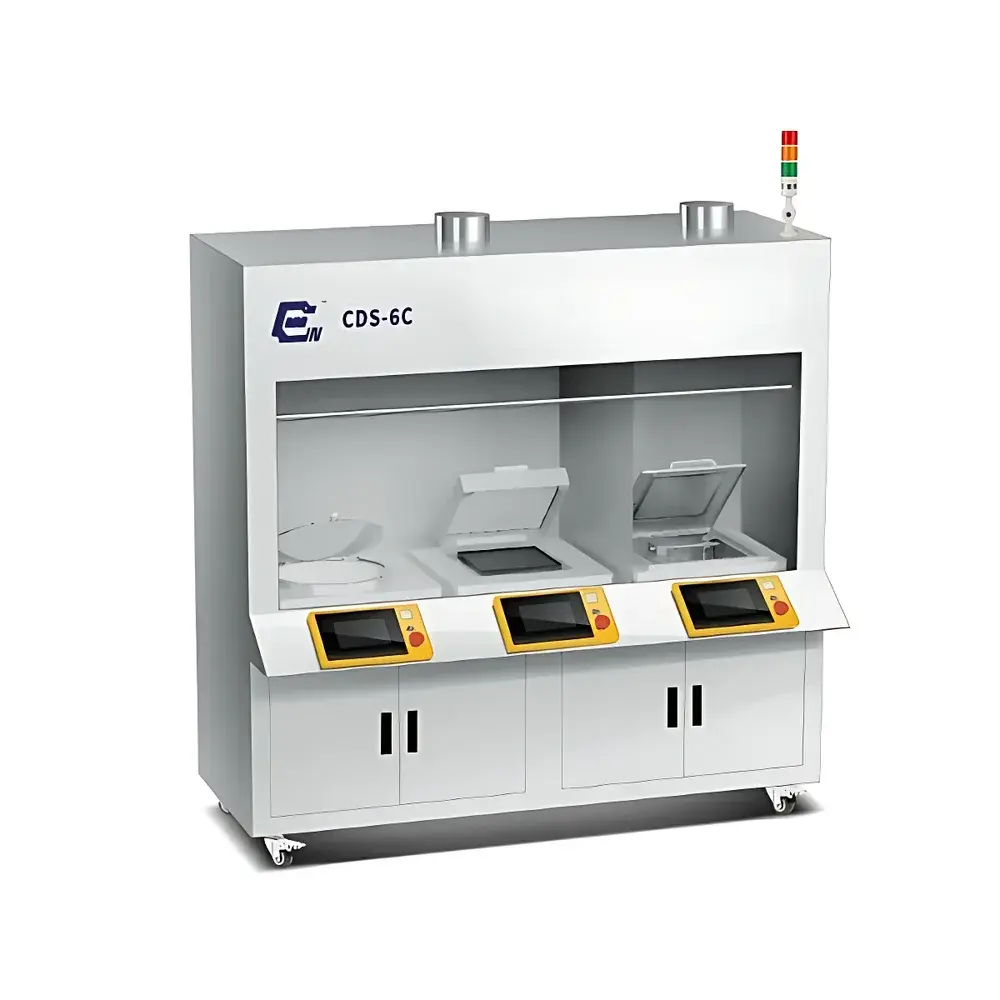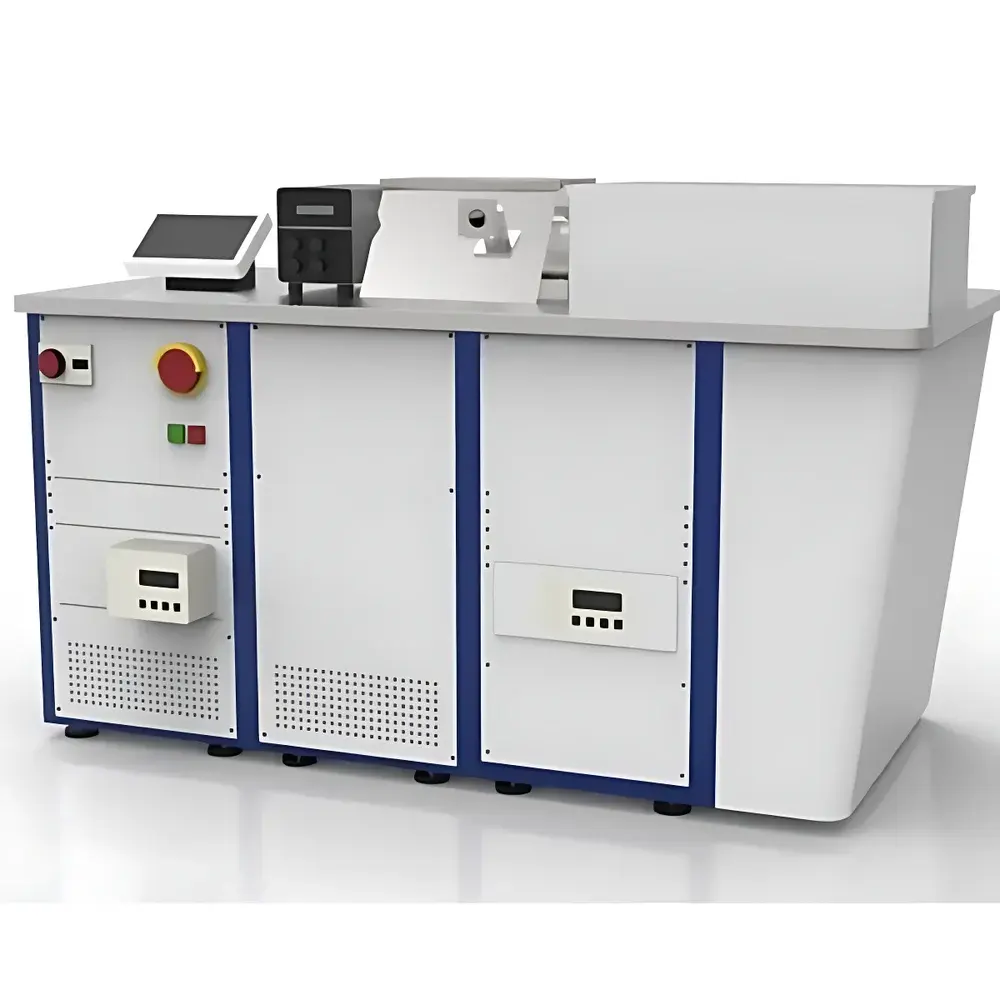
Oxford Instruments Plasmalab 133 Reactive Ion Etcher (RIE)
| Brand | Oxford Instruments |
|---|---|
| Model | Plasmalab 133 |
| Maximum Wafer Size | 300 mm (330 mm chuck) |
| RF Power | 600 W, 13.56 MHz |
| Electrode Temperature Control | 10 °C – 80 °C (water-cooled) |
| Endpoint Detection | Verity Optical Emission Spectroscopy (OES), 200–800 nm |
| Gas Delivery | 8-line manifold with 7 Mass Flow Controllers (MFCs): Ar (100 sccm), Cl₂ (100 sccm), BCl₃ (100 sccm), N₂O (200 sccm), CHF₃ (200 sccm), NH₃ (100 sccm), CH₄ (50 sccm) |
Overview
The Oxford Instruments Plasmalab 133 is a high-precision, benchtop reactive ion etcher (RIE) engineered for advanced semiconductor process development and R&D-scale fabrication. Operating on the principle of plasma-assisted anisotropic etching, the system utilizes capacitively coupled radiofrequency (RF) discharge at 13.56 MHz to generate energetic ions and reactive neutral species in low-pressure gas environments. This enables highly directional, chemically selective material removal—critical for patterning sub-micron features in compound semiconductors such as GaN, SiC, and AlGaN, as well as silicon-based devices. Designed around a robust stainless-steel vacuum chamber and integrated water-cooled electrode, the Plasmalab 133 supports stable, reproducible plasma conditions across extended process durations. Its modular architecture allows seamless integration into cleanroom workflows and compatibility with standard photolithography and metrology protocols.
Key Features
- Capacitively coupled RF plasma source delivering up to 600 W at 13.56 MHz, optimized for high-density, low-damage etching of wide-bandgap materials.
- Temperature-controlled electrostatic chuck (ESC) with water-cooling capability spanning 10 °C to 80 °C, ensuring thermal stability during high-power GaN etch processes.
- Integrated Verity optical emission spectroscopy (OES) endpoint detection system covering 200–800 nm spectral range, enabling real-time monitoring of etch chemistry evolution and precise endpoint determination.
- Eight-port gas distribution manifold with seven independently controlled mass flow controllers (MFCs) supporting complex multi-gas chemistries—including Cl₂, BCl₃, CHF₃, N₂O, NH₃, CH₄, and Ar—for tailored selectivity and profile control.
- 300 mm wafer compatibility via a 330 mm diameter grounded electrode platform, accommodating standard FOUP/SMIF load ports and enabling future scalability to pilot-line throughput requirements.
- Full vacuum interlock architecture compliant with IEC 61000-6-2 (EMC immunity) and ISO 14644-1 Class 5 cleanroom operation standards.
Sample Compatibility & Compliance
The Plasmalab 133 accommodates substrates ranging from 100 mm to 300 mm in diameter, including Si, SiO₂, SiNₓ, GaN-on-silicon, GaN-on-SiC, AlGaN heterostructures, and metal stacks (e.g., Ti/Al/Ni/Au). It supports both blanket and patterned wafers processed with standard photoresist or hard masks (e.g., SiO₂, SiNₓ, Cr). The system meets essential safety and operational compliance benchmarks including CE marking per Machinery Directive 2006/42/EC and Low Voltage Directive 2014/35/EU. Vacuum and gas-handling subsystems adhere to SEMI S2-0215 safety guidelines for semiconductor manufacturing equipment. While not certified for full GMP production use, its hardware design and software audit trail capabilities align with GLP documentation practices required for pre-fab qualification and DOE validation.
Software & Data Management
Control is managed via Oxford Instruments’ proprietary Plasmalab Suite software, running on a Windows-based industrial PC with deterministic real-time process scheduling. The interface provides full recipe management, parameter logging at 100 ms resolution, and synchronized acquisition of OES spectra, RF forward/reflected power, chamber pressure, and electrode temperature. All process data are stored in vendor-neutral HDF5 format, supporting traceability and post-process spectral deconvolution. Audit trails comply with FDA 21 CFR Part 11 requirements when deployed with optional electronic signature modules and networked domain authentication. Remote diagnostics and firmware updates are supported over secure TLS-enabled Ethernet connections, minimizing downtime during technology transfer or multi-site deployment.
Applications
- High-selectivity dry etching of GaN HEMT gate recesses and ohmic contact openings using Cl₂/BCl₃/Ar chemistries.
- Anisotropic patterning of AlGaN barrier layers with minimal sidewall roughness (<0.8 nm RMS) for high-electron-mobility transistor fabrication.
- Low-damage etching of SiC MOSFET trenches using SF₆/O₂ mixtures (via gas manifold reconfiguration).
- Resist stripping and surface activation prior to ALD or PVD deposition steps.
- Process window optimization studies for critical dimension (CD) control, etch rate uniformity (<±3.5% across 300 mm), and mask erosion quantification.
- Development of novel etch chemistries for emerging 2D materials (e.g., MoS₂, h-BN) and ferroelectric oxides (e.g., Hf₀.₅Zr₀.₅O₂).
FAQ
What vacuum level does the Plasmalab 133 achieve during operation?
The system reaches base pressures below 1 × 10⁻⁷ mbar using a turbomolecular pump backed by a dry scroll pump, ensuring low contamination and repeatable plasma ignition.
Is the Verity OES system calibrated traceable to NIST standards?
Yes—each Verity spectrometer is factory-calibrated against NIST-traceable tungsten halogen and mercury-argon lamp sources, with calibration certificates provided upon installation.
Can the Plasmalab 133 be integrated with automated wafer handling systems?
It supports SECS/GEM communication protocol via RS-422 and Ethernet/IP interfaces, enabling integration with cluster tools and factory host systems under SEMI E30/E40 standards.
Does the system support pulsed RF etching modes?
Yes—the RF generator includes programmable pulse modulation (duty cycle 1–100%, frequency up to 10 kHz), facilitating heat-sensitive material processing and improved selectivity in multilayer stacks.
What maintenance intervals are recommended for the MFCs and OES optics?
MFC recalibration is advised every 6 months or after 500 process hours; OES quartz windows require cleaning every 200 plasma hours and full optical alignment verification annually.