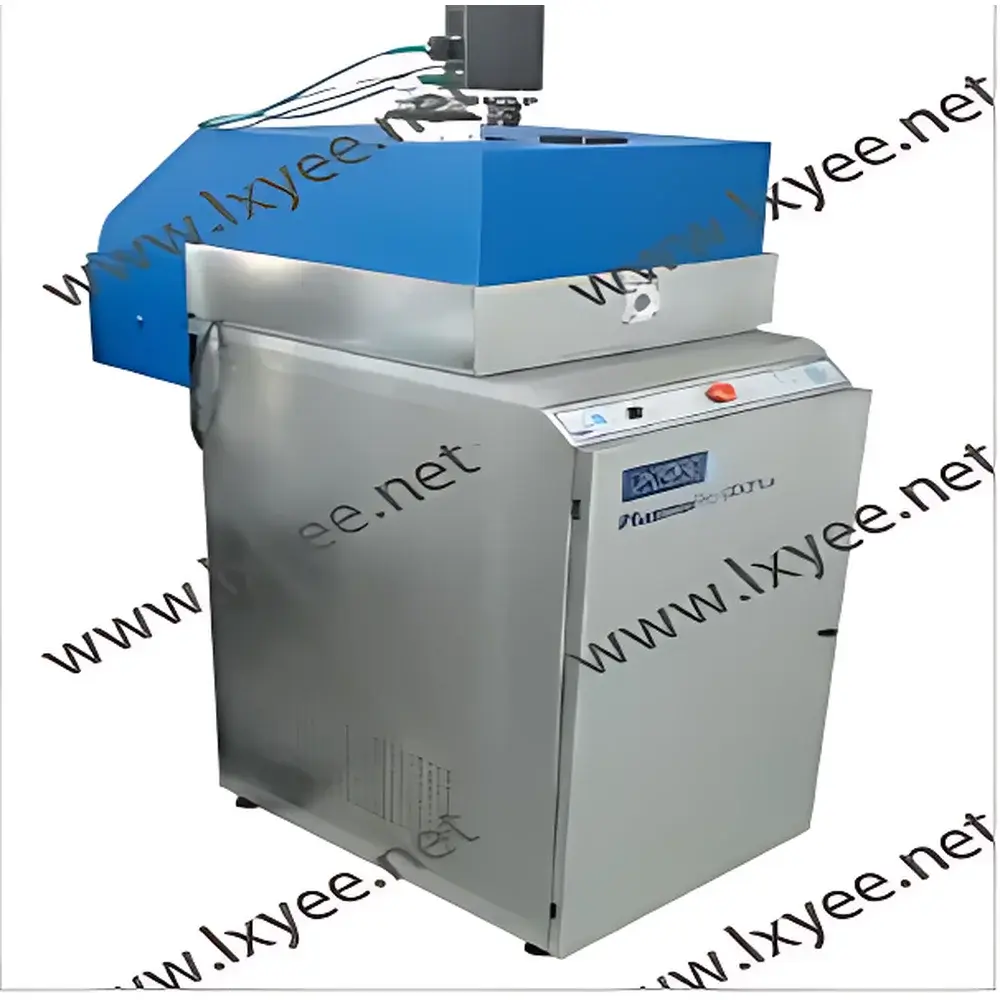
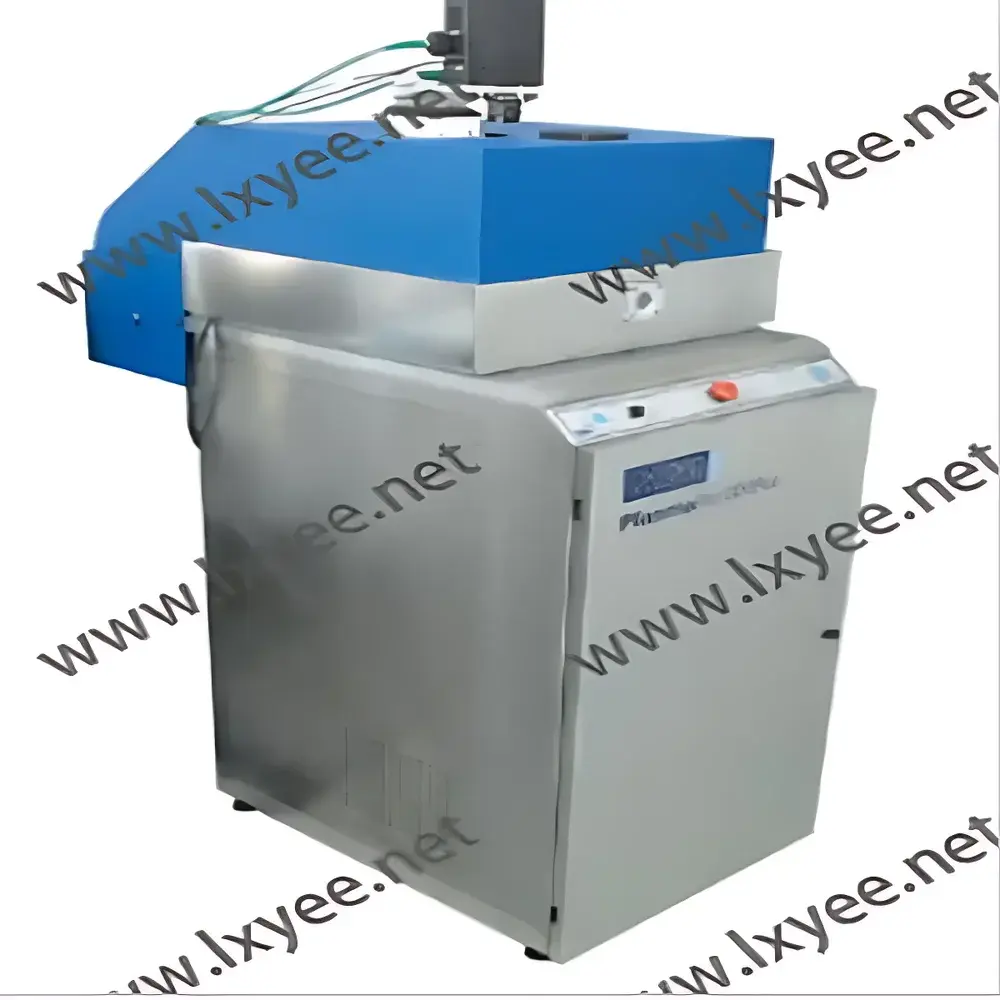
Oxford Instruments PlasmaPro 800 RIE Reactive Ion Etcher
| Brand | Oxford Instruments |
|---|---|
| Origin | United Kingdom |
| Model | PlasmaPro 800 RIE |
| Category | Dry Process Equipment for Semiconductor Fabrication |
| Etching Principle | Reactive Ion Etching (RIE) with optional Plasma Enhanced (PE) mode |
| Substrate Compatibility | Up to 300 mm wafers and batch processing |
| Electrode Configuration | Large-area lower electrode with liquid cooling and/or resistive heating |
| Endpoint Detection | Laser interferometry and/or optical emission spectroscopy (OES) |
| Gas Delivery | Configurable gas cabinet with 4-, 8-, or 12-channel options |
| Vacuum System | Proximal turbomolecular pumping |
| Temperature Control | Precision substrate temperature regulation (±0.5 °C typical stability) |
| Compliance | Designed for GLP/GMP-aligned process documentation |
Overview
The Oxford Instruments PlasmaPro 800 RIE is a compact, front-loading reactive ion etcher engineered for high-reproducibility dry etch processes in semiconductor R&D, pilot-line fabrication, and failure analysis laboratories. Based on capacitively coupled plasma (CCP) architecture operating in the 13.56 MHz RF frequency band, the system delivers controlled anisotropic etching through synergistic ion bombardment and radical-driven chemical reactions. Its modular design supports both standard RIE mode—optimized for directional profile control—and optional Plasma Enhanced (PE) mode, enabling higher selectivity for delicate mask layers or low-damage etching of compound semiconductors. The system is qualified for 300 mm single-wafer processing and scalable batch operation, making it suitable for technology transfer from development to pre-production environments.
Key Features
- Large-area lower electrode (up to 300 mm diameter) with integrated liquid cooling and/or resistive heating for precise thermal management (operating range: –20 °C to +150 °C)
- High-speed proximal turbomolecular pumping system ensuring rapid chamber evacuation (< 60 s to 1 × 10⁻⁶ mbar) and stable pressure control during etch cycles
- Dual-mode operation: Standard RIE for vertical sidewall profiles and PE mode for enhanced selectivity and reduced ion-induced damage
- Endpoint detection via real-time laser interferometry (for transparent films) and/or optical emission spectroscopy (OES) with configurable spectral windows (200–800 nm)
- Modular gas delivery architecture supporting up to 12 independent mass flow controllers (MFCs), with remote gas cabinet option to minimize contamination and simplify maintenance
- Comprehensive data logging system capturing time-stamped records of RF power, pressure, gas flows, temperature, and endpoint signals for full process traceability
- Robust chamber construction using anodized aluminum and ceramic-coated components, compliant with ISO Class 5 cleanroom integration standards
Sample Compatibility & Compliance
The PlasmaPro 800 RIE accommodates substrates ranging from 50 mm to 300 mm in diameter—including compound semiconductor wafers (GaAs, InP, GaN), silicon photonics platforms, MEMS devices, and packaged ICs for decapsulation. It supports etching of SiO2, SiNx, quartz, metals (Al, Ti, Ni), polyimide, and III–V materials using fluorine- and chlorine-based chemistries (e.g., CF4/O2, BCl3/Cl2, SF6). All hardware and software subsystems are designed to support audit-ready documentation per ISO 9001, ISO/IEC 17025, and GLP requirements. Optional software modules enable electronic signature capture, user access control, and 21 CFR Part 11–compliant audit trails for regulated environments.
Software & Data Management
The PlasmaPro 800 is operated via Oxford Instruments’ proprietary PlasmaLab software suite—a Windows-based platform offering recipe-driven process automation, real-time parameter monitoring, and hierarchical user permission management. Each process step is timestamped and logged with metadata including chamber history, sensor diagnostics, and alarm events. Export functions support CSV and XML formats for integration with MES or LIMS systems. Advanced scripting (via Python API) allows custom endpoint logic, multi-step etch sequences, and automated calibration routines. Data integrity safeguards include write-once archival storage, cyclic redundancy checks (CRC), and encrypted database backups.
Applications
- Failure analysis: Controlled decapsulation of molded IC packages and die-level trenching for cross-sectional SEM/TEM preparation
- Photonics device fabrication: High-aspect-ratio etching of SiN and SiO2 waveguides with sub-50 nm critical dimension control
- LED and laser diode manufacturing: Selective etching of AlGaN/GaN heterostructures with minimal surface damage
- Dielectric passivation: Low-stress SiNx deposition (via optional PECVD module) for back-end-of-line protection
- MEMS release etching: Anisotropic removal of sacrificial oxide layers with uniformity < ±3% across 200 mm wafers
- Research-grade process development: Rapid screening of etch chemistries, power/pressure trade-offs, and mask material compatibility
FAQ
What wafer sizes does the PlasmaPro 800 RIE support?
Standard configurations accommodate 50 mm to 300 mm wafers, including full 300 mm single-wafer processing and batch handling of smaller substrates.
Can the system perform both RIE and plasma-enhanced etching in one tool?
Yes—the PlasmaPro 800 RIE/PE variant integrates dual-frequency RF matching networks to switch seamlessly between conventional RIE and high-selectivity PE modes.
Is endpoint detection included as standard?
Laser interferometry and OES-based endpoint detection are available as factory-installed options, with configurable thresholds and signal averaging algorithms.
How is process repeatability ensured across multiple runs?
Through closed-loop temperature control, pressure stabilization via capacitance manometers, real-time RF impedance monitoring, and automated MFC calibration routines embedded in the PlasmaLab software.
Does the system meet regulatory requirements for quality-controlled environments?
Hardware design and optional software modules support compliance with ISO 13485, FDA 21 CFR Part 11, and EU Annex 11 when deployed with validated procedures and change-controlled configuration management.
Related Products