
Oxford Instruments Xplore15/Xplore30 Energy Dispersive Spectrometer for SEM
| Brand | Oxford Instruments |
|---|---|
| Origin | United Kingdom |
| Model | Xplore15 / Xplore30 |
| Detector Geometry | Tilting (Side-entry) |
| Energy Resolution | 129 eV @ 100,000 cps |
| Peak-to-Background Ratio | 20,000:1 |
| Maximum Count Rate | 1,000,000 cps |
| Elemental Detection Range | Boron (B) to Californium (Cf) |
| Active Crystal Area | 15 mm² or 30 mm² |
| Window Type | Super-Atmospheric Thin Window (SATW) |
Overview
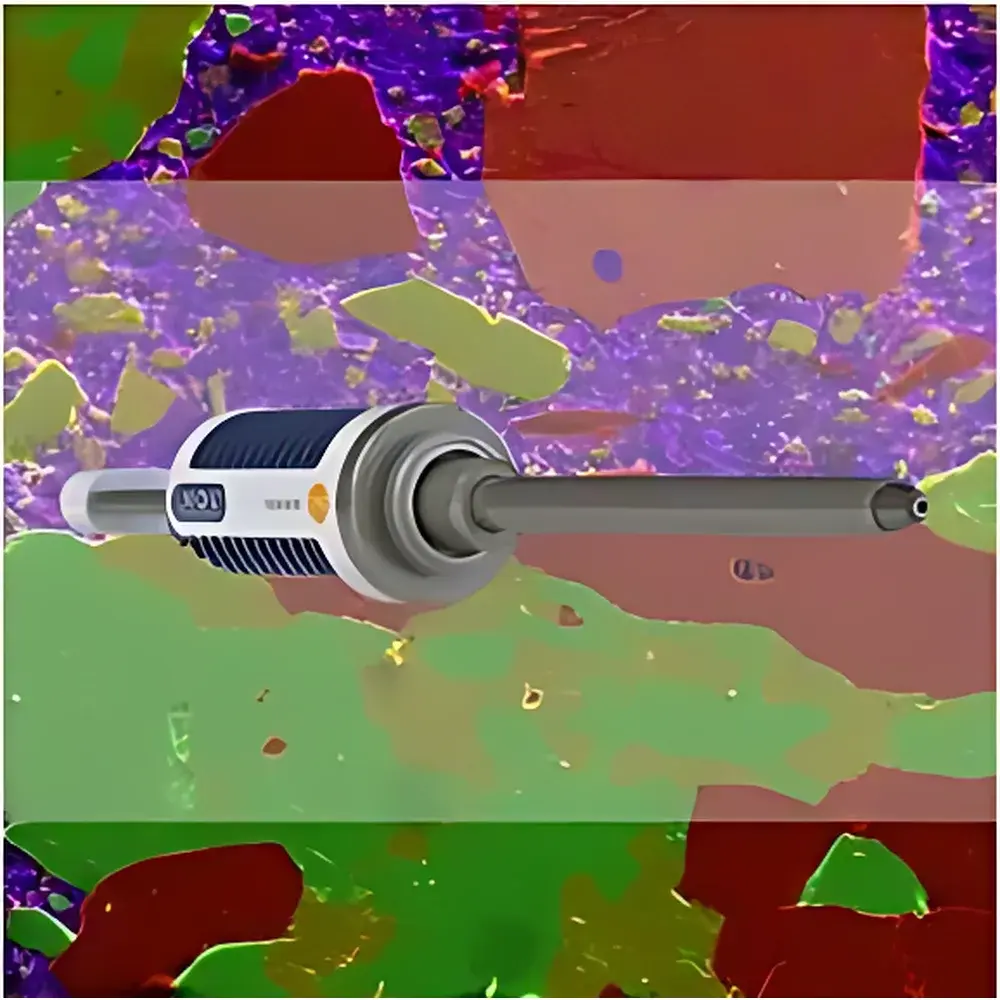
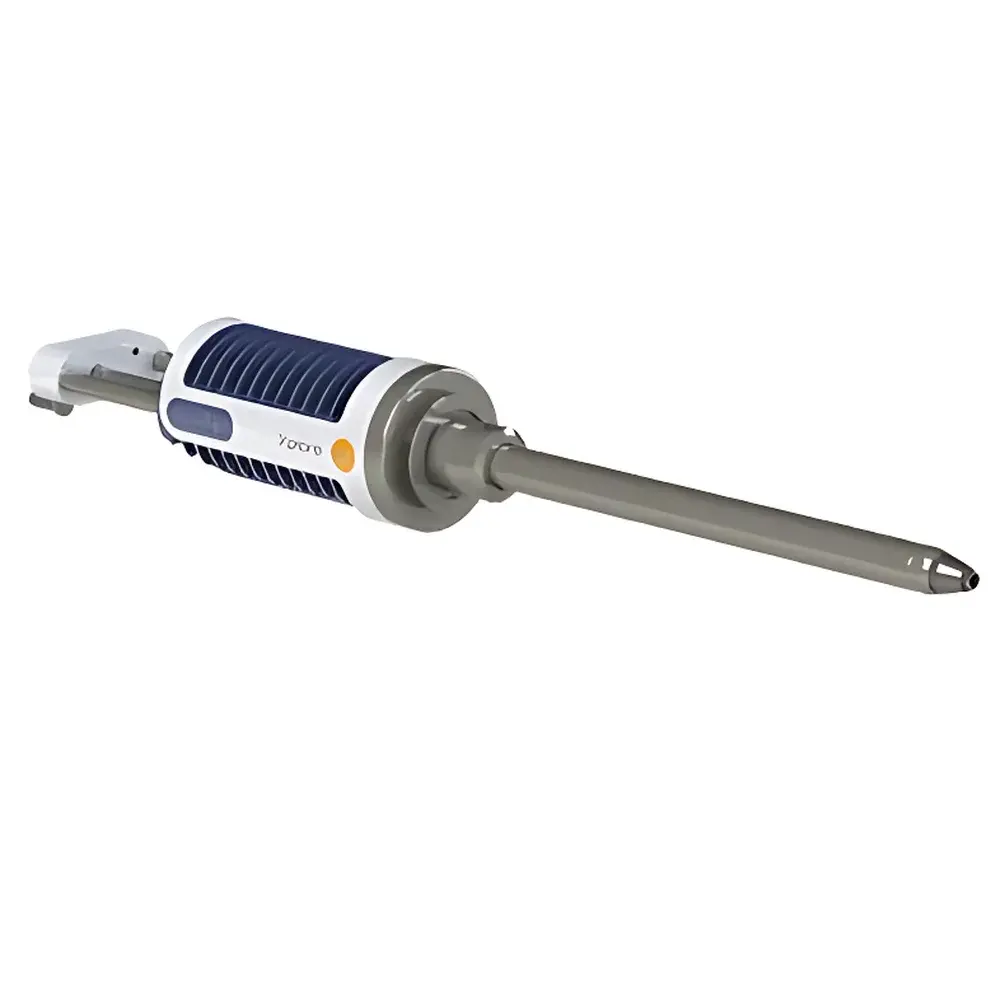
The Oxford Instruments Xplore15 and Xplore30 are high-performance energy dispersive spectrometers (EDS) engineered specifically for integration with scanning electron microscopes (SEM). Based on the proven Ultim Max detector architecture, the Xplore series implements advanced silicon drift detector (SDD) technology coupled with proprietary Extreme electronics and the X1 pulse processor. It operates on the fundamental principle of X-ray photon detection following electron-beam-induced inner-shell ionization in the sample. Characteristic X-rays emitted during electron relaxation are energy-resolved by the SDD, enabling simultaneous multi-element identification and quantification at micron- to sub-micron spatial scales. Designed for routine and demanding analytical workflows, the Xplore delivers robust spectral fidelity across a wide dynamic range—from low-dose imaging to high-current quantitative mapping—without compromising resolution, accuracy, or acquisition speed.
Key Features
- Two detector configurations: 15 mm² and 30 mm² active crystal area, optimized for flexibility in working distance, tilt angle, and signal-to-noise requirements.
- Extreme electronics architecture minimizes electronic noise and enables stable spectral performance even at ultra-high count rates up to 1,000,000 cps.
- X1 pulse processor ensures real-time dead-time correction, pile-up rejection, and high-fidelity peak deconvolution for reliable qualitative and quantitative analysis.
- SATW (Super-Atmospheric Thin Window) provides enhanced transmission for light elements (B–F), supporting trace-level detection and improved low-energy X-ray collection efficiency.
- Compact, modular mechanical design facilitates rapid field replacement of detector modules—reducing instrument downtime and simplifying maintenance under vacuum or in situ service conditions.
- Optimized for both point analysis and large-area elemental mapping, with support for drift-corrected, multi-frame acquisition and automated stage synchronization.
Sample Compatibility & Compliance
The Xplore EDS system is compatible with standard SEM chamber configurations, including variable pressure (VP-SEM) and high-vacuum modes. Its tilting (side-entry) geometry accommodates typical SEM pole-piece clearances and allows optimal take-off angles (>30°) for maximum X-ray collection efficiency. The SATW window enables analysis of non-conductive, beam-sensitive, or hydrated specimens when used with low-kV beam conditions and charge-compensation techniques. In terms of regulatory alignment, the system supports GLP-compliant data acquisition workflows through audit-trail-enabled software logging, user-access controls, and metadata-rich spectrum storage—fully traceable per ISO/IEC 17025 and ASTM E1508 guidelines for compositional microanalysis. While not FDA-certified as a standalone medical device, its output meets reporting requirements for materials characterization in pharmaceutical excipient testing (USP ) and semiconductor process control (SEMI E142).
Software & Data Management
Controlled via AZtec software (v4.5+), the Xplore integrates seamlessly with major SEM platforms (e.g., Thermo Fisher, Zeiss, JEOL, Hitachi) using standardized communication protocols (e.g., TCP/IP, RS-232, or OEM SDKs). AZtec provides full spectral processing—including background subtraction (Shirley, Tougaard), peak integration (Gaussian-Lorentzian fitting), matrix correction (ZAF or φ(ρz)), and standardless quantification with k-ratio calibration. All spectra and maps are stored in vendor-neutral HDF5 format, preserving raw counts, live time, probe parameters, and stage coordinates. Software features include 21 CFR Part 11-compliant electronic signatures, role-based permissions, and export options compliant with ASTM E1357 (standard practice for EDS data exchange). Batch processing, scripting (Python API), and cloud-synced project archiving further enhance reproducibility and cross-laboratory data harmonization.
Applications
- Metallurgical phase identification and inclusion analysis in aerospace alloys and additive-manufactured components.
- Geological mineral phase mapping and trace-element zoning studies in thin sections and polished blocks.
- Failure analysis of microelectronic interconnects, solder joints, and dielectric layers using line scans and high-resolution elemental overlays.
- Biomineralization studies in bone, teeth, and calcified tissues—leveraging B–Na detection for organic-inorganic interface characterization.
- Quality assurance of battery cathode/anode materials, including Ni–Co–Mn distribution homogeneity and transition-metal leaching assessment.
- Forensic particle analysis and environmental particulate source attribution via automated particle search and classification (AZtecFeature).
FAQ
What is the minimum detectable atomic concentration for boron using the Xplore with SATW?
Typical detection limits for boron range from 0.1–0.3 wt% under optimized conditions (20 kV, 1 nA, 100 s live time, carbon-coated conductive sample), depending on matrix absorption and peak overlap.
Can the Xplore be retrofitted onto older SEM models?
Yes—Oxford Instruments provides custom mounting kits and OEM interface adapters for SEMs manufactured since 2005; compatibility verification requires chamber dimensions, flange type (CF63/CF100), and available electrical feedthroughs.
Is the 129 eV resolution guaranteed at all count rates?
No—the specified 129 eV Mn Kα resolution is validated at 100,000 cps; resolution degrades gradually above this rate but remains ≤145 eV at 500,000 cps due to Extreme electronics optimization.
Does the system support offline spectral reprocessing?
Yes—AZtec allows full reprocessing of saved .azd files with updated standards, background models, or quantification methods without requiring re-acquisition.
How often does the detector require liquid nitrogen refills?
None—the Xplore is Peltier-cooled and operates continuously at –20 °C to –30 °C; no cryogen handling or scheduled cooldown cycles are required.





