
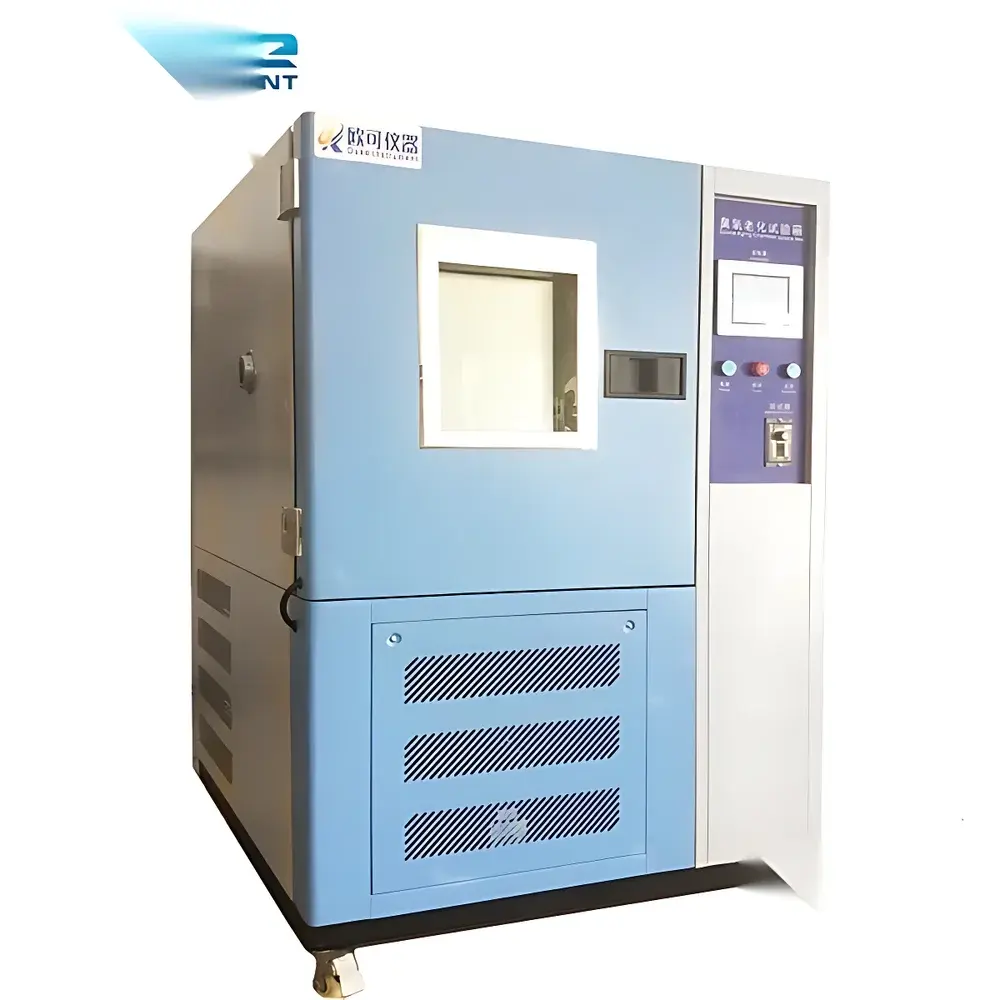
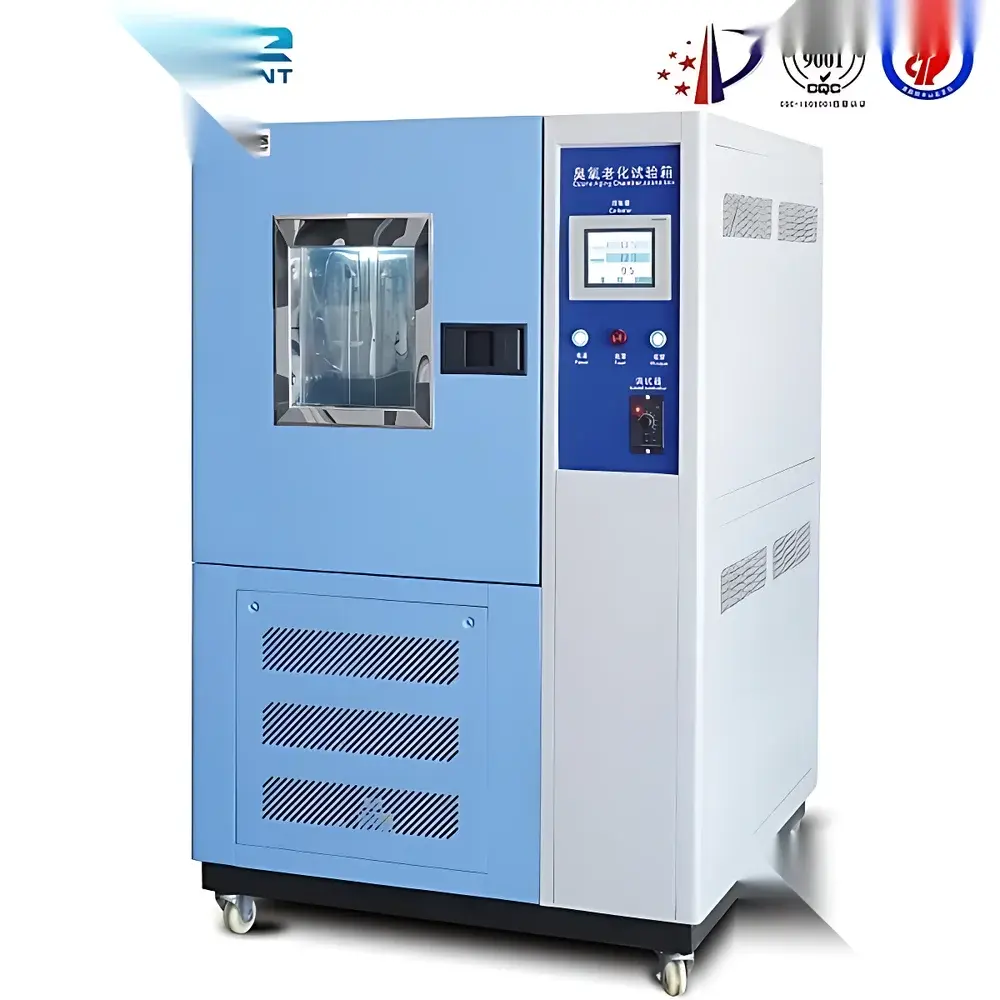
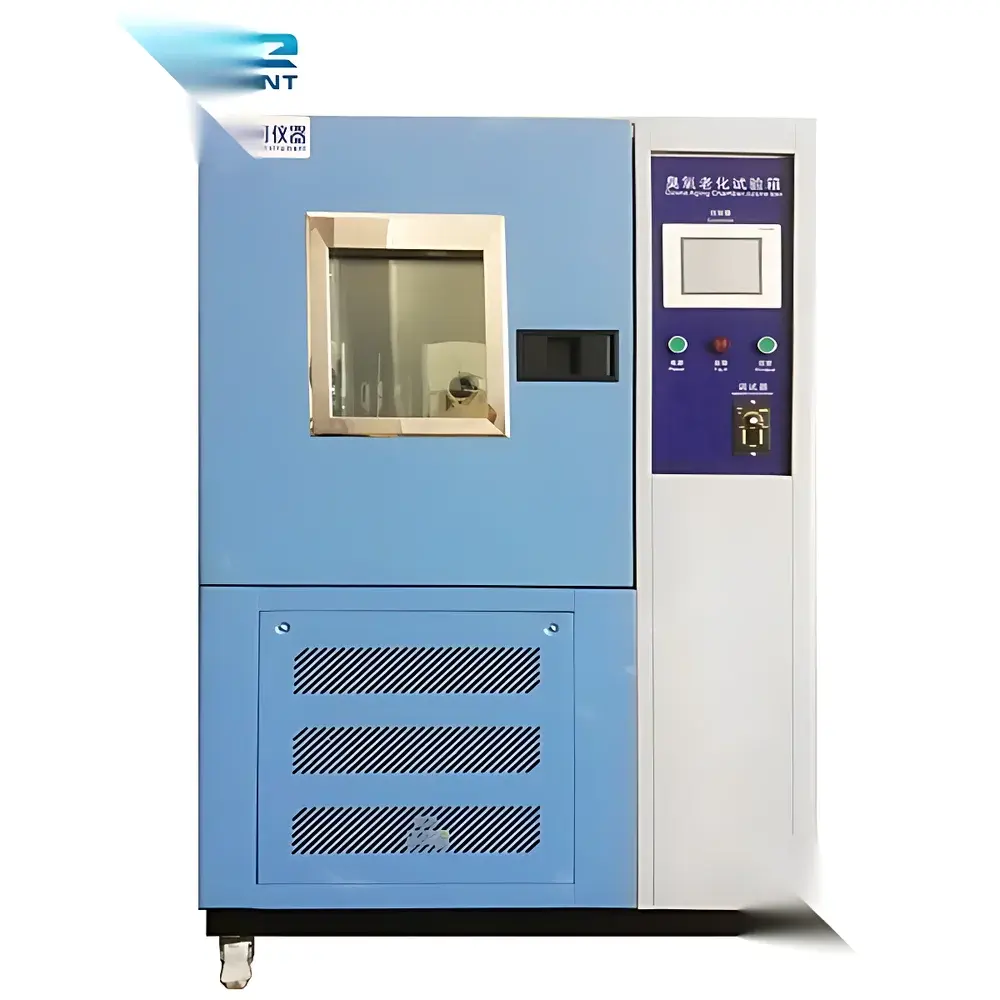
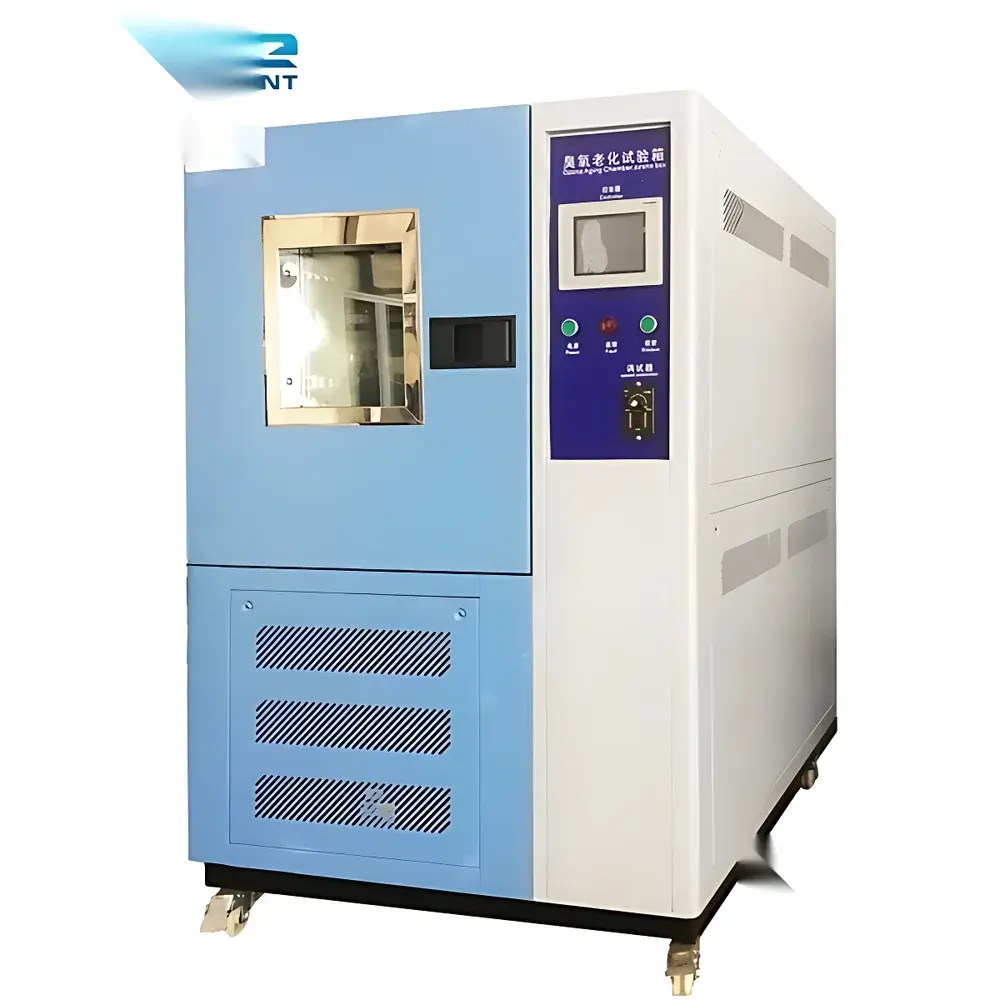
Ozone Aging Test Chamber for Plastics and Elastomers
| Brand | OK |
|---|---|
| Model | OK-CY Series |
| Type | Environmental Test Chamber |
| Application | Ozone Resistance Testing of Polymers and Rubber |
| Temperature Range | 25–80 °C |
| Humidity Range | 30–65 %RH |
| Ozone Concentration Range | 50–1500 pphm |
| Ozone Generation Method | Silent Discharge Tube |
| Ozone Monitoring | Non-Dispersive UV Absorption Sensor (≥5 yr lifespan) |
| Control System | Siemens PLC + 7″ Color Touchscreen HMI |
| Temperature Uniformity | ±0.5 °C |
| Sample Rack | 360° Rotating (1 rpm), Static/Dynamic Configurable |
| Gas Flow Velocity | 8–16 mm/s |
| Safety Protections | Leakage, Short-Circuit, Over-Temperature, Motor Overheat, Over-Current |
| Power Supply | AC 380 V ±5 %, 50 Hz ±0.5 Hz |
| Compliance | GB/T 7762, ISO 1431-1, ASTM D1149, JIS K 6259 |
Overview
The OK-CY Series Ozone Aging Test Chamber is an engineered environmental test system designed specifically for evaluating the ozone resistance of polymeric materials—particularly elastomers, rubber compounds, thermoplastic elastomers (TPE), and synthetic rubbers used in automotive seals, cables, gaskets, and industrial hoses. It operates on the principle of controlled atmospheric exposure: ozone is generated via silent discharge technology and precisely maintained within a sealed, stainless-steel reaction chamber where specimens undergo accelerated aging under defined thermal, humid, and oxidative stress conditions. Unlike xenon arc or UV weathering chambers—which simulate solar radiation—the OK-CY chamber isolates ozone-induced surface oxidation as the sole degradation driver, enabling standardized assessment of crack initiation and propagation per internationally recognized test protocols.
Key Features
- Stainless-steel test chamber conforming to GB/T 7762 and ISO 1431-1 structural requirements, ensuring corrosion resistance and long-term gas-tight integrity.
- Wide-range ozone concentration control (50–1500 pphm) with real-time feedback via non-dispersive ultraviolet (NDUV) absorption sensor—calibration-stable for ≥5 years and traceable via integrated metrology port.
- Dual-mode sample mounting: static tension fixtures (for ASTM D1149 Type A/B) and dynamic 360° rotating sample rack (1 rpm), engineered to replicate cycloidal strain trajectories for realistic crack development under mechanical stress.
- Siemens S7-1200 PLC-based control architecture with 7-inch color touchscreen HMI, supporting PID auto-tuning for temperature and humidity loops, plus programmable ramp/soak profiles.
- Full-closed-loop ozone generation and recirculation system—no ambient venting—minimizing operator exposure and ensuring consistent gas-phase kinetics throughout testing.
- Comprehensive safety suite: earth-leakage protection, over-temperature cutoff (independent dual sensors), motor thermal overload monitoring, and short-circuit interruption—all logged with timestamped event records.
Sample Compatibility & Compliance
The chamber accommodates standard dumbbell-shaped specimens (ISO 37, ASTM D412), strip samples (ISO 1431-1), and custom-sized parts up to 100 cm × 100 cm × 100 cm (OK-CY-1000 model). Fixture configurations support both uniaxial static extension (0–20 % strain) and dynamic cyclic loading. All operational parameters—including ozone setpoint, temperature, humidity, and exposure duration—are fully configurable to meet method-specific requirements of ISO 1431-1 (rubber—determination of resistance to ozone cracking—part 1: static strain), ASTM D1149 (rubber degradation—ozone cracking in air), and JIS K 6259. The system supports GLP-compliant data integrity through audit-trail-enabled parameter logging and exportable CSV reports.
Software & Data Management
The embedded control firmware provides real-time visualization of ozone concentration (pphm), chamber temperature (°C), relative humidity (%RH), and elapsed test time. All analog inputs—including UV sensor output (4–20 mA), thermocouple readings, and flow meter signals—are sampled at 1 Hz and stored locally with millisecond timestamps. RS232 serial interface enables integration with LIMS or centralized QA databases; optional Ethernet module supports Modbus TCP for SCADA-level supervision. Calibration certificates for ozone sensor and temperature/humidity probes are retained digitally and linked to each test record—fully traceable for FDA 21 CFR Part 11 readiness when paired with user-access controls and electronic signature workflows.
Applications
This chamber is routinely deployed in R&D laboratories for formulation screening of antioxidant packages (e.g., p-phenylenediamine derivatives), in QC labs for incoming raw material verification (e.g., SBR, EPDM, CR, NBR batches), and in certification testing for automotive OEM specifications (e.g., VW TL 226, GMW 15635). It also supports failure analysis of field-failed components—correlating laboratory-induced crack morphology (via optical microscopy post-test) with service history. Validated use cases include evaluation of silicone encapsulants in photovoltaic modules, fluoroelastomer O-rings in aerospace hydraulics, and halobutyl innerliners in radial tires.
FAQ
What standards does the OK-CY chamber comply with?
It is configured and validated per ISO 1431-1, ASTM D1149, GB/T 7762, and JIS K 6259 for ozone resistance testing of vulcanized rubber and thermoplastic elastomers.
Can the chamber operate without humidity control?
Yes—humidity is independently adjustable between 30–65 %RH; tests may be conducted at fixed RH or dry-air mode (≤30 %RH) depending on material specification requirements.
Is ozone sensor calibration traceable to national standards?
The NDUV sensor includes a certified calibration certificate referencing NIST-traceable ozone standards, and the built-in metrology port allows third-party verification without chamber disassembly.
How is safety ensured during extended unattended operation?
Redundant hardware interlocks—including independent temperature limiters, ozone leak detection via ambient monitor (optional), and automatic power cutoff upon door opening—meet IEC 61000-6-2 EMC and IEC 61010-1 safety directives.
Can test data be exported for regulatory submission?
Yes—raw time-series data (with metadata: operator ID, sample ID, method version, calibration status) exports as timestamped CSV or PDF summary reports, compliant with ALCOA+ principles for GxP environments.



