
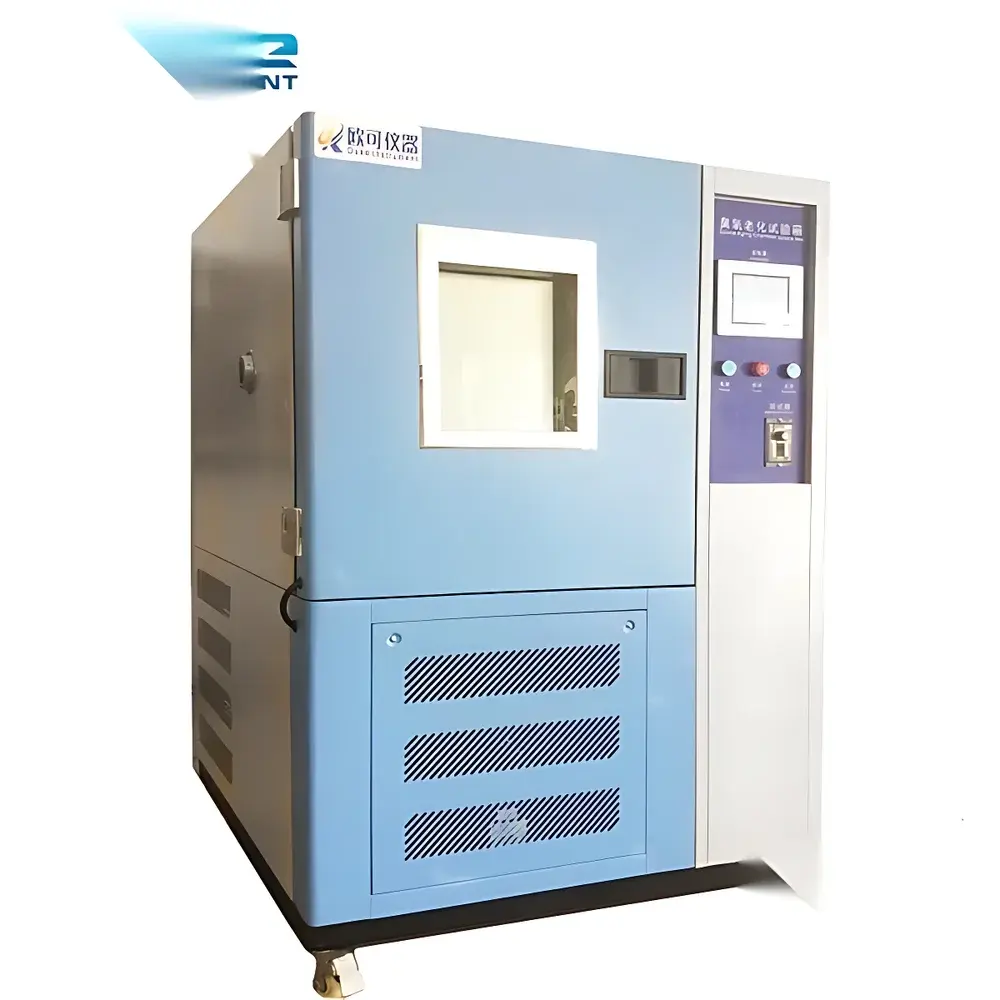
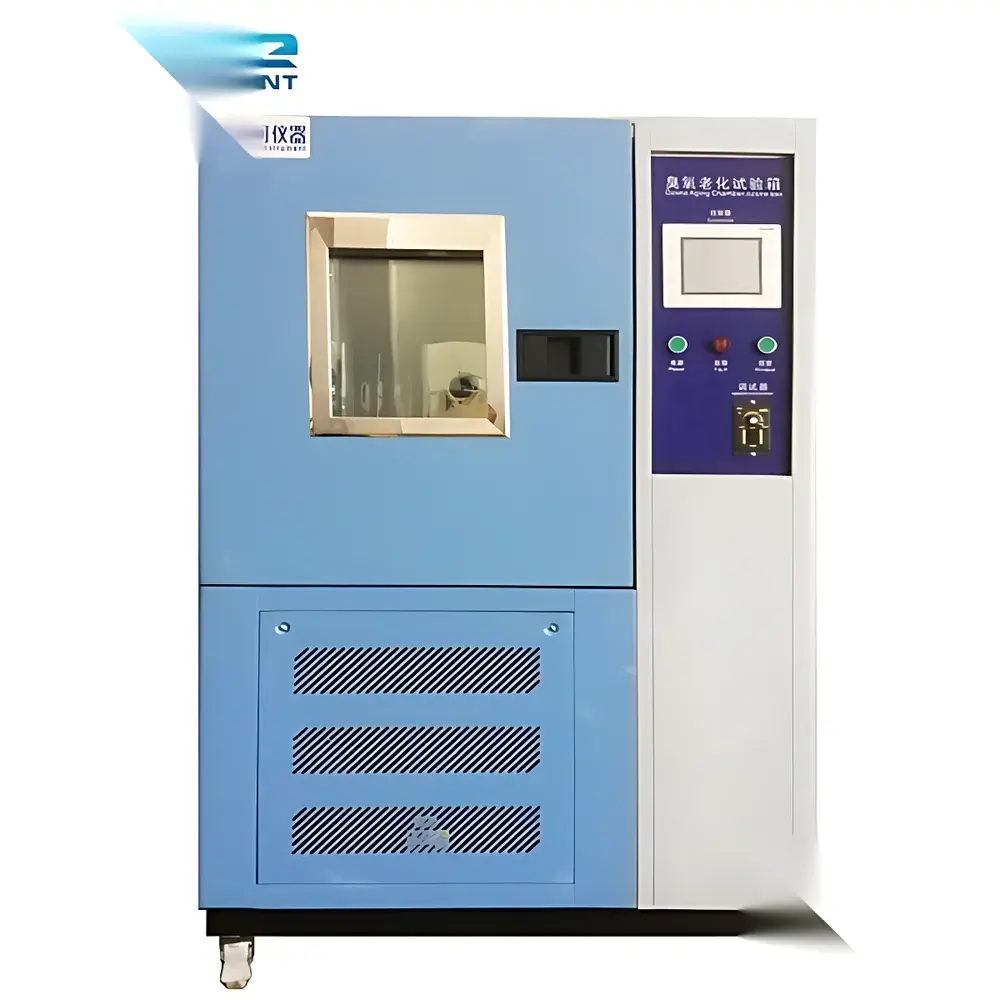
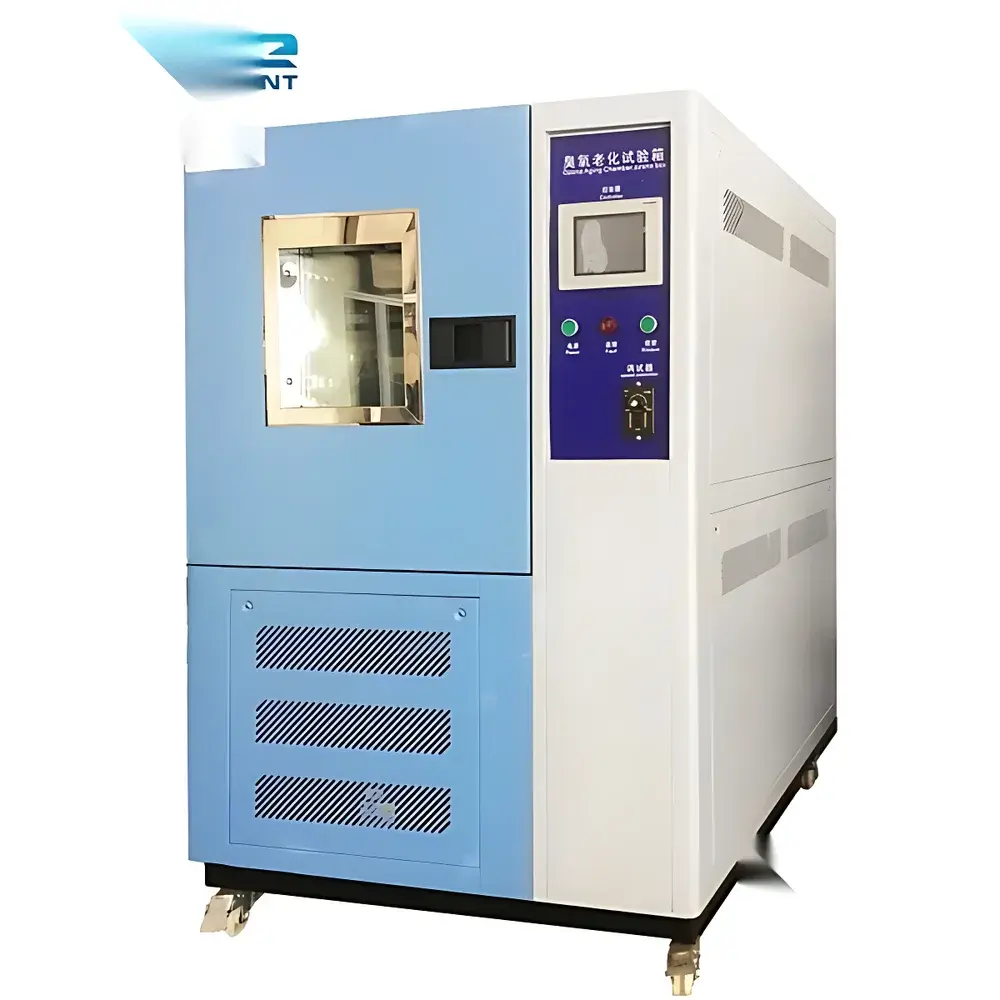
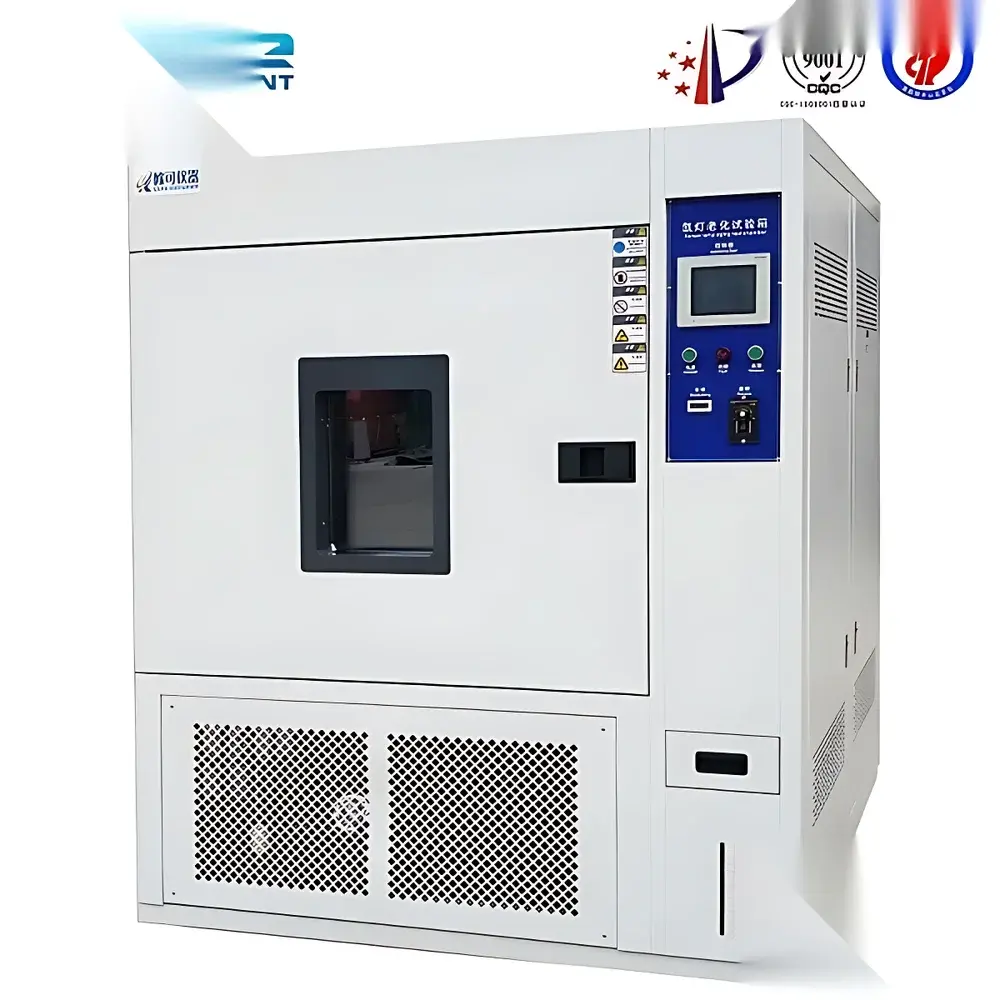
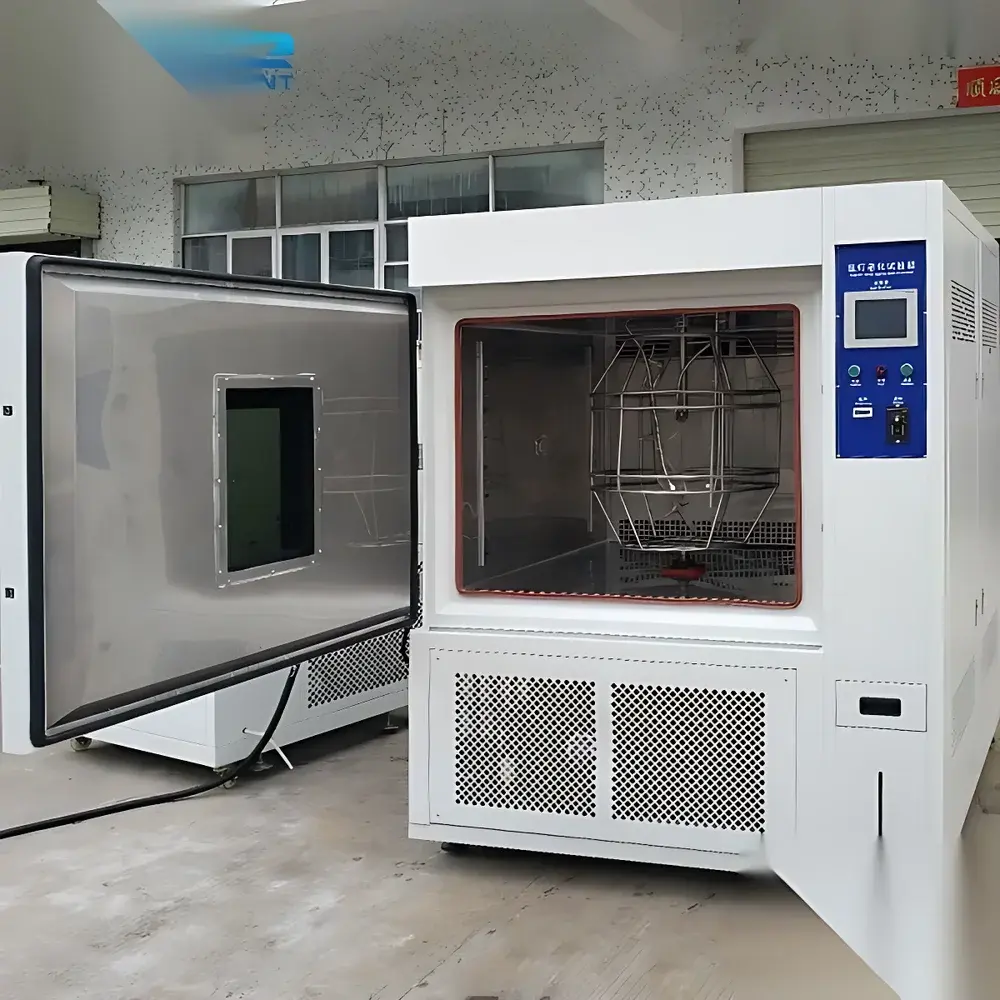
Ozone Aging Test Chamber QY-Series
| Brand | Other Brands |
|---|---|
| Origin | Imported |
| Manufacturer Type | General Distributor |
| Price | USD 6,300 (FOB) |
| Chamber Volume Options | 80 L / 225 L / 500 L / 1000 L |
| Temperature Range | 25–40 °C |
| Humidity Range | 30–65 % RH |
| Ozone Concentration Range | 50–1500 pphm |
| Ozone Control Accuracy | ±10 pphm |
| Temperature Uniformity | ±0.5 °C |
| Sample Rotation | 360° continuous, 1 rpm |
| Gas Flow Velocity | 8–16 mm/s |
| Ozone Generation | Silent Discharge Tube |
| Ozone Detection | Non-Dispersive UV Absorption Analyzer (Lifespan ≥5 years) |
| Control System | Weilun Color Touchscreen + Siemens PLC |
| Compliance Standards | GB/T 7762–2003, GB/T 2951.21–2008, GB/T 11206–2009, ISO 1431-1:2004 |
Overview
The QY-Series Ozone Aging Test Chamber is an engineered environmental test system designed to evaluate the resistance of elastomeric and polymeric materials to ozone-induced degradation under controlled, reproducible conditions. It operates on the principle of accelerated aging via exposure to precisely regulated ozone concentrations within a thermally and hygroscopically stabilized chamber environment. Unlike ambient or open-loop ozone exposure methods, this chamber employs a fully sealed, recirculating gas loop—eliminating operator exposure risks and ensuring stable, traceable ozone partial pressures. The system integrates silent discharge ozone generation with non-dispersive ultraviolet (UV) absorption spectroscopy for real-time, in-line ozone concentration monitoring. Its design conforms to internationally recognized test protocols for rubber and cable insulation evaluation, enabling laboratories to perform standardized static and dynamic aging assessments per ISO 1431-1:2004 and multiple GB/T standards.
Key Features
- Fully enclosed stainless-steel test chamber with seamless welds and ozone-resistant gasketing to prevent leakage and ensure long-term corrosion resistance.
- Silent discharge ozone generator with adjustable output, delivering stable ozone concentrations from 50 to 1500 pphm (parts per hundred million) with ±10 pphm repeatability.
- Non-dispersive UV ozone analyzer calibrated per ISO 1431-2, providing continuous, drift-compensated measurement with ≥5-year operational lifespan and 4–20 mA analog output plus RS232 digital interface.
- Motor-driven 360° rotating sample rack (1 rpm), engineered to follow cycloidal motion trajectory—meeting the mechanical requirements for dynamic tensile aging per ISO 1431-1 Annex B.
- Integrated PID-controlled temperature and humidity regulation using a Weilun color touchscreen HMI paired with Siemens S7-1200 PLC for deterministic setpoint tracking and self-tuning response.
- Dedicated metrology port compliant with national calibration procedures, allowing third-party verification of ozone concentration, temperature, and humidity sensors without system disassembly.
- Comprehensive safety architecture including ozone leak detection interlock, overtemperature cutoff, motor thermal overload protection, short-circuit and ground-fault circuit interruption, and emergency power disconnect.
Sample Compatibility & Compliance
The QY-Series accommodates a broad range of specimen geometries—including dumbbell tensile strips, molded rings, extruded cables, and vulcanized sheets—within configurable internal chambers (80 L to 1000 L). Static testing fixtures and optional dynamic stretch frames are available to satisfy both ASTM D1149 and ISO 1431-1 requirements. All configurations comply with GLP documentation practices and support audit-ready operation: event logs, sensor calibration histories, and parameter change records are timestamped and stored onboard. The system’s ozone generation and sensing subsystems meet the metrological traceability criteria outlined in ISO/IEC 17025 for accredited testing laboratories. It is routinely deployed in QC labs serving automotive sealing systems, aerospace elastomers, medical tubing, and power transmission cable manufacturers—where regulatory adherence to IEC 60811, UL 1581, and EN 50363 is mandatory.
Software & Data Management
Data acquisition and control are managed through an embedded industrial HMI running deterministic real-time firmware. All operational parameters—including ozone concentration, chamber temperature, relative humidity, elapsed test time, and rotation status—are logged at user-defined intervals (1 s to 60 min) and exportable via USB or Ethernet as CSV files. The controller supports dual-language UI (English/Chinese) and retains full configuration history across power cycles. For enterprise integration, optional Modbus TCP and OPC UA gateways enable connection to LIMS or MES platforms. Audit trail functionality satisfies FDA 21 CFR Part 11 requirements when configured with electronic signature and role-based access control modules. Calibration certificates for ozone sensor, PT100 probes, and humidity transducers are provided with each unit and include NIST-traceable reference data.
Applications
This chamber is routinely applied in material qualification workflows for natural rubber (NR), styrene-butadiene rubber (SBR), nitrile butadiene rubber (NBR), ethylene propylene diene monomer (EPDM), silicone, and fluorocarbon elastomers. Typical use cases include: evaluating crack initiation and propagation kinetics in tire sidewalls; validating ozone resistance of EPDM gaskets in HVAC systems; assessing shelf-life stability of silicone catheters under accelerated aging; verifying crosslink density retention in vulcanized cable jackets; and supporting failure analysis of field-aged polymer components through correlation with Arrhenius-based acceleration models. Research institutions also employ it for mechanistic studies on ozone-initiated chain scission and surface oxidation kinetics using complementary post-test characterization (e.g., FTIR, SEM, tensile modulus mapping).
FAQ
What ozone concentration ranges are supported, and how is accuracy validated?
The system delivers 50–1500 pphm with ±10 pphm repeatability, verified using dual-calibration against certified ozone standard gases traceable to NIST SRM 2691. Internal UV detector self-diagnosis and zero-span verification routines run automatically every 24 hours.
Can the chamber be used for both static and dynamic testing?
Yes—standard configuration includes a 360° rotating sample rack (1 rpm) for dynamic tests. Static fixtures are supplied as standard; optional motorized tensioning stages enable programmable strain profiles per ISO 1431-1 Annex C.
Is third-party calibration and validation support available?
Yes—factory-certified calibration services include IQ/OQ documentation packages, uncertainty budgets per GUM, and on-site SAT (Site Acceptance Testing) with witness reports aligned to ISO 17025.
What electrical supply and installation requirements apply?
Units require AC 380 V ±5 %, 50 Hz ±0.5 Hz, three-phase + PE. Minimum clearance: 60 cm rear service access; exhaust ducting not required due to closed-loop operation.
How is ozone decomposition handled after testing?
Residual ozone is catalytically decomposed to oxygen via heated manganese dioxide beds integrated into the recirculation loop—ensuring <0.05 ppm ambient emission at exhaust ports, compliant with OSHA PEL and EU Directive 2004/108/EC.



