
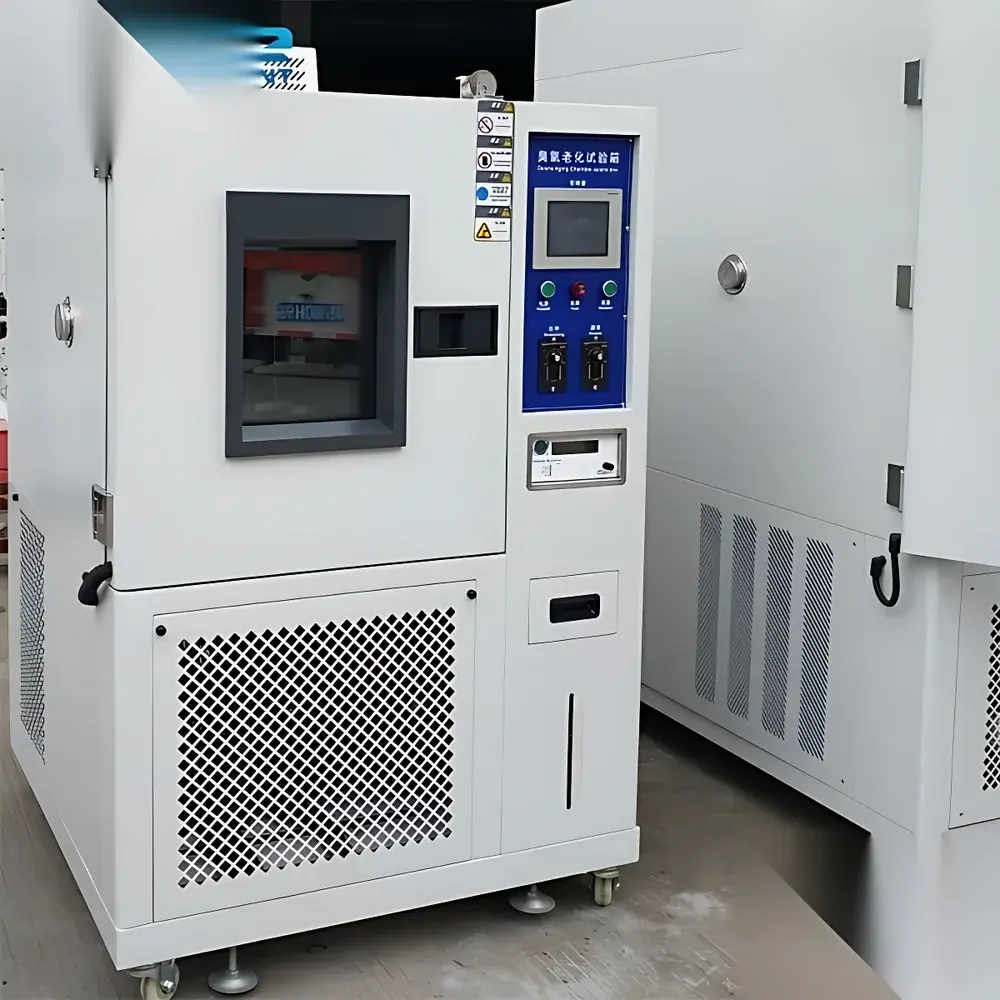
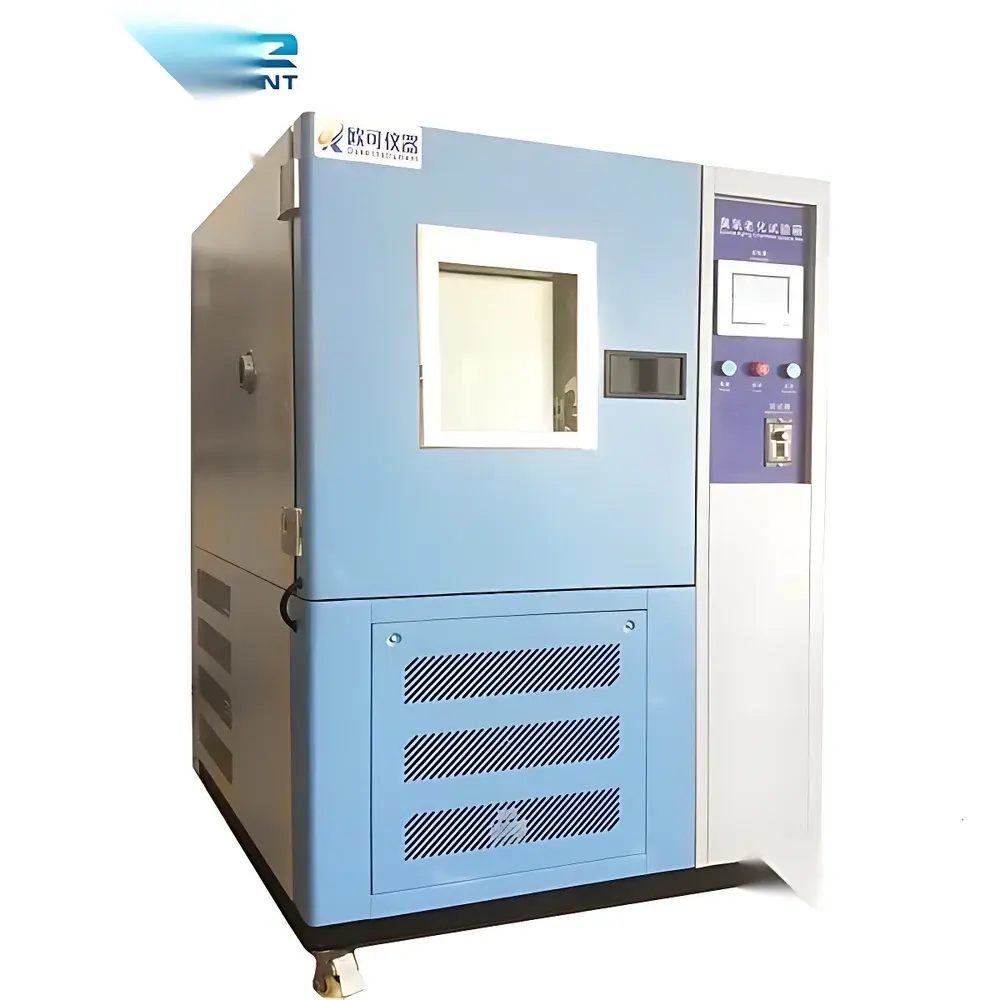
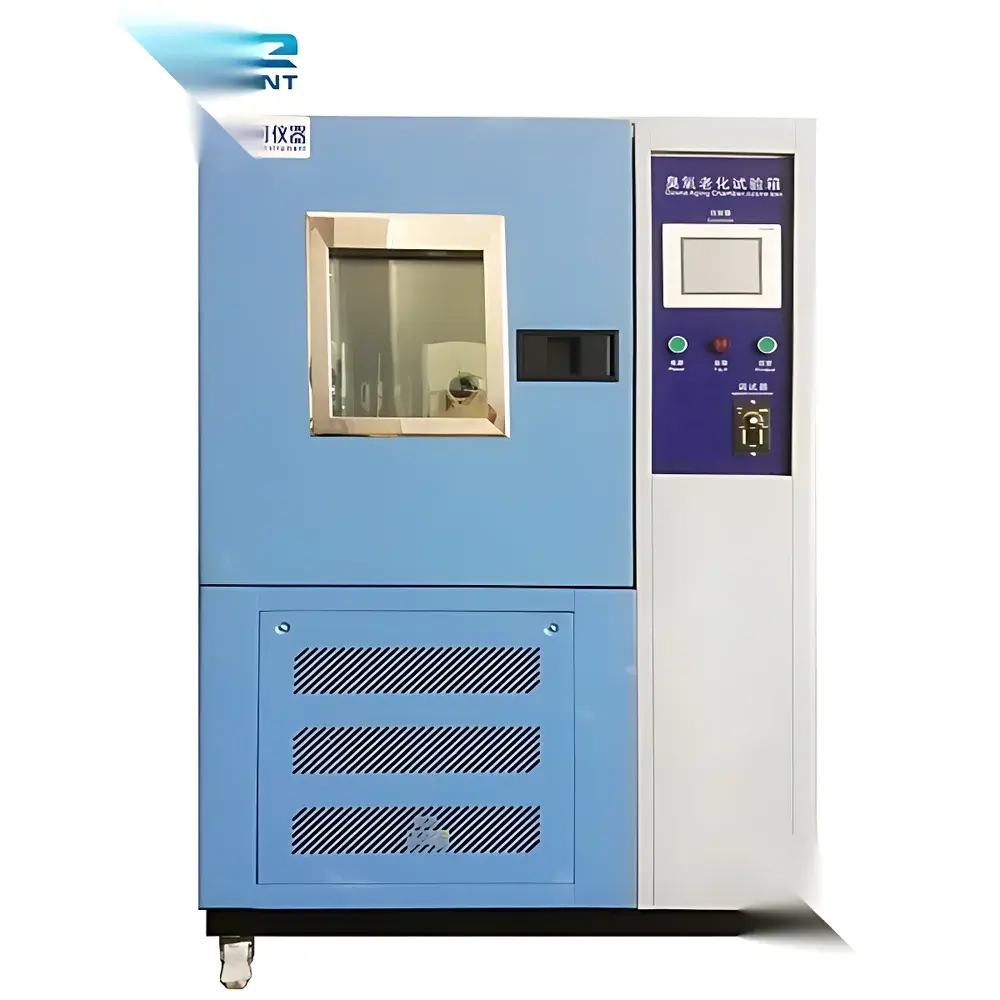
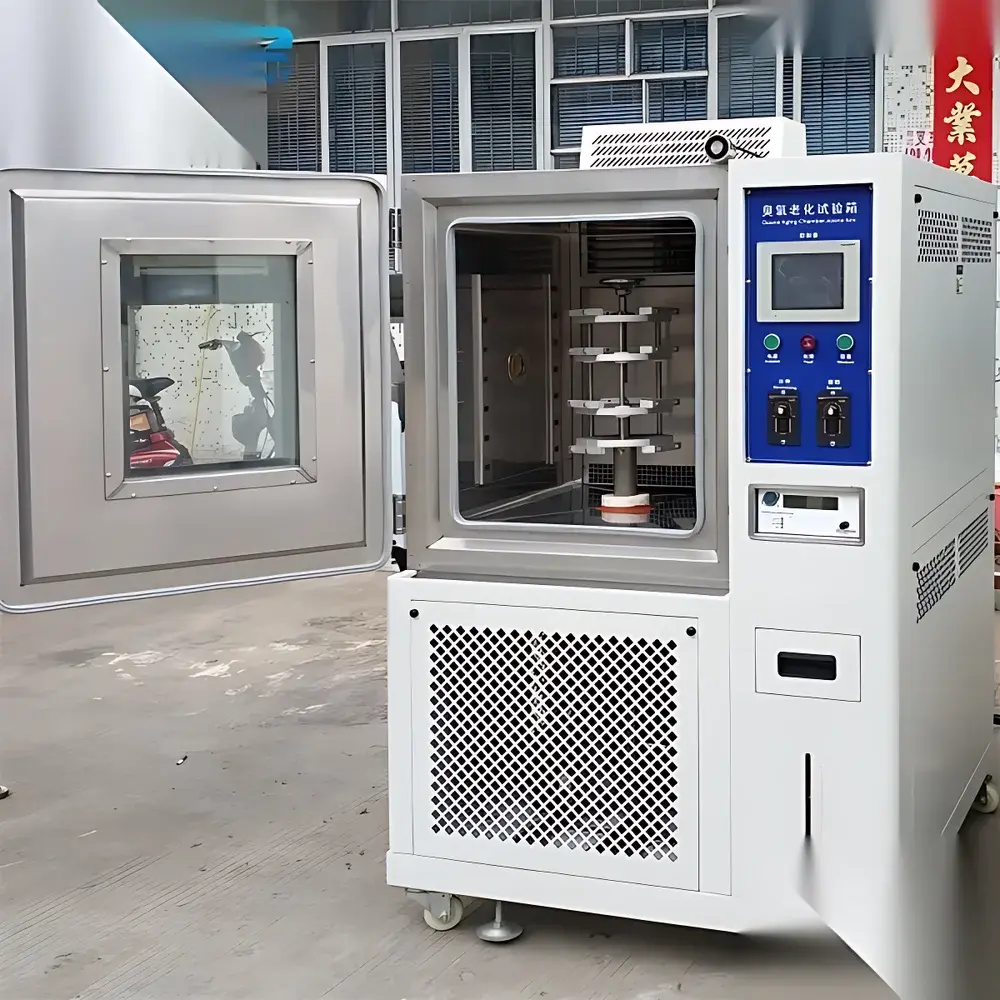
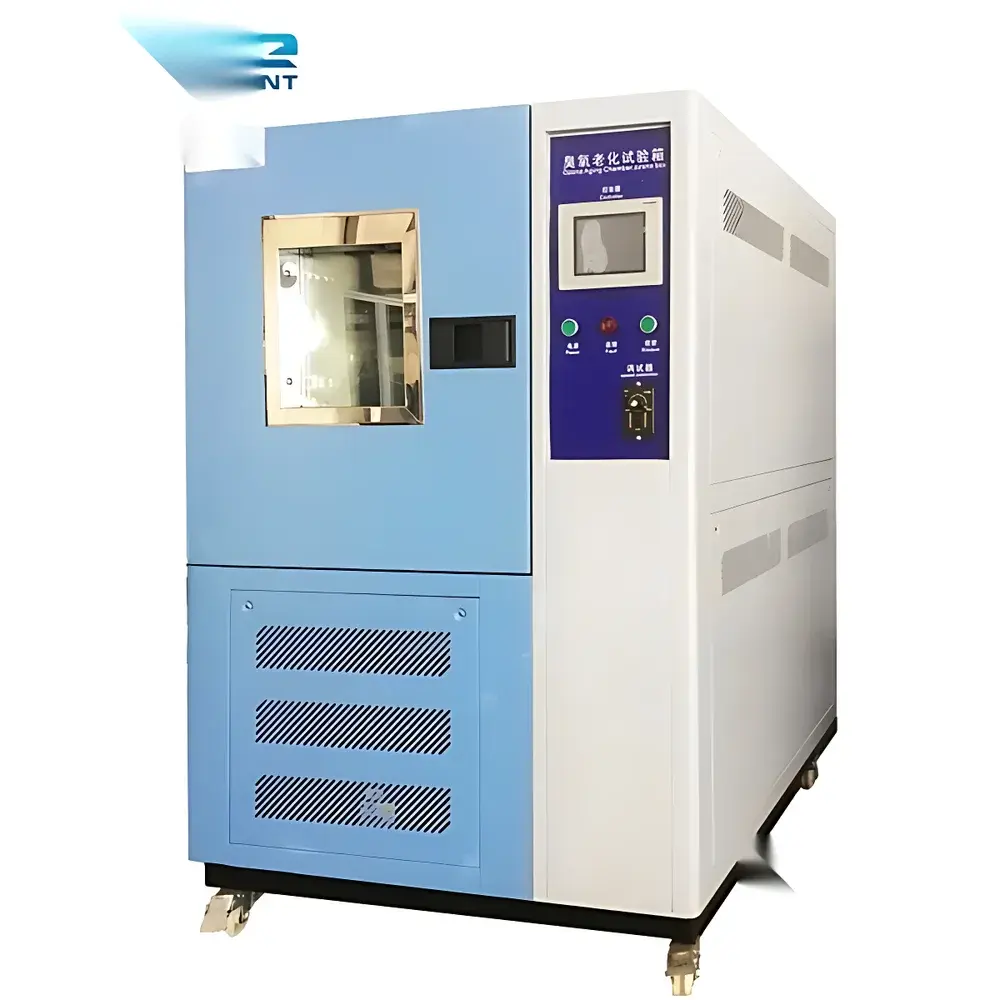
Ozone Aging Test Chamber – QY Series (Customizable Benchtop to Floor-Standing Environmental Test Chamber)
| Key Features | Stainless steel sealed test chamber |
|---|---|
| Ozone concentration range | 50–1500 ppm (pphm) |
| Temperature range | 25–40 °C |
| Humidity range | 30–65 %RH |
| Temp. uniformity | ±0.5 °C |
| Sample rotation | 360°, 1 rpm |
| Gas flow velocity | 8–16 mm/s |
| Compliance with GB/T 7762–2003, GB/T 2951.21–2008, GB/T 11206–2009, ISO 1431-1 | 2004 |
Overview
The QY Series Ozone Aging Test Chamber is an engineered environmental test system designed for accelerated evaluation of rubber, elastomer, and polymer materials under controlled ozone exposure. It operates on the principle of controlled oxidative degradation, where ozone (O3)—a highly reactive triatomic oxygen species—induces surface cracking in susceptible materials via chain scission at double bonds (e.g., in natural rubber, SBR, or NBR). Unlike ambient aging, this chamber enables reproducible, standardized stress application by maintaining precise ozone concentration (50–1500 ppm), temperature (25–40 °C), and relative humidity (30–65 %RH) within a fully sealed, stainless-steel reaction chamber. The system employs silent discharge ozone generation—a corona-based method that avoids nitrogen oxide byproducts—and integrates real-time, non-dispersive ultraviolet (UV) absorption spectroscopy for trace-level ozone quantification. This architecture ensures metrological traceability, operator safety, and compliance with internationally recognized material durability protocols.
Key Features
- Hermetically Sealed Test Environment: Electropolished 304 stainless steel chamber with zero gas leakage design; all ozone generation, circulation, and detection occur within a closed-loop gas circuit.
- Precision Ozone Control: Digital ozone concentration controller with auto-calibration capability; adjustable setpoint from 50 to 1500 ppm (parts per hundred million), resolution ±10 ppm.
- Dual-Mode Sample Exposure: Supports both static (fixed-strain) and dynamic (cyclic deformation) testing configurations; dynamic mode utilizes a 360° rotating sample rack (1 rpm) engineered to follow cycloidal trajectory per ASTM D1149 and ISO 1431-1 requirements.
- Long-Life UV Ozone Analyzer: Non-dispersive UV photometer with dual-beam optical path and temperature-compensated detector; specified operational lifetime ≥5 years without recalibration under continuous use.
- Intelligent Process Control: Integrated Weintek cMT Series color touchscreen HMI paired with Siemens S7-1200 PLC; supports PID auto-tuning for temperature and humidity loops, event logging, and alarm history with timestamping.
- Compliance-Ready Instrumentation: Built-in calibration interface for third-party metrological verification; 4–20 mA analog output and RS232 serial port enable integration into centralized lab data acquisition systems (e.g., LabVIEW, SCADA).
Sample Compatibility & Compliance
The QY chamber accommodates standard dumbbell-shaped specimens (per ISO 37, ASTM D412), O-rings, hose sections, and molded elastomeric components. Its modular internal dimensions—from 40×50×40 cm (QY-80) to 100×100×100 cm (QY-1000)—allow customization for product-specific fixtures and multi-position racks. All models conform to the core test methodologies defined in GB/T 7762–2003 (Rubber—Determination of resistance to ozone cracking—Static strain), GB/T 2951.21–2008 (Electric cables—Test methods for non-metallic materials—Part 21: Ozone resistance), GB/T 11206–2009 (Rubber—Aging tests), and ISO 1431-1:2004. The system’s sealed architecture and redundant safety circuits (leak detection, over-temperature cutoff, motor thermal protection) satisfy IEC 61000-6-2/6-4 EMC requirements and align with GLP laboratory infrastructure standards for environmental testing.
Software & Data Management
While the QY series operates via embedded PLC logic without proprietary PC software, its communication interfaces support full traceability under regulated environments. The RS232 port transmits real-time ozone concentration, chamber temperature, humidity, and elapsed test time as ASCII-formatted strings—compatible with FDA 21 CFR Part 11–compliant data loggers when paired with audit-trail-enabled middleware. The 4–20 mA output can feed into distributed control systems (DCS) for automated pass/fail decision trees based on pre-defined crack onset thresholds. All parameter setpoints, runtime logs, and alarm events are stored locally on the HMI with 30-day circular memory; export via USB is supported for external archiving.
Applications
- Evaluation of ozone resistance in automotive sealing systems (door gaskets, trunk liners)
- Quality assurance testing for aerospace elastomeric bushings and vibration isolators
- R&D screening of new synthetic rubber formulations (EPDM, CR, FKM)
- Validation of protective coatings and antioxidant additives in cable jacketing compounds
- Accelerated aging correlation studies between field service life and laboratory exposure duration
- Supporting ISO/IEC 17025 accredited testing laboratories requiring documented uncertainty budgets for ozone concentration measurement
FAQ
What ozone generation technology does the QY chamber use, and why is it preferred?
It uses silent discharge (dielectric barrier discharge) ozone generation—proven for high-purity O3 output without NOx contamination, critical for artifact-free material degradation assessment.
Can the chamber perform dynamic testing per ISO 1431-1 Annex B?
Yes—the optional dynamic configuration includes a precision stepper-driven sample rack rotating at exactly 1 rpm with cam-follower kinematics ensuring true cycloidal motion as specified.
Is third-party calibration support available?
Yes; the integrated calibration port allows direct connection to NIST-traceable ozone transfer standards; recommended annual verification per ISO/IEC 17025 Clause 6.5.
Does the system meet electrical safety requirements for EU and North American labs?
All units are CE-marked (EMC Directive 2014/30/EU, LVD Directive 2014/35/EU) and supplied with UL-listed power distribution modules upon request.
How is operator safety ensured during ozone exposure cycles?
The chamber features dual interlocked access doors, real-time ozone leak monitoring via auxiliary sensor, automatic shutdown on door opening, and negative-pressure exhaust ducting provisions compliant with OSHA 29 CFR 1910.1200.



