
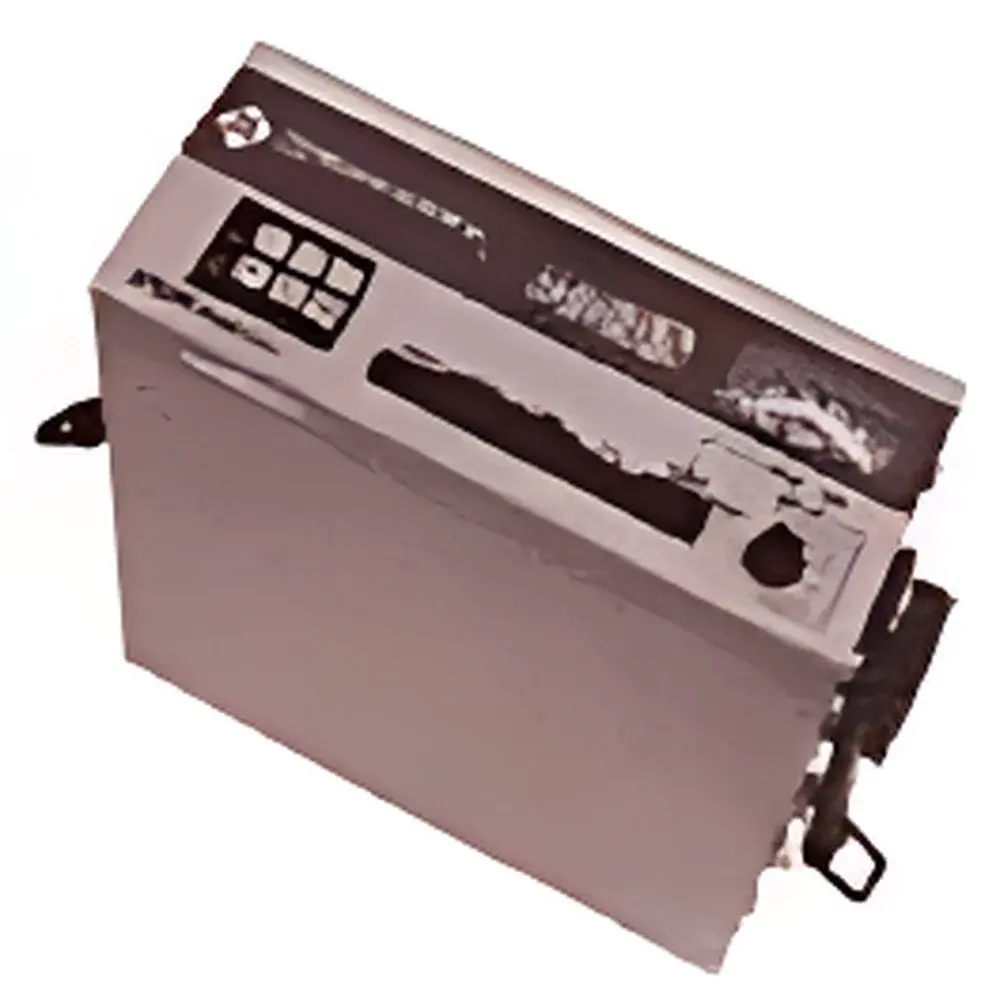
P5-L2C Microcomputer Dust Monitor
| Origin | Beijing |
|---|---|
| Manufacturer Type | Distributor |
| Origin Category | Domestic |
| Model | P5-L2C |
| Price | ¥18,600 |
| Operating Principle | Light Scattering (Nephelometric) |
| Safety Rating | Non-Explosive |
| Measurement Range | 0.01–100 mg/m³ |
| Resolution | 0.01 mg/m³ |
| Accuracy | ±10% |
| Sampling Duration Options | 0.1, 1, 3, 5, 10, 15 min or user-defined manual interval |
| Display | 4-digit LCD showing CPM and mass concentration (mg/m³) simultaneously |
| Data Output | RS-232 serial interface for PC connection |
| Data Storage | 99 measurement records |
| Environmental Operating Range | 0–40 °C |
| Power Supply | NiMH ×9 rechargeable battery (12 h continuous operation) |
| Dimensions | 202 × 84 × 183 mm |
| Weight | 3.4 kg |
Overview
The P5-L2C Microcomputer Dust Monitor is a portable, real-time particulate matter (PM) concentration analyzer engineered for field-deployable environmental and occupational hygiene monitoring. It operates on the principle of optical light scattering (nephelometry), where airborne particles passing through an illuminated detection chamber scatter incident light in proportion to their size and concentration. The scattered light intensity is converted into an electrical signal, calibrated against gravimetric reference standards to deliver quantitative mass concentration values in milligrams per cubic meter (mg/m³). Designed for compliance with ambient air quality assessment protocols and workplace exposure limit (WEL) verification, the instrument delivers rapid, on-site quantification of respirable and inhalable dust fractions without requiring laboratory-based filter weighing or time-intensive gravimetric analysis.
Key Features
- Real-time dual-mode display: Simultaneous readout of counts-per-minute (CPM) and mass concentration (mg/m³) on a high-contrast 4-digit LCD screen
- Flexible sampling duration control: Pre-set intervals (0.1, 1, 3, 5, 10, 15 minutes) plus fully adjustable manual timing for adaptive field protocols
- Integrated data logging: Stores up to 99 complete measurement sessions onboard, each timestamped and associated with duration, concentration, and CPM
- Robust power architecture: Rechargeable NiMH ×9 battery pack enabling ≥12 hours of continuous operation; compatible with both AC mains (220 V) and vehicle-mounted 12 V DC charging
- Compact ergonomic design: Dimensions of 202 × 84 × 183 mm and net weight of 3.4 kg facilitate handheld use during walk-through surveys, industrial hygiene rounds, or construction site audits
- Direct digital interfacing: RS-232 serial port supports bidirectional communication with Windows-based PCs for real-time streaming or post-hoc batch download
Sample Compatibility & Compliance
The P5-L2C is optimized for aerosolized particulates commonly encountered in urban ambient air, indoor workplaces, mining environments, and construction zones—including but not limited to coal dust, silica, cement powder, wood flour, and general PM10-fraction suspensions. While not intrinsically rated for hazardous area deployment (non-explosive classification), its operational envelope complies with IEC 60529 IP20 for protection against solid ingress and meets EN 61326-1:2013 for electromagnetic compatibility in industrial environments. Calibration traceability aligns with ISO 7708:1995 for particle size-selective sampling conventions, and measurement uncertainty (±10% at mid-range concentrations) satisfies routine screening requirements under OSHA Technical Manual (OTM) Section II and EU Directive 2008/50/EC for indicative monitoring.
Software & Data Management
Data acquired via the P5-L2C can be exported to standard CSV or TXT formats using included PC software. The application enables automated statistical processing—calculating arithmetic mean, standard deviation, maximum/minimum values, and comparison against regulatory thresholds (e.g., NIOSH REL, ACGIH TLV, or local ambient air quality standards). Audit-ready output includes session metadata (date/time, duration, operator ID), raw CPM traces, and concentration time-series plots. All data transfers support basic GLP-compliant recordkeeping; optional firmware upgrades may introduce enhanced audit trail capabilities aligned with FDA 21 CFR Part 11 principles for electronic records and signatures.
Applications
- Occupational health surveillance: Monitoring worker exposure to nuisance dusts in manufacturing, foundries, woodworking, and pharmaceutical production
- Ambient air quality screening: Rapid assessment of PM levels near roadways, demolition sites, landfills, and agricultural operations
- Indoor air quality (IAQ) diagnostics: Evaluating HVAC filtration efficiency, identifying fugitive dust sources in offices and schools
- Regulatory compliance verification: Supporting Tier 1 assessments prior to formal gravimetric or beta-attenuation monitoring campaigns
- Educational and research fieldwork: Teaching atmospheric science concepts and collecting preliminary datasets for longitudinal studies
FAQ
What particle size range does the P5-L2C effectively detect?
The instrument responds primarily to particles within the respirable (PM4) and thoracic (PM10) fractions, with peak sensitivity between 0.5 µm and 10 µm aerodynamic diameter.
Is factory calibration traceable to national standards?
Yes—each unit is calibrated using NIST-traceable polystyrene latex (PSL) microsphere suspensions and verified against ISO 12103-1 A2 test dust reference material.
Can the device be used in high-humidity environments?
Operation is validated up to 85% relative humidity non-condensing; prolonged exposure above this threshold may affect optical path stability and require recalibration.
Does the P5-L2C support external pump integration?
No—the instrument uses an integrated axial-flow sampling pump; external flow control or isokinetic sampling requires auxiliary hardware not supplied with the base configuration.
How often should routine calibration verification be performed?
Users are advised to conduct zero and span checks before each daily shift; full recalibration is recommended every 6 months or after 200 hours of cumulative operation, whichever occurs first.
Related Products







