
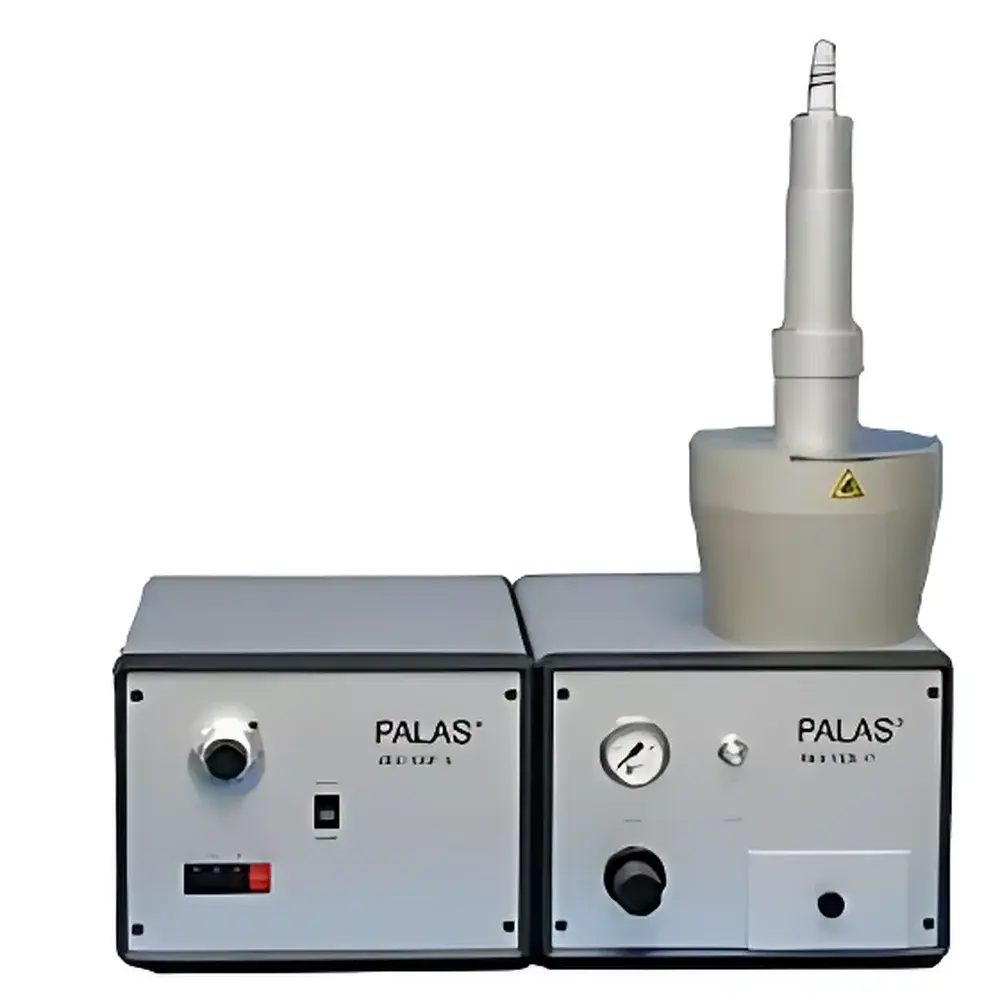
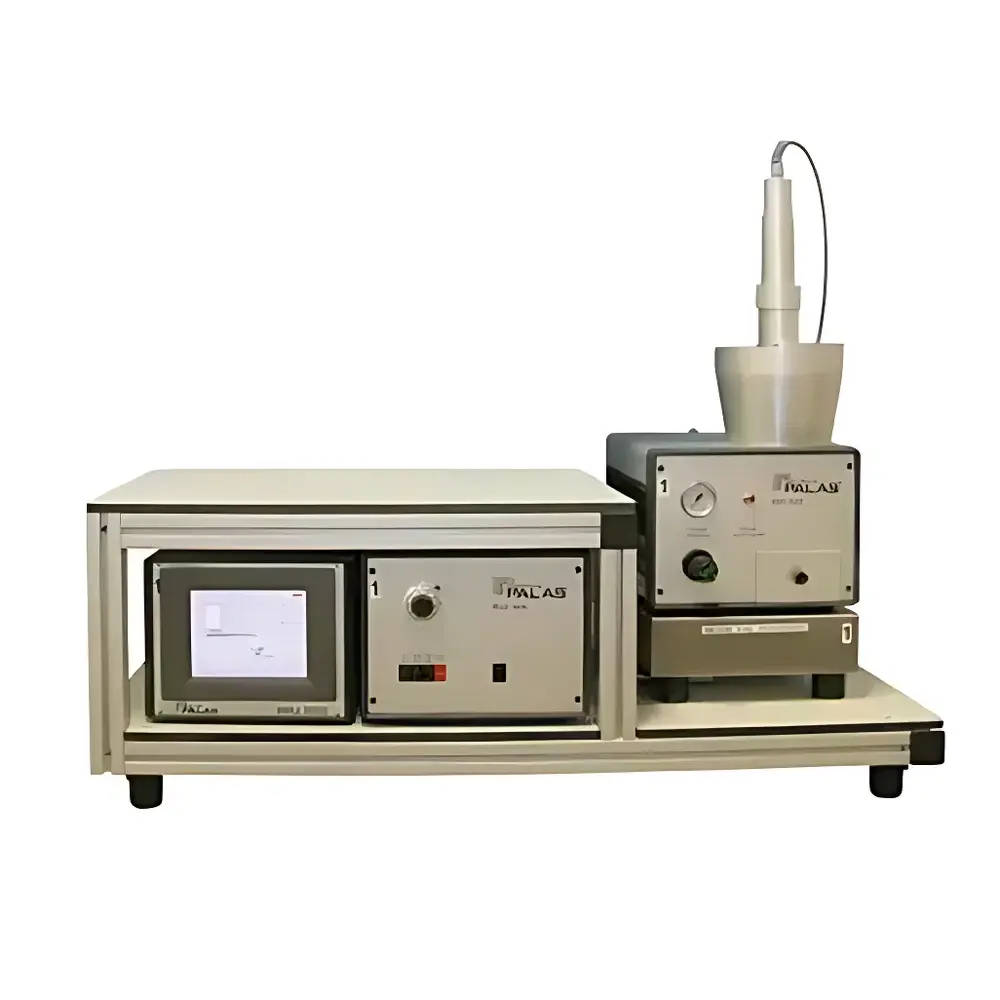
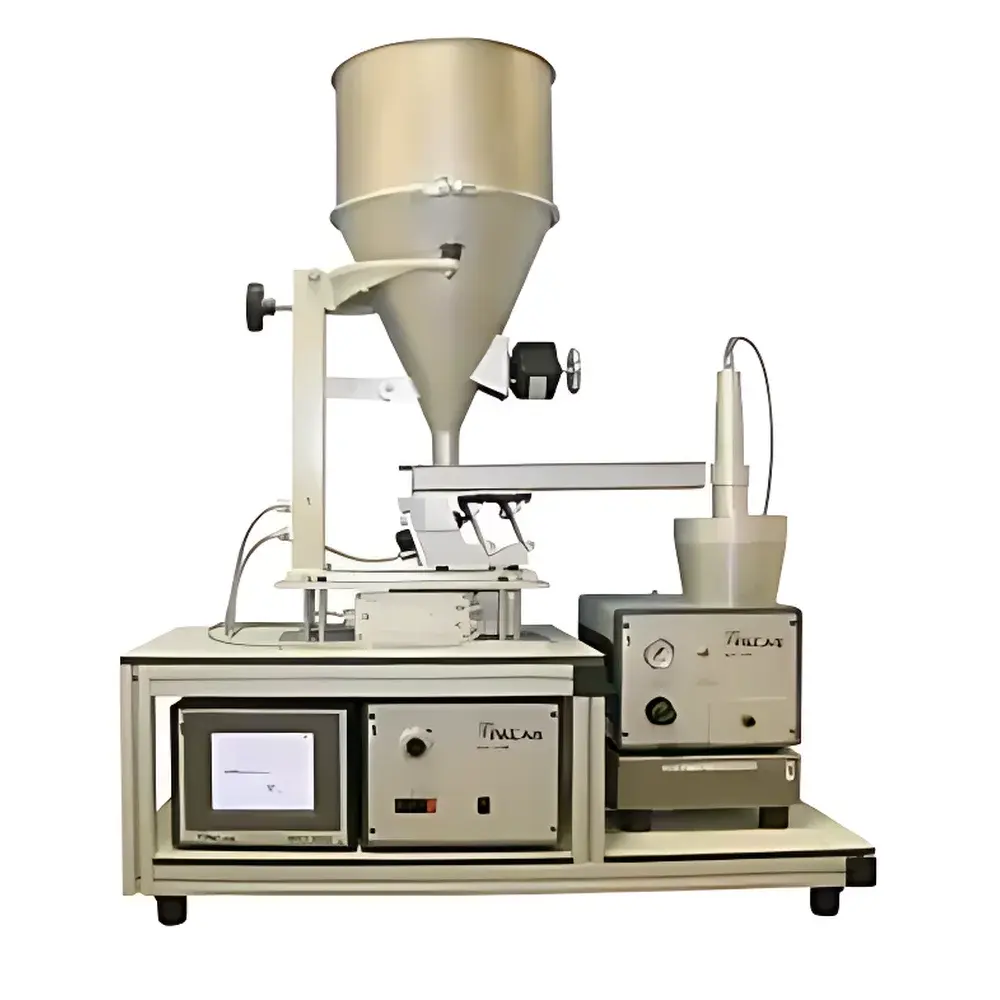
PALAS BEG1000 / BEG2000 / BEG3000 Aerosol Generator
| Brand | PALAS |
|---|---|
| Origin | Germany |
| Model | BEG1000, BEG2000, BEG3000 |
| Volumetric Flow Rate | 80–165 L/min |
| Particle Material | Non-cohesive powders & bulk dusts |
| Max. Aerosol Concentration | ~10⁷ particles/cm³ |
| Mass Flow Rate (A-type) | 8–550 g/h (SAE Fine, A2 Dust) |
| Mass Flow Rate (B-type) | 100–6,000 g/h (SAE Fine, A2 Dust) |
| Mass Flow Rate (C-type) | 350–7,300 g/h (SAE Fine, A2 Dust) |
| Particle Size Range | 0.1–200 µm |
| Carrier Gas | Compressed air (4–8 bar) |
| Inlet Connection | Quick-fit coupling |
| Aerosol Outlet (A) | ID 6.4 mm / OD 10 mm |
| Aerosol Outlet (B) | ID 8 mm / OD 12 mm |
| Aerosol Outlet (C) | ID 6.2 mm / OD 10 mm |
| Power Supply | 115–230 V, 50/60 Hz |
| Reservoir Volume | 1500 cm³ |
| Fill Capacity | 500 g |
| Continuous Operation | Up to 120 hours |
| Compliance | ISO 5011 nozzle design |
| Control Interface | Remote operation via analog/digital I/O or PC software |
Overview
The PALAS BEG1000, BEG2000, and BEG3000 series are precision-engineered aerosol generators designed for the reproducible, long-duration generation of high-concentration solid particulate aerosols. Based on the validated rotating brush dispersion principle and integrated ISO 5011-compliant diffusion nozzles, these instruments produce stable, monodisperse-to-polydisperse aerosols from non-cohesive, free-flowing powders—including SAE Fine and A2 test dusts—under controlled pneumatic conditions. Unlike thermal or ultrasonic generators, the BEG platform relies on mechanical shear and turbulent entrainment in compressed air streams to achieve consistent particle liberation without agglomeration or thermal degradation. This makes it especially suitable for filter testing, industrial hygiene challenge studies, and calibration of optical particle counters where mass-based dosing fidelity and temporal stability are critical.
Key Features
- Three scalable models (BEG1000, BEG2000, BEG3000) optimized for distinct mass flow regimes: low-, medium-, and high-dust-output applications
- ISO 5011-certified diffusion nozzle geometry ensuring traceable, standardized aerosol delivery for filter efficiency validation per ISO 11171, ISO 16890, and EN 779
- Robust stainless-steel reservoir (1500 cm³ volume) with 500 g maximum fill capacity and tool-free access for rapid powder replenishment
- Continuous unattended operation up to 120 hours under stable mass flow and concentration profiles (±2.5% short-term, ±4.0% over 72 h)
- Dual-mode control architecture: local keypad + analog/digital I/O interface for PLC integration or full PC-based automation via PALAS WinControl software
- Modular outlet configurations (A/B/C types) with standardized tubing interfaces enabling seamless integration into test ducts, wind tunnels, and cleanroom challenge systems
- Low-maintenance design featuring wear-resistant brush assemblies, self-cleaning airflow paths, and sealed motor compartments rated IP54
Sample Compatibility & Compliance
The BEG series is validated for use with certified reference dusts including ISO A2, SAE Fine, ISO Medium, and Arizona Road Dust (ARD), as well as proprietary non-hygroscopic, non-adhesive industrial powders (e.g., TiO₂, SiO₂, limestone, cement clinker). All models conform to ISO 5011:2014 Annex B requirements for aerosol generator performance in engine air filter testing. The system supports GLP-compliant operation when paired with audit-trail-enabled software and calibrated mass flow controllers. Documentation packages include Factory Acceptance Test (FAT) reports, metrological traceability certificates for flow sensors (NIST-traceable), and CE/UKCA declarations of conformity covering EMC Directive 2014/30/EU and Low Voltage Directive 2014/35/EU.
Software & Data Management
PALAS WinControl v4.x provides real-time monitoring and closed-loop regulation of mass flow, volumetric flow, and operating pressure. The software logs timestamped operational parameters at user-defined intervals (1 s to 10 min resolution), generates CSV-exportable dose history reports, and supports automated sequence programming for multi-step challenge protocols (e.g., ramped loading, pulse-mode cycling). When deployed in regulated environments, WinControl can be configured to comply with FDA 21 CFR Part 11 requirements—including electronic signatures, role-based access control, and immutable audit trails—upon installation of optional PKI modules and networked domain authentication.
Applications
- Filter certification testing: Engine air filters (ISO 5011), hot-gas filtration systems, baghouse media, HVAC particulate filters (ISO 16890), and cyclone separators
- Industrial hygiene exposure assessment: Workplace aerosol challenge studies for respirator fit testing and ventilation system validation
- Pharmaceutical manufacturing: Dry powder inhaler (DPI) formulation development and inhalation device qualification per USP & Ph. Eur. guidelines
- Cement and metallurgical process engineering: Emission control system verification, ESP and fabric filter benchmarking, and raw material handling dust suppression evaluation
- Research laboratories: Aerosol physics investigations, deposition efficiency modeling, and sensor response characterization under realistic loading conditions
FAQ
What reference standards does the BEG series support for filter testing?
The BEG generators are fully compatible with ISO A2, SAE Fine, ISO Medium, and Arizona Road Dust (ARD) test aerosols, and meet the aerosol generation requirements specified in ISO 5011:2014, ISO 11171, and ISO 16890.
Can the BEG operate with gases other than compressed air?
Yes—while compressed air is standard, inert carrier gases (e.g., nitrogen or argon) may be used upon verification of compatibility with internal seals and brush materials; consult PALAS Application Engineering prior to substitution.
Is remote start/stop and parameter adjustment possible without a PC?
Yes—via 0–10 V analog input or discrete digital signals (TTL/24 V DC), enabling integration into facility-wide SCADA or PLC-controlled test benches.
How often does the rotating brush require replacement?
Under typical use with SAE Fine dust, brush service life exceeds 2,000 operating hours; wear indicators are provided in WinControl, and replacement kits include torque-calibrated mounting hardware.
Does PALAS provide installation qualification (IQ) and operational qualification (OQ) documentation?
Yes—custom IQ/OQ protocols aligned with GMP Annex 15 and ASTM E2500-13 are available upon request, including sensor calibration records, flow profile verification data, and repeatability test reports.
Related Products







