
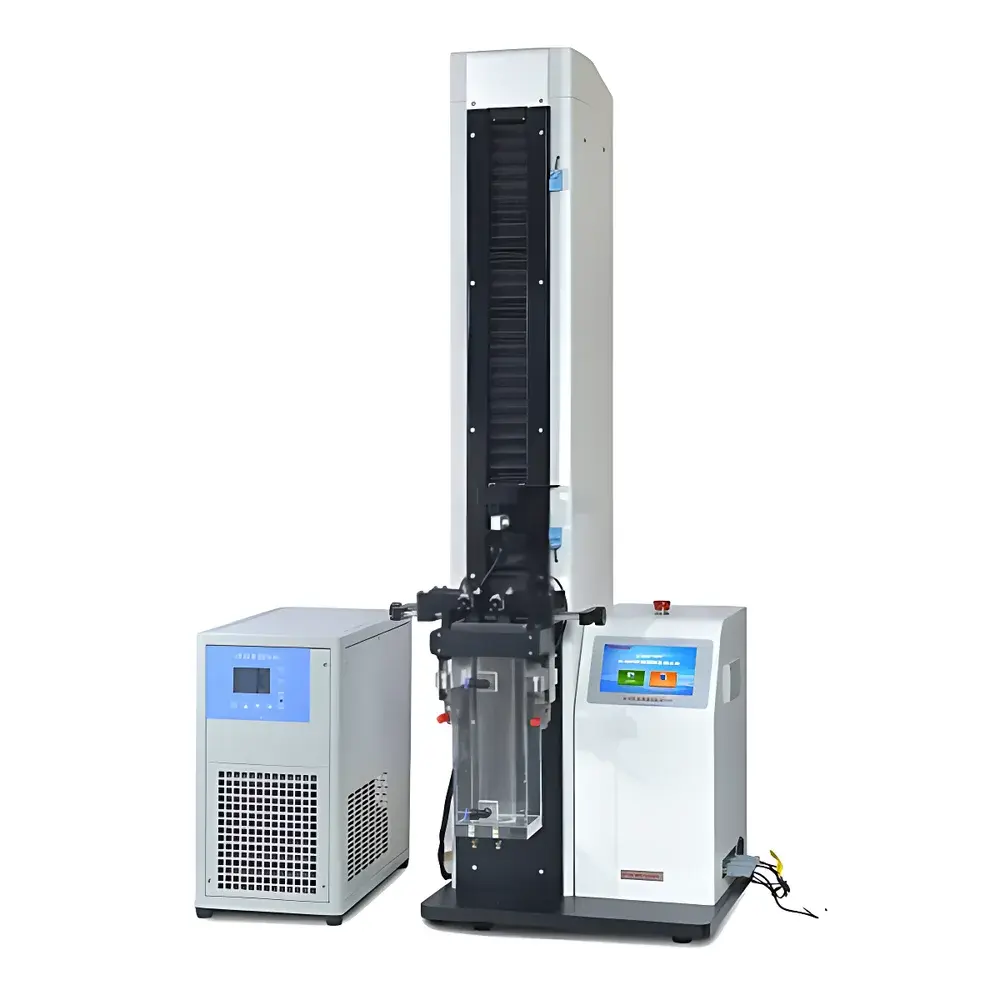
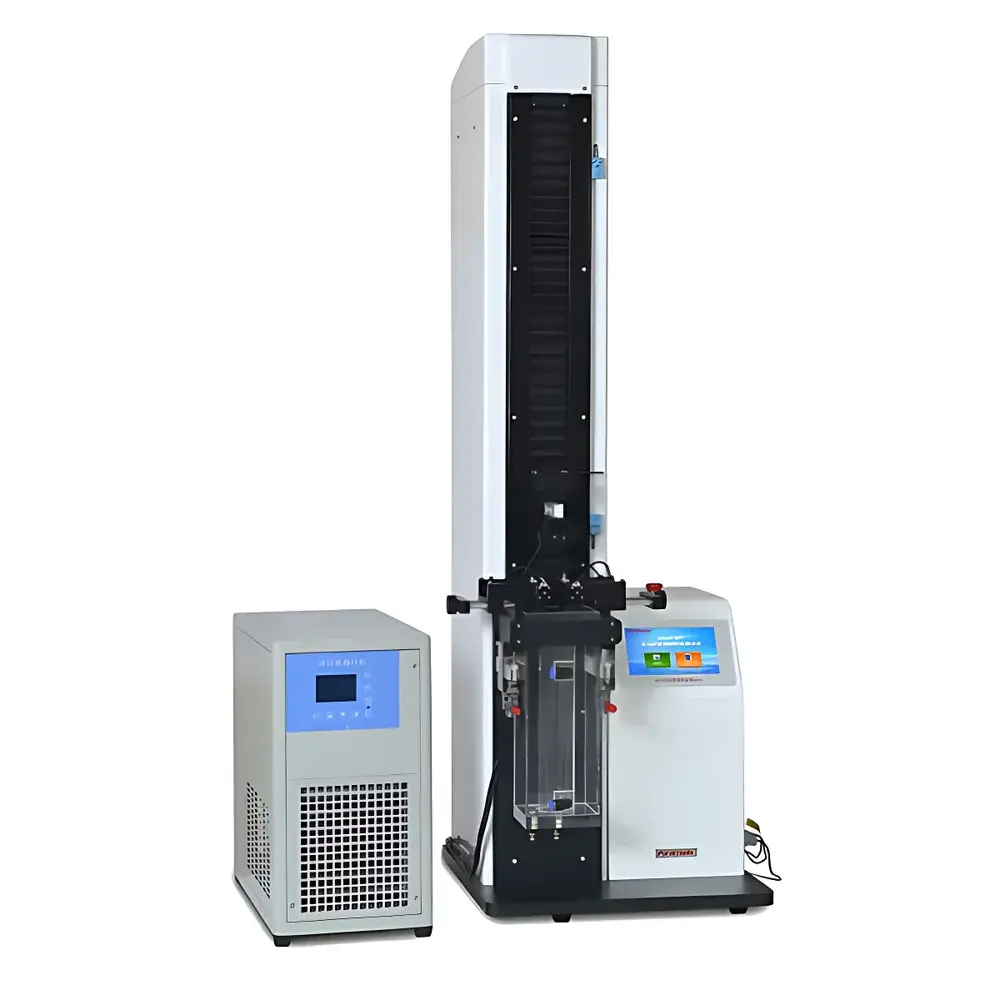
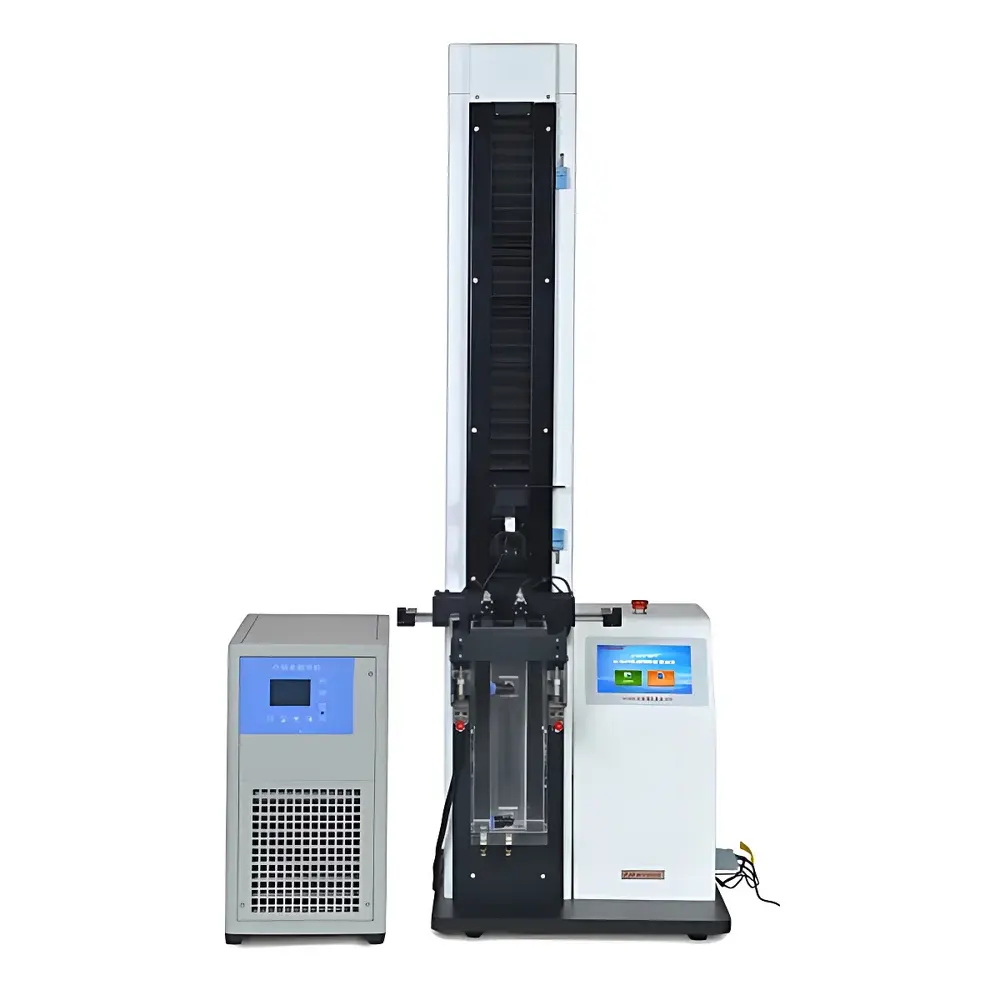
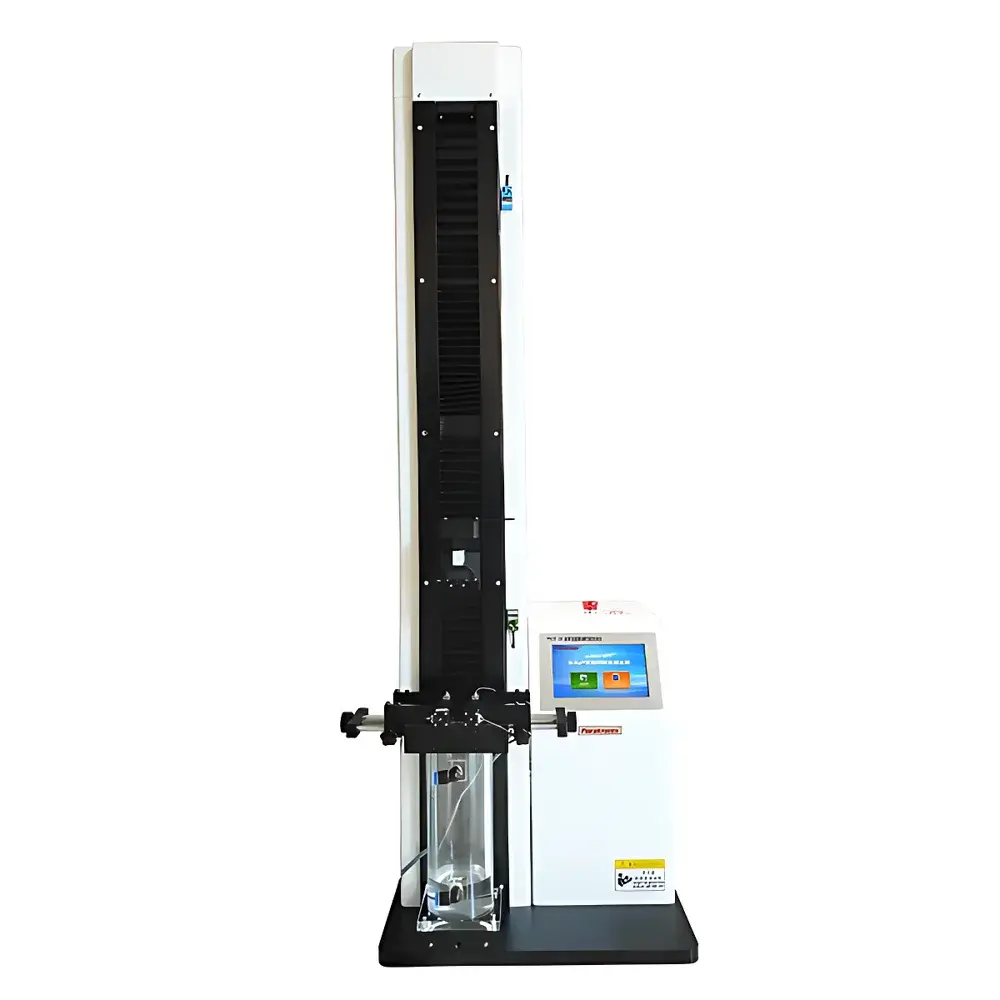
Paratronix PMT-CSP02 Hydrophilic-Coated Guidewire Coefficient of Friction Tester
| Brand | Paratronix |
|---|---|
| Model | PMT-CSP02 |
| Measurement Range | 1 kg / 5 kg / 25 kg / 50 kg (selectable) |
| Force Resolution | 0.001 N |
| Displacement Resolution | 0.001 mm |
| Test Speed | 1–500 mm/min (infinitely variable) |
| Speed Accuracy | ±1% (1–10 mm/min), ±0.5% (10–500 mm/min) |
| Temperature Control Range | −10 °C to +80 °C |
| Temp. Stability | ±0.1 °C |
| Clamp Force Adjustment | 0–10 N |
| Test Stroke | 1000 mm |
| Water Bath Flow Rate | 10 L/min |
| Power Supply | AC 220 V ±22 V, 50 Hz |
| Dimensions (L×W×H) | 480 × 560 × 1430 mm |
| Weight | ~90 kg |
| Compliance | YY/T 1536–2017, T/CAMDI 021–2019 |
Overview
The Paratronix PMT-CSP02 Hydrophilic-Coated Guidewire Coefficient of Friction Tester is a purpose-built mechanical testing instrument engineered for quantitative evaluation of static and kinetic frictional resistance between hydrophilic-coated guidewires and simulated physiological or synthetic luminal surfaces. It operates on the principle of controlled axial pull-through testing under precisely regulated environmental conditions—including temperature-controlled aqueous immersion—mimicking clinical insertion dynamics in vascular and non-vascular catheterization procedures. Designed in strict accordance with YY/T 1536–2017 (“Standard Test Model for Evaluating Surface Sliding Performance of Non-Vascular Catheters”) and T/CAMDI 021–2019 (“Single-Use Hydrophilic-Coated Guidewires”), the system delivers traceable, repeatable force-displacement data essential for regulatory submissions (e.g., FDA 510(k), CE marking), internal quality control, and coating process validation.
Key Features
- High-precision load cell with ≤0.5-class accuracy and 0.001 N minimum resolution, calibrated per ISO 7500-1 and traceable to national standards;
- Infinitely variable test speed from 1 to 500 mm/min, with dual-range speed accuracy certified at ±1% (low range) and ±0.5% (high range);
- Integrated Peltier-based water bath system enabling precise thermal regulation from −10 °C to +80 °C (±0.1 °C stability), supporting lubricity assessment across physiologically relevant temperatures;
- Motorized micro-adjustment clamping mechanism (0–10 N adjustable preload) ensuring consistent contact pressure and eliminating operator-induced variability;
- 7-inch high-resolution color touchscreen interface with real-time force–displacement curve visualization, built-in statistical analysis (mean, SD, CV%), and automated pass/fail flagging against user-defined thresholds;
- Modular mechanical architecture featuring ground stainless-steel linear guides, preloaded ball screws, and low-noise stepper motor drive—optimized for long-term dimensional stability and sub-micron positional repeatability;
- Built-in calibration routine compliant with ISO/IEC 17025 requirements, facilitating third-party metrological verification without disassembly;
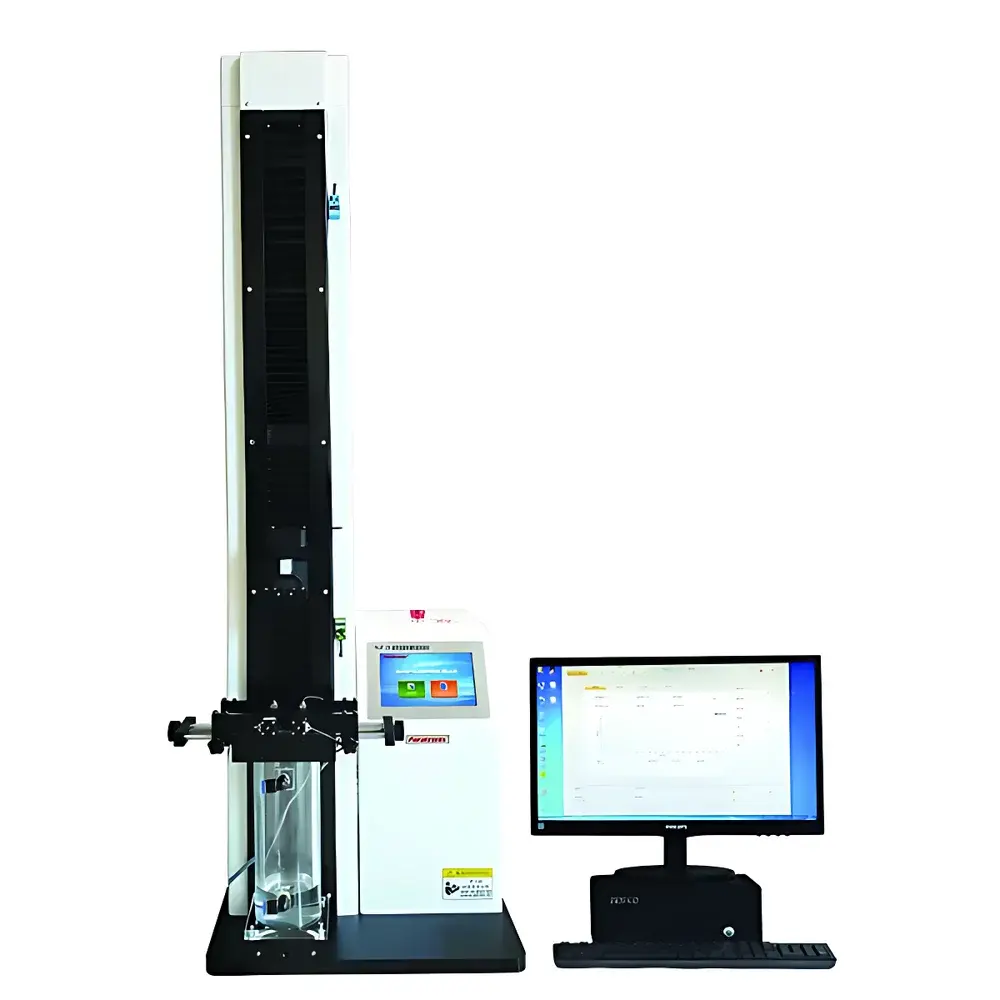
- Optional PC-based software module supporting bidirectional control, raw data export (CSV, Excel), audit trail logging (21 CFR Part 11 ready), and GLP/GMP-compliant report generation.
Sample Compatibility & Compliance
The PMT-CSP02 accommodates a broad range of guidewire geometries (diameters 0.2–1.2 mm, lengths up to 1000 mm) and surface chemistries—including polytetrafluoroethylene (PTFE), silicone oil, polyvinylpyrrolidone (PVP), and zwitterionic hydrogels. Test fixtures support both straight-pull and bent-path configurations to replicate anatomical curvature effects. All test protocols align with internationally recognized standards: YY/T 1536–2017 defines the standardized test model using a 3-mm inner-diameter polyethylene tube immersed in saline at 37 °C; T/CAMDI 021–2019 specifies performance limits for peak static friction force (<0.15 N) and coefficient of kinetic friction (<0.08). The instrument’s measurement uncertainty budget has been validated against reference standards accredited by CNAS (China National Accreditation Service) and supports documentation required for ISO 13485:2016 quality management systems.
Software & Data Management
The optional Paratronix TestSuite™ software provides full remote instrumentation control, synchronized multi-channel data acquisition (force, displacement, temperature, time), and customizable test method templates. All data entries include embedded metadata (operator ID, timestamp, environmental conditions, calibration status), and electronic signatures are supported for 21 CFR Part 11 compliance. Audit trails record every parameter change, result modification, or user login event with immutable timestamps. Export formats include CSV (for statistical packages such as JMP or Minitab), PDF reports with embedded curves and summary tables, and XML for integration into LIMS environments. Software validation documentation (IQ/OQ/PQ protocols) is available upon request for regulated laboratory deployment.
Applications
- Quantitative comparison of hydrophilic coating durability across manufacturing batches;
- Evaluation of friction reduction efficacy before and after simulated use (e.g., repeated passage through tortuous vascular models);
- Accelerated aging studies assessing coating degradation under elevated temperature/humidity exposure;
- Material selection support for novel polymer blends, crosslinking agents, or surface grafting techniques;
- Root cause analysis of clinical feedback related to insertion resistance or tissue trauma;
- Regulatory testing for Class II/III medical device dossiers submitted to NMPA, FDA, or EU Notified Bodies.
FAQ
What standards does the PMT-CSP02 directly support?
It is fully aligned with YY/T 1536–2017 and T/CAMDI 021–2019, and its mechanical and thermal specifications meet the technical requirements of ASTM F2624 (Standard Guide for Evaluation of Lubricious Coatings) and ISO 8536-4 (Infusion equipment – Part 4: Requirements for infusion sets).
Can the system perform tests outside the specified temperature range?
No—the integrated water bath is rated for −10 °C to +80 °C only. Operation beyond this range may compromise sensor linearity, seal integrity, and thermal uniformity, voiding calibration validity.
Is third-party calibration supported?
Yes. The instrument includes a dedicated calibration mode accessible via password-protected service menu, and all critical components (load cell, encoder, temperature sensor) are individually identified and documented to enable external accreditation per ISO/IEC 17025.
How is sample alignment ensured during testing?
A precision X–Y cross-centering adjustment stage allows sub-0.1 mm coaxial alignment between the guidewire axis and the pull direction, minimizing parasitic bending moments that could distort friction readings.
Does the system comply with data integrity requirements for FDA audits?
When equipped with the optional TestSuite™ software and configured with audit trail, electronic signature, and role-based access controls, it satisfies 21 CFR Part 11 Subpart B criteria for electronic records and signatures in regulated environments.






