
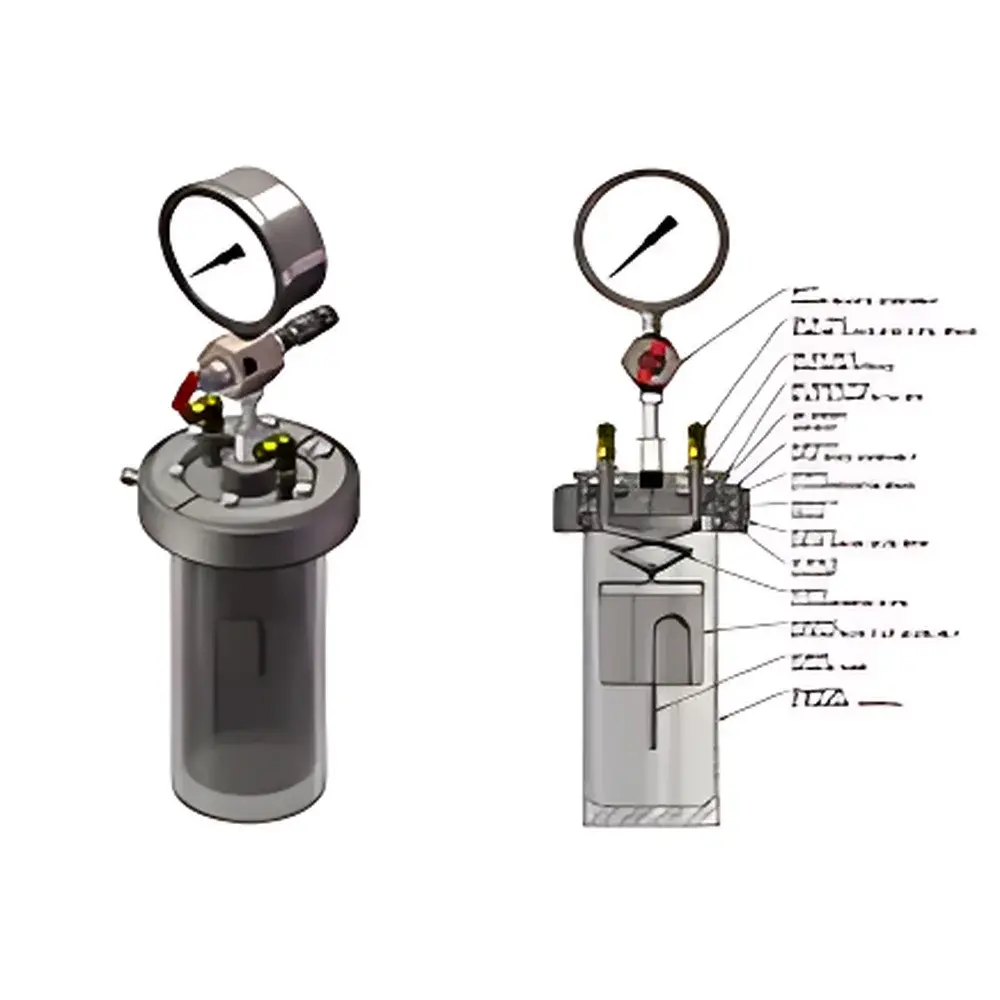
Parr 4632 High-Pressure Extraction System
| Brand | Parr |
|---|---|
| Origin | USA |
| Manufacturer Status | Authorized Distributor |
| Origin Category | Imported |
| Model | 4632 |
| Price Range | USD 68,000 – 109,000 (estimated) |
| Maximum Operating Pressure | 10,000 psi (68.9 MPa) |
| Maximum Temperature | 200 °C |
| Extraction Vessel Volume | 2 L |
| Siphon Cup Volume | 450 mL |
| Solvent Flow Cycles | 15–22 cycles/hour |
| Total Extraction Duration | Up to 6 h |
| Compliance | ASTM D2307, ASTM D3455, IEC 60851-5, UL 1446 |
Overview
The Parr 4632 High-Pressure Extraction System is an engineered laboratory platform designed for controlled, repeatable solvent extraction under elevated pressure and temperature conditions. Unlike conventional ambient-pressure Soxhlet extractors, the 4632 leverages a sealed, pressurized vessel architecture to maintain solvent integrity—particularly critical when handling volatile or low-boiling-point solvents such as refrigerants (e.g., R-134a, R-22), hydrocarbons, or fluorinated compounds. Its core operational principle combines static high-pressure immersion with dynamic siphon-assisted solvent renewal, enabling precise simulation of real-world exposure environments where insulation materials, polymeric coatings, or natural product matrices undergo prolonged contact with aggressive solvents. The system is widely deployed in electrical insulation qualification testing, refrigeration component compatibility studies, and botanical compound isolation where thermodynamic stability and phase behavior must be preserved throughout extraction.
Key Features
- Robust 2 L stainless steel pressure vessel rated to 10,000 psi (68.9 MPa) and 200 °C, conforming to ASME Section VIII Div. 1 design standards.
- Dedicated 450 mL siphon cup with integrated虹吸 (siphon) mechanism—enables automatic solvent displacement and renewal without manual intervention or vessel opening.
- Integrated jacketed cooling coil for precise condensate control; water flow rate adjustable to sustain 15–22 full solvent circulation cycles per hour.
- Independent temperature regulation of both vessel jacket and internal condenser—critical for maintaining consistent vapor–liquid equilibrium during extended extractions.
- Pressure transducer with digital readout and overpressure safety interlock (mechanical rupture disc + electronic shutdown).
- Modular construction allows direct integration with analytical downstream systems (e.g., GC-MS, HPLC) via optional vapor-tight transfer lines.
Sample Compatibility & Compliance
The Parr 4632 accommodates solid and semi-solid samples including enameled magnet wire, polymer-coated substrates, plant biomass (leaves, seeds, roots), and animal tissue specimens. Its geometry supports standardized test protocols defined in ASTM D2307 (dielectric enamel resistance to refrigerants), ASTM D3455 (electrical insulating varnishes), and IEC 60851-5 (test methods for winding wires). For pharmaceutical and nutraceutical applications, the system supports GLP-aligned workflows—full audit trail capability is enabled when paired with compliant data acquisition software (e.g., Parr’s WinControl™ with 21 CFR Part 11-compliant user authentication and electronic signature modules). All wetted parts are electropolished 316 SS or PTFE-lined to prevent catalytic degradation or metal ion leaching during solvent exposure.
Software & Data Management
While the base 4632 operates via analog controls and mechanical timers, it is fully compatible with Parr’s WinControl™ v5.2 data acquisition suite. This Windows-based application provides real-time logging of pressure, vessel temperature, coolant flow rate, and cycle count—with configurable alarm thresholds and automated report generation in PDF/CSV formats. Raw datasets include time-stamped pressure decay events corresponding to siphon activation, enabling quantitative correlation between solvent renewal frequency and mass loss kinetics. All data files support SHA-256 hashing and encrypted storage, meeting FDA 21 CFR Part 11 requirements for electronic records retention in regulated laboratories.
Applications
- Electrical insulation evaluation: Quantifying extractable fractions from magnet wire enamels after refrigerant exposure—directly informing compressor reliability and capillary clogging risk assessment.
- Natural product extraction: High-yield isolation of thermolabile phytochemicals (e.g., terpenes, alkaloids) using subcritical fluid solvents at pressures below critical points but above atmospheric—minimizing thermal degradation.
- Material compatibility screening: Accelerated aging of elastomers, gaskets, and seals in HVAC/R systems exposed to next-generation low-GWP refrigerants.
- Method development for ISO 17025-accredited labs: Validated SOPs exist for residual solvent quantification per USP , supporting extractables & leachables (E&L) studies in medical device packaging.
FAQ
What solvents are compatible with the Parr 4632 system?
Commonly used solvents include R-134a, R-22, cyclohexane, ethanol, ethyl acetate, and supercritical CO₂ (with optional pump upgrade). Solvent selection must respect vapor pressure limits at operating temperature and chemical compatibility with 316 SS and Kalrez® seals.
Can the system perform continuous-flow extraction?
No—the 4632 implements batch-mode siphon cycling. Continuous flow requires integration with external HPLC or SFE pumps and custom manifold adaptation.
Is validation documentation available for GMP environments?
Yes—Parr supplies IQ/OQ protocol templates, calibration certificates traceable to NIST standards, and material test reports (MTRs) for all pressure-bearing components.
How is residue quantification performed post-extraction?
Residual solids are recovered by rotary evaporation under inert atmosphere, followed by gravimetric analysis on a microbalance (±0.01 mg resolution); optional FTIR or TGA characterization is supported via standard sample pans.



