
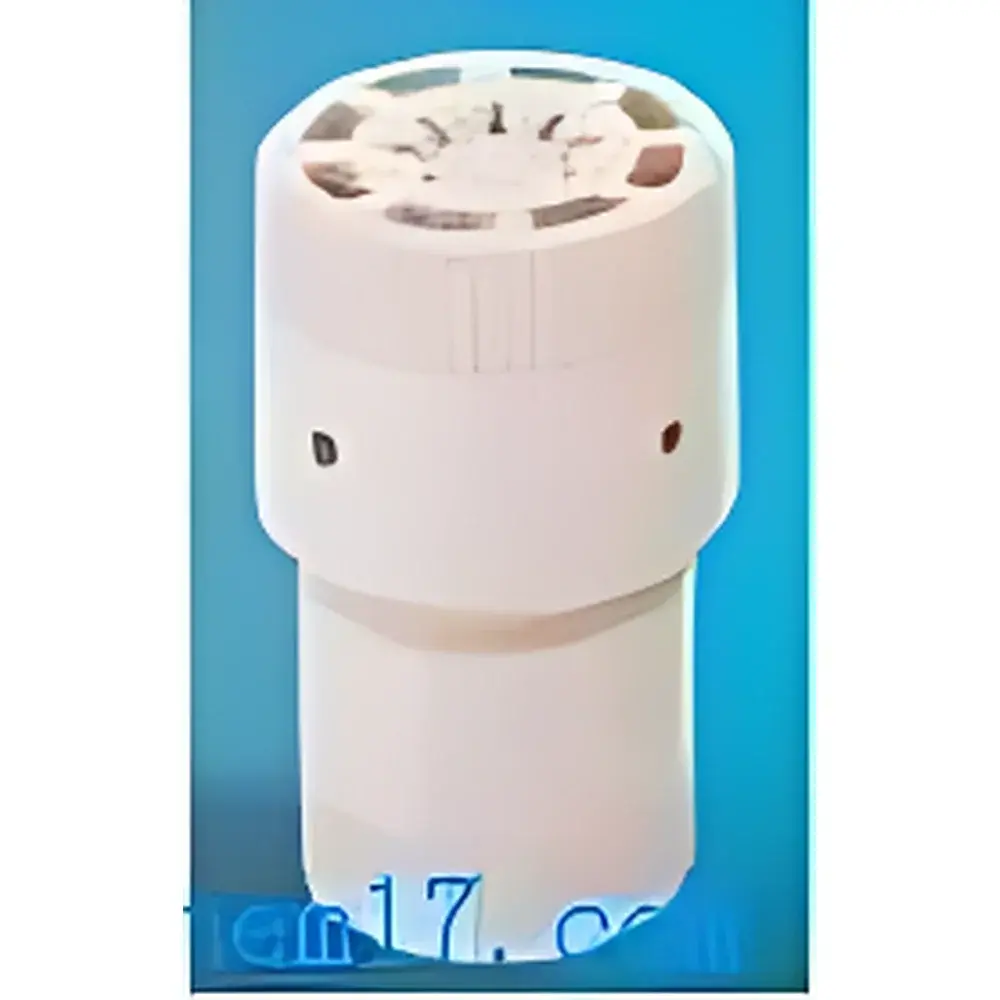
PARR Microwave Digestion Vessels
| Brand | PARR |
|---|---|
| Origin | USA |
| Manufacturer Status | Authorized Distributor |
| Origin Category | Imported |
| Model | Microwave Digestion Vessel |
| Pricing | Upon Request |
| Max Operating Temperature | 250 °C |
| Max Operating Pressure | 1200 psig |
| Sample Volume Capacity | 23–45 mL |
| Construction | Reinforced High-Performance Polymer Outer Sleeve with PTFE Liner |
Overview
The PARR Microwave Digestion Vessels are engineered for high-efficiency, contamination-controlled sample preparation in trace elemental analysis workflows. Unlike conventional stainless-steel or quartz-based digestion systems, these vessels utilize a proprietary high-strength polymer outer sleeve—replacing metallic pressure containment components—to eliminate leachable metal ion interference during microwave-assisted acid digestion. The core architecture integrates a chemically inert, low-extractable PTFE (polytetrafluoroethylene) liner housed within a thermally stable, impact-resistant polymer jacket. This design enables safe operation under rigorously controlled microwave energy input, supporting rapid thermal ramping and uniform heat distribution while maintaining structural integrity at elevated temperature–pressure conditions. The system is purpose-built for compatibility with standard laboratory microwave digestion platforms, facilitating seamless integration into AA (Atomic Absorption), ICP-OES, and ICP-MS sample preparation pipelines where ultra-low background contamination and reproducible matrix decomposition are critical.
Key Features
- Non-metallic pressure containment architecture eliminates risk of transition metal leaching (e.g., Fe, Cr, Ni, Cu) during HNO₃/HF/HClO₄ digestions—essential for environmental, clinical, and semiconductor-grade sample analysis.
- Rated for continuous operation up to 250 °C and 1200 psig (82.7 bar), enabling complete mineralization of refractory matrices including silicates, borosilicate glass, ceramic oxides, and polymer composites.
- PTFE liners conform to ASTM D4327 and USP requirements for extractables profiling; outer sleeves undergo ISO 10993-5 cytotoxicity screening for laboratory safety compliance.
- Optimized vessel geometry ensures consistent microwave coupling and minimizes hot-spot formation—validated via IR thermal mapping per IEC 61000-4-3 EMC guidelines.
- Modular design supports batch processing of 4–12 vessels per run; each vessel features dual-seal integrity verification (visual O-ring compression indicator + pressure-relief venting mechanism).
Sample Compatibility & Compliance
The PARR Microwave Digestion Vessels accommodate heterogeneous solid and semi-solid samples across diverse sectors: geological (ore concentrates, slag, fly ash), industrial (catalysts, battery cathode materials, pigments), pharmaceutical excipients, and biological tissues (freeze-dried or lyophilized). Their non-reactive surface chemistry prevents catalytic degradation of organic analytes during oxidative digestion, preserving speciation integrity for subsequent hyphenated techniques (e.g., HPLC-ICP-MS). All materials comply with FDA 21 CFR Part 11–aligned documentation protocols when used within validated GLP/GMP workflows. Vessel certification includes traceability to NIST-traceable pressure transducers and independent third-party validation against ISO 17025-accredited digestion efficiency benchmarks (e.g., recovery rates ≥95% for certified reference materials SRM 2710a, BCR-667).
Software & Data Management
While the vessels themselves are hardware components, they are fully compatible with industry-standard microwave digestion control software suites—including CEM’s iPrep™, Milestone’s Ethos UP, and Anton Paar’s Multiwave PRO—enabling automated method recall, real-time pressure/temperature logging, and audit-trail generation. Each vessel batch is supplied with a unique serial-numbered certificate of conformance detailing lot-specific mechanical testing data (burst pressure ≥1800 psig), PTFE lot traceability, and polymer sleeve tensile strength verification (ASTM D638). Raw sensor data exported from digestion runs can be imported into LIMS environments supporting ASTM E1482-compliant metadata tagging for full chain-of-custody tracking.
Applications
- Routine digestion of soil and sediment samples prior to multi-element quantification by ICP-OES per EPA Method 3052.
- High-purity digestion of silicon wafers and photovoltaic materials for dopant profiling without introducing Al or Na contamination.
- Pharmaceutical raw material testing under USP heavy metals limits, where stainless-steel vessel carryover would invalidate results.
- Digestion of carbon-fiber-reinforced polymers (CFRPs) in aerospace QA/QC, requiring complete organic matrix removal without compromising SiC or TiB₂ filler integrity.
- Forensic toxicology sample prep involving hair/nail digests, where Cr and Ni background suppression is mandatory for reliable As/Sb detection.
FAQ
Are these vessels compatible with all commercial microwave digestion systems?
Yes—mechanical dimensions and pressure interface specifications align with ISO/IEC 17025-recognized platforms including CEM MARS 6, Milestone Start, and Anton Paar Multiwave PRO.
What is the recommended cleaning protocol between uses?
Rinse thoroughly with 18.2 MΩ·cm deionized water, followed by ultrasonic cleaning in dilute nitric acid (2% v/v) for 15 minutes; air-dry in Class 100 cleanroom environment.
Can the PTFE liners be reused?
Reuse is permitted only for identical matrix types and after rigorous blank testing; liners exposed to HF or molten alkali fluxes must be discarded per ASTM E2912 guidance.
Is calibration required before first use?
No calibration is needed—the vessels are factory-validated for pressure/temperature performance; users should verify system-level calibration using NIST SRM 1643e conductivity standards.
How is lot-to-lot consistency ensured?
Each production lot undergoes destructive burst testing (n ≥ 5 per lot), FTIR identity confirmation of PTFE resin, and dynamic mechanical analysis (DMA) of polymer sleeves per ASTM D7028.



