
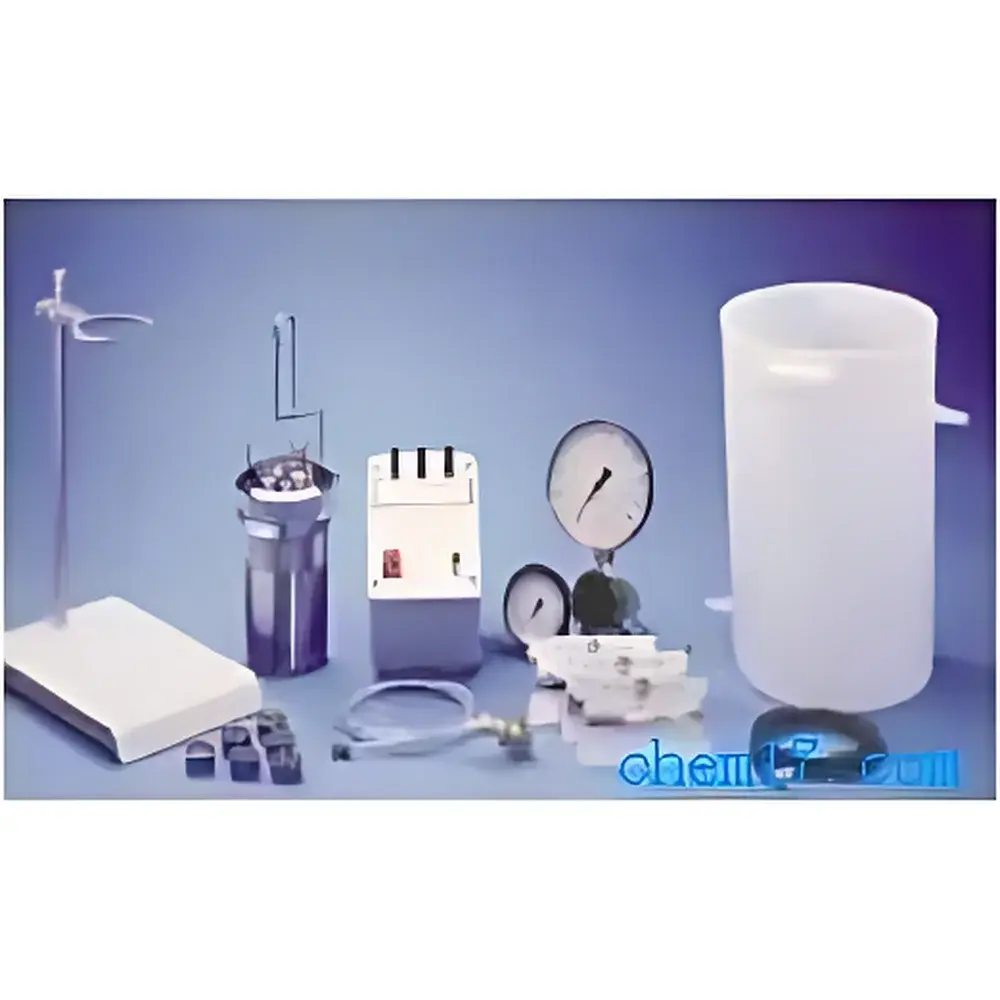
PARR Model Sample Combustion Bomb System
| Brand | PARR |
|---|---|
| Origin | Imported |
| Manufacturer Status | Authorized Distributor |
| Model | Sample Combustion Bomb System |
| Pricing | Upon Request |
Overview
The PARR Model Sample Combustion Bomb System is a high-pressure, sealed oxygen combustion vessel engineered for quantitative elemental analysis of organic and inorganic matrices via complete oxidative decomposition. Operating on the principle of controlled isothermal bomb calorimetry and high-temperature oxygen combustion (typically at 30–35 bar O₂ pressure and up to 1800 °C peak temperature), this system ensures total mineralization of refractory samples—including polymers, biological tissues, electronic waste, and environmental specimens—into soluble oxides and halides suitable for downstream quantification by ICP-OES, ICP-MS, AAS, or ion chromatography. Designed to meet the rigorous demands of trace elemental analysis in regulated environments, the system complies with ASTM D3278, ISO 14852, and USP guidelines for heavy metal determination, and supports method validation under GLP and GMP frameworks.
Key Features
- Stainless steel 316L combustion bomb body with precision-machined sealing interface and integrated pressure relief valve rated to 40 bar burst pressure
- Electrically ignited platinum or nickel-chromium ignition wire assembly with programmable current ramping to ensure consistent ignition across heterogeneous samples
- Integrated digital pressure monitoring and real-time O₂ fill control with auto-shutoff at preset pressure (25–35 bar)
- Compatible with standard 1.0 g and 2.0 g sample crucibles; optional quartz, silver, or nickel crucibles available for halogen-sensitive or high-sulfur applications
- Robust safety interlock system including lid position sensor, overpressure cutoff, and post-combustion cooling delay before chamber opening
- Modular design allows integration with automated sample handling accessories and fume hood-compatible exhaust manifolds
Sample Compatibility & Compliance
The system accommodates solid, semi-solid, and low-volatility liquid samples weighing 10–500 mg, including polymeric materials (PCB substrates, PVC, ABS), plant biomass (leaves, roots, lichens), soil/sediment composites, and spent catalysts. It enables full recovery of volatile elements (e.g., Cl, Br, I, Hg, As) and refractory metals (Pb, Cd, Cr, Ni, Co) without loss or speciation change—critical for nuclear environmental monitoring (e.g., Cs-137, Sr-90 bioaccumulation studies) and RoHS/WEEE compliance testing. All components conform to ASTM E1510 for bomb calorimeter construction and are compatible with EPA Method 3050B and ISO/IEC 17025-accredited laboratory workflows.
Software & Data Management
While the base system operates via manual ignition and analog pressure readout, optional digital control modules provide RS-485 or USB connectivity for logging ignition time, peak pressure, and cooldown duration. Data export supports CSV format for integration into LIMS platforms. Audit trail functionality—including operator ID, timestamp, sample ID, and parameter settings—is configurable to satisfy FDA 21 CFR Part 11 requirements when paired with validated software extensions. Calibration records, maintenance logs, and pressure transducer verification reports are maintained per ISO/IEC 17025 documentation standards.
Applications
- Quantitative halogen analysis (Cl, Br, F) in printed circuit boards and flame-retardant plastics per IEC 61249-2-21
- Radioisotope digestion for gamma spectrometry of environmental plant samples contaminated with U-238, Th-232, or Cs-134/137
- Heavy metal leachability assessment in e-waste following EN 12457-4 protocols
- Preparation of certified reference materials (CRMs) for multi-element calibration standards
- Digestion of high-carbon-content samples (e.g., activated carbon, coal ash) prior to ICP-MS analysis
- Supporting ISO 11885 wastewater sludge characterization where microwave digestion fails due to silicate matrix interference
FAQ
What sample types require pre-treatment before combustion?
Samples with high water content (>15%) or volatile solvents must be air-dried or freeze-dried to prevent explosive vapor expansion during pressurization.
Can the bomb be used for sulfur analysis in coal samples?
Yes—when paired with BaSO₄ precipitation or ion chromatographic detection, the system achieves >98% sulfur recovery from ASTM D3177-compliant coal matrices.
Is third-party certification available for regulatory submissions?
PARR provides factory calibration certificates traceable to NIST standards; full IQ/OQ/PQ documentation packages are available upon request for GxP validation.
What is the typical turnaround time per sample?
From loading to cooled bomb opening: 25–35 minutes, depending on sample mass and organic load; throughput increases to 12–16 samples per 8-hour shift with dual-bomb configurations.
Are replacement parts covered under warranty?
Standard consumables (ignition wires, O-rings, crucibles) are excluded; the bomb body and pressure transducer carry a 3-year limited warranty against material and workmanship defects.



