
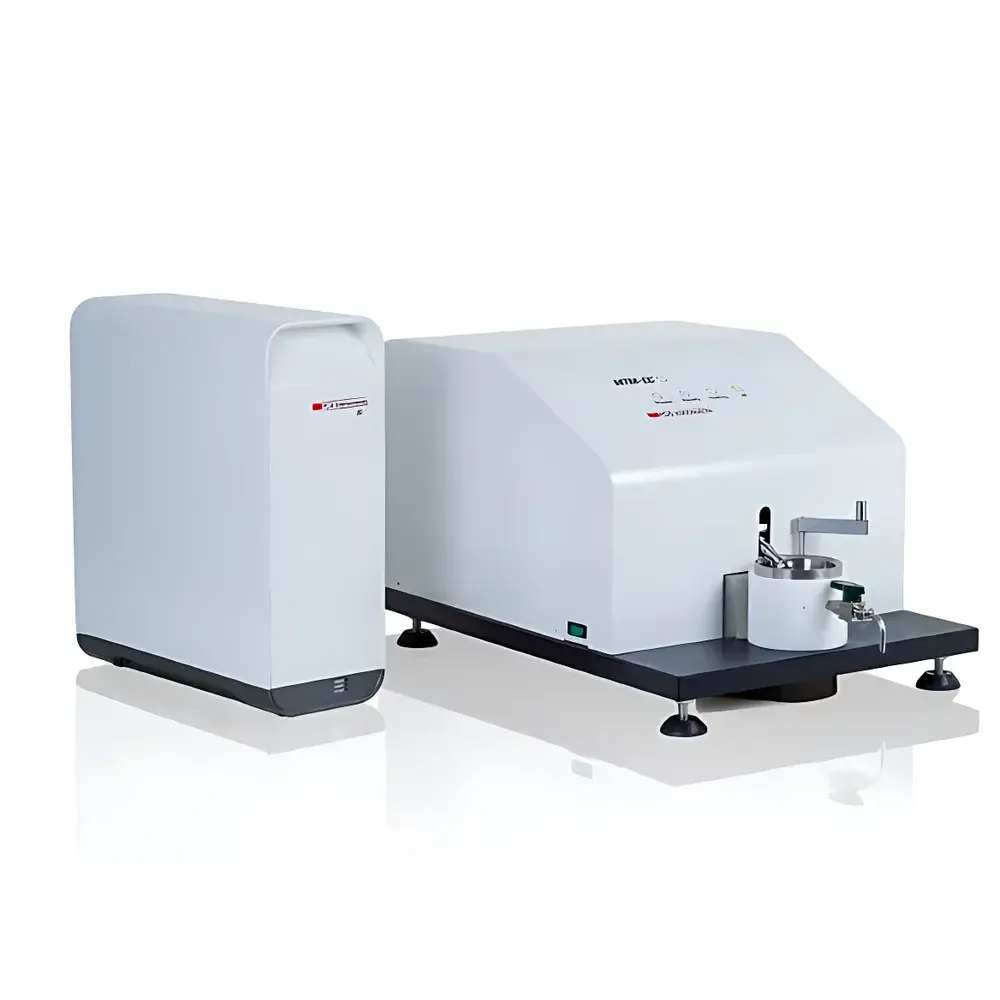
PCS MTM-EC Electrochemical Micro-Tribometer
| Brand | PCS Instruments |
|---|---|
| Origin | United Kingdom |
| Model | MTM-EC |
| Instrument Type | Multi-Functional Tribological Tester |
| Maximum Friction Force | 75 N |
| Temperature Range | Ambient to 150 °C |
| Contact Pressure Range | 0–1.25 GPa (standard), up to 3.1 GPa (optional) |
| Sliding Speed | −4 to +4 m/s |
| Electrochemical Potential Range | ±60 V (high range), ±10 V (low range) |
| Current Range | 0–3.5 A (high), 0–200 mA (low) |
| Measurement Noise | ±120 mV / ±20 mA (high), ±20 mV / ±0.4 mA (low) |
| Sample Volume | 30 mL (10 mL with optional filler kit) |
| Dimensions (H×W×D) | 400 × 400 × 600 mm |
| Weight | 30 kg |
Overview
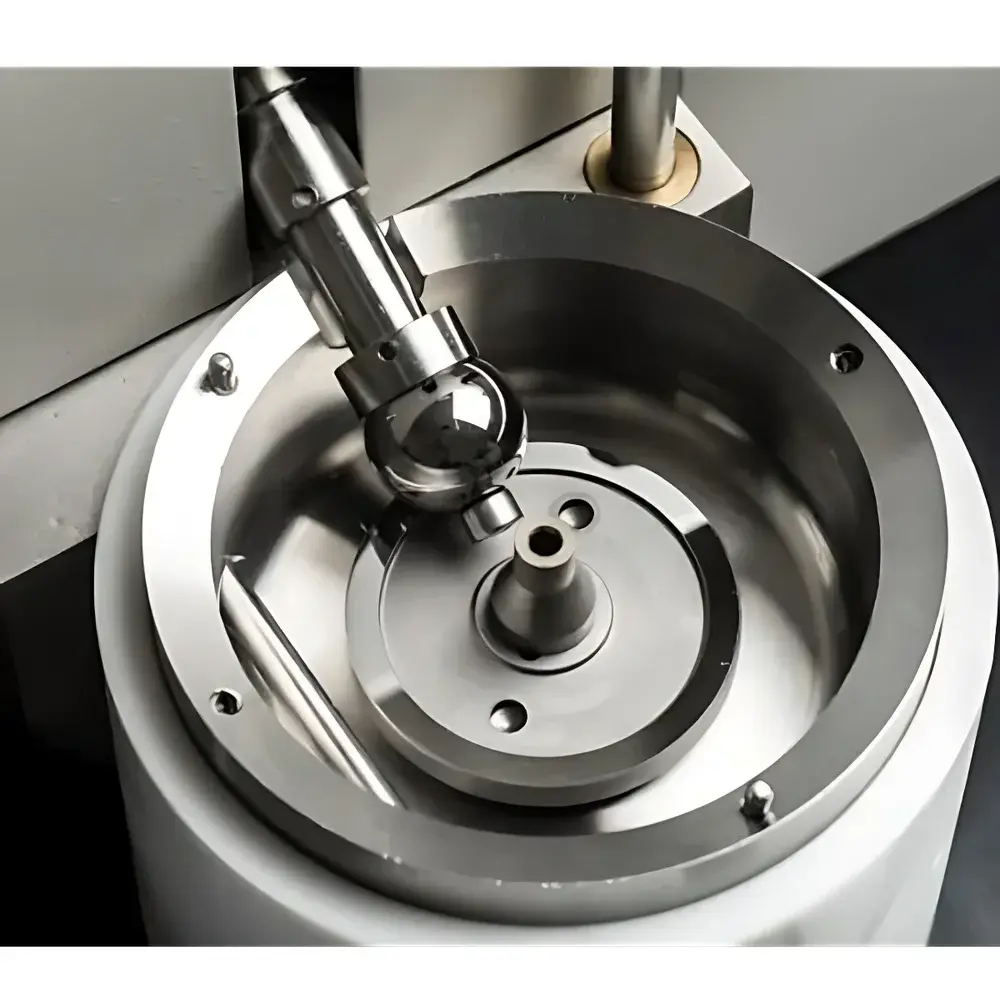
The PCS MTM-EC Electrochemical Micro-Tribometer is an advanced, benchtop tribological testing system engineered for precision investigation of friction, wear, and interfacial electrochemical behavior under controlled mechanical and electrochemical conditions. Unlike conventional tribometers, the MTM-EC integrates real-time electrochemical stimulation and measurement directly into the tribological contact zone—enabling quantitative study of tribo-corrosion, lubricant film breakdown, passivation layer formation, and electrochemically activated wear mechanisms. Its core architecture employs a dual-actuator design: one motor independently drives the upper ball specimen while another controls the lower disc, allowing precise control of relative sliding velocity, direction reversal (±4 m/s), and synchronized load application (0–75 N). The system operates on the principle of reciprocating or unidirectional sliding within a defined Hertzian contact, with simultaneous acquisition of friction force, normal load, temperature, and electrochemical parameters—including applied potential, current response, and open-circuit potential (OCP) transients.
Key Features
- Integrated electrochemical module enabling potentiostatic, galvanostatic, and open-circuit testing during active tribological motion.
- Electrically isolated ball-and-disc specimens—both can be configured as working electrode, counter electrode, or reference electrode in standard three-electrode setups.
- Dual independent drive system ensures high-fidelity control over sliding kinematics, including bidirectional motion, dwell periods, and programmable velocity profiles.
- Temperature-controlled test chamber supporting operation from ambient up to 150 °C; optional oil-bath cooling extends low-temperature capability below ambient.
- High-resolution force sensing with calibrated friction and normal load channels, optimized for micro-scale contact pressures (up to 3.1 GPa with optional high-pressure fixtures).
- Modular signal acquisition: supports external oscilloscopes and custom potentiostats via analog I/O and digital trigger synchronization through MTM software.
Sample Compatibility & Compliance
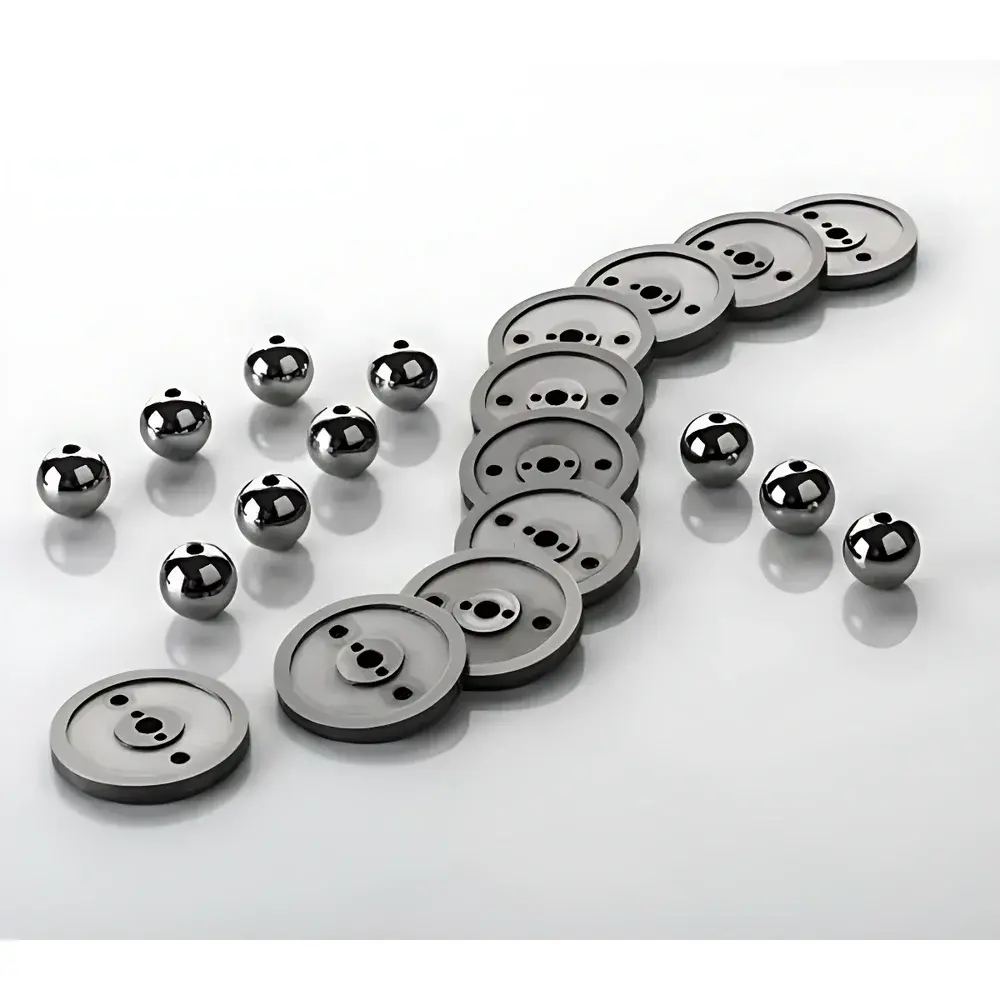
The MTM-EC accommodates standard ball-on-disc geometry using 6–12 mm diameter balls and 24–50 mm diameter discs, with compatibility for metallic, ceramic, polymer, and coated substrates. Specimen holders are electrically insulated and chemically resistant to common electrolytes (aqueous, organic, ionic liquids). The system meets essential requirements for GLP-compliant tribocorrosion studies, including audit-trail-capable data logging, user-access-level management, and timestamped metadata embedding. While not certified to a single harmonized standard, its operational methodology aligns with ASTM G119 (Standard Guide for Determining Synergism Between Wear and Corrosion), ISO 20806 (Lubricants — Determination of Frictional Properties), and EN 10002-1 (Metallic Materials — Tensile Testing). All electrochemical measurements comply with potentiostat performance benchmarks per ASTM E2108 and IUPAC recommendations for electrode kinetics quantification.
Software & Data Management
The proprietary MTM Control Software provides full instrument orchestration—including closed-loop load control, velocity ramping, electrochemical protocol sequencing (e.g., cyclic voltammetry synchronized with sliding cycles), and real-time visualization of friction coefficient, current density, polarization resistance, and OCP drift. Experimental sequences are scriptable via Python API integration, supporting automated multi-step tests across variable temperature, potential, and speed regimes. Raw data is saved in HDF5 format with embedded calibration coefficients, environmental metadata, and user-defined annotations. Export options include CSV, MATLAB (.mat), and ASCII for post-processing in third-party analysis tools. Audit trails record operator ID, parameter changes, calibration events, and software version history—fully compliant with FDA 21 CFR Part 11 requirements when deployed with validated IT infrastructure and electronic signature modules.
Applications
- Tribo-corrosion evaluation of biomedical alloys (e.g., CoCrMo, Ti-6Al-4V) in simulated physiological electrolytes.
- Mechano-electrochemical degradation studies of battery electrode coatings under shear stress.
- Electrochemical influence on boundary lubrication film stability in engine oils and greases.
- In-situ characterization of self-healing corrosion inhibitors activated by mechanical disruption.
- Fundamental research on electron transfer kinetics at sliding solid/liquid interfaces.
- Development and validation of smart lubricants responsive to applied potential or pH shifts.
FAQ
Can the MTM-EC perform true potentiodynamic scans during sliding?
Yes—the system supports synchronized linear sweep voltammetry (LSV) and cyclic voltammetry (CV) while maintaining constant or programmed sliding velocity and load.
Is the electrochemical cell configuration limited to three-electrode setups?
No—two-electrode configurations are fully supported, and custom electrode geometries (e.g., microband, rotating ring-disc) can be integrated with appropriate mounting adapters.
Does the system support in-situ optical observation of the contact zone?
The MTM-EC features a top-access optical port compatible with upright microscopes (up to 40× magnification); optional video tribometry kits enable real-time contact area imaging and wear track profiling.
What maintenance is required for long-term electrochemical stability?
Annual recalibration of force and electrochemical channels is recommended; reference electrode integrity should be verified before each test series using standard redox couples (e.g., Fe(CN)₆³⁻/⁴⁻).
Can test data be exported directly to LIMS or ELN platforms?
Yes—via RESTful API or file-based triggers, raw and processed datasets can be pushed to enterprise laboratory informatics systems supporting HL7, ASTM E1467, or vendor-specific ingestion protocols.



