
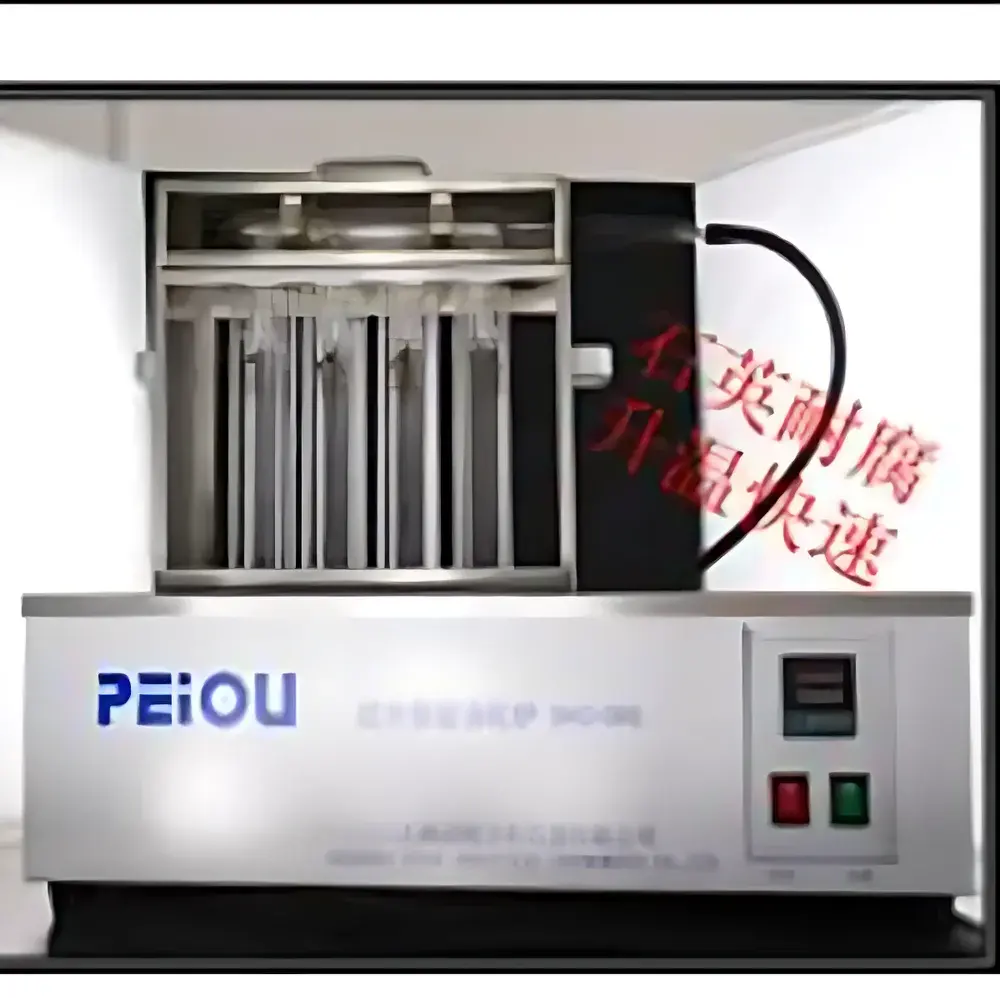
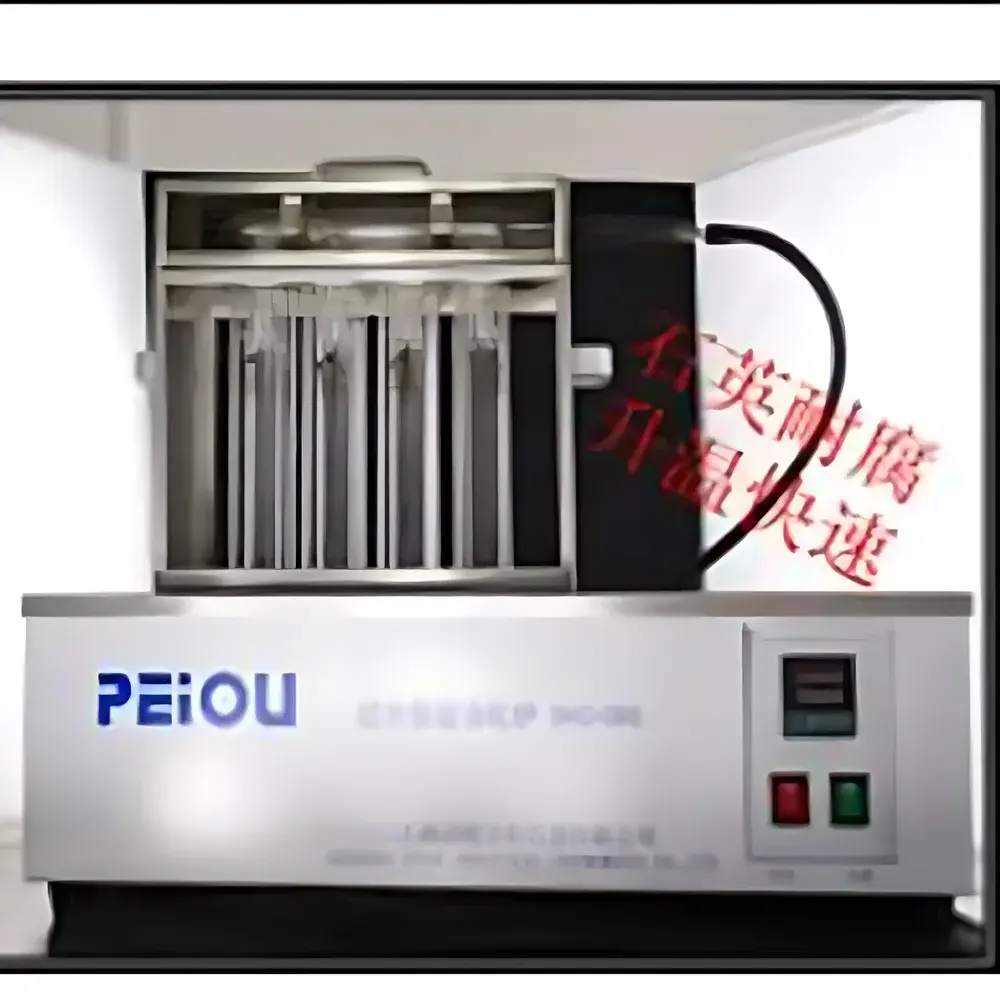
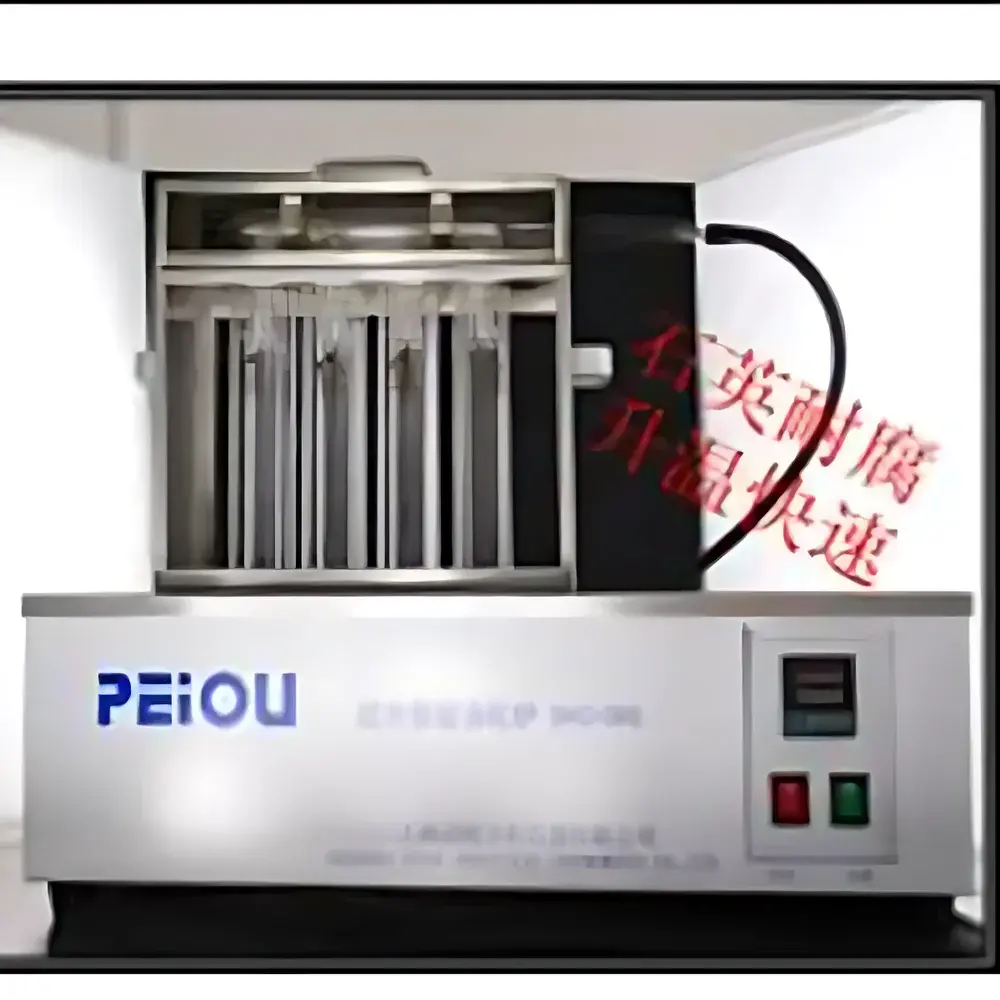
Peiou SKD-08S Infrared Smart 8-Position Automatic Digestion Furnace
| Brand | Peiou |
|---|---|
| Origin | Shanghai, China |
| Manufacturer Type | Authorized Distributor |
| Product Category | Domestic |
| Model | SKD-08S |
| Pricing | Upon Request |
Overview
The Peiou SKD-08S Infrared Smart 8-Position Automatic Digestion Furnace is engineered for high-efficiency, reproducible wet digestion of organic and inorganic samples prior to elemental analysis (e.g., Kjeldahl nitrogen, heavy metals, total phosphorus). Unlike conventional conductive heating systems—such as aluminum block or graphite block digesters—the SKD-08S employs far-infrared radiation generated by proprietary opalescent milky quartz tubes. This radiation-based heating mechanism eliminates physical contact between the heat source and digestion vessels, delivering rapid, uniform thermal energy transfer directly to sample matrices. The furnace operates on the principle of selective molecular vibrational excitation: electrical resistance heating elements emit broadband IR and visible radiation; >97% of this energy is absorbed by the opalescent quartz tube wall, inducing Si–O bond oscillation and re-emitting energy predominantly in the 3–10 µm far-infrared band. This spectral shift maximizes absorption by water, organic molecules, and common acid matrices (e.g., H₂SO₄, HNO₃), resulting in faster ramp rates, reduced thermal lag, and minimal temperature gradients across the 8-position array.
Key Features
- Far-infrared quartz radiation heating system with opalescent milky quartz tubes—no coatings, no outgassing, chemically inert under concentrated sulfuric acid (≥98%) and nitric acid exposure
- 8 independent digestion positions with uniform irradiance distribution; inter-hole temperature deviation ≤ ±1.5°C at 400°C (measured per ASTM D5142)
- Dual-control safety architecture: isolated power switch and independent heating switch enable precise operational staging and energy conservation
- PID-integrated digital temperature controller with 60-step programmable ramp/soak profiles; temperature range: ambient to 680°C; stability: ±1% of setpoint
- Integrated stainless-steel fume hood with dedicated SO₂/NOₓ exhaust port, compatible with external aspiration pumps and alkaline scrubber systems per OSHA 1910.1200 and ISO 15202-2
- Over-current and earth-leakage protection circuits compliant with IEC 61000-4-5 and EN 61000-6-3
- Thermal inertia < 45 s (time to reach 90% of target from cold start at 400°C), enabling rapid thermal cycling without residual heat carryover
Sample Compatibility & Compliance
The SKD-08S supports standard borosilicate glass or quartz digestion tubes (16×150 mm to 25×200 mm) used in AOAC 984.27, EPA Method 3050B, ISO 11047, and GB/T 5009.5. Its non-contact heating design ensures compatibility with acid-sensitive matrices—including dairy products, botanical tissues, feedstuffs, soil extracts, and pharmaceutical excipients—without risk of metal leaching or carbonization-induced wall adhesion (“wall hanging”). The furnace meets CE marking requirements (2014/30/EU EMC Directive and 2014/35/EU LVD Directive) and conforms to GLP documentation standards when paired with validated SOPs. All structural components resist corrosion from H₂SO₄/H₂O₂/HNO₃ mixtures up to 350°C, verified per ISO 9223 corrosion classification C5-M.
Software & Data Management
While the SKD-08S operates via embedded firmware (no PC connectivity required), its 60-segment programmable controller logs timestamped temperature profiles internally (non-volatile memory, ≥10,000 cycles). Optional RS-485 Modbus RTU interface enables integration into laboratory information management systems (LIMS) for audit-trail generation. Temperature setpoints, ramp rates, hold durations, and real-time deviations are exportable as CSV for FDA 21 CFR Part 11–compliant review—provided external data acquisition hardware implements electronic signature and change control protocols. Firmware updates follow ISO/IEC 17025:2017 Clause 5.9.2 validation procedures.
Applications
This instrument is routinely deployed in accredited environmental labs for EPA 3050B soil digestion; in food testing facilities for AOAC 984.27 protein determination; in agricultural research for NPK analysis in plant tissue; and in QC laboratories supporting ISO/IEC 17025-accredited heavy metal testing (Cd, Pb, As, Hg) per ISO 17294-2. Its low thermal mass and radiative coupling minimize localized overheating in viscous or heterogeneous samples—critical for avoiding charring in milk powder, soybean meal, or compost extracts. Method transfer studies confirm 12–18% shorter digestion cycles versus equivalent aluminum-block systems at 420°C, with improved RSD (<2.3%) for triplicate Kjeldahl nitrogen recovery (n = 45).
FAQ
What distinguishes far-infrared quartz heating from aluminum or graphite block digestion?
Far-infrared radiation delivers energy directly to molecular bonds without intermediate conduction losses. Aluminum and graphite rely on thermal conduction—introducing lag, gradient errors, and higher wattage demand (typically 3.5 kW vs. SKD-08S’s 1.6 kW). Quartz radiation achieves >97% electrothermal conversion efficiency; aluminum blocks waste ~40% of input energy as unabsorbed near-IR/visible photons.
Is the SKD-08S suitable for EPA-compliant wastewater digestion?
Yes—when operated with certified digestion tubes and HNO₃/HF/HClO₄ blends per EPA Method 3052, and coupled to a fume extraction system meeting ANSI Z9.5 ventilation standards.
Can the furnace be validated for GMP environments?
Yes—its deterministic PID control, programmable profiles, and internal logging support IQ/OQ/PQ protocols. Full validation packages—including DQ templates and calibration certificates traceable to NIST SRM 1484—are available upon request.
What maintenance is required for long-term quartz tube performance?
No scheduled maintenance beyond periodic visual inspection for tube clouding or electrode oxidation. Quartz tubes exhibit no measurable emissivity decay after 5,000 h of operation at 550°C, per accelerated aging tests per IEC 60068-2-40.
Does the unit support custom ramp profiles for novel sample types?
Yes—up to 60 discrete steps (ramp rate: 0.1–20°C/min; soak time: 1–999 min per step) can be configured via front-panel keypad or optional PC software.
Related Products



