
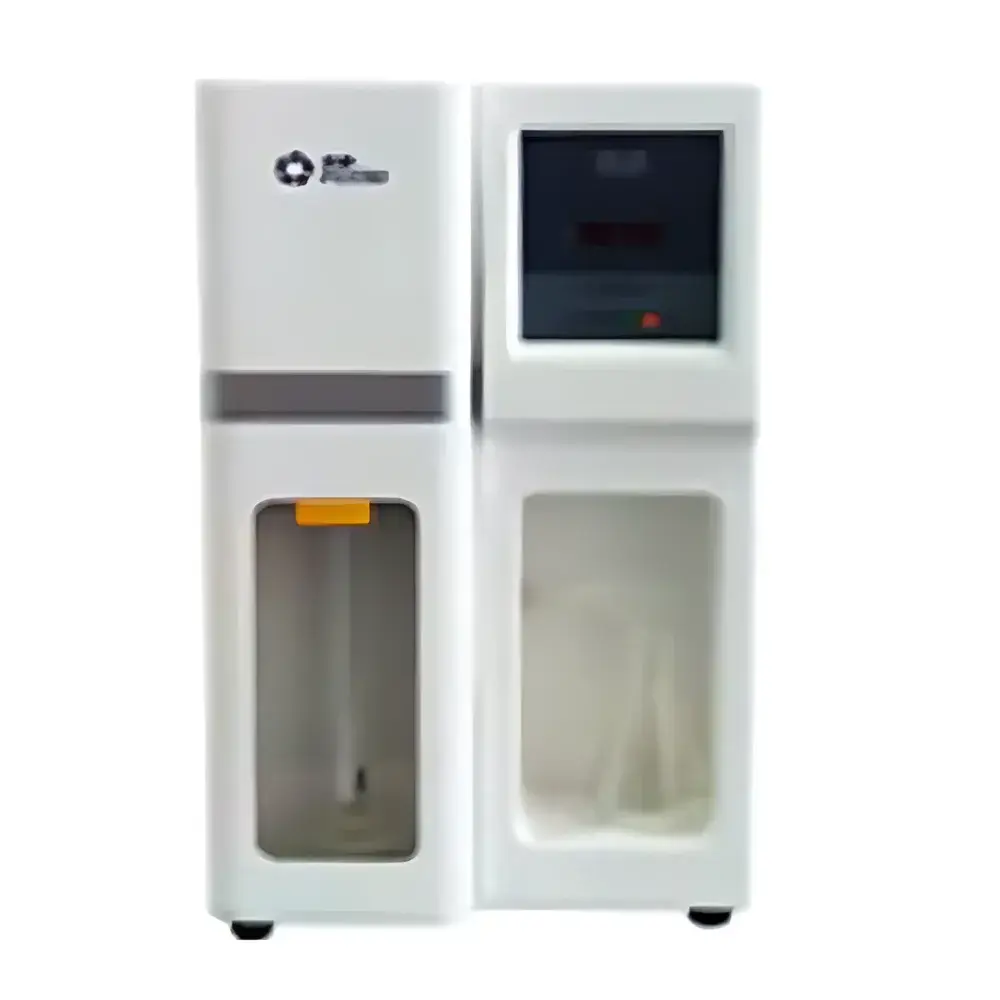
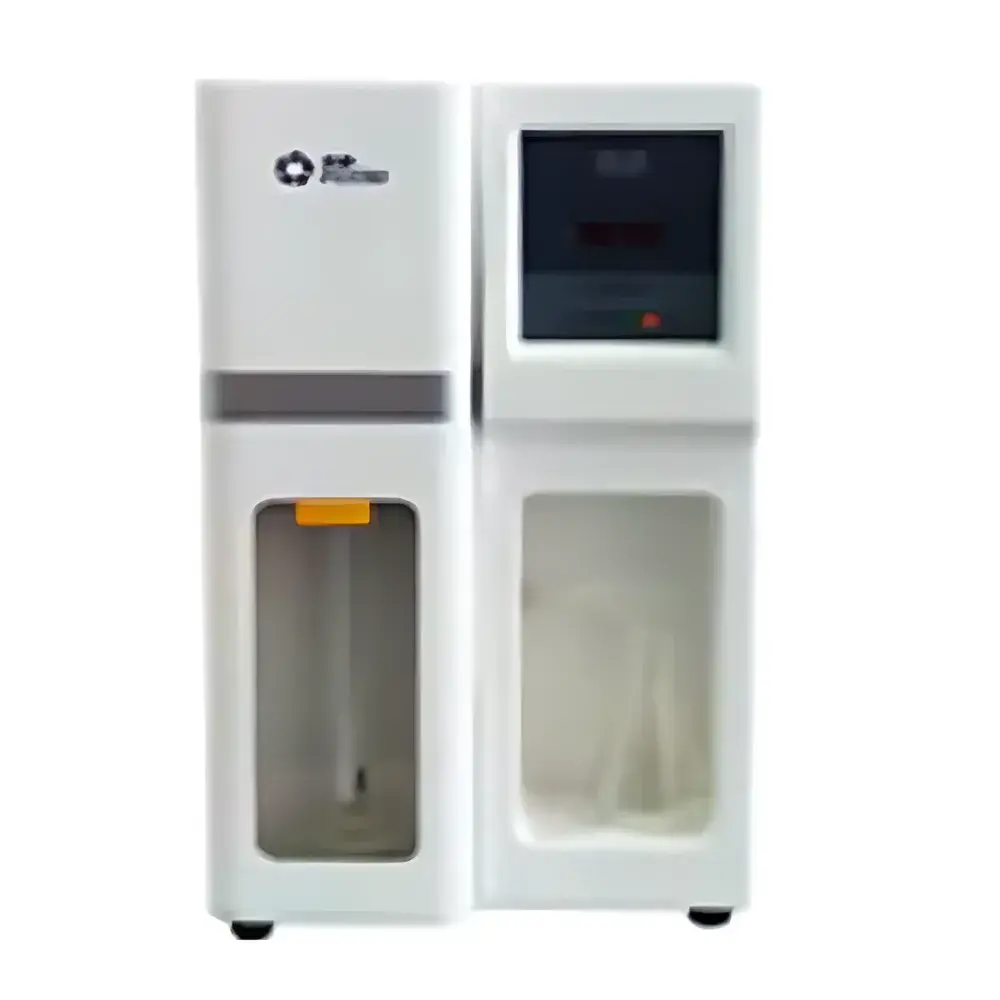
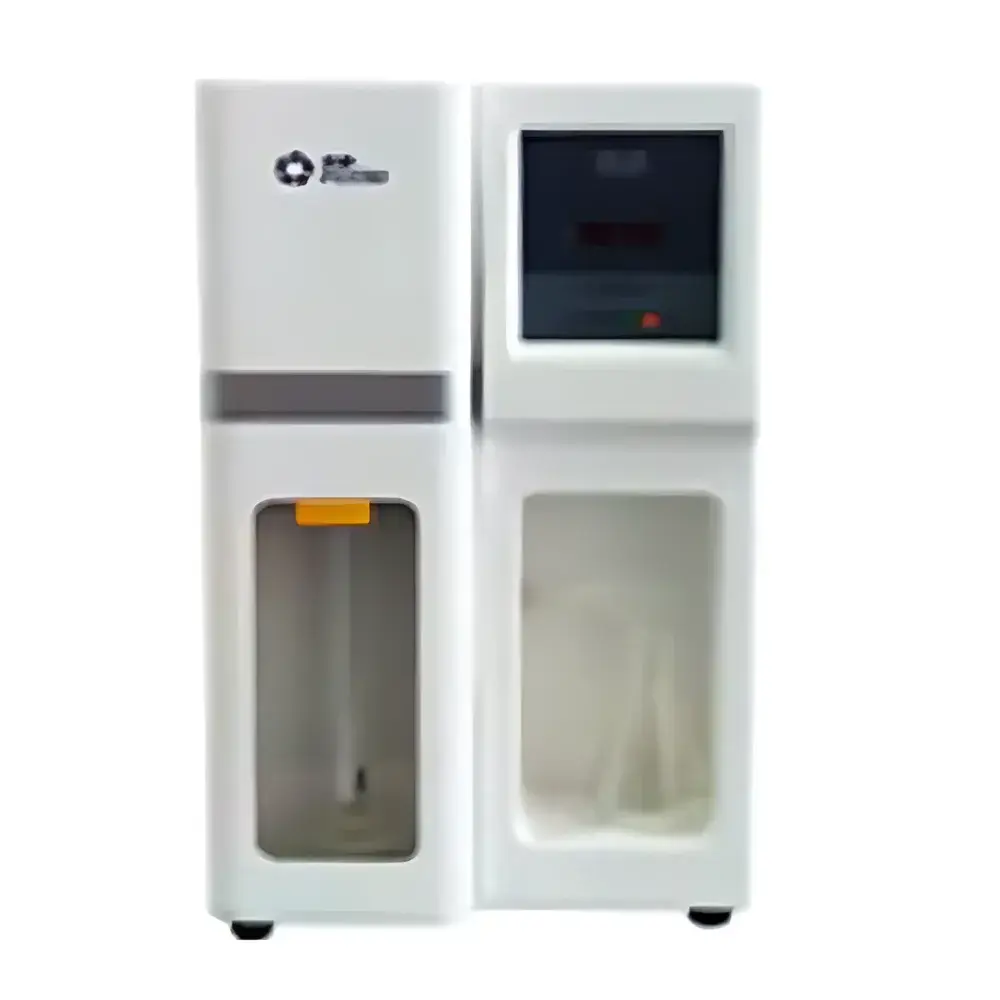
Peiou SKD-300 Soil Cation Exchange Capacity (CEC) Analyzer
| Brand | Peiou |
|---|---|
| Origin | Shanghai, China |
| Model | SKD-300 |
| Measurement Range | 0.07–140 mmol/L |
| Recovery Rate | >99.5% |
| Repeatability (RSD) | ≤0.5% |
| Distillation Time Range | 0–99 min |
| Sample Throughput | 3–8 min/sample |
| Boric Acid Delivery | Constant-pressure dosing system |
| Program Storage | 10 customizable acid addition & distillation protocols |
| Display | LED digital interface |
| Dimensions | 370 × 300 × 680 mm |
| Construction | ABS engineering plastic housing with high-temperature/acid-alkali resistant tubing and seals |
| Safety Features | Dry-run prevention (Peiou proprietary digestion cup), auto low-water cutoff, emergency stop button |
| Compliance | Designed to support ASTM D4373, ISO 11260, and GB/T 22105.3–2008 workflows |
Overview
The Peiou SKD-300 Soil Cation Exchange Capacity (CEC) Analyzer is a fully automated, benchtop distillation-based instrument engineered for precise quantification of cation exchange capacity in diverse soil matrices. It operates on the principle of ammonium acetate (pH 7.0) extraction followed by steam distillation of displaced ammonium ions into boric acid solution, where titration or colorimetric detection yields total exchangeable cations (expressed as mmolc/kg or mmol/L in extract). Unlike manual or semi-automated methods, the SKD-300 integrates controlled acid addition, temperature-stabilized distillation, and constant-pressure boric acid delivery—minimizing operator variability and ensuring metrological traceability across sequential analyses. Its architecture supports routine use in environmental testing laboratories, agricultural research stations, and regulatory soil characterization facilities requiring compliance with standardized methods including ASTM D4373 (Standard Test Method for Cation Exchange Capacity of Soils), ISO 11260 (Soil quality — Determination of cation exchange capacity), and Chinese national standard GB/T 22105.3–2008.
Key Features
- Constant-pressure boric acid delivery system ensures reproducible reagent volume per analysis, directly contributing to RSD ≤0.5% across repeated measurements.
- Microcontroller-driven automation manages acid dosing, distillation timing (0–99 min programmable), and post-distillation cleaning cycles—eliminating manual intervention during critical reaction phases.
- Corrosion-resistant fluidic path constructed from high-purity fluoropolymer tubing and imported sealing components rated for continuous exposure to 6 mol/L HCl and saturated ammonium acetate solutions.
- Integrated dry-burn protection via Peiou’s proprietary digestion cup design prevents thermal damage during low-sample or no-sample operation—a critical safeguard for long-term operational integrity.
- ABS engineering plastic enclosure provides electrical insulation, structural rigidity, and resistance to fume chamber environments without compromising ergonomic service access.
- Emergency stop button and real-time low-water level detection provide dual-layer hardware interlocks compliant with IEC 61010-1 safety requirements for laboratory equipment.
Sample Compatibility & Compliance
The SKD-300 accommodates air-dried, sieved (<2 mm) soil samples across textural classes—from sandy loams to heavy clays—and supports both routine screening and method-validation workflows. Sample mass is user-selectable based on expected CEC concentration (e.g., 1–5 g for low-CEC soils; 0.5–2 g for high-CEC vertisols), enabling optimized ammonium displacement kinetics. The system is validated for use with standard 650 mL Kjeldahl-type distillation tubes and compatible with downstream detection modalities including automatic potentiometric titration (e.g., Metrohm 916 Ti-Touch) or spectrophotometric quantification (e.g., Hach DR3900 at 655 nm). All operational parameters align with GLP documentation requirements: timestamped run logs, programmable method IDs, and non-volatile memory storage for 10 distinct analytical protocols satisfy audit readiness for ISO/IEC 17025-accredited labs.
Software & Data Management
While the SKD-300 operates via embedded microcontroller firmware (no external PC dependency), it supports full data traceability through LED-displayed real-time status codes (e.g., “ACID”, “DIST”, “WASH”, “END”) and audible end-of-cycle alerts. Each analysis records distillation duration, acid volume delivered, and cycle completion flag—accessible via front-panel recall. For integration into LIMS environments, optional RS-232 output enables ASCII-formatted transmission of result metadata (method ID, sample ID placeholder, time stamp, CEC value) to laboratory information management systems. Firmware adheres to FDA 21 CFR Part 11 principles in design intent: all stored programs are write-protected unless accessed via administrator-level physical key switch, and no user-modifiable audit trail exists within the device—consistent with GMP-aligned validation practices for environmental test equipment.
Applications
- Quantitative assessment of soil fertility potential in agronomic soil health monitoring programs.
- Regulatory compliance testing for land reclamation projects under EPA Region 10 or EU Soil Thematic Strategy frameworks.
- Research-grade CEC profiling in pedological studies involving clay mineralogy shifts (e.g., smectite-to-kaolinite transformation).
- Quality control of soil amendments, biochars, and industrial byproduct-based conditioners prior to field application.
- Method comparison studies between ammonium acetate (pH 7.0) and barium chloride–triethanolamine (pH 8.2) extraction protocols.
FAQ
What extraction buffer is required for CEC analysis on the SKD-300?
The instrument is optimized for ammonium acetate buffer at pH 7.0, per ASTM D4373 and ISO 11260. Alternative buffers (e.g., BaCl2-TEA) may be used but require independent validation of distillation efficiency.
Can the SKD-300 interface with an automatic titrator?
Yes—its distillate collection is compatible with standard 250 mL Erlenmeyer flasks or titration cups. No proprietary coupling is needed; endpoint detection remains external to the analyzer.
Is calibration verification required before each batch?
While not mandated, daily verification using certified reference material (CRM) soil with known CEC (e.g., NIST SRM 2710a) is recommended to confirm recovery stability (>99.5%) and repeatability (RSD ≤0.5%).
What maintenance intervals are specified for fluidic components?
The acid-resistant tubing and seals are rated for ≥3 years of continuous operation under standard soil testing loads; replacement is only necessary upon visible degradation or leakage—no scheduled interval is prescribed.
Does the SKD-300 meet GLP documentation standards?
It supports GLP-compliant operation through immutable method storage, time-stamped cycle logging, and hardware-enforced protocol integrity—though full electronic audit trails require external LIMS integration.







