
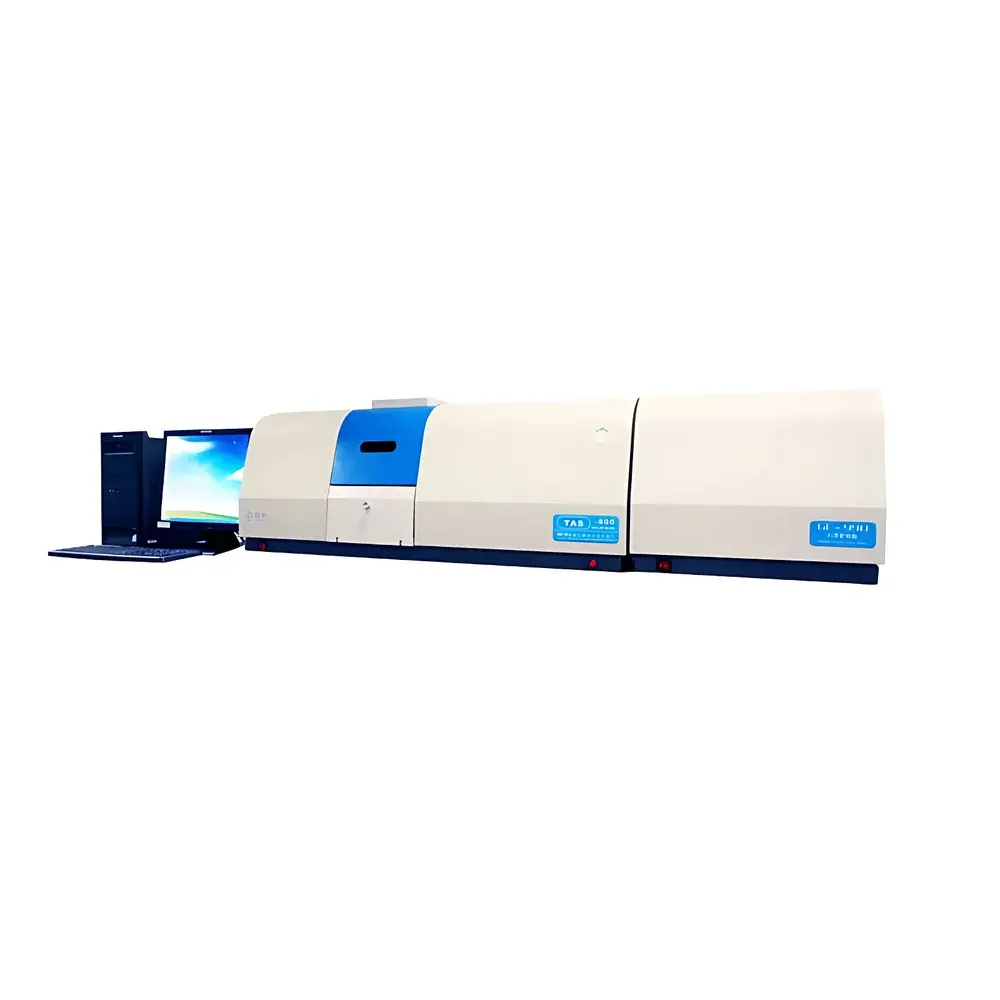
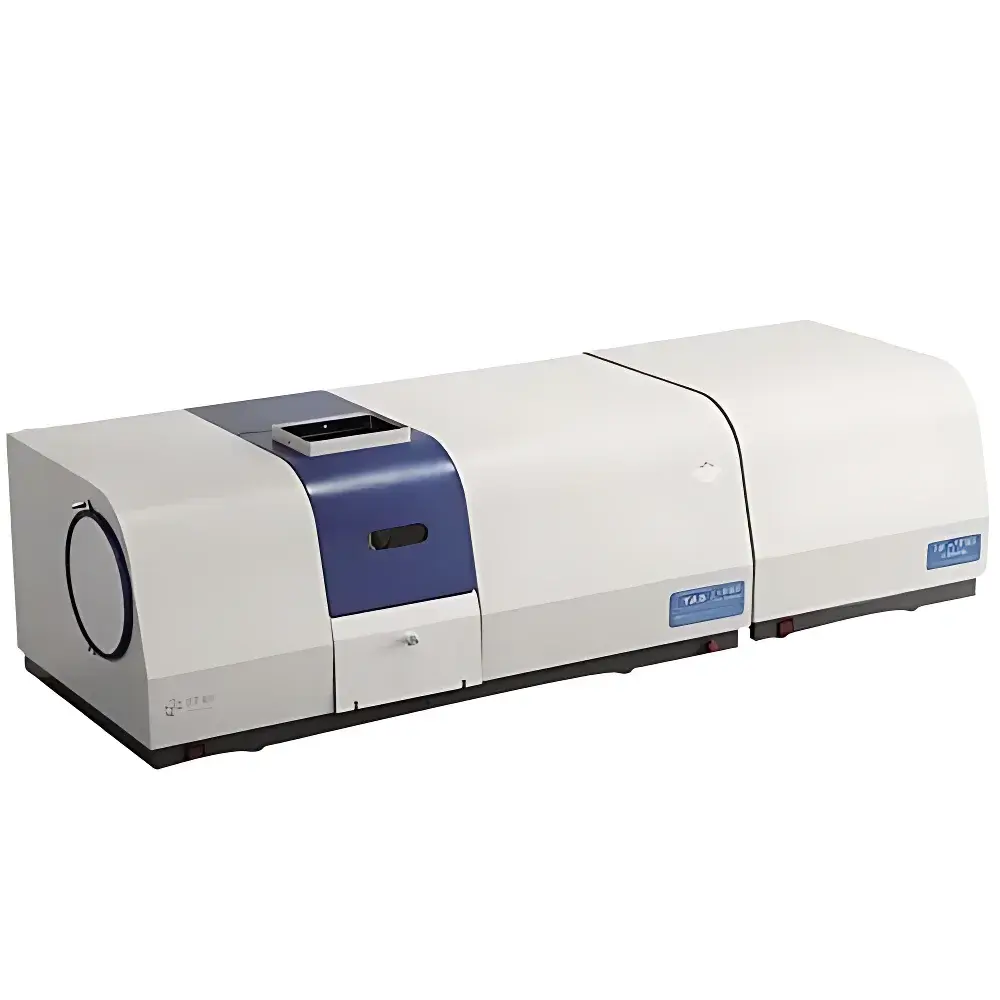
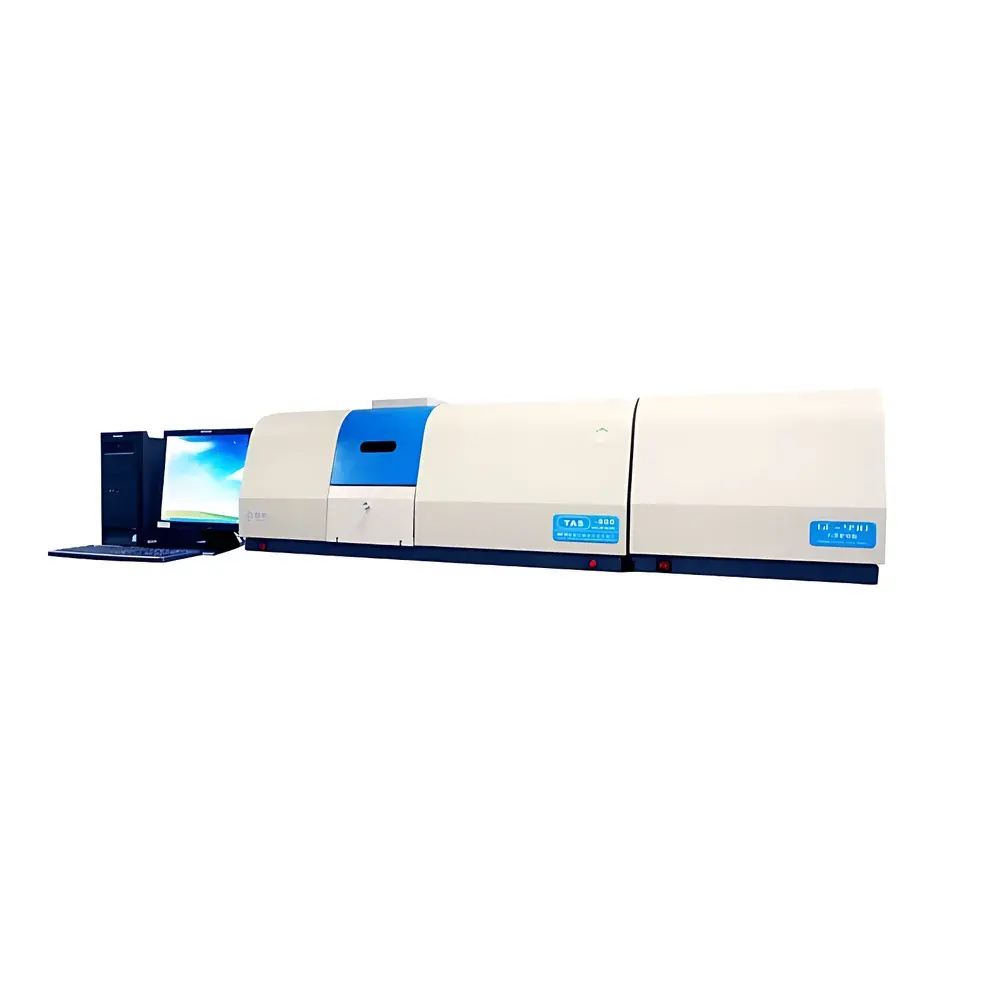
Persee TAS-990 Flame and Graphite Furnace Atomic Absorption Spectrophotometer
| Brand | Persee |
|---|---|
| Origin | Beijing, China |
| Manufacturer | Persee General Instrument Co., Ltd. |
| Model | TAS-990 |
| Instrument Type | Dual-mode (Flame + Electrothermal Graphite Furnace) |
| Monochromator | Concave Grating |
| Optical System | Double-beam |
| Detector | Photomultiplier Tube (PMT) |
| Background Correction | D₂ Lamp + Self-reversal Method |
| Wavelength Accuracy | ±0.25 nm |
| Baseline Stability (Static) | ±0.004 A / 30 min |
| RSD (Repeatability) | ≤1.0% (Flame, Cu), ≤3.0% (GFAAS, Cu) |
| Characteristic Concentration (Cu) | <0.04 µg/mL per 1% absorption |
| Detection Limit (Flame, Cu) | <0.006 µg/mL |
| Detection Limit (GFAAS, Cd) | <1.0 pg |
Overview
The Persee TAS-990 is a dual-mode atomic absorption spectrophotometer engineered for high-precision elemental quantification in environmental, pharmaceutical, clinical, food safety, and metallurgical laboratories. It operates on the fundamental principle of atomic absorption spectroscopy (AAS), where ground-state free atoms in a flame or graphite furnace absorb light at element-specific wavelengths emitted by hollow cathode lamps. The instrument integrates flame atomic absorption (FAAS) and electrothermal graphite furnace atomic absorption (GFAAS) in a single platform, enabling trace-level detection (sub-pg for Cd) and routine ppm-level analysis with robust reproducibility. Its double-beam optical architecture compensates for source intensity drift and lamp aging, while the concave grating monochromator delivers high spectral resolution and throughput without auxiliary mirrors or slit mechanisms—minimizing alignment sensitivity and maintenance overhead.
Key Features
- Integrated flame–graphite furnace system with automated switching and independent gas control logic for optimized atomization conditions per technique.
- Transversely heated graphite tube (THGA) design minimizes temperature gradients and memory effects, ensuring consistent analyte volatilization and reduced inter-sample carryover—critical for high-accuracy GFAAS analysis.
- Dual background correction: Deuterium (D₂) lamp for broadband correction in flame mode; self-reversal (SR) method for high-fidelity correction in graphite furnace mode—enabling accurate measurement even under complex matrix interference.
- Comprehensive safety architecture including flame failure detection, acetylene pressure monitoring, graphite furnace overtemperature cutoff, and automatic gas shutoff—fully compliant with ISO 22000 and laboratory safety best practices.
- Modular accessory compatibility: Supports hydride generation (HG-AAS), flow injection (FI-AAS), and autosampler integration (e.g., Persee AS-990) for unattended multi-element batch analysis.
Sample Compatibility & Compliance
The TAS-990 accommodates liquid samples across wide concentration ranges—from sub-ng/mL (via GFAAS) to mg/mL (via dilution and flame mode). It supports aqueous matrices, digested biological tissues, acid-leached soils, and filtered wastewater without modification. All operational parameters—including lamp current, slit width, burner height, and furnace temperature ramp profiles—are programmable and stored as method templates. The system meets key international performance standards: ASTM E1718–22 (Standard Guide for AAS Instrument Qualification), ISO 11170 (Water Quality – Determination of Metals by AAS), and USP (Elemental Impurities – Procedures). Full audit trail capability, user access levels, and electronic signature support align with FDA 21 CFR Part 11 requirements when paired with Persee’s certified LIMS-integrated software.
Software & Data Management
Control and data acquisition are managed via Persee AAStation v3.2—a Windows-based application supporting real-time signal visualization, peak area/height integration, multi-point calibration (linear, quadratic, weighted), and QC charting (Levey-Jennings, Shewhart). Raw spectral data (absorbance vs. time/wavelength) and processed results are saved in vendor-neutral .csv and .txt formats. Method files include full instrument configuration metadata, enabling GLP-compliant reprocessing and regulatory submission. Software logs all user actions—including method edits, calibration events, and result approvals—with timestamped, non-erasable records. Optional API integration enables bidirectional communication with enterprise LIMS (e.g., LabWare, Thermo SampleManager) using HL7 or RESTful protocols.
Applications
- Environmental monitoring: Quantification of Pb, Cd, As, Hg, and Cr in drinking water (EPA Method 200.9), soil extracts (EPA 6010D), and airborne particulates (NIOSH 7300).
- Pharmaceutical quality control: Elemental impurity screening per ICH Q3D guidelines—particularly for catalyst residues (Pd, Pt, Ni) in active pharmaceutical ingredients (APIs).
- Clinical toxicology: Blood lead (Pb-B) testing at clinically relevant thresholds (<3.5 µg/dL) using GFAAS with Zeeman background correction.
- Food safety compliance: Detection of Cu, Zn, Fe, and Mn in fortified cereals (AOAC 999.10) and Cd in rice (ISO 17294-2).
- Geochemical analysis: Multi-element profiling of rock digests (HF-HNO₃-HClO₄) with matrix-matched calibration and internal standardization (Sc, Y, or In).
FAQ
What sample introduction options are supported?
The TAS-990 accepts nebulized solutions for flame mode and direct micro-injection (5–50 µL) into the graphite tube for electrothermal mode. Optional accessories include a flow injection manifold for online preconcentration and a hydride generation system for As, Se, Sb, Bi, and Te speciation.
Is the instrument compatible with third-party hollow cathode lamps?
Yes—it accepts standard 1/4″ pin-base HCLs from major vendors (PerkinElmer, Agilent, Hamamatsu) with full power and current control via the lamp housing interface.
How is baseline stability verified during qualification?
Baseline stability is assessed per ASTM E1718 Annex A3: continuous absorbance recording at 279.5 nm (Mg line) for 30 minutes under idle conditions; maximum deviation must not exceed ±0.004 A.
Can the software generate 21 CFR Part 11–compliant reports?
Yes—when configured with password-protected user roles, electronic signatures, and audit-trail logging enabled, AAStation v3.2 produces fully compliant PDF reports suitable for regulatory submission.
What maintenance intervals are recommended for routine operation?
Daily: Nebulizer cleaning and burner head inspection. Weekly: Graphite tube replacement (if >200 firings) and D₂ lamp energy check. Annually: Monochromator alignment verification and PMT gain calibration using NIST-traceable standards.





