
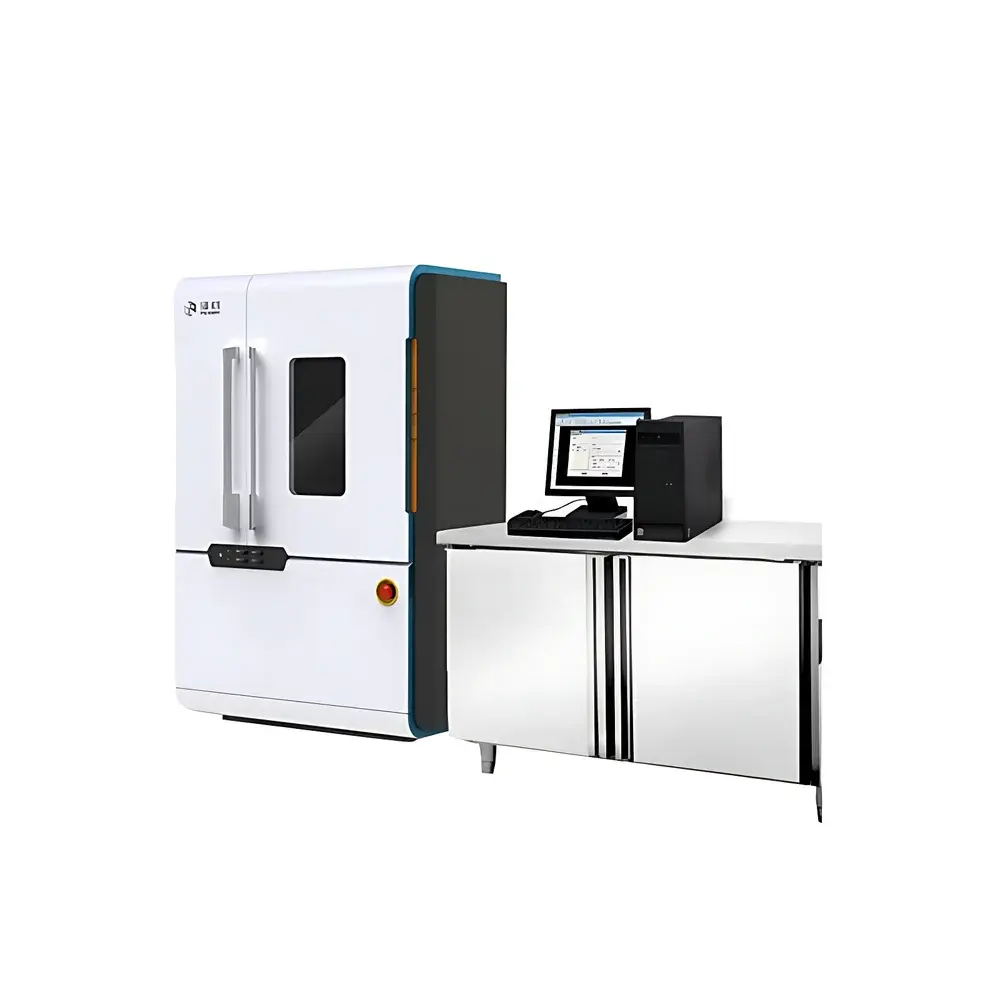
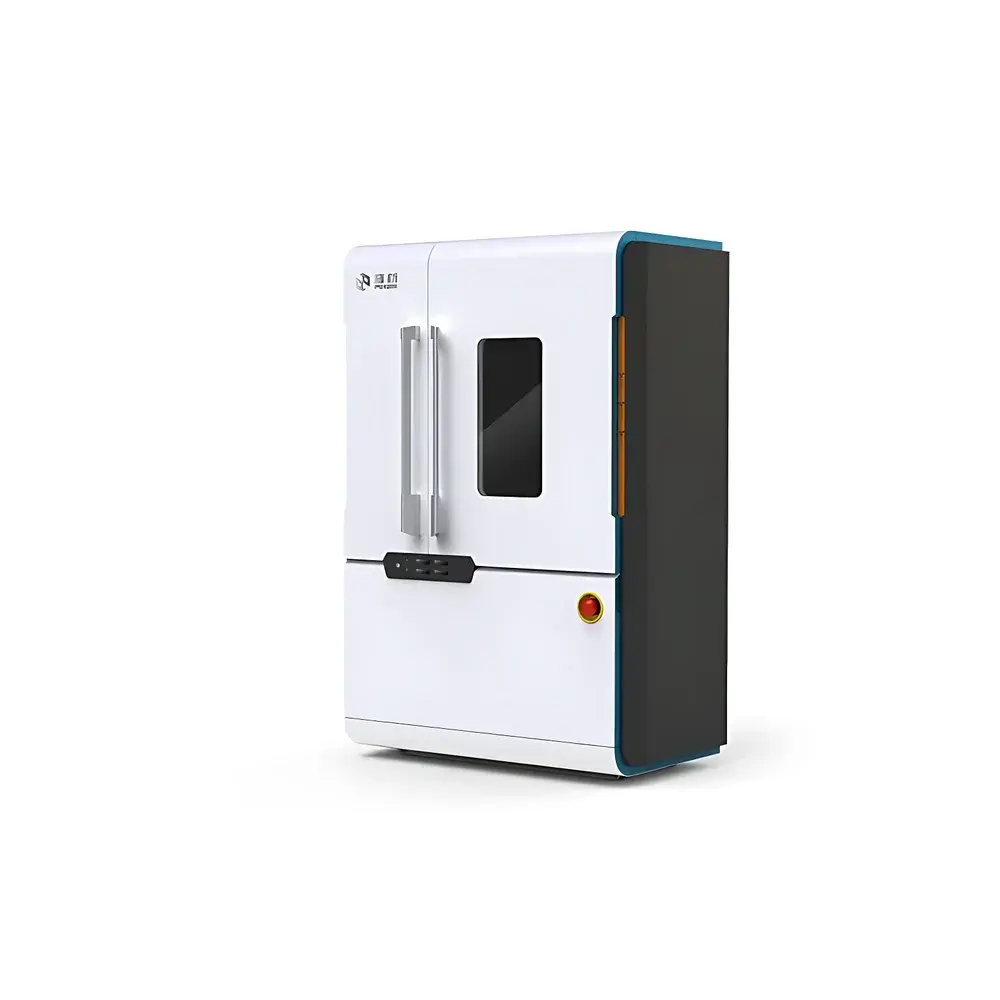
Persee XD-6 Series Powder X-ray Diffractometer
| Brand | Persee |
|---|---|
| Origin | Beijing, China |
| Manufacturer Type | Original Equipment Manufacturer (OEM) |
| Product Line | XD-6 Series |
| Price Range | USD 42,000 – 70,000 |
Overview
The Persee XD-6 Series Powder X-ray Diffractometer is a benchtop Bragg-Brentano geometry instrument engineered for routine and research-grade phase identification, crystallinity assessment, and semi-quantitative analysis of polycrystalline materials. Based on the proven XD-3 platform, the XD-6 integrates mechanical and electronic enhancements to improve measurement flexibility, operational efficiency, and long-term stability. Its core measurement principle relies on monochromatic Cu Kα radiation (λ = 1.5418 Å) incident upon powdered or solid flat samples, with diffraction angles (2θ) detected via a NaI(Tl) scintillation counter. The diffractometer employs θ–2θ coupled scanning in accordance with ASTM E975 and ISO 17873 standards for powder diffraction data acquisition, ensuring traceable and reproducible results across laboratories.
Key Features
- Vertical goniometer architecture: Enables intuitive sample loading, simplified alignment, and unobstructed access to the sample stage—reducing operator fatigue and minimizing contamination risk during cleanup.
- Continuously adjustable scan radius: Achieved through microstepping motor control and precision-machined brass bearing assemblies; allows users to optimize the trade-off between angular resolution (smaller radius) and diffracted intensity (larger radius) without hardware modification.
- Enhanced rotational speed: Goniometer acceleration and maximum scan velocity increased by >35% over XD-3, reducing typical 5–70° 2θ scans from ~15 minutes to under 9 minutes at 0.02°/step.
- Integrated radiation safety design: X-ray tube housing machined from solid copper stock for superior thermal conductivity and geometric shielding integrity; shutter mechanism utilizes a rotating tungsten-alloy wheel with <10 ms actuation time and <0.1 µSv/h external dose rate at 5 cm (per IEC 61000-4-3 compliance).
- Digital X-ray generator control: High-voltage (20–50 kV) and tube current (5–40 mA) regulated via embedded microcontroller with real-time feedback loops; all parameters set and logged via software interface with programmable ramp profiles.
Sample Compatibility & Compliance
The XD-6 accommodates standard 25 mm × 25 mm × 2 mm flat-plate samples, capillary mounts (Ø 0.3–1.0 mm), and reflection-mode thin films. It supports both air and helium purge environments (optional accessory) for low-angle (<5° 2θ) measurements or moisture-sensitive specimens. System-level compliance includes CE marking per EN 61000-6-3 (EMC) and EN 61000-6-4 (emission), as well as adherence to GB/T 15445–2021 (Chinese national standard for XRD instrumentation). Data acquisition workflows are compatible with GLP/GMP documentation requirements, including audit-trail-enabled parameter logging and user-access-controlled method files.
Software & Data Management
The system ships with PDP (Persee Diffraction Processing) v4.x—a Windows-based application supporting real-time scan monitoring, automatic peak search (using modified Marquardt-Levenberg algorithms), Rietveld refinement (via integrated GSAS-II engine), and crystallite size/strain analysis using Williamson-Hall and Scherrer methods. Raw data export formats include .raw (Bruker-compatible), .csv, .xy, and .pdh; processed reports generate PDFs with embedded metadata (operator ID, timestamp, instrument serial number, calibration certificate reference). Software supports 21 CFR Part 11-compliant user authentication (role-based permissions), electronic signatures, and immutable audit trails for QC/QA environments.
Applications
- Pharmaceutical solid-state characterization: Polymorph screening, excipient compatibility studies, and stability-indicating assays per USP and ICH Q5A guidelines.
- Inorganic materials R&D: Phase purity verification of battery cathodes (e.g., NMC, LFP), catalysts (zeolites, MOFs), and ceramic precursors.
- Geological and mining QA: Rapid clay mineral quantification (smectite/illite/kaolinite ratios) and ore grade estimation using internal standard methods.
- Metallurgical process control: Residual stress mapping (via sin²ψ technique), retained austenite quantification in steels, and coating thickness validation.
- Academic teaching labs: Modular experiment modules for undergraduate crystallography courses—including lattice parameter determination, space group assignment, and structure factor calculation exercises.
FAQ
Is the XD-6 compliant with FDA 21 CFR Part 11 for regulated pharmaceutical use?
Yes—the PDP software implements full electronic signature support, role-based access control, and tamper-evident audit logs meeting Part 11 Annex A requirements for closed systems.
Can the instrument be upgraded to support grazing-incidence (GIXRD) or small-angle (SAXS) configurations?
No—the XD-6 is optimized exclusively for conventional Bragg-Brentano powder diffraction. GIXRD and SAXS require dedicated optics, detector positioning, and beam conditioning not supported by its mechanical architecture.
What maintenance intervals are recommended for the X-ray tube and detector?
X-ray tube lifetime is rated at ≥2,000 operating hours under nominal 40 kV/30 mA conditions; NaI(Tl) detector requires annual energy calibration and quarterly background checks per ISO 17025 internal quality procedures.
Does the system support remote operation or integration into LIMS?
Yes—PDP provides OPC UA server functionality and RESTful API endpoints for bidirectional data exchange with major LIMS platforms (e.g., LabWare, Thermo SampleManager) and automated workflow orchestration.



