
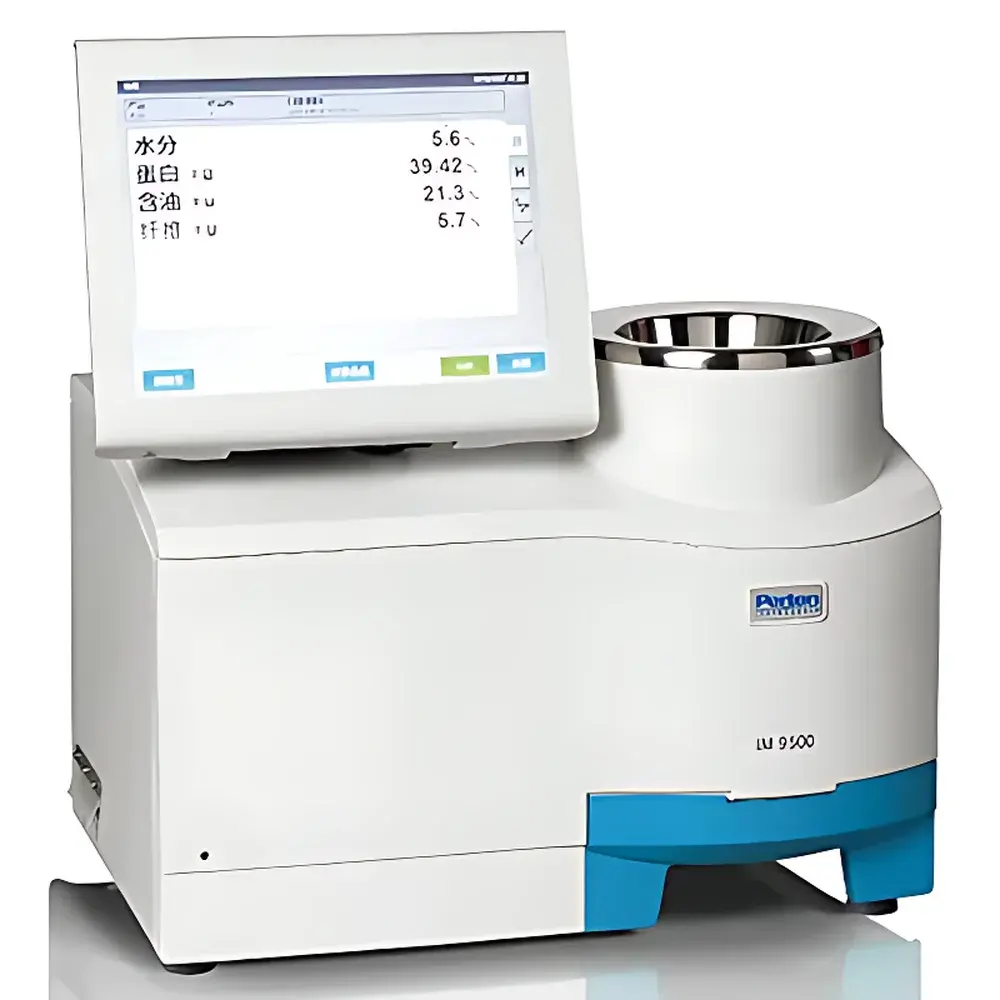
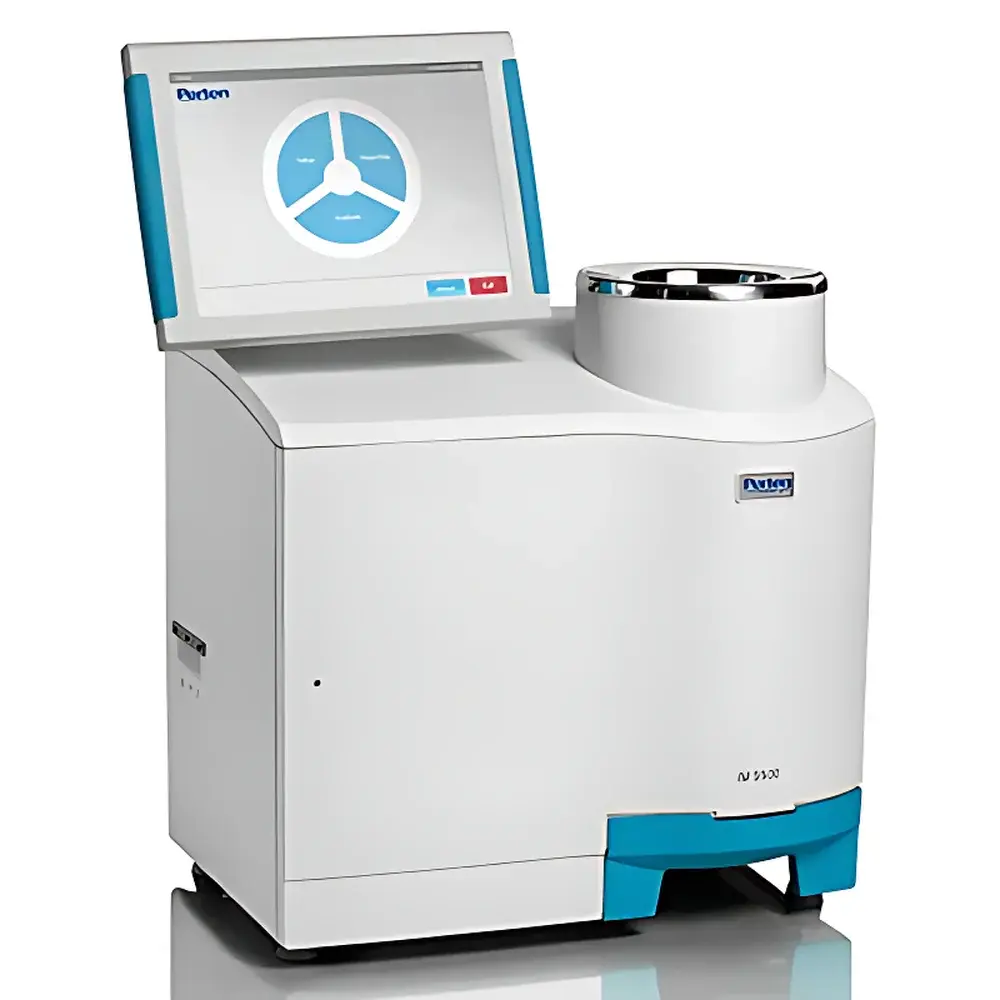
Perten Inframatic 9500plus Multi-Parameter Grain Near-Infrared Spectrometer
| Brand | Perten |
|---|---|
| Origin | Sweden |
| Model | IM 9500plus |
| Instrument Type | Laboratory NIR Spectrometer |
| Application Domain | Cereal & Oilseed Analysis |
| Principle | Grating Scanning Transmission NIR |
| Wavelength Range | 570–1100 nm |
| Scan Speed | 10 scans/min |
| Data Acquisition Interval | 6 s/scan |
| Measurement Mode | Transmission |
| Chemometrics Software | Unscrambler X |
Overview
The Perten Inframatic 9500plus is a high-performance, laboratory-grade near-infrared (NIR) spectrometer engineered specifically for rapid, non-destructive, multi-parameter analysis of intact cereal grains and milled products. Based on grating-scanning transmission spectroscopy, it captures full-spectrum absorbance data across the visible–NIR range (570–1100 nm), enabling quantitative prediction of key compositional parameters—including moisture, protein, fat, starch, ash, fiber, gluten content, sedimentation value, and bulk density—using robust, chemometrically validated calibration models. Designed for grain trading, quality control laboratories, breeding programs, and regulatory testing facilities, the instrument delivers analytical repeatability ≤0.02 nm (spectral) and accuracy ≤0.05 nm (wavelength), traceable to NIST-certified reference standards. Its industrial-grade architecture supports continuous operation in demanding environments—including grain elevators and mobile labs—with an operating temperature range of 5–40 °C and humidity tolerance up to 85% RH.
Key Features
- Integrated monolithic optical module: The grating monochromator, detector, and light path are precision-machined into a single aluminum housing, eliminating alignment drift from thermal expansion or mechanical vibration—ensuring long-term spectral stability and inter-instrument model transferability.
- NIST-traceable wavelength calibration: Every unit undergoes factory calibration against NIST Standard Reference Materials (SRMs), guaranteeing spectral fidelity and enabling cross-laboratory result comparability under ISO/IEC 17025 and AOAC guidelines.
- Automated transmission measurement: Non-contact sample loading with auto-adjusted optical path length; accommodates whole grains (50–800 mL) and ground samples (2–5 g) without manual intervention.
- Sub-sample segmentation: Each analysis automatically divides the sample into 16 spatially distinct sub-samples and acquires individual spectra, mitigating heterogeneity bias in bulk grain lots.
- High-reliability illumination system: Long-life tungsten-halogen source (>10,000 h rated lifetime) with built-in lamp health monitoring and automatic beam alignment after lamp replacement.
- Embedded industrial PC: Fanless embedded computer running Windows IoT Enterprise, equipped with SSD storage, 12″ rotatable capacitive touchscreen, Gigabit Ethernet, and four USB 3.0 ports—designed for 24/7 operation and GLP-compliant data integrity.
Sample Compatibility & Compliance
The Inframatic 9500plus is validated for routine analysis of wheat, barley, corn (maize), rice, oats, rye, soybeans, and sorghum—both as whole kernels and milled flours. It complies with international standard methods including ISO 24333:2009 (cereal and cereal products — sampling), AACC Method 39-01 (moisture), AACC Method 39-10 (protein), and ICC Standard No. 168 (NIR calibration transfer). All calibration models are developed and maintained per ASTM E1655 (Standard Practices for Infrared Multivariate Quantitative Analysis) and adhere to FDA 21 CFR Part 11 requirements for electronic records and signatures when deployed with audit-trail-enabled Unscrambler X software. The instrument’s IP54-rated enclosure meets IEC 60529 for dust and splash resistance, supporting deployment in grain receiving bays and field laboratories.
Software & Data Management
Controlled via Unscrambler X v10.5 or later, the system provides a fully localized English interface with intuitive workflow navigation—requiring only grain type selection and sample loading to initiate analysis. Calibration models are pre-installed at shipment and updated free of charge for the instrument’s lifetime, with version-controlled model archives and change logs maintained in accordance with ISO/IEC 17025 clause 7.7. Data export supports CSV, XML, and LIMS-compatible formats; raw spectra and prediction reports include metadata (timestamp, operator ID, instrument serial number, model version). Remote diagnostics and firmware updates are supported over secure TLS-encrypted connections, and network integration enables centralized curve management across multi-site installations using Perten’s GrainVision™ infrastructure.
Applications
- Grain procurement & pricing: Real-time determination of protein and moisture for contract compliance and differential pricing.
- Mill feedstock optimization: Monitoring starch and ash content to adjust milling parameters and maximize flour yield.
- Breeding program support: High-throughput screening of progeny lines for nutritional traits during early-generation selection.
- Regulatory compliance testing: Verification of labeling claims (e.g., protein content in organic wheat) per EU Regulation (EC) No 834/2007 and USDA AMS standards.
- Process validation: Supporting HACCP and GMP documentation by providing auditable, timestamped spectral records linked to batch identifiers.
FAQ
Is the Inframatic 9500plus compliant with FDA 21 CFR Part 11 for electronic records?
Yes—when configured with Unscrambler X’s audit trail and electronic signature modules, the system satisfies all technical and procedural requirements for regulated environments.
Can calibration models developed on other Perten instruments be transferred directly to the 9500plus?
Yes—due to its monolithic optical design and NIST-traceable wavelength calibration, models from earlier Inframatic systems (e.g., 9500, 9520) transfer seamlessly without restandardization.
What is the recommended frequency for reference sample verification?
Perten recommends daily verification using certified grain reference materials; quarterly full recalibration is advised for laboratories operating under ISO/IEC 17025 accreditation.
Does the instrument support integration with enterprise LIMS or ERP platforms?
Yes—via standardized OPC UA or RESTful API interfaces, enabling automated data ingestion into SAP QM, LabVantage, or Thermo Fisher SampleManager systems.
How is spectral reproducibility verified during routine operation?
The system includes an internal photometric reference channel and performs real-time dark-current correction; users may run daily performance qualification (PQ) tests using NIST-traceable ceramic tiles per ASTM E2753.




