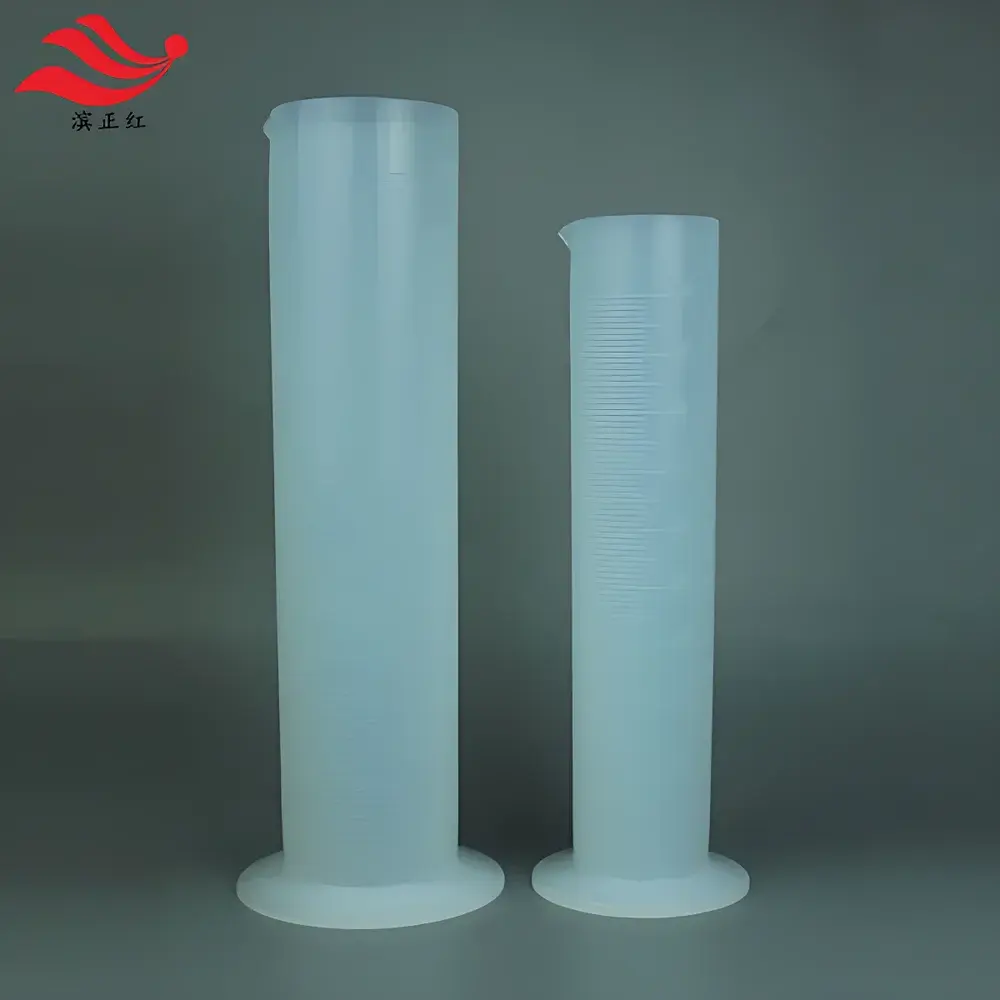
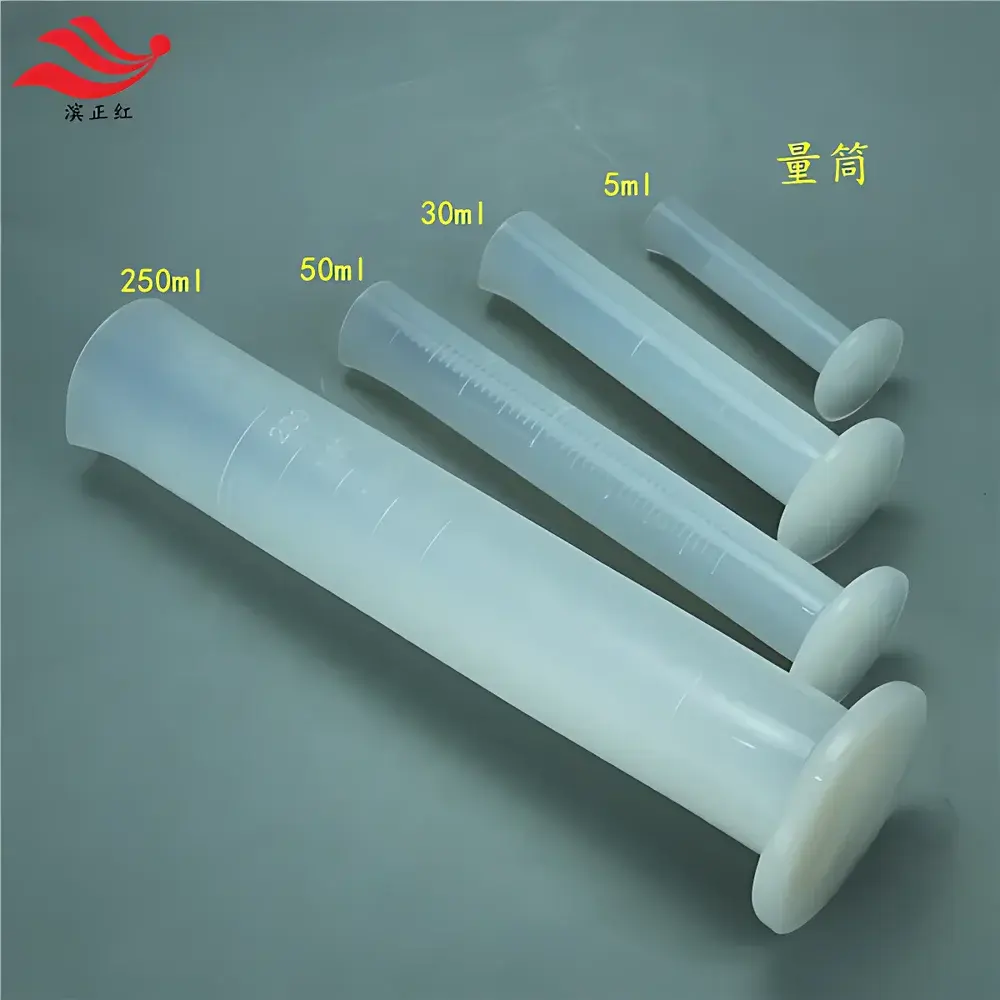
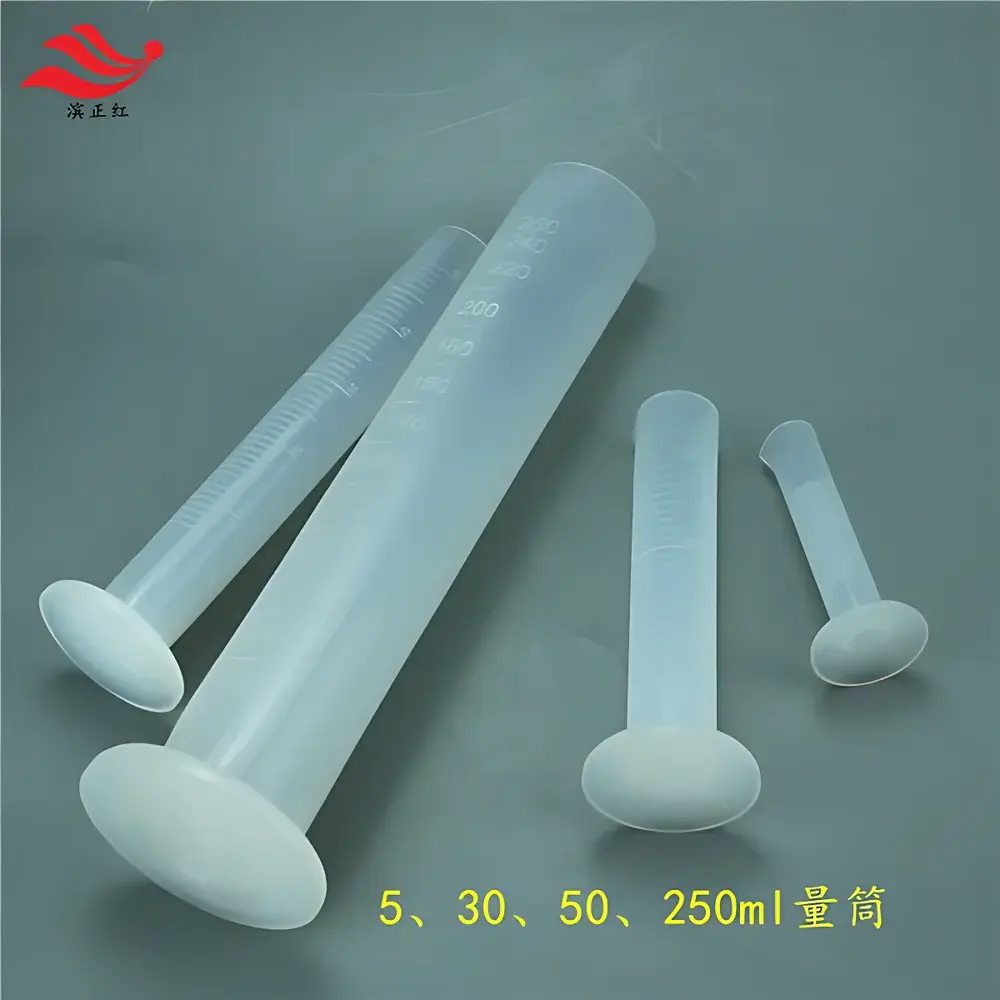
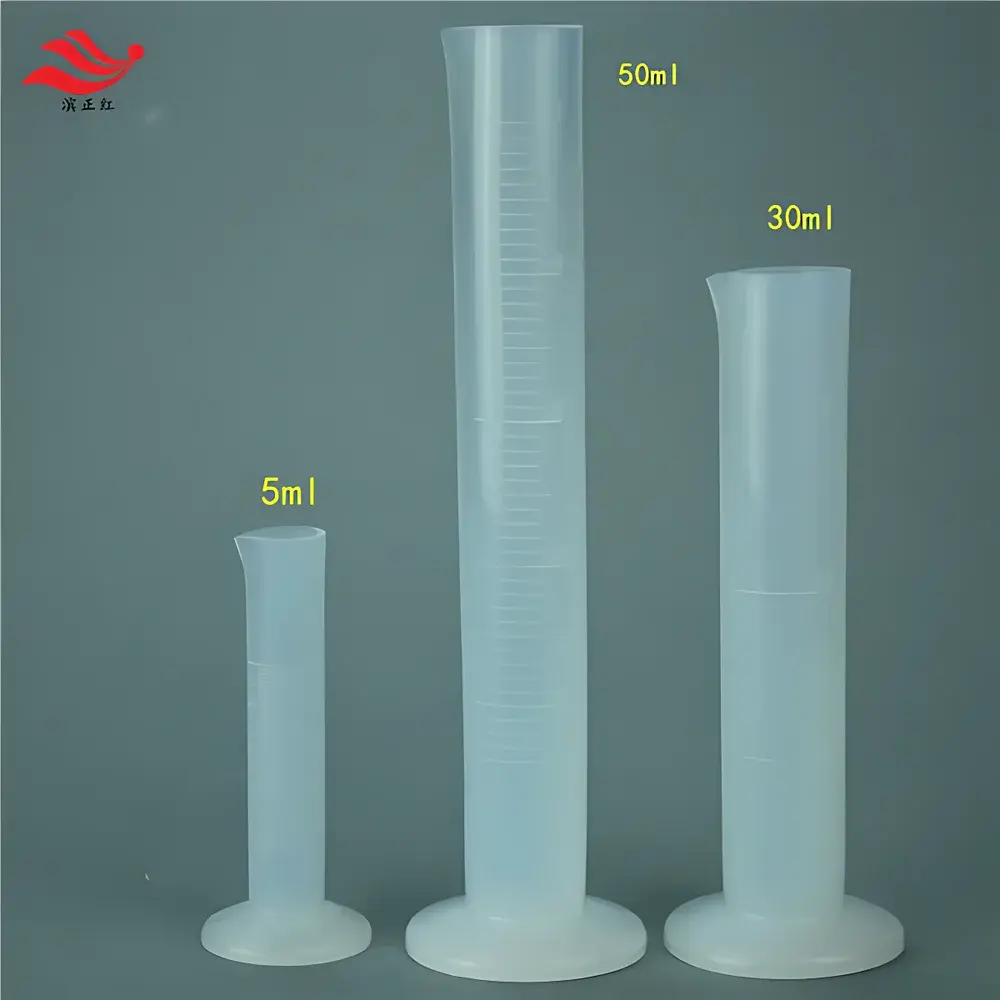
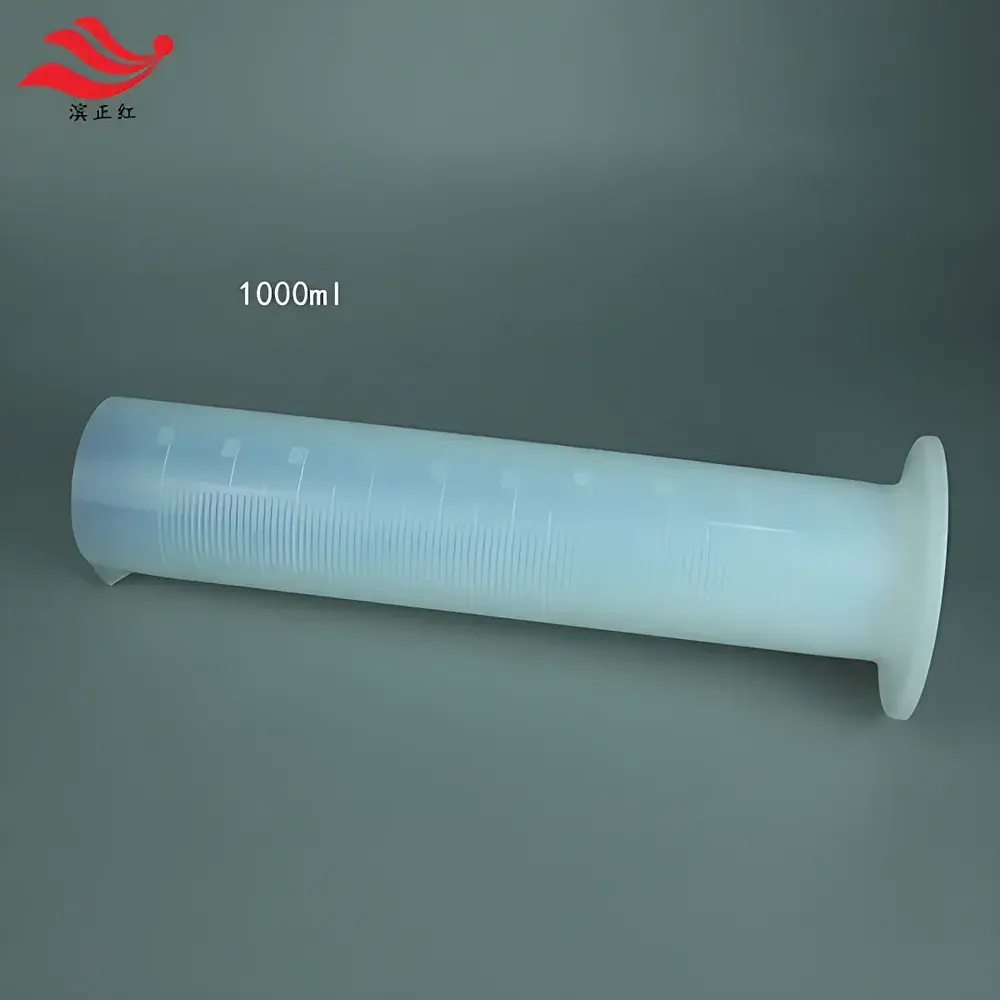
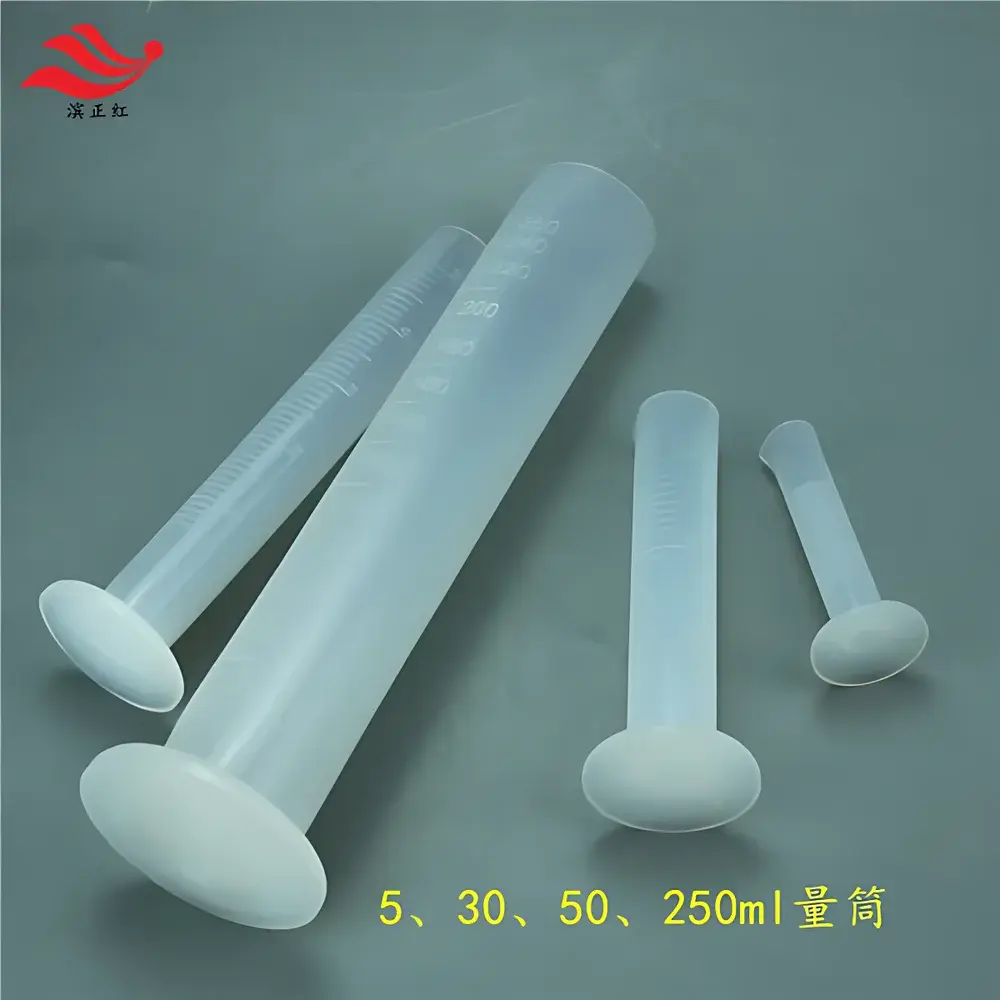
PFA Acid- and Alkali-Resistant Graduated Cylinder
| Brand | Binzhenghong |
|---|---|
| Origin | Jiangsu, China |
| Manufacturer Type | Direct Producer |
| Country of Origin | China |
| Capacity Range | 5 mL to 2000 mL |
| Pricing | Upon Request |
Overview
The Binzhenghong PFA Acid- and Alkali-Resistant Graduated Cylinder is a high-purity, chemically inert volumetric instrument engineered for precise liquid measurement in aggressive chemical environments. Constructed entirely from perfluoroalkoxy alkane (PFA), a fluoropolymer with exceptional resistance to strong acids (e.g., concentrated HNO₃, HF, aqua regia), caustic bases (e.g., 50% NaOH, KOH), oxidizers, and organic solvents, this graduated cylinder eliminates leaching, adsorption, or surface degradation commonly observed with glass, polypropylene, or standard PTFE vessels. Unlike borosilicate glass—prone to etching by hydrofluoric acid—or polycarbonate—susceptible to stress cracking in chlorinated solvents—the PFA matrix provides long-term dimensional stability and optical clarity across pH 0–14 and temperatures from –200 °C to +260 °C. Its seamless, molded construction ensures zero dead volume at the base and eliminates threaded joints or adhesive seams that could harbor residues or compromise integrity during trace-level analysis.
Key Features
- Full-body PFA construction—no metal components, no fillers, no plasticizers—certified to ASTM D4894 and ISO 10993-5 for biocompatibility and extractables control
- Laser-etched, permanent graduations with ±0.5% volumetric tolerance (per ISO 4787:2021 Class B specifications) for capacities ≥50 mL; ±1.0% for 5–25 mL sizes
- Chemical resistance validated against USP and cytotoxicity testing; compliant with EPA Method 300.0 for anion analysis requiring fluoride-free containment
- Low extractables profile: <0.1 µg/cm² total organic carbon (TOC) leachables after 24-hr exposure to 1 M HCl at 60 °C (tested per ICH Q5C)
- Thermal shock resistance: withstands direct transfer from –80 °C freezer to boiling water bath without crazing or delamination
- Autoclavable up to 121 °C (250 °F) for 30 minutes—validated per ISO 17665-1 for repeated sterilization cycles
Sample Compatibility & Compliance
This cylinder is routinely deployed in semiconductor wet processing (e.g., wafer rinse tanks handling SC-1/SC-2 solutions), nuclear fuel cycle labs handling uranyl nitrate in HNO₃ media, and pharmaceutical QC for residual solvent testing (ICH Q3C) where PFA’s low-metal ion release (<0.05 ppb Cr, Ni, Fe per ASTM F2129) prevents interference in ICP-MS quantitation. It meets the material requirements of FDA 21 CFR 177.1550 for repeated food-contact use and supports GLP-compliant documentation through lot-specific CoA (Certificate of Analysis) and CoC (Certificate of Conformance) upon request. All units are manufactured under ISO 9001:2015-certified quality management systems with full traceability to raw-material resin batch numbers.
Software & Data Management
While inherently analog, the cylinder integrates seamlessly into digital lab workflows: graduation markings are optimized for automated vision-based volume reading systems (e.g., robotic liquid handlers with camera calibration modules). Optional QR-code laser marking on the cylinder base enables LIMS (Laboratory Information Management System) linkage—scanning retrieves manufacturing date, resin lot ID, calibration history, and compliance certificates. For audit readiness, electronic records of calibration verification (per ISO/IEC 17025 Clause 6.5) can be generated and exported in PDF/A-2 format supporting FDA 21 CFR Part 11 electronic signature requirements.
Applications
- Precise dispensing and dilution of high-purity reagents in analytical chemistry (e.g., ICP-OES standard preparation, titrant storage)
- Handling hydrofluoric acid-based etchants in MEMS fabrication and photovoltaic cell cleaning processes
- Storage and transfer of radioactive solutions (e.g., ⁹⁹Mo/⁹⁹ᵐTc eluates) where gamma-induced degradation must be minimized
- Trace metal analysis in environmental water testing (EPA 200.8, ISO 17294-2) requiring sub-ppt contamination control
- Cell culture media formulation in biologics development where endotoxin and silicone-free surfaces are mandatory
FAQ
Can this cylinder be used for volumetric calibration of pipettes or burettes?
Yes—when used in conjunction with certified reference weights and temperature-controlled distilled water (per ISO 4787 Annex C), it serves as a Class B secondary standard for field verification.
Is PFA transparent enough for accurate meniscus reading?
Yes—PFA exhibits >90% transmittance in the visible spectrum (400–700 nm), enabling clear meniscus visualization comparable to borosilicate glass.
Does repeated exposure to hot concentrated sulfuric acid affect accuracy?
No—PFA maintains dimensional stability after 72 hours at 98% H₂SO₄ and 80 °C; volume deviation remains within ±0.2% per ISO 4787 repeatability criteria.
Are custom graduation scales (e.g., non-linear or dual-unit) available?
Yes—custom laser-etched scales (including metric/imperial dual labeling or density-corrected volume marks for specific solvents) are offered with minimum order quantities.
How is traceability ensured for GMP-regulated environments?
Each cylinder carries a unique serialized identifier linked to a digital quality dossier including raw-material CoA, in-process dimensional inspection reports, and final volumetric verification data archived for 10 years.