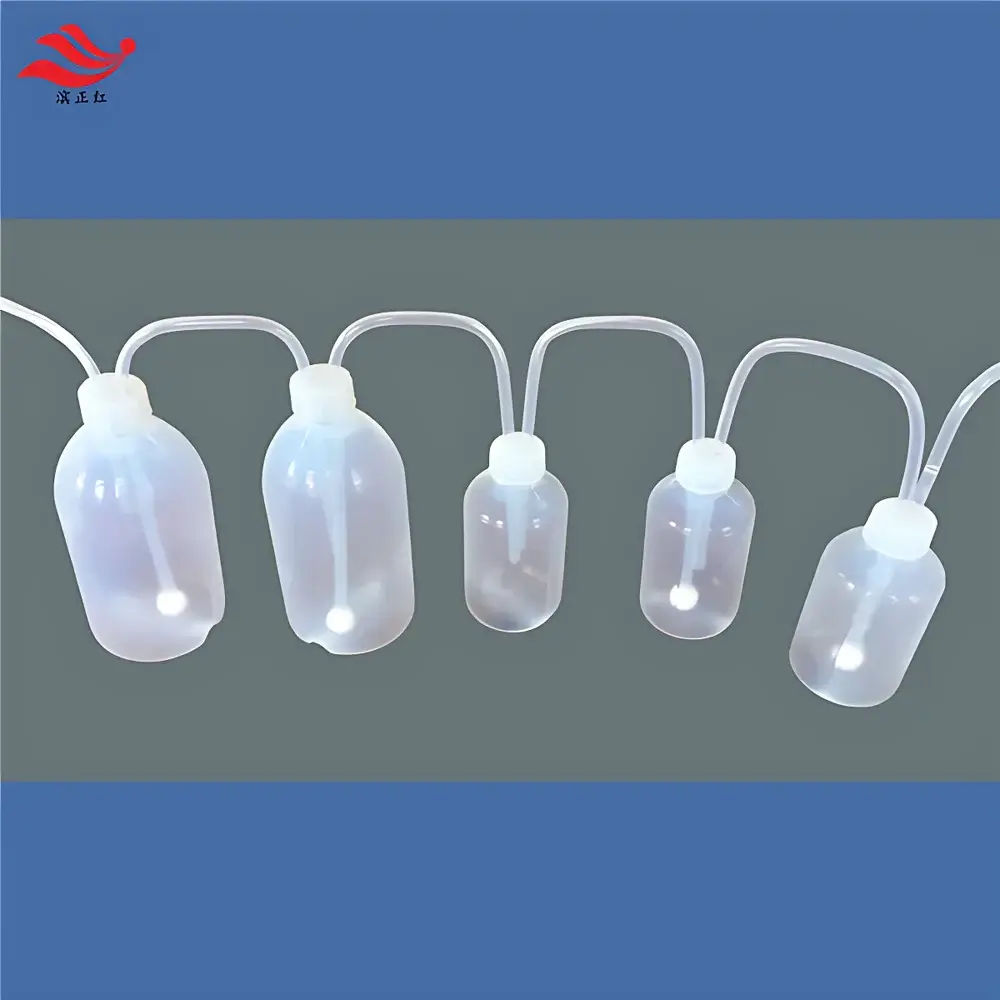
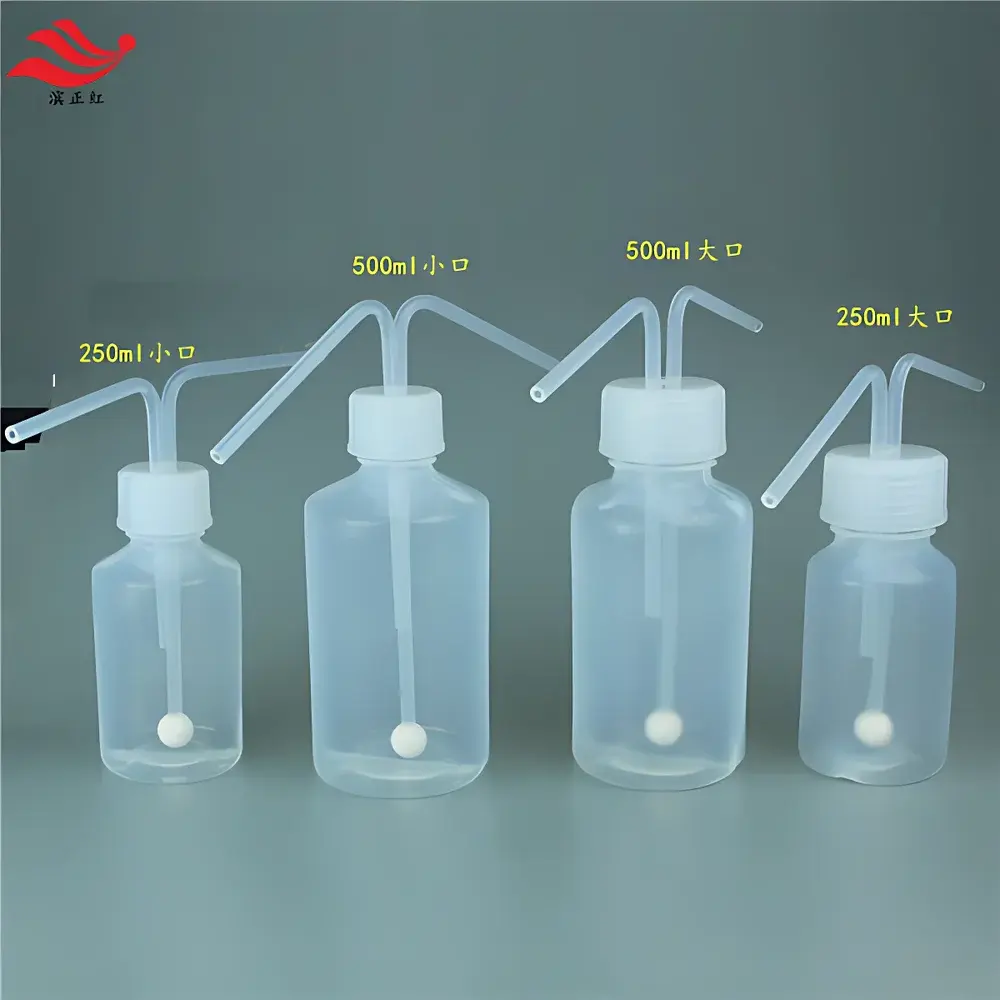
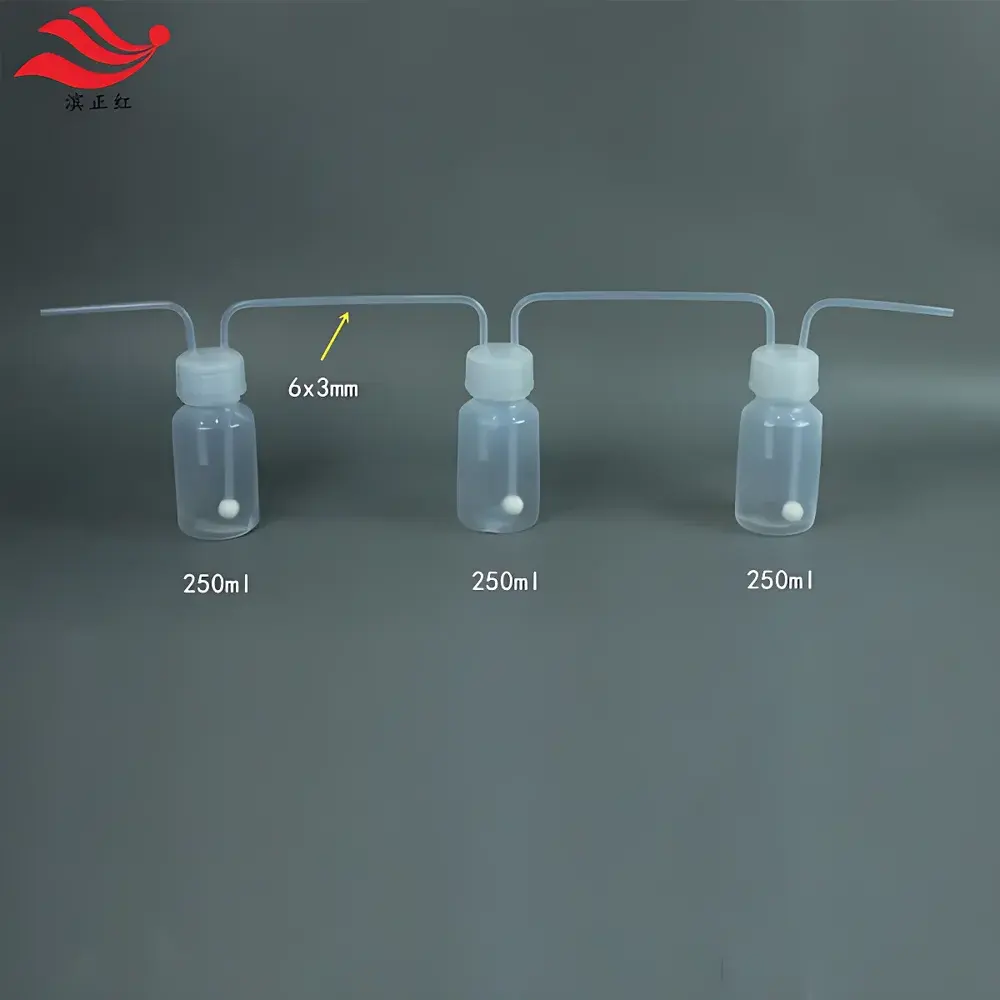
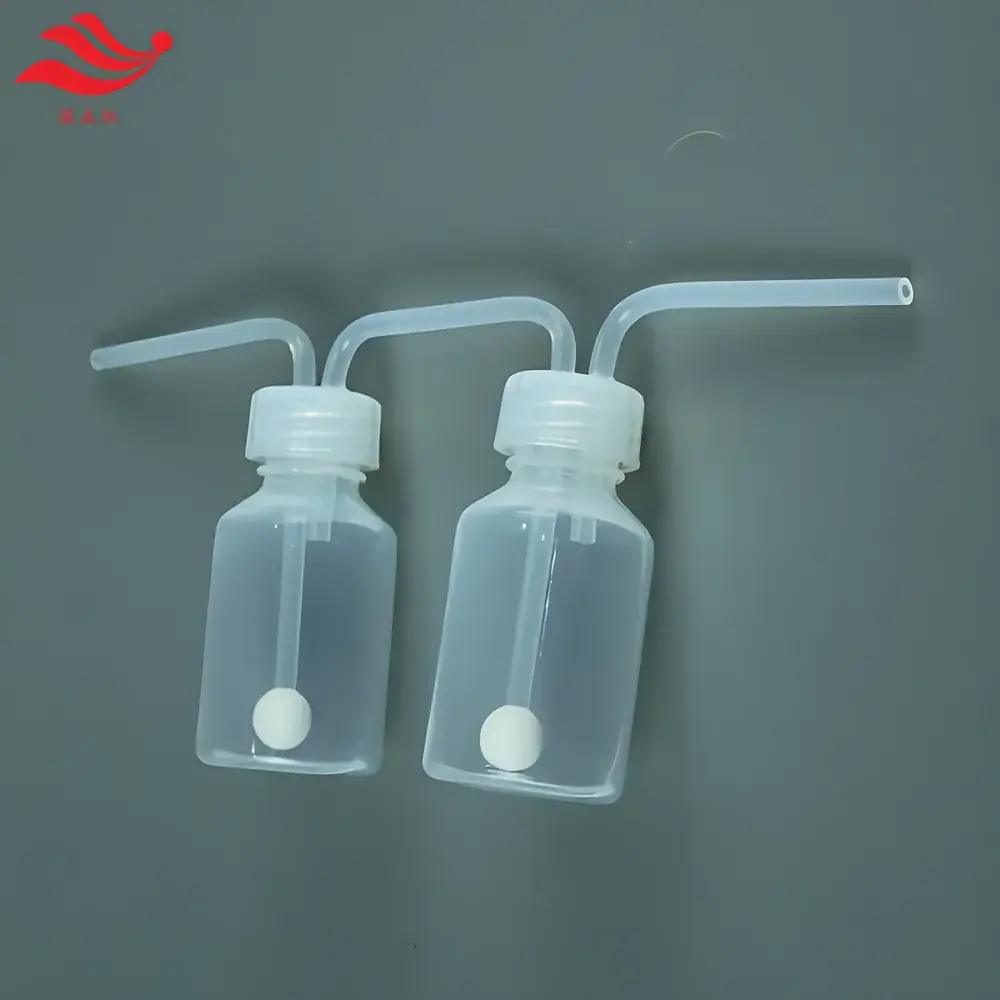
PFA Gas Scrubbing Bottle (Binhenghong BV-100/250/500 Series)
| Brand | Binhenghong |
|---|---|
| Origin | Jiangsu, China |
| Manufacturer Type | Direct Producer |
| Origin Category | Domestic |
| Volume Options | 100 mL, 250 mL, 500 mL |
| Pricing | Upon Request |
| Material | Perfluoroalkoxy alkane (PFA) |
| Max. Continuous Use Temperature | +205 °C |
| Min. Operating Temperature | −205 °C |
| Transparency | Optically Clear |
| Seal Integrity | Threaded PFA cap with integrated O-ring seal |
| Chemical Resistance | Fully resistant to HF, aqua regia, hot conc. H₂SO₄, NaOH (short-term), and all organic solvents |
Overview
The Binhenghong BV-Series PFA Gas Scrubbing Bottles are precision-engineered laboratory components designed for high-purity gas purification, quantitative gas absorption, and controlled gas sampling in demanding analytical and process environments. Constructed entirely from perfluoroalkoxy alkane (PFA), these scrubbers leverage the exceptional chemical inertness, thermal stability, and ultra-low extractables profile of PFA to ensure zero interference with reactive, corrosive, or ultra-trace analyte streams. Unlike conventional glass or polypropylene scrubbers, PFA bottles eliminate risks of metal leaching, surface adsorption, or hydrolytic degradation—critical when handling halogenated gases (e.g., Cl₂, F₂, HF), aggressive acid vapors (e.g., HNO₃, HCl fumes), or high-purity carrier gases in semiconductor fab tooling or EPA Method TO-14/TO-15 sampling trains. The dual-tube configuration follows standard gas washing hydrodynamics: inlet gas is dispersed through a fine-pore sintered PFA frit (integrated into the long inlet tube) to maximize interfacial contact area with the scrubbing liquid, while purified gas exits via the shorter outlet tube. This design enables efficient mass transfer governed by Henry’s law and first-order reaction kinetics where applicable.
Key Features
- Fully fluorinated PFA construction ensures compliance with ASTM D6387 and IEC 61249-2-21 for halogen-free, low-outgassing fluidic components
- Continuous service temperature range from −205 °C to +205 °C supports cryogenic gas trapping and high-temperature acid vapor scrubbing
- Optical clarity permits real-time visual monitoring of bubble formation, liquid level, and phase separation without disassembly
- Smooth, non-porous internal surface minimizes residue retention and enables complete recovery of volatile analytes during desorption protocols
- Threaded PFA cap with compression-molded fluorocarbon O-ring delivers leak-tight sealing up to 0.5 MPa at 25 °C, validated per ISO 15848-1 for fugitive emissions
- Standardized 10–32 UNF or ¼″ NPT inlet/outlet ports accommodate Swagelok®-compatible ferrule fittings and PFA tubing assemblies
Sample Compatibility & Compliance
These scrubbers are routinely deployed in applications requiring adherence to USP <661.2>, ISO 10993-12, and FDA 21 CFR Part 11–compliant workflows where material traceability and extractables profiling are mandated. PFA meets USP Class VI biocompatibility requirements and exhibits <0.1 µg/cm² total organic extractables when extracted per USP <661.1> with water, 50% ethanol, and hexane. The bottles are compatible with aqueous KOH (≤20 wt%, ≤1 hr exposure), saturated Na₂CO₃, H₂O₂ (≤30%), and dilute mineral acids; prolonged exposure to molten alkali metals or fluorine gas at elevated pressure is not recommended. Each unit is supplied with a certified material test report (MTR) indicating melt flow index (ASTM D1238), density (ASTM D792), and infrared spectral match to ASTM D4895 reference spectra.
Software & Data Management
While the PFA scrubber itself is a passive fluidic component, it integrates seamlessly into automated gas monitoring systems compliant with ISO/IEC 17025 and GLP frameworks. When paired with digital mass flow controllers (e.g., Bronkhorst EL-FLOW Select), pressure transducers, and data loggers (e.g., Campbell Scientific CR6), the scrubber enables time-resolved quantification of removal efficiency (η = 1 − Cout/Cin) and breakthrough curve modeling. Raw pressure drop and flow rate data can be timestamped, archived with instrument metadata, and subjected to audit trail review per 21 CFR Part 11 Annex 11 requirements. Optional RFID tags (mounted on base flange) support LIMS integration for lot-level traceability and calibration history linkage.
Applications
- EPA Compendium Method TO-14A/TO-15 air sampling for VOCs, where PFA prevents analyte adsorption losses observed with glass or stainless steel
- ICP-MS and HR-ICP-OES sample introduction systems for removal of chloride matrix interferences prior to nebulization
- Calibration gas generation via dynamic dilution using certified standards (e.g., NIST SRM 1628)
- Inert atmosphere glovebox purge train conditioning for lithium battery electrode synthesis
- Radiochemical laboratories for trapping ¹⁴CO₂ or ³⁵SO₂ from off-gas streams under ALARA protocols
- Pharmaceutical lyophilization cycle validation, where residual solvent vapors are absorbed in chilled PFA scrubbers
FAQ
Can this scrubber be used for alkaline solutions such as 1 M NaOH?
Yes, short-term exposure (<1 hour) is permissible; however, continuous use above pH 13 at elevated temperatures may accelerate PFA surface etching. Rinse immediately after use with deionized water.
Is the PFA frit replaceable?
No—the sintered PFA frit is integrally molded with the inlet tube and cannot be serviced independently. Units are supplied as single-use or reusable components based on application criticality.
What is the maximum allowable differential pressure across the scrubber?
0.5 MPa at 25 °C, per ASME B31.3 process piping design limits for PFA-lined components. Derate linearly to 0.1 MPa at 200 °C.
Do you provide custom port configurations (e.g., 1/8″ NPT or barbed outlets)?
Yes—custom machining of inlet/outlet threads or fusion-welded PFA tubing stubs is available under OEM agreement with minimum order quantities.
Are certificates of conformance and extractables data available?
Yes—each batch is accompanied by a CoC referencing ASTM D4895, USP <661.1>, and ISO 10993-12, plus third-party GC-MS extractables reports upon request.