
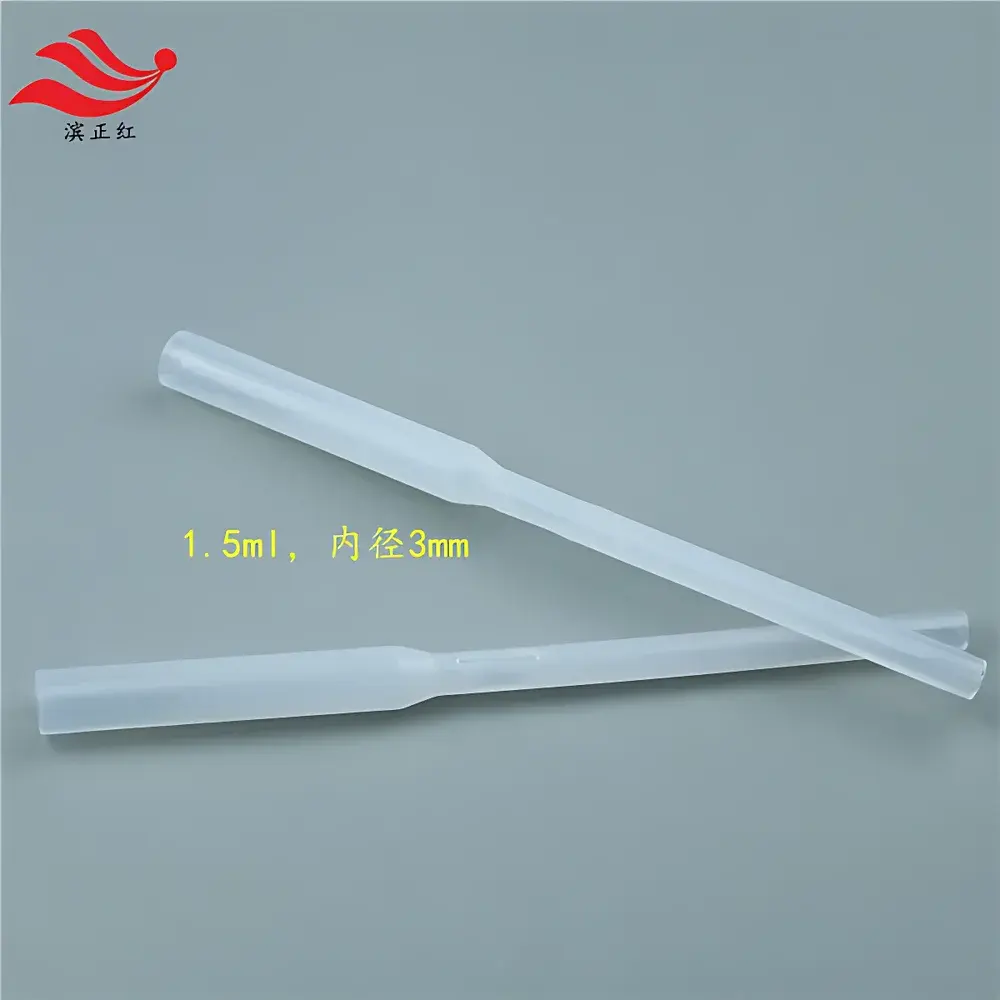
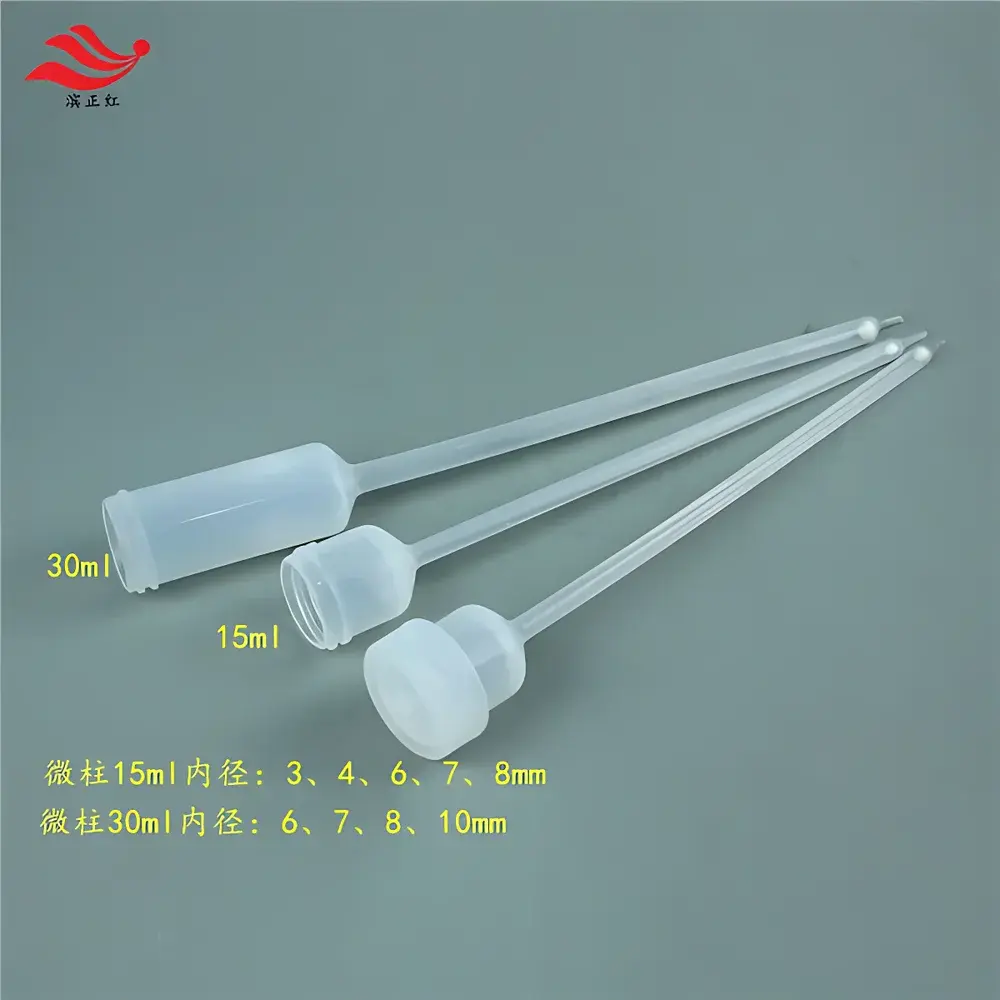
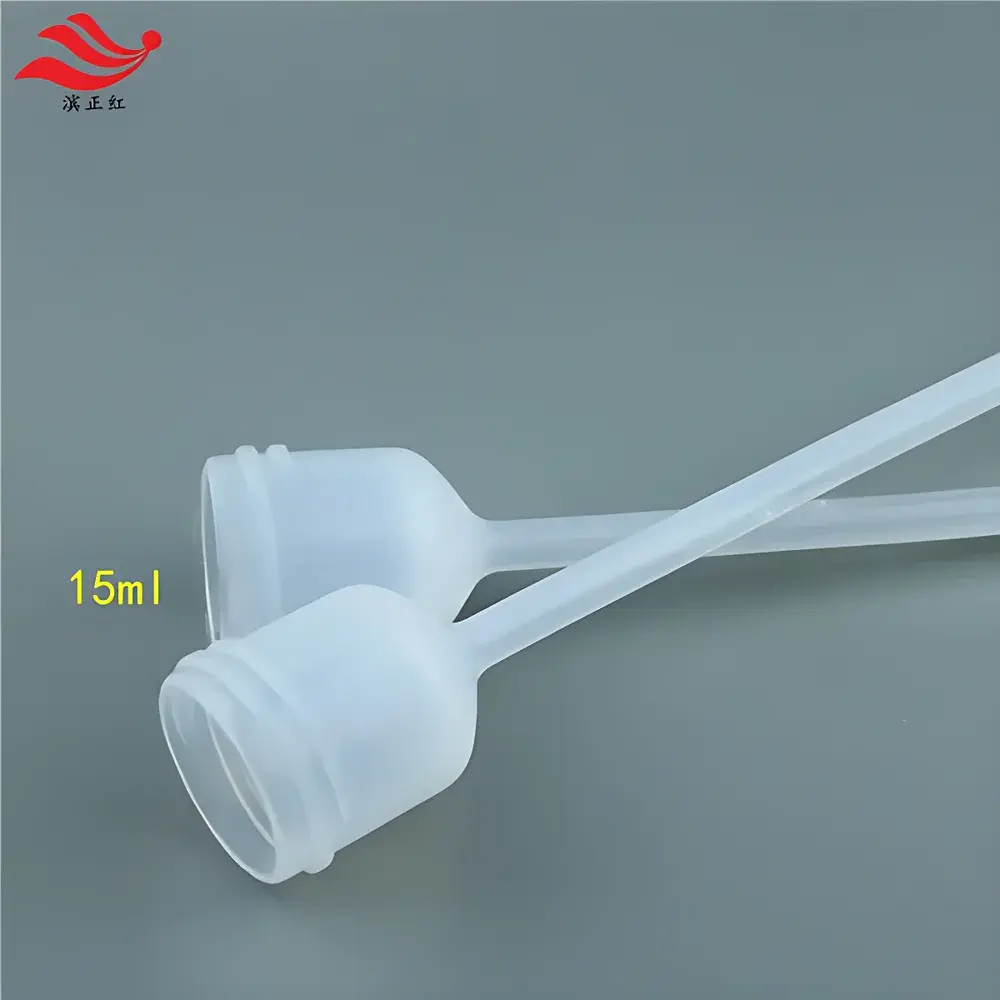
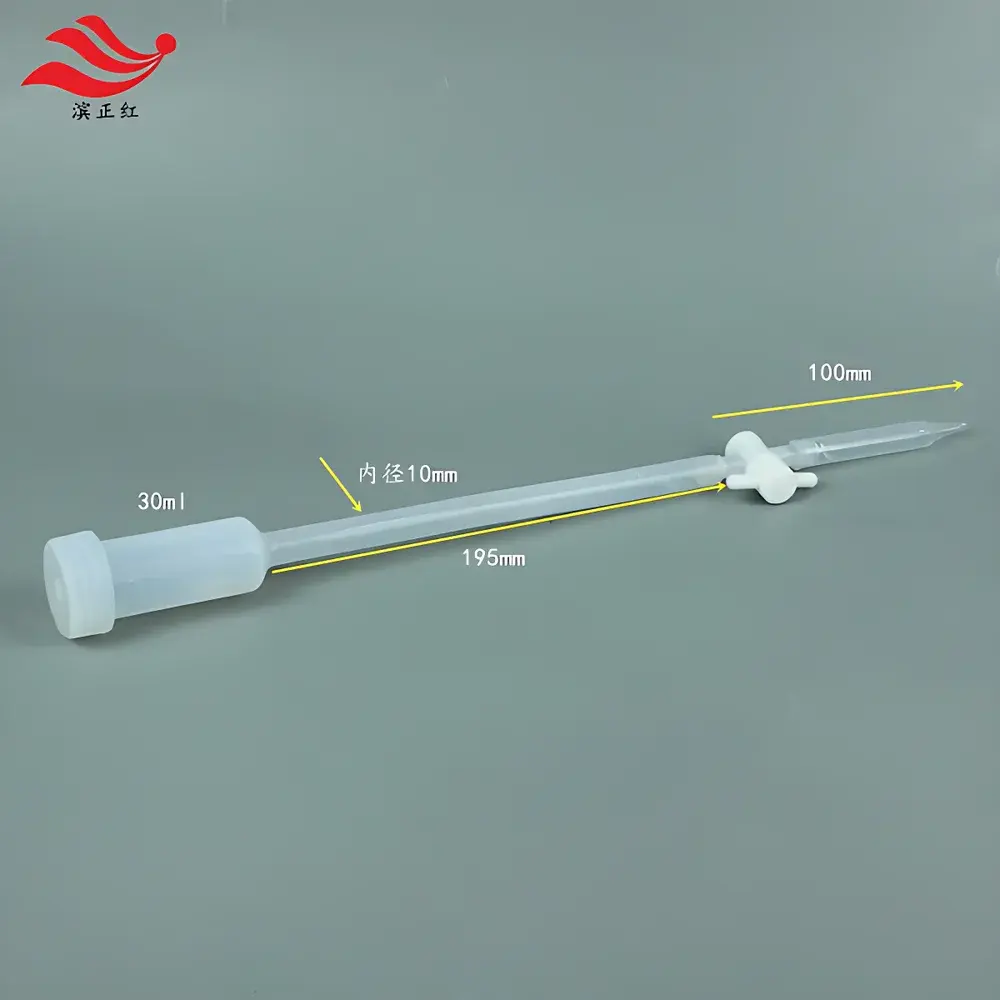
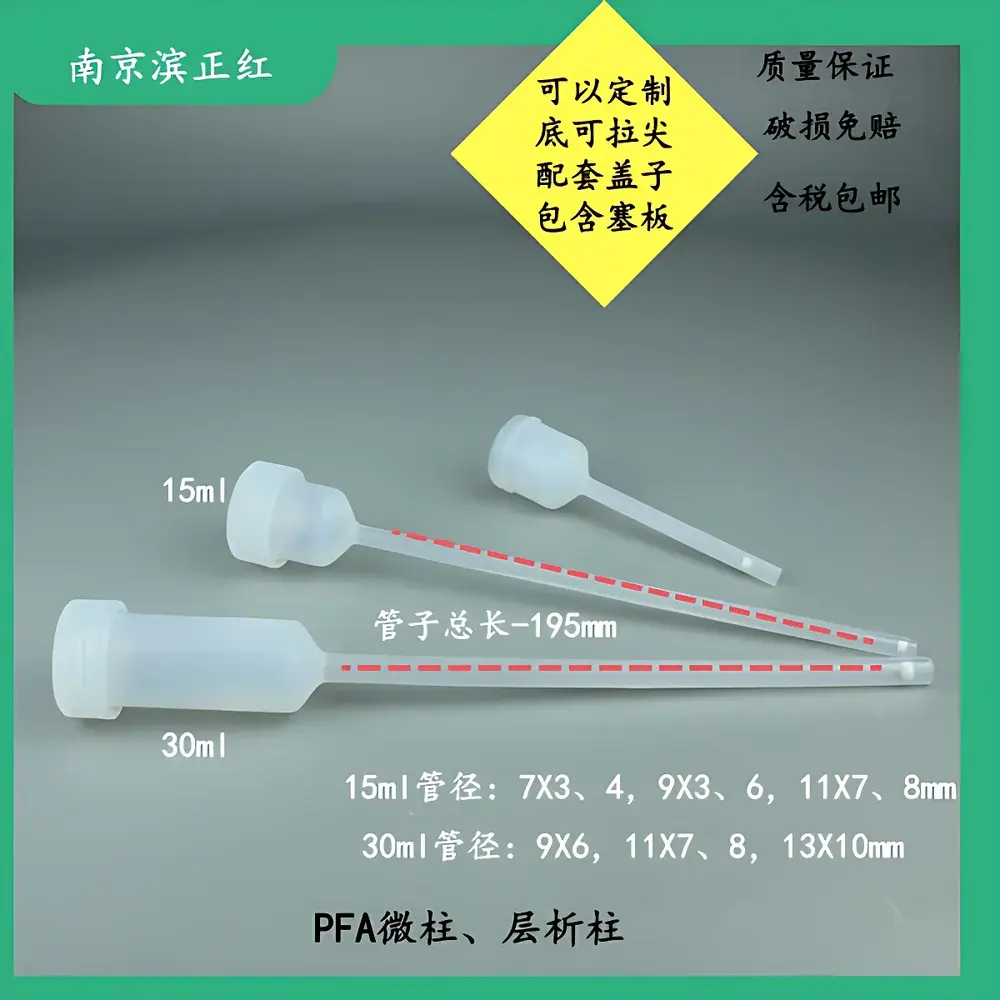
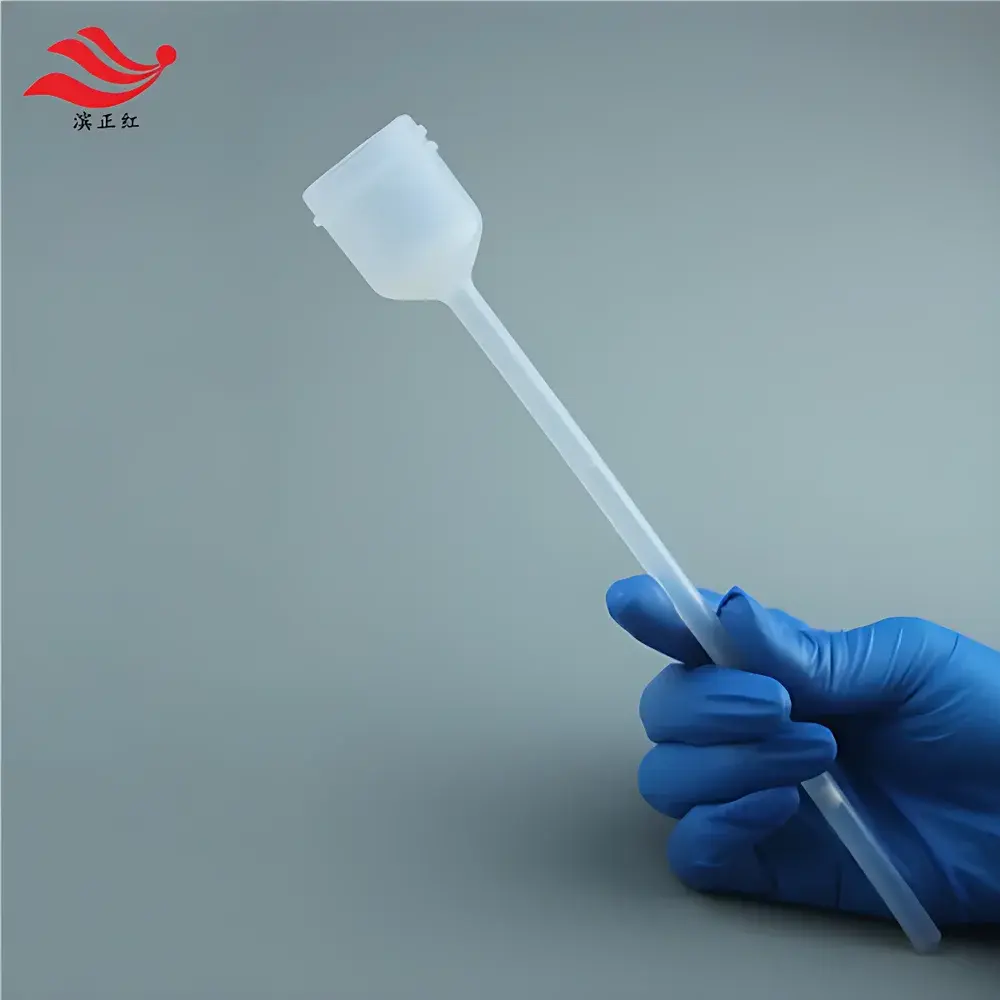
PFA Monolithic Chromatography Column (Integrated Resin-Bed Microcolumn, 15–30 mL)
| Brand | Binzhenghong |
|---|---|
| Origin | Jiangsu, China |
| Manufacturer Type | Direct Producer |
| Product Origin | Domestic (China) |
| Model | Integrated 15–30 mL |
| Pricing | Upon Request |
| Material | Perfluoroalkoxy (PFA) |
| Configuration | Valve-Optional Monolithic Design |
Overview
The PFA Monolithic Chromatography Column (Integrated Resin-Bed Microcolumn, 15–30 mL) is an engineered solution for low-volume, high-integrity sample purification and separation in analytical, preparative, and method-development workflows. Constructed entirely from perfluoroalkoxy (PFA) resin—a fluoropolymer with exceptional chemical inertness, thermal stability (−200 °C to +260 °C), and ultra-low extractables—the column eliminates metal leaching, adsorptive losses, and surface-mediated degradation commonly observed with stainless-steel or glass-based systems. Its monolithic architecture integrates the frit, resin bed support, and column body into a single, seamless PFA structure—eliminating internal joints, dead volumes, and potential leakage paths. This design supports both gravity-driven and low-pressure (<2 bar) positive-displacement elution, making it suitable for manual, syringe-pump-assisted, or automated fraction collector–coupled applications in trace analysis, radiolabeling, and high-purity synthesis.
Key Features
- Monolithic PFA construction ensures zero metallic contamination and near-zero nonspecific binding—critical for ultratrace elemental analysis (e.g., ICP-MS sample prep) and sensitive biomolecule handling.
- Integrated resin bed support eliminates need for separate frits or retainers; resin is directly packed and thermally stabilized within the PFA matrix, minimizing channeling and bed collapse under repeated loading.
- Valve-integrated variants available (with PFA diaphragm valve or Luer-lock actuated valve), enabling on-column flow control, solvent switching, and stop-flow equilibration without external manifolds.
- Chemical resistance across full pH range (0–14), including hot concentrated HNO₃, HF, aqua regia, and organic solvents (THF, DCM, DMF, acetonitrile), supporting aggressive clean-in-place (CIP) protocols.
- Dimensionally stable at temperatures up to 260 °C; compatible with steam sterilization (autoclave cycles) and gamma irradiation (≤50 kGy), meeting ISO 11137 requirements for reusable labware in regulated environments.
Sample Compatibility & Compliance
The column accommodates diverse sample matrices—including aqueous acids/bases, organic extracts, biological lysates, and radiolabeled eluates—without measurable analyte adsorption or column fouling. Its PFA composition complies with USP Class VI and FDA 21 CFR §177.1550 for repeated-use contact with pharmaceutical intermediates and diagnostic reagents. When used in GLP/GMP-aligned purification workflows (e.g., radiopharmaceutical precursor isolation or catalyst recovery), the monolithic design supports full traceability: each unit carries laser-etched batch ID and conforms to ISO 9001-certified manufacturing controls. No lubricants, adhesives, or secondary seals are employed—ensuring compliance with ICH Q5A (viral safety) and Q5D (cell substrate characterization) guidance where extractables profiling is mandated.
Software & Data Management
While the column itself is hardware-only, its standardized dimensions (15–30 mL internal volume, 10 mm inner diameter, 150 mm length) ensure compatibility with widely deployed chromatography data systems (CDS) such as Thermo Fisher Chromeleon, Waters Empower, and Agilent OpenLab CDS. When integrated into automated platforms (e.g., Gilson GX-271, Biotage Isolera), column identity, usage history, and resin lot tracking can be logged via barcode-scanned metadata fields. For audit readiness, users may assign unique identifiers and record packing date, resin type (e.g., AG MP-50, Bio-Rad Chelex 100), and validation runs in electronic lab notebooks (ELN) compliant with 21 CFR Part 11 requirements.
Applications
- Pre-concentration and matrix removal prior to ICP-MS or HR-ICP-OES analysis of environmental water, geological digests, and semiconductor process chemicals.
- Purification of ⁶⁸Ga, ¹⁸F, and ⁹⁹mTc radiopharmaceuticals—leveraging PFA’s radiolytic stability and absence of transition metals that catalyze decomposition.
- Scavenging residual palladium, copper, or nickel from cross-coupling reaction mixtures in API synthesis.
- Desalting and buffer exchange of peptides and oligonucleotides under native or denaturing conditions without column clogging.
- Small-scale ion exchange or size-exclusion separations where column-to-column reproducibility and carryover minimization are essential (e.g., QC release testing of monoclonal antibody fragments).
FAQ
Can this column be reused, and what is its typical lifetime?
Yes—when cleaned according to validated PFA-compatible protocols (e.g., 3× 5 mL 6 M HCl followed by 3× 5 mL Milli-Q water), columns demonstrate >50 cycles without measurable performance drift in breakthrough volume or resolution.
Is resin replacement possible in the monolithic design?
No—resin is permanently integrated during molding. Users select the appropriate pre-packed variant (e.g., strong cation exchange, chelating, or reversed-phase) at time of order.
Does the valve-integrated version support pressure cycling?
Valve variants are rated for static pressures up to 2 bar; they are not designed for rapid pneumatic actuation or cyclic pressurization beyond 0.5 Hz.
What documentation accompanies each column shipment?
Certificate of Conformance (CoC), material traceability sheet (PFA resin lot number), and dimensional inspection report per ISO 2768-mK.
Are custom internal diameters or volumes available?
Yes—custom configurations (e.g., 5 mL microcolumns with 4 mm ID or 50 mL macroscale variants) are available under OEM agreement with minimum order quantities.



