

Pfeiffer Vacuum APA Contamination Management System
| Brand | Pfeiffer Vacuum |
|---|---|
| Origin | Germany |
| Manufacturer Type | Original Equipment Manufacturer (OEM) |
| Origin Category | Imported |
| Model | APA |
| Price Range | USD 105,000 – 132,000 |
Overview
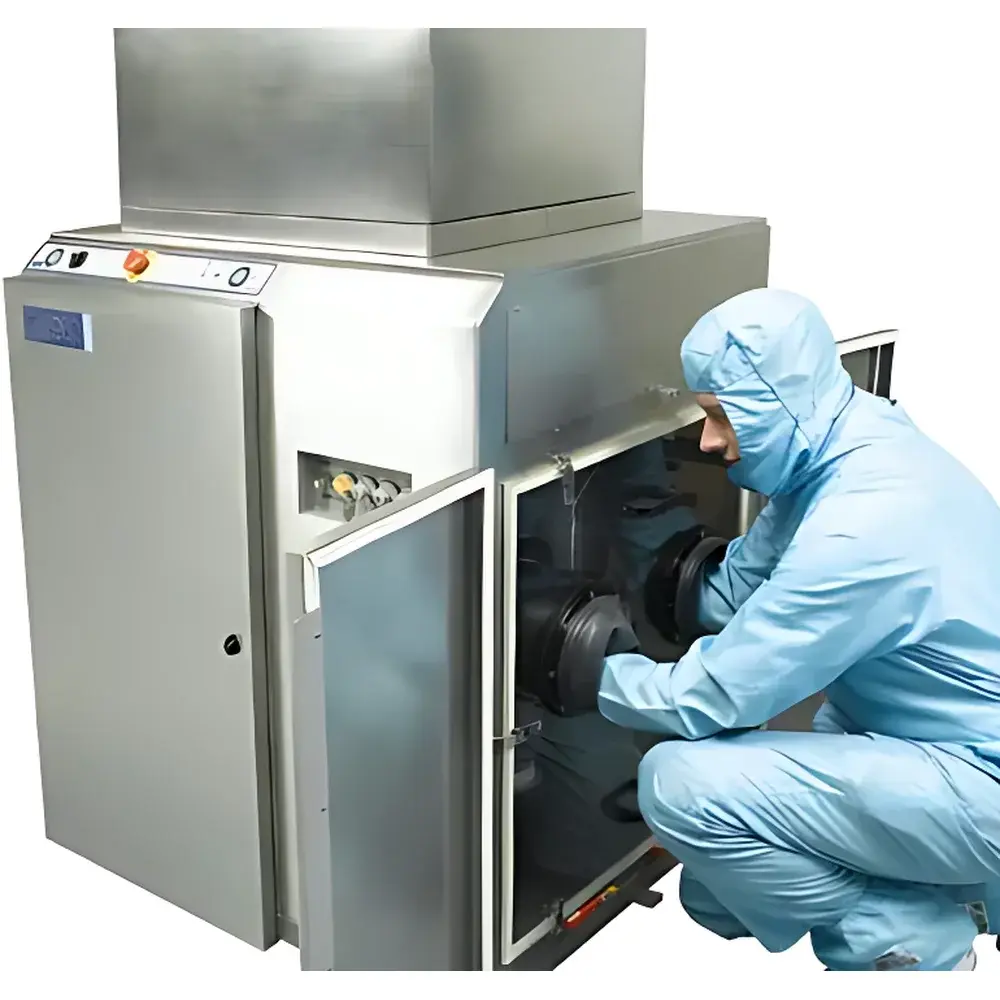
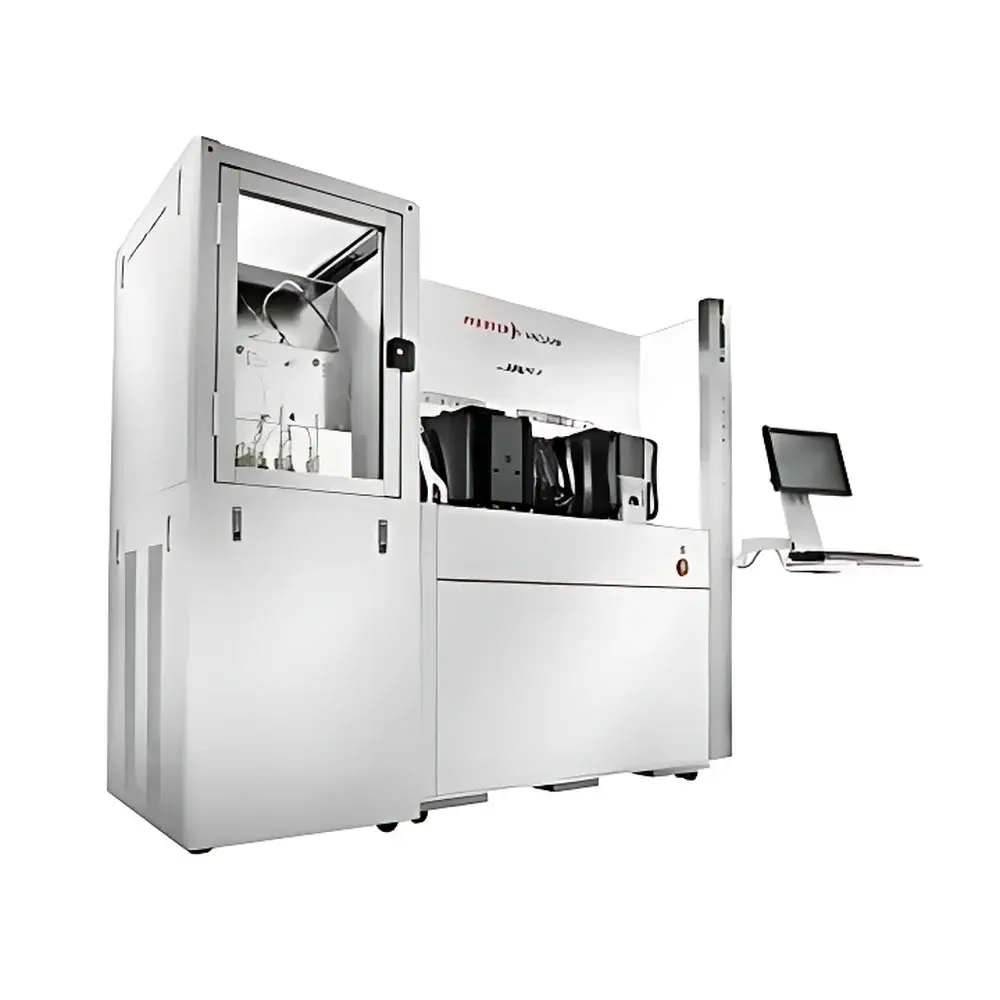
The Pfeiffer Vacuum APA Contamination Management System is an integrated suite of in-line, real-time analytical and mitigation platforms engineered specifically for high-precision semiconductor front-end manufacturing environments. Unlike conventional offline or periodic monitoring tools, the APA family—comprising the APA 302 (AMC monitor), ADPC 302 (automated particle counter), and APR 4300 (in-situ decontamination chamber)—operates at the molecular and sub-micron level to address contamination sources where they originate: within FOUPs (Front Opening Unified Pods), FOSBs (Front Opening Shipping Boxes), and inter-process waiting zones. The system is grounded in vacuum science principles—leveraging controlled evacuation, ultra-sensitive trace gas detection, and inert-gas purging—to intercept airborne molecular contaminants (AMCs) such as HF, NH₃, H₂O, and organic vapors, as well as particulate matter ≥0.1 µm, before they induce pattern degradation, haze formation, or gate oxide defects on 300 mm wafers. Its architecture conforms to SEMI S2/S8 safety standards and supports integration into 300 mm automated material handling systems (AMHS), including OHT (Overhead Hoist Transport) interfaces.
Key Features
- APA 302: Real-time AMC monitoring with ppbv-level sensitivity across multiple analytes (HF, NH₃, H₂O, VOCs), using ion mobility spectrometry (IMS), cavity ring-down spectroscopy (CRDS), or fluorescence UV detection—switchable per application requirement.
- ADPC 302: Fully automated, non-contact particle counting system for FOUP/FOSB internal surfaces—including door seals and ledge regions—with 0.1 µm detection threshold and <7-minute cycle time per carrier.
- APR 4300: Four-chamber vacuum decontamination system with independent pressure control (down to 0.1 mbar), N₂ purge sequencing, and robotic FOUP loading/unloading; validated for >24-hour post-purge contamination suppression.
- SEMI-compliant hardware design: All units feature stainless-steel wetted parts, Class 10 cleanroom-rated enclosures, and fail-safe interlocks aligned with SEMI S2/S8 and ISO 14644-1 requirements.
- Unified software platform with audit-trail logging, configurable alarm thresholds, and timestamped event records compliant with FDA 21 CFR Part 11 and GMP/GLP data integrity guidelines.
Sample Compatibility & Compliance
The APA system is validated for use with standard 300 mm FOUPs (SEMI E47.1 compliant) and FOSBs under ambient and low-humidity cleanroom conditions (ISO Class 1–3). It accommodates both empty and wafer-loaded carriers without modification. All measurement and decontamination protocols are developed in alignment with industry-relevant standards: ASTM E2551 (AMC sampling), ISO 14644-8 (chemical contamination), IEST-RP-CC034.2 (particle counting in confined volumes), and SEMI F21 (FOUP cleanliness specification). Calibration routines are traceable to NIST-certified reference gases and certified particle standards (PSL spheres, ISO 21501-4). No consumables requiring user replacement are used in routine operation—calibration gases and purge nitrogen are externally supplied via facility lines.
Software & Data Management
The APA Control Suite is a Windows-based, multi-user SCADA interface supporting local HMI operation and remote supervision via Ethernet/IP or OPC UA. It provides synchronized time-stamped logs for AMC concentration trends, particle count maps per FOUP surface zone, and APR chamber cycle parameters (vacuum ramp rate, dwell time, purge flow, final residual pressure). All data is stored in encrypted SQLite databases with configurable retention policies (default: 90 days). Audit trails record operator login/logout, parameter changes, calibration events, and alarm acknowledgments—each with digital signature and immutable timestamps. Export formats include CSV, PDF reports, and XML for MES/ERP integration. The system supports electronic signatures and role-based access control (RBAC) to meet FDA 21 CFR Part 11 requirements for regulated environments.
Applications
- Real-time AMC surveillance during FOUP idle periods in lithography, etch, and deposition tool load ports.
- Qualification of FOUP cleaning efficacy and optimization of dry-clean process parameters (e.g., plasma ashing, UV-ozone exposure).
- Root-cause analysis of yield loss linked to ambient-induced haze or metal contamination on patterned wafers.
- Validation of AMHS transfer path cleanliness prior to critical layer processing.
- Supporting ICH Q5C stability studies in pharmaceutical packaging by adapting AMC monitoring protocols to moisture/O₂ ingress assessment in blister packs and vials.
FAQ
What detection technologies does the APA 302 support?
The APA 302 platform is modular: users select IMS for rapid HF/NH₃ screening, CRDS for ultra-trace H₂O or VOC quantification, or fluorescence UV for aromatic hydrocarbons—each configured at time of order.
Can ADPC 302 distinguish between adhered and loosely bound particles?
Yes—the system applies calibrated laminar airflow shear stress during imaging to differentiate static adhesion from mobile particulates, enabling classification per ISO 14644-1 Annex B.
Does APR 4300 require dedicated exhaust or abatement?
No—evacuated process gases are routed through standard facility vacuum roughing lines; no reactive byproduct generation occurs during inert-gas purging.
Is the APA system compatible with 200 mm FOUPs?
Not natively—mechanical and software interfaces are designed exclusively for SEMI E47.1–compliant 300 mm FOUPs and FOSBs.
How frequently must the APA 302 be calibrated?
Automatic zero/span calibration is scheduled every 24 hours; manual full-range verification is recommended quarterly using certified gas standards.